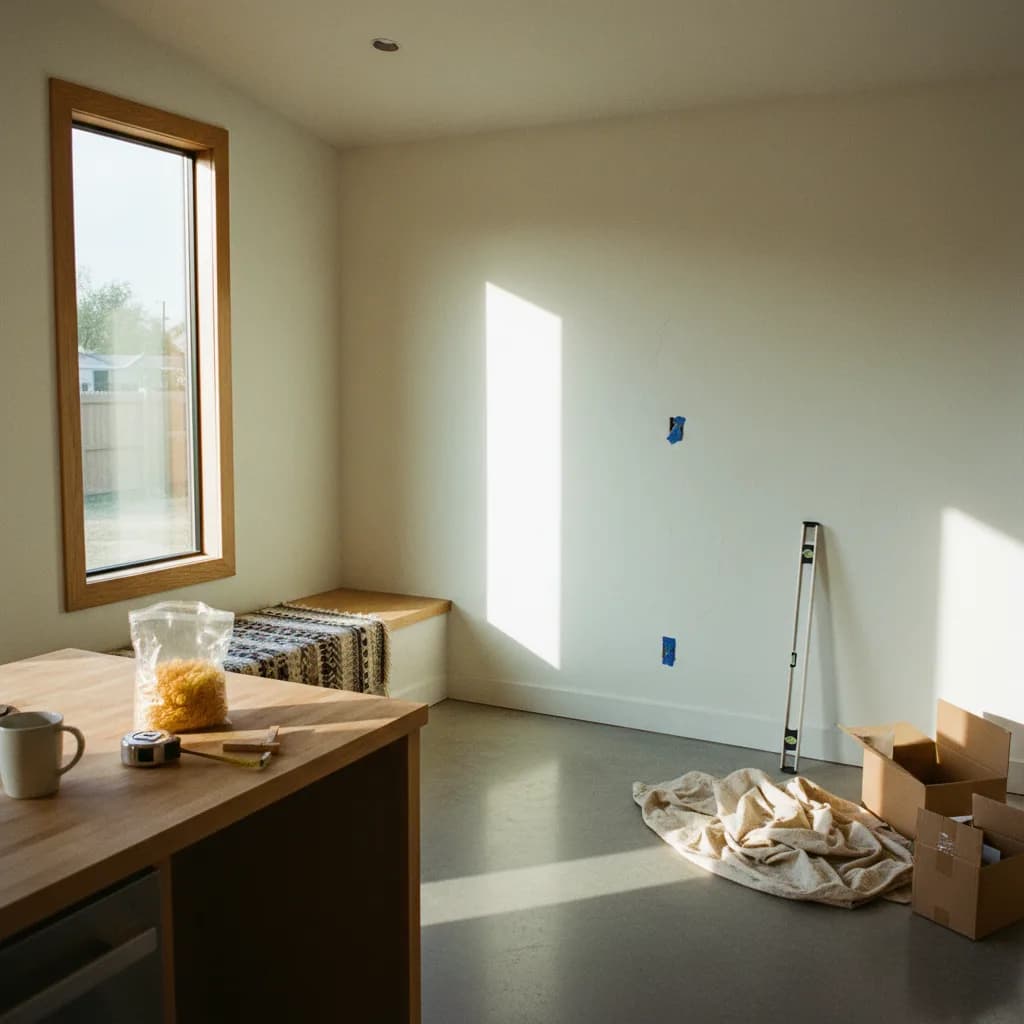
Building an Accessory Dwelling Unit (ADU) in Dallas costs between $145,000 and $320,000 for a detached new-construction unit in 2026. The median project for a one-bedroom, 650-square-foot structure lands near $210,000. Costs can start lower, in the $85,000 to $130,000 range, but these figures typically represent garage conversions or interior renovations which involve less site work and structural construction. For homeowners planning a standalone backyard home, the $210,000 median is a more realistic starting point for budgeting an adu dallas project.
In a Nutshell
- Total Cost Range (New Build): $145,000, $320,000
- Typical Mid-Range Project: $210,000 for a 650 sq. ft., one-bedroom, one-bathroom unit with mid-grade finishes.
- Project Timeline: Seven to eleven months from initial design to final inspection.
- Biggest Surprise Line Item: Utility connections. Trenching and connecting to city water, sewer, and electrical grids can cost $12,000 to $22,000, a figure frequently underestimated in initial homeowner budgets.
What does an ADU actually cost in Dallas?
The total adu dallas cost is determined by size, build type (new construction vs. conversion), and finish quality. Below are three representative tiers for a new-construction ADU in 2026. These figures include design, permits, labor, and materials.
| Tier | Cost Range | Typical Scope |
|---|---|---|
| Basic | $145,000, $190,000 | 450, 600 sq. ft.; simple rectangular footprint; standard-grade materials (vinyl plank flooring, laminate countertops, basic appliance package); minimal site work. |
| Mid-Range | $190,000, $260,000 | 600, 800 sq. ft.; semi-custom design; upgraded finishes (engineered hardwood, quartz countertops, stainless steel appliances); some exterior features like a small deck or patio. |
| Premium | $260,000, $320,000+ | 800, 1,100 sq. ft.; fully custom architectural design; high-end materials (hardwood floors, stone countertops, premium fixtures); energy-efficient systems and extensive landscaping. |
For a typical $210,000 mid-range Dallas ADU, the budget allocation is approximately:
- Site Prep & Foundation: 15% ($31,500). Includes grading, excavation, and a pier-and-beam or post-tensioned slab foundation engineered for Dallas's expansive clay soil.
- Structure & Framing: 25% ($52,500). Lumber, sheathing, labor for walls, roof trusses, and subfloor.
- Exterior Finishes: 18% ($37,800). Siding, roofing, windows, and doors.
- Utilities (MEP): 12% ($25,200). Electrical wiring, plumbing lines, and HVAC system installation.
- Interior Finishes: 20% ($42,000). Insulation, drywall, paint, flooring, cabinets, countertops, and fixtures.
- Permits, Design & Fees: 10% ($21,000). Architectural plans, engineering reports, city permits, and impact fees.
The lower end of the cost spectrum, such as a garage conversion, avoids major foundation and framing costs, which is why those projects can fall below the $145,000 threshold for new construction.
Why is an ADU more expensive in Dallas than in surrounding rural areas?
Three primary factors drive the higher adu dallas cost compared to construction in smaller towns or rural parts of North Texas.
First, labor rates are significantly higher within the metroplex. According to the Texas Workforce Commission's Dallas-Fort Worth-Arlington MSA occupational wage data, skilled tradespeople like electricians, plumbers, and carpenters command wages 15 to 25 percent higher than in non-metropolitan areas of Texas. This premium reflects the high demand from a booming construction market and a higher cost of living. A reliable adu contractor dallas must pay competitive wages to retain qualified crews, and this cost is passed directly to the project budget.

Second, neighborhood-specific premiums and logistical challenges add to the cost. Building in established, high-value neighborhoods like Preston Hollow or Lakewood involves more than just construction. Contractors must work through stricter homeowner association (HOA) design reviews, protect mature trees which are often protected by city ordinance, and manage construction on tighter lots with limited access for machinery and material storage. These factors increase planning, labor, and insurance costs.
Third, Dallas's notorious geology plays a critical role. The region's expansive clay soil swells when wet and shrinks when dry, putting immense stress on building foundations. A standard slab-on-grade foundation that might suffice elsewhere is inadequate here. Proper construction in Dallas requires a more expensive engineered foundation, such as a pier-and-beam system or a post-tensioned slab, which can add $10,000 to $20,000 to the project cost compared to regions with more stable soil.
What do real Dallas homeowners spend in 2026?
Three modeled project scenarios for 2026, built from the Renology Cost Index and typical local scopes. These are illustrative estimates, not completed client projects:
1. Oak Cliff Garage Conversion: $162,000
A two-car garage was converted into a 580-square-foot, one-bedroom apartment. The project involved reinforcing the existing foundation, running new plumbing and electrical lines from the main house, adding a kitchen and bathroom, and installing a high-efficiency mini-split system. The cost was kept down by using the existing structure, but significant funds were allocated to upgrading the electrical panel and sewer line to support the new unit.
2. Lakewood New Build: $235,000
This project was a 720-square-foot, one-bedroom detached ADU built in the backyard of a 1940s home. The cost included a strong pier-and-beam foundation to counteract soil movement, architectural plans designed to match the main home's Tudor style, and mid-grade finishes like quartz countertops and engineered wood floors. The largest unforeseen expense was $14,000 for trenching 150 feet to the city sewer connection in the front yard.
3. North Dallas Custom ADU: $315,000
A 950-square-foot, two-bedroom ADU was built for aging parents. This project featured a fully custom design with accessibility features like a zero-threshold shower and wider doorways. High-end finishes included custom cabinetry, stone countertops, and a premium appliance package. The cost also covered significant landscaping and hardscaping to create a private patio and walkway connecting to the main residence. The higher dallas adu cost reflects the larger size and premium material selection.
Where does the money actually go? The hidden costs of building an ADU
3 Dallas ADU builders, editor-screened. 4 questions.
See my 3 matchesContractor quotes often focus on the structure itself, leaving homeowners surprised by necessary but unlisted expenses. A complete budget must account for these items:
- Soil Engineering Report: $1,500, $3,500. Essential in Dallas to design the correct foundation for the specific soil conditions on your lot.
- Utility Connection Fees: $12,000, $22,000. This is the cost to trench and physically connect your ADU to water, sewer, electrical (Oncor), and gas (Atmos Energy) lines. The distance from the street to the ADU site is the primary cost driver.
- Architectural & Structural Plans: $8,000, $18,000. Professional, permit-ready blueprints are not a minor expense.
- City of Dallas Permit & Impact Fees: $4,000, $9,000. These fees are paid to the city for plan review, inspections, and to offset the new unit's impact on public services.
- Landscaping and Hardscaping: $5,000, $20,000. The cost to restore the yard after construction, add walkways, a patio, and plantings is rarely in the builder's quote.
- Builder's Risk Insurance: $2,500, $5,000. A specific policy required to cover the structure during construction against theft, vandalism, or damage.
- Site Survey: $1,000, $2,500. A licensed surveyor must map your property lines, easements, and the precise location of the new structure for the permit application.
- Tree Protection or Removal: $2,000, $8,000. Dallas has a strong tree ordinance. If a protected tree is near the build site, you will incur costs for professional protection measures or a lengthy, expensive removal permit process.
What stops a Dallas ADU from running over budget?
Budget overruns on an adu dallas 2026 project typically stem from three main sources. First, unforeseen site conditions are a major risk. Discovering buried debris, hitting rock during excavation, or finding that the soil composition is worse than anticipated can force expensive changes to the foundation plan. Second, material price volatility can impact the budget. While a good contractor will lock in prices, a long-delayed project can be exposed to price increases for lumber, concrete, or roofing. Third, and most commonly, are owner-driven changes. Deciding to upgrade from carpet to hardwood or adding a larger window after construction has started creates a cascade of costs from new materials, change order fees, and potential project delays.
To mitigate these risks, a contingency fund is non-negotiable. The National Association of Home Builders recommends a ten to fifteen percent contingency on renovations in homes over thirty years old. This same principle applies to new construction on established lots, where surprises are common. For a $210,000 ADU project, this means having $21,000 to $31,500 in reserve.
What should your Dallas contractor include in the quote?
A detailed, fixed-price quote is the best tool for preventing budget surprises. Before signing, ensure your adu contractor dallas provides a line-item breakdown that includes the following:
- A detailed scope of work referencing the architectural plans.
- Site preparation, including demolition, grading, and erosion control.
- Foundation costs, specifying the type (e.g., pier-and-beam) and engineering requirements.
- Framing, sheathing, and structural hardware.
- Roofing, including underlayment, flashing, and gutter systems.
- Exterior finishes: siding, trim, paint, windows, and exterior doors.
- Plumbing, electrical, and HVAC, including all fixtures and final connections.
- Insulation for walls and ceiling, specifying R-values.
- Interior work: drywall, taping, texture, and paint.
- Flooring, cabinetry, and countertops with specific material allowances.
- All necessary city permits and associated fees.
- A schedule of inspections and who is responsible for meeting with inspectors.
- Debris removal and final site cleanup.
- A clear warranty on workmanship and materials.
Understanding the permit process is also critical. For a full breakdown of the steps, timelines, and requirements, see our guide: The Dallas ADU Permit Playbook 2026.
Renology Take
The most common point of failure for Dallas ADU projects is an incomplete understanding of total project cost. Homeowners often anchor to a builder's initial construction estimate, which may exclude thousands in necessary soft costs and site work. In the Dallas market, the two largest variables are the foundation engineering required for expansive clay soil and the cost of utility trenching. A low bid that is vague on these two points is not a bargain; it is a future change order. The most successful projects are those where the homeowner insists on a comprehensive budget upfront, including specific allowances for a soil report, engineered plans, and a worst-case scenario for utility runs. Focusing on the completeness of the bid, not just the bottom-line number, is the single most effective strategy for keeping a dallas adu project on budget and on schedule.
Sources & Methodology
Renology reviews public permit and labor signals, supplier pricing, remodeler quote patterns, comparable projects, the Renology Cost Index, and the Renology Methodology. Cost references are planning ranges for Dallas ADU projects, not fixed bids.

- City of Dallas, Development Services Department, ADU Ordinance and Fee Schedule (2026)
- Remodeling Magazine, 2025 Cost vs. Value Report (Dallas, TX data)
- National Association of Home Builders (NAHB), Construction Cost Survey (2025)
- Texas Workforce Commission, Dallas-Fort Worth-Arlington MSA Occupational Wage Data (2025)
- Renology Project of the Day (POTD) Network, Dallas Metro Data (2024-2026)
- Building-Cost.net, Dallas Construction Cost Calculator (2026)
Frequently Asked Questions
How much value does an ADU add to a property in Dallas?
What are the basic requirements to build an ADU in Dallas?
How long does it take to get ADU permits in Dallas?
Is it cheaper to convert a garage or build a new ADU in Dallas?
What is the biggest unexpected challenge when building a Dallas ADU?
Dallas · pre-screened
Get 3 Dallas ADU bids in 48 hours.
Our editors already vetted Dallas ADU builders. Answer 4 questions and we send 3 written bids inside 48 hours, with the real price for your scope, not their inflated first-call number.
- Free, no commission
- Pre-screened locally
- Bids inside 48 hours
Takes about 60 seconds. We'll text you when bids arrive.
Sources
- City of Dallas, Development Services Department, ADU Ordinance and Fee Schedule
- Remodeling Magazine, 2025 Cost vs. Value Report (Dallas, TX data)
- National Association of Home Builders (NAHB), Construction Cost Survey
- Texas Workforce Commission, Dallas-Fort Worth-Arlington MSA Occupational Wage Data
- Renology Project of the Day (POTD) Network, Dallas Metro Data
- Building-Cost.net, Dallas Construction Cost Calculator