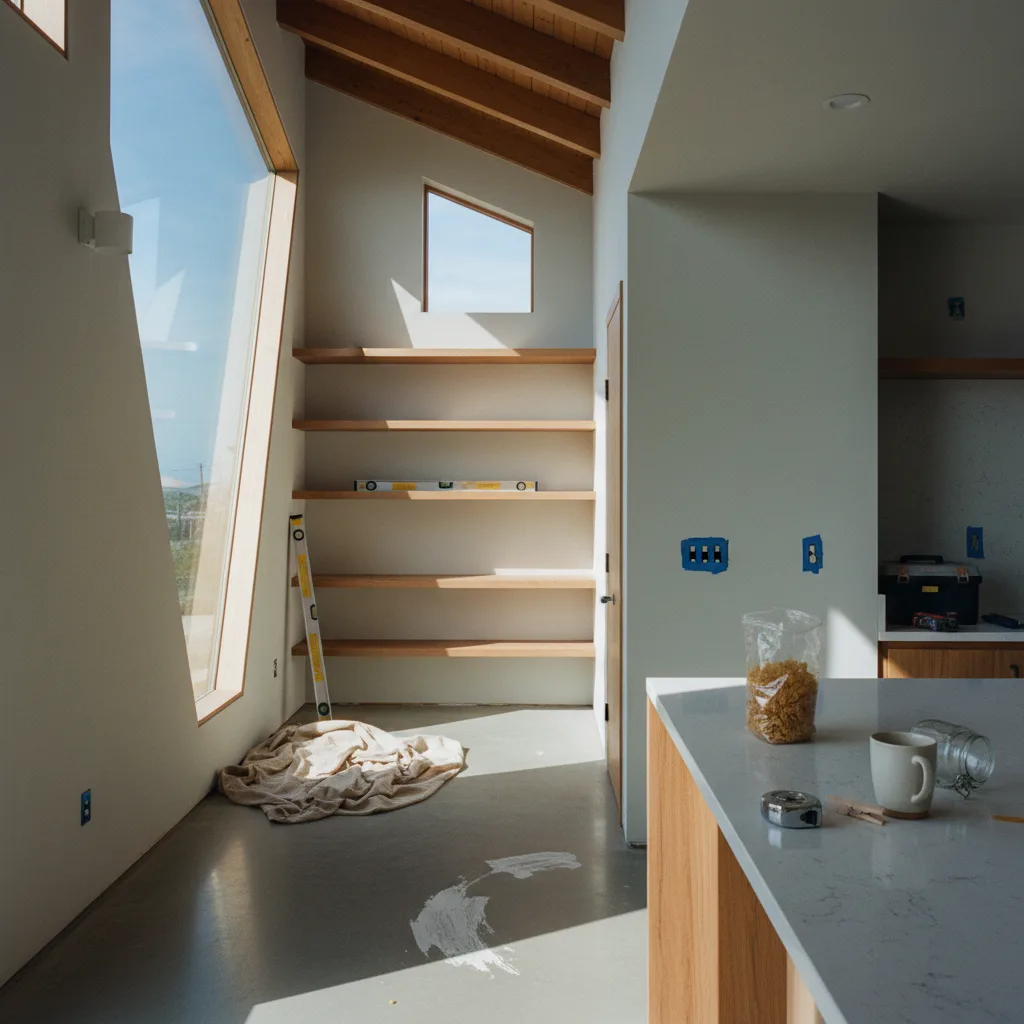
The era of the stucco box is over. San Diego ADUs in 2026 are full-fledged second homes, not just rental afterthoughts. Local design-build firms report that over sixty percent of new ADU projects now specify custom-level finishes that match or exceed the main residence, a complete reversal from just five years ago. The focus has shifted decisively from minimum viable product to maximum livable space.
In a Nutshell
- Umbrella Theme: The Accessory Dwelling Unit becomes the Accessory Home.
- Top Trends: Disappearing Kitchens, Indoor-Outdoor Flow via Bifold Doors, High-Performance Shells.
- What's Out: Matching the main house stucco, builder-grade finishes, cramped layouts.
- What's Next: Architecturally distinct structures, luxury materials, and a focus on long-term energy performance.
Trend 1: The Disappearing Kitchen
The kitchen work triangle is collapsing into a single, elegant line. In spaces under 500 square feet, the goal is to make the kitchen vanish. We're seeing this in North Park and South Park ADUs, where designers specify fully integrated, panel-ready appliances from brands like Fisher & Paykel and Bosch. Countertops are thin-profile honed quartzite or Dekton, running seamlessly into a matching backsplash. The effect is a serene, built-in look that feels more like custom furniture than a utility zone, maximizing the perceived living area. This trend will likely become the default standard for ADUs by 2028.
Trend 2: Spa-Inspired Wet Rooms
To make a compact bathroom feel generous, designers are eliminating the shower curb and enclosure entirely. The result is a Japanese-inspired wet room, a trend we're seeing in high-end projects from La Jolla to Encinitas. Large-format porcelain tiles, often 24x48 inches, run across the floor and up the walls, minimizing grout lines and creating a monolithic, spacious feel. A simple glass panel and a linear drain are the only divisions. This design choice not only adds a touch of luxury but also improves accessibility, a key consideration for multigenerational living.
Trend 3: Indoor-Outdoor Flow via Bifold Doors
San Diego's climate is its greatest asset, and 2026 ADUs are designed to embrace it. The nine-foot sliding door is being replaced by full-wall bifold or multi-slide systems from brands like LaCantina and NanaWall. In a Clairemont project we profiled, a twelve-foot opening completely removes the barrier between the small living area and a private patio, effectively doubling the usable space for nine months of the year. This is the single most impactful feature for making a small footprint feel expansive. Expect to see this become a code-minimum expectation in coastal communities.
Trend 4: The "Flex-Office" Murphy Bed
The ADU is the ultimate multi-purpose room. It’s a home office, a guest suite, a yoga studio. To accommodate this, the dedicated bedroom is giving way to flexible sleeping solutions. High-end, Italian-made murphy bed systems with integrated desks or sofas are becoming standard issue. A recent Renology Project of the Day in University City featured a wall bed system that converted from a full-time WFH station to a queen guest bed in under a minute. This isn't your grandparents' wobbly murphy bed; it's sophisticated, space-saving engineering.
Trend 5: Vaulted Ceilings and Clerestory Windows
3 San Diego ADU builders, editor-screened. 4 questions.
See my 3 matchesVolume is the new square footage. Instead of standard eight-foot ceilings, architects are pushing rooflines up to create vaulted interiors that make 400 square feet feel like 600. This vertical space is then used for clerestory windows, narrow openings set high on the wall. These windows pull in the clear, bright light of a coastal morning and create architectural interest without sacrificing privacy from the main house or neighbors. We're seeing this technique used masterfully in the dense lots of Golden Hill and Sherman Heights.
Trend 6: Dedicated Exterior Identities
The beige stucco ADU that perfectly matches the main house is starting to look dated. The new approach, seen in design-forward neighborhoods like Bird Rock, is to treat the ADU as a distinct architectural object. Designers are using contrasting but complementary materials: dark, vertically-installed composite siding against a white stucco main house, or the warm texture of clear-sealed cedar against a modern gray exterior. This gives the ADU its own presence and character, signaling it's a thoughtfully designed space, not an afterthought.
Trend 7: High-Performance Shells
Beyond California's already strict Title 24 energy code, clients are demanding ADUs that are truly high-performance. This means focusing on the building envelope: advanced framing to reduce thermal bridging, continuous exterior insulation, and high-performance windows with low U-factors. An ADU contractor in San Diego we spoke with noted that requests for energy modeling before construction have tripled since 2024. Homeowners understand that a small upfront investment in the shell leads to huge savings in heating and cooling costs and a much more comfortable living environment, especially important given San Diego's rising utility rates. This also addresses wildfire resiliency in areas like Rancho Peñasquitos, with non-combustible siding and well-sealed envelopes.
Trend 8: The All-Electric Standard
The gas line is a thing of the past for new ADUs. Driven by both state incentives and a desire for simplicity, all-electric is now the default. This means induction cooktops, which offer precise control without the indoor air quality concerns of gas, and super-efficient heat pump water heaters and HVAC mini-splits. For builders, it simplifies the permitting and construction process by eliminating the need for gas line trenching and venting. For homeowners, it creates a cleaner, safer, and future-proofed home.
What an ADU Actually Costs in San Diego
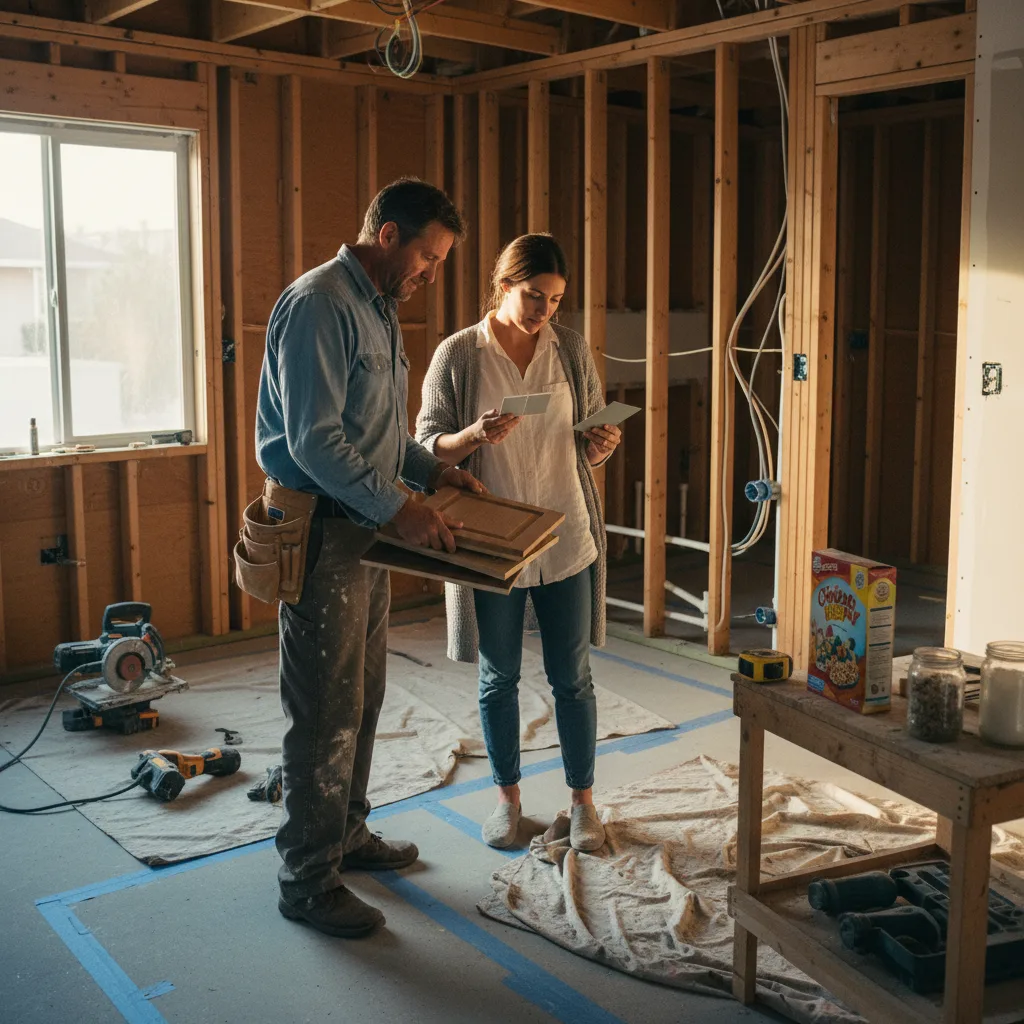
Conversations about an `adu cost in San Diego` can be misleading. While online calculators suggest low starting points, the reality for a well-designed, turnkey ADU in 2026 is more substantial. Understanding the scope is key to setting a realistic budget. Before you even speak with a contractor, it's wise to review the city's requirements. You can find a detailed breakdown in our San Diego ADU Permit Playbook for 2026. The National Association of Home Builders recommends a ten to fifteen percent contingency on renovations in homes over thirty years old, a rule that applies to the complexities of adding a new structure to an existing lot.
Three modeled project scenarios for 2026, built from the Renology Cost Index and typical local scopes. These are illustrative estimates, not completed client projects:
- $195,000 (North Park): A 450 sq. ft. studio ADU conversion of an existing garage. This project kept the existing slab and two walls, focusing the budget on a vaulted ceiling, a high-quality bifold door to the yard, and custom cabinetry with integrated appliances.
- $280,000 (Encinitas): A 700 sq. ft. one-bedroom new construction ADU. This cost included significant site work on a sloped lot, a high-performance building shell with continuous exterior insulation, and mid-range luxury finishes like honed quartzite countertops and Andersen windows.
- $410,000 (La Jolla): A 900 sq. ft. two-bedroom ADU designed for aging parents. The budget accommodated premium finishes throughout, a full spa-style wet room with curbless shower, custom rift-cut white oak cabinetry, and a LaCantina door system. It also included costs for seismic upgrades required for the site.
Sources & Methodology
See the Renology Methodology for how sources are reviewed, ranges are normalized, and planning-data limits are handled.
Cost ranges in this guide draw on the following named industry sources, public agency datasets, and Renology editorial research.
- NKBA 2026 Kitchen & Bath Design Trends Report (2026)
- Remodeling Magazine's 2025-2026 Cost vs. Value Report (2025)
- Jackson Design and Remodeling, San Diego Showroom Data (Q1 2026)
- Lars Remodeling & Design, San Diego Project Data (2025)
- California Department of Industrial Relations, San Diego County Wage Data (2026)
- Renology Project of the Day field interviews, San Diego metro (2025-2026)
Renology Take
The through-line connecting these eight trends is the maturation of the ADU market. For a decade, ADUs were a novelty, a clever hack for rental income or a simple guest room. Now, they are a core component of San Diego's housing fabric. Homeowners and designers are treating them not as additions, but as small, primary homes deserving of the same architectural rigor and material quality as a custom residence. This isn't about extravagance. It's about permanence. As families embrace multigenerational living and flexible work, they are investing in these small spaces to be comfortable, efficient, and beautiful for decades to come. The "granny flat" is gone. In its place is the accessory home, a testament to the idea that good design isn't about size, but about intention.
Frequently Asked Questions
What is the typical ADU San Diego cost in 2026?
How long does it take to build an ADU in San Diego?
What should I look for in an ADU contractor in San Diego?
Can I build more than one ADU on my property?
San Diego · pre-screened
Get 3 San Diego ADU bids in 48 hours.
Our editors already vetted San Diego ADU builders. Answer 4 questions and we send 3 written bids inside 48 hours, with the real price for your scope, not their inflated first-call number.
- Free, no commission
- Pre-screened locally
- Bids inside 48 hours
Takes about 60 seconds. We'll text you when bids arrive.
Sources
- NKBA 2026 Kitchen & Bath Design Trends Report
- Remodeling Magazine's 2025-2026 Cost vs. Value Report
- Jackson Design and Remodeling, San Diego Showroom Data
- Lars Remodeling & Design, San Diego Project Data
- California Department of Industrial Relations, San Diego County Wage Data
- Renology Project of the Day field interviews, San Diego metro