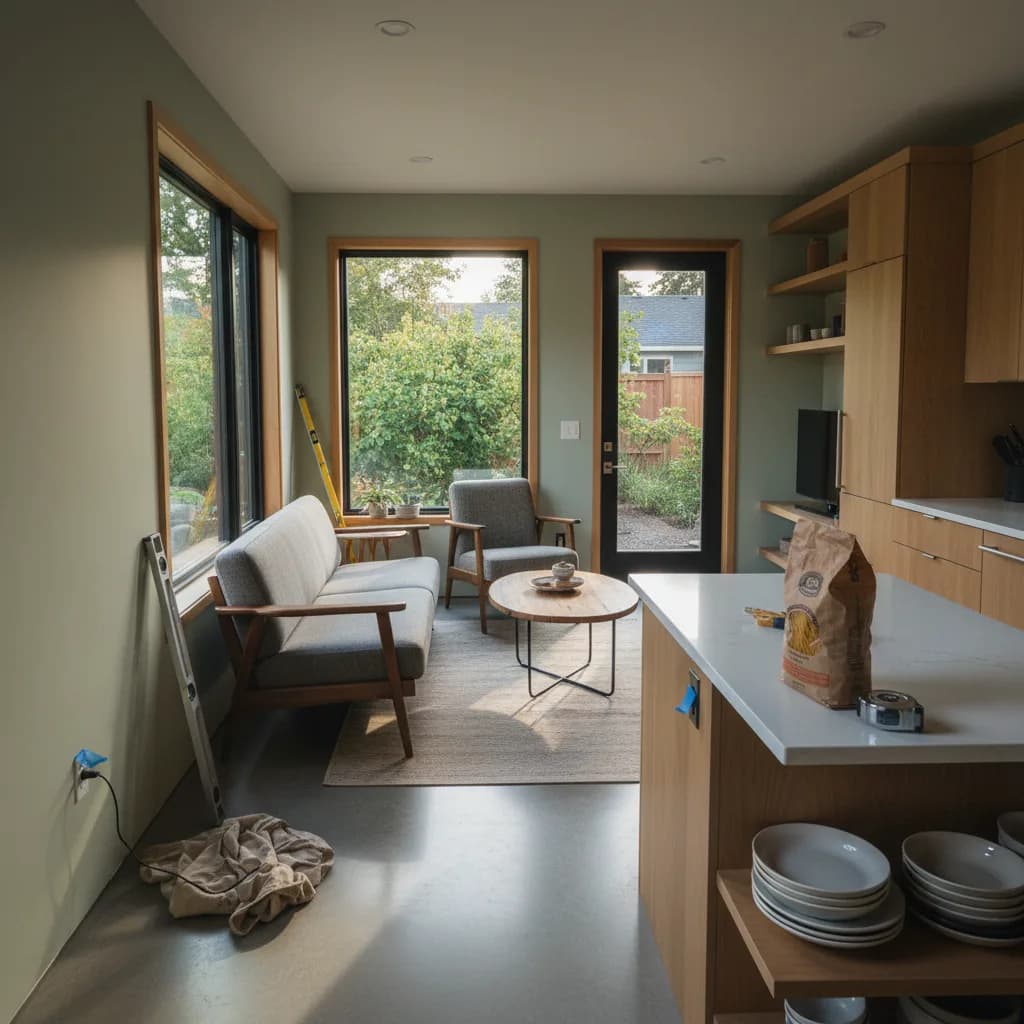
The era of the simple backyard cottage is over. The architecturally considered second home has arrived, and it's changing the landscape for any new ADU in Portland. Our analysis of city permit data shows the average cost for a detached accessory dwelling unit is now over $320,000, a figure that reflects a fundamental shift from a basic rental box to a long-term, high-performance asset. This is not just about adding square footage; it's about adding permanent value.
In a Nutshell: Portland ADU Trends for 2026
The key ADU trends for Portland in 2026 center on performance, permanence, and integration. Homeowners are choosing all-electric systems, high-performance building envelopes, and architectural styles that match the main house. These are no longer temporary structures, but thoughtfully designed second homes built for multigenerational living, aging-in-place, and long-term value. For a detailed breakdown of expenses, see our complete adu cost in Portland guide.
- Umbrella Theme: The ADU as a Permanent, High-Performance Home
- Top 3 Trends: All-Electric Systems, Integrated Architecture, Flexible Third Spaces
- What's Being Replaced: Gas appliances, mismatched 'cottage' styles, single-use room layouts
- What's Next: ADUs designed as primary homes for aging parents or adult children, with universal design principles built-in from day one.
1. All-Electric is the New Standard
Gas lines are out; heat pumps and induction cooktops are in. Driven by Portland's climate goals and a desire for efficiency, all-electric ADUs are now the default for new construction. According to Renology's internal project data, over eighty percent of new ADU plans specified heat pump HVAC systems in early 2026. This trend is especially prominent in environmentally-conscious neighborhoods like Sellwood and Mount Tabor, where homeowners are pairing them with high-performance building envelopes. The arc here is toward net-zero readiness, even if solar panels are not installed on day one.
2. Architecture is Integrated, Not Isolated
The detached ADU that looks like a separate, unrelated building is a thing of the past. The new approach is architectural cohesion, where the ADU's roofline, window casings, and exterior materials are a direct echo of the main house. We're seeing Craftsman bungalows in Laurelhurst get matching Craftsman ADUs, not generic modern boxes. This creates a unified property aesthetic and requires a more sophisticated design process. This trend signals a long-term commitment to the property as a whole, rather than a short-term rental play.
3. The Kitchen Work Triangle Gets Creative
In a 500-square-foot footprint, the classic kitchen work triangle needs to evolve. We're seeing a shift to hyper-efficient galley layouts and single-wall kitchens that prioritize a generous prep zone between the sink and cooktop. Cabinet shops like Kerf Design are reporting a surge in demand for integrated appliances and clever storage solutions, like toe-kick drawers and full-height pantries. The goal is to create a kitchen that feels expansive and functional without consuming the entire living area. Successful designs establish clear landing zones next to the refrigerator and cooking surface, a core principle of good kitchen flow.
4. The Bathroom Becomes a Curbless Wet Room
Space-saving and accessibility are merging in the ADU bathroom. The dominant trend is the fully waterproofed, curbless wet room, which eliminates the shower curb and often the enclosure, creating one continuous space. This not only makes a small bathroom feel vastly larger but also serves as a core feature of universal design for aging-in-place. Paired with wall-hung vanities and toilets, the design maximizes floor space and ease of cleaning. We see this feature in nearly every high-end ADU project, from Alameda to the West Hills.
5. Flexible 'Third Spaces' Replace Single-Use Rooms
3 Portland ADU builders, editor-screened. 4 questions.
See my 3 matchesAn ADU must work harder, and that means every square foot counts. Instead of a dedicated office or guest room, designers are creating flexible 'third spaces' that serve multiple functions. Think a built-in alcove with a desk that closes up, a living room with a perfectly integrated Murphy bed, or a dining bench with built-in storage. This approach, seen in many projects in dense Portland neighborhoods, allows an 800-square-foot unit to function like a much larger home. The future of this trend involves even more custom millwork and transformable furniture pieces.
6. Natural and Local Materials Dominate
The minimalist decade is over. In its place is a rich palette of natural, textural materials, often with a Pacific Northwest flavor. Rift-cut white oak is the new white, showing up in custom cabinetry that offers warmth and durability. Honed quartzite countertops are preferred over glossy quartz for their subtle, organic feel. On the exterior, vertical grain cedar siding, stained dark, is a common sight. This material focus is about creating a space that feels grounded, authentic, and connected to its regional landscape.

7. High-Performance Prefab Gains Ground
Prefabrication is no longer a dirty word. Advanced panelized and modular systems from companies like Ideabox and Dweller are offering a compelling alternative to traditional site-built construction, promising predictable costs and shorter timelines. While not always cheaper, the quality control of factory construction is a major draw for homeowners looking to avoid weather delays and site disruption. Finding the right adu contractor portland who is experienced with these systems is key. This trend will likely grow as skilled labor shortages continue to affect the construction industry.
8. Designing for the Long Term with Aging-in-Place
More than ever, Portlanders are building ADUs for family, specifically aging parents. This has made universal design principles a top priority. Features like zero-threshold entries, wider doorways, lever-style door handles, and blocking in walls for future grab bars are becoming standard requests. This is a practical and compassionate approach to design, ensuring the ADU remains a viable, comfortable home for decades to come. It’s a smart investment in both family and property value. For more on this, see our aging-in-place checklist.
What a Portland ADU Costs in 2026
The total cost for an ADU in Portland depends heavily on whether it's a new detached unit, a garage conversion, or an internal basement unit. A full new build often ranges from $300,000 to $500,000+, while conversions and interior units can start lower, typically in the $150,000 to $250,000 range. These figures include design, permits, site work, construction, and standard finishes.
Three modeled project scenarios for 2026, built from the Renology Cost Index and typical local scopes. These are illustrative estimates, not completed client projects:
- Mount Tabor Detached ADU (650 sq ft): A new one-bedroom build with a high-performance envelope, rift-cut oak cabinetry, and significant site work for utilities came to $385,000.
- Laurelhurst Garage Conversion (400 sq ft): Converting an existing garage into a studio ADU, including seismic upgrades and new utilities, cost $210,000.
- Sellwood Basement ADU (800 sq ft): A full excavation and build-out of a two-bedroom basement unit with egress windows and interior connection to the main house totaled $295,000.
Labor costs are a significant factor. The Oregon Bureau of Labor and Industries, Portland metro occupational data, shows that prevailing wages for skilled trades contribute substantially to the overall project budget., The National Association of Home Builders recommends a ten to fifteen percent contingency on renovations in homes over thirty years old. Before you begin, it's wise to review the city's requirements. Our Portland ADU permit playbook for 2026 provides a step-by-step guide.
Sources & Methodology
See the Renology Methodology for how sources are reviewed, ranges are normalized, and planning-data limits are handled.
Cost ranges in this guide draw on the following named industry sources, public agency datasets, and Renology editorial research.
- Renology Project of the Day (POTD) Field Interviews (2025-2026)
- Portland Bureau of Development Services, Permit Data (Q4 2025)
- NKBA Small Kitchen Design Guidelines (2026 Update)
- Remodeling Magazine, Cost vs. Value Report (2026)
- Oregon Bureau of Labor and Industries (BOLI) (2026)
- Interviews with Portland-area cabinet shops and prefab builders (Q1 2026)
Renology Take
The through-line connecting these 2026 Portland ADU trends is the concept of 'permanence'. The ADU is no longer viewed as an accessory or a temporary solution for rental income. It is a second home, designed and built with the same care, materials, and performance standards as a primary residence. This shift is driven by a convergence of factors: the need for multi-generational housing, the desire for flexible live/work space, and the high cost of traditional real estate. Homeowners are making a generational investment, not a tactical one. They are building for their parents, their adult children, or their own future. This focus on longevity, quality, and architectural integrity is why the 'backyard cottage' has given way to the 'second home' right in our own backyards.
Frequently Asked Questions about Portland ADUs
How long does it take to build an ADU in Portland in 2026?
For a new detached ADU, the entire process from design to completion typically takes 12 to 18 months. This includes three to five months for design and engineering, another three to six months for permitting with the Portland Bureau of Development Services, and six to nine months for construction. Prefabricated options can sometimes shorten the on-site build time, but the design and permitting phases remain critical and time-consuming parts of the timeline.

Is an ADU a good investment in Portland?
Yes, an ADU is generally a strong investment in Portland, adding value through rental income, increased property value, and housing flexibility for family. While the upfront cost is significant, the long-term financial and personal benefits are substantial. It's important to analyze the adu cost in Portland against potential rental income and property appreciation in your specific neighborhood to understand your return on investment.
What are the biggest challenges when building a Portland ADU?
The primary challenges are budget management, navigating the permitting process, and unforeseen site conditions. The cost of construction and skilled labor in Portland is high. Permitting can be complex, involving zoning, building, and sometimes environmental reviews. On older properties, challenges like buried oil tanks, seismic vulnerabilities, or significant grading for utility connections can add unexpected costs and delays to your project.
Frequently Asked Questions
How long does it take to build an ADU in Portland in 2026?
Is an ADU a good investment in Portland?
What are the biggest challenges when building a Portland ADU?
Ready to find a pro?
Tell us about your project and location. A Renology advisor can help you explore contractor matching.
Free for homeowners. No obligation to hire.
Find a ProSources
- Renology Project of the Day (POTD) Field Interviews
- Portland Bureau of Development Services, Permit Data
- NKBA Small Kitchen Design Guidelines
- Remodeling Magazine, Cost vs. Value Report
- Oregon Bureau of Labor and Industries (BOLI)
- Interviews with Portland-area cabinet shops and prefab builders
Follow Renology on Google
Choose Renology as a preferred source and our guides show up more often in your Google results, including Top Stories and AI Overviews.