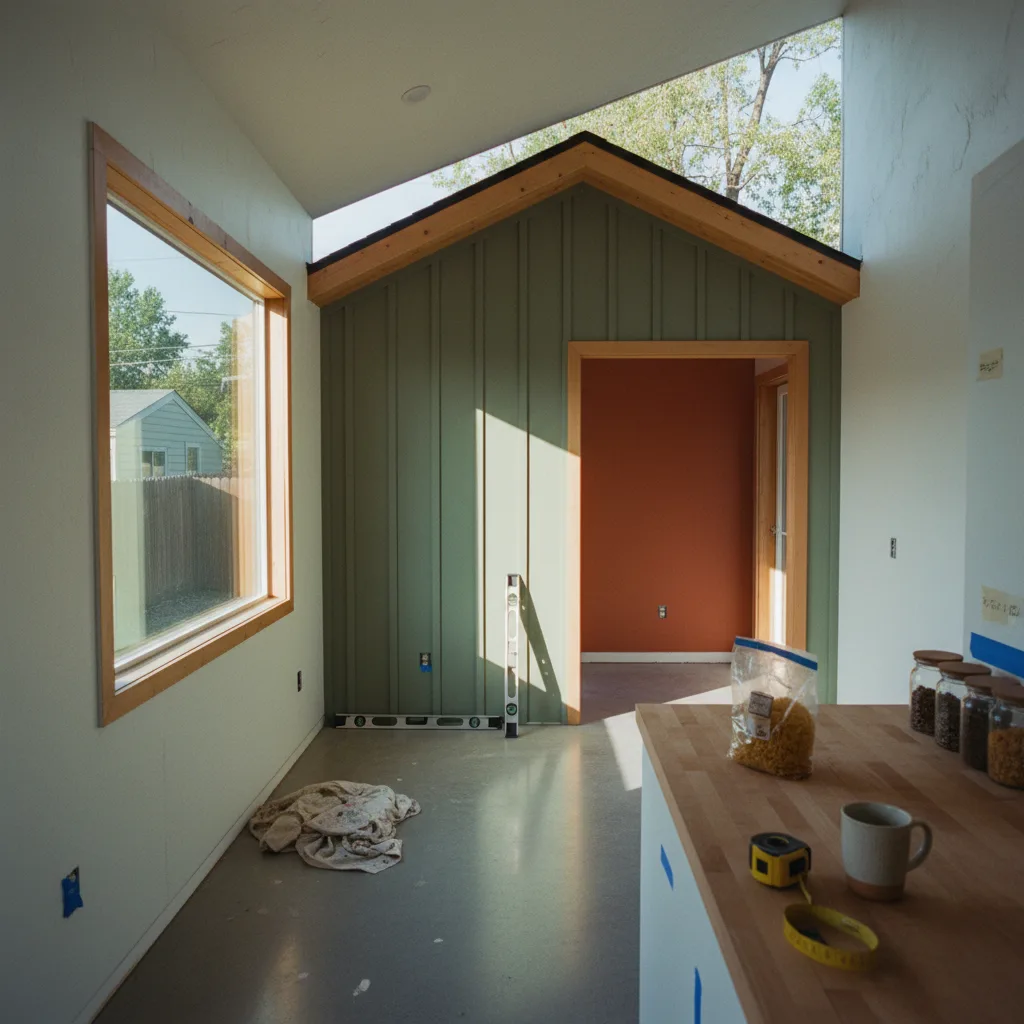
A typical Denver ADU build goes over budget by $40,000 and runs eight weeks behind schedule. The reasons are predictable, born from a handful of flawed assumptions most homeowners make. The ones who finish on time and on budget do seven things differently, and they decide all of them before a single shovel hits the ground. This is what they know.
In a Nutshell: The Denver ADU Minefield
The core pattern is simple: underestimation. Underestimating the complexity, the cost of utilities, and the harshness of the Colorado climate. An average adu cost in Denver overrun is twenty to thirty percent. On a $220,000 project, that is a $44,000 to $66,000 mistake. Here is how to avoid it.
- Three Most Common Mistakes: Failing to budget for utility connections, hiring an unvetted contractor, and using materials that can't handle Denver's freeze-thaw cycles.
- The Real Timeline: From initial design to final occupancy, a realistic timeline for a denver adu in 2026 is nine to fourteen months, not the six months many contractors suggest.
- Your First Step (This Week): Before you call a single designer, use the official Denver Accela Citizen Portal to confirm your property’s zoning and check for any easements or restrictions. This ten-minute check can save you ten thousand dollars in wasted design fees.
Mistake #1: Accepting the First Friendly Quote
Most homeowners, eager to get started, talk to one or two contractors and hire the one they like the best. This feels efficient, but it is the most expensive relationship you will form this year. Without competitive bids, you have no benchmark for cost or quality, often leading to a 15-25% overpayment for standard work. The fix is to treat hiring like a business decision, not a personality contest. Get three quotes. Check three references. Visit one finished job before signing any contract. A reputable adu contractor denver will welcome this level of diligence.
Mistake #2: Underestimating Utility Connection Costs
Homeowners budget for the structure but treat utility hookups as an afterthought. This is a catastrophic financial error. Connecting a new, separate dwelling to sewer, water, and electricity is not a simple task. It often requires extensive trenching across your property and significant fees paid to Denver Water and Xcel Energy. These costs can easily add $20,000 to $35,000 to your total project, a figure almost never included in the initial casual estimates. The fix is to demand a specific, detailed line-item for all utility connections in every contractor bid. Ask them to explain exactly how they arrived at that number.
Mistake #3: Ignoring Denver's Soil and Climate
Many designs treat a Denver backyard like one in a milder climate. This mistake manifests in two costly ways: foundation failure and exterior decay. Denver's expansive bentonite clay soil swells and shrinks dramatically, which can crack and destroy an improperly engineered foundation. The fix requires a geotechnical soil report and an engineered foundation designed to handle this movement. Similarly, the high-altitude UV radiation and intense freeze-thaw cycles will shred cheap siding and paint. Insist on materials built for this environment, like James Hardie ColorPlus siding and a premium acrylic latex paint like Benjamin Moore Aura Exterior. These choices add cost upfront but prevent a full replacement in five to seven years.
Mistake #4: A Vague Scope of Work
3 Denver ADU builders, editor-screened. 4 questions.
See my 3 matchesMost contractor disputes and budget overruns start here. A scope of work that says “install kitchen cabinets” or “tile bathroom floor” is an open invitation for change orders. The contractor installs the cheapest option that meets the description, and any upgrade or change you request comes with a hefty surcharge. This is how a budget spirals out of control. The solution is to create a painfully specific scope of work before signing the contract. Specify everything: the make and model of the faucet, the grout color, the Schluter waterproofing system model number, the R-value of the insulation. Our Denver ADU permit playbook provides a comprehensive checklist to ensure you cover every detail.
Mistake #5: DIYing the Permit and Inspection Process
Homeowners think they can save money by managing the city's permitting process themselves. In Denver, this is a path to expensive delays. Navigating the city’s Community Planning and Development department requires experience. A missed detail on a submission can set your project back for months. The inspections process is equally unforgiving. A failed framing or insulation inspection means costly rework and another wait for the inspector to return. The fix is to hire a design-build firm or a contractor with a dedicated, in-house permit specialist who has an established working relationship with city officials in neighborhoods from Sloan's Lake to Washington Park.
Mistake #6: Believing the Initial Cost Estimate
The total adu cost in Denver can start lower for simple conversions or projects with existing foundations, but a new detached ADU is a significant build. The average cost per square foot for an ADU in Denver is higher than for a primary residence because of the fixed costs (kitchen, bathroom, utility hookups) spread over less square footage. Labor costs are also a major factor. According to the Colorado Department of Labor and Employment for the Denver-Aurora-Lakewood MSA, skilled trade wages continue to rise. Expect a well-built, 600-square-foot ADU in 2026 to cost between $210,000 and $280,000 all-in. Below are some representative project costs.

Three modeled project scenarios for 2026, built from the Renology Cost Index and typical local scopes. These are illustrative estimates, not completed client projects:
- Highland Carriage House (550 sq. ft.): $235,000. Included a second-story unit over a new garage, requiring significant structural work.
- Berkeley Bungalow (650 sq. ft.): $260,000. Slab-on-grade construction with higher-end finishes, including vaulted ceilings and custom cabinetry.
- Platt Park Studio (480 sq. ft.): $215,000. A straightforward rectangular build with standard finishes, focused on maximizing rental income potential.
Mistake #7: Forgetting the Contingency Fund
Most homeowners build their budget to the exact dollar amount of the contractor's quote. This leaves zero room for error. Unforeseen issues are a guarantee in construction, especially on older properties. You might discover buried debris during excavation or find that your home's main electrical panel needs an expensive upgrade to support the ADU. Without a buffer, these discoveries force you to make compromises on finishes or go into debt. The National Association of Home Builders recommends a ten to fifteen percent contingency on renovations in homes over thirty years old. For a $220,000 ADU project, this means having an additional $22,000 to $33,000 set aside in a separate account before you begin.
Sources & Methodology
See the Renology Methodology for how sources are reviewed, ranges are normalized, and planning-data limits are handled.
Cost ranges in this guide draw on the following named industry sources, public agency datasets, and Renology editorial research.
- Denver Community Planning and Development, Accessory Dwelling Units Guide (2026)
- Colorado Department of Labor and Employment, Denver-Aurora-Lakewood MSA Occupational Employment and Wage Statistics (2025)
- National Association of Home Builders (NAHB), Construction Cost Survey (2025)
- City of Denver, Accela Citizen Portal, Permitting Data (2026)
- Building Science Corporation, 'BSI-051: Slabs, Basements, and Crawlspaces' (2024)

Renology Take
The meta-mistake that causes all the others is this: treating an ADU project like a deck or a kitchen remodel. It is not. An ADU is a small house. It has its own foundation, sewer line, electrical service, kitchen, and HVAC system. It must meet the same building codes for safety, structure, and energy efficiency as a 3,000-square-foot new build. Homeowners who get into trouble are the ones who apply a remodel mindset to a new construction project. They underestimate the complexity of the systems, the rigor of the permitting, and the precision required in the planning phase. The homeowners who succeed treat it exactly like building a new home, just smaller. They invest heavily in pre-construction planning so that when construction finally starts, it is just an assembly process, not a series of expensive discoveries.
Frequently Asked Questions
What's the most expensive mistake when building an ADU in Denver?
How do I know if my ADU contractor is padding the quote?
When should I walk away from a contractor's quote?
What is the fastest way to blow an ADU budget?
Ready to find a pro?
Tell us about your project and location. A Renology advisor can help you explore contractor matching.
Free for homeowners. No obligation to hire.
Find a ProSources
- Denver Community Planning and Development, Accessory Dwelling Units Guide
- Colorado Department of Labor and Employment, Denver-Aurora-Lakewood MSA Occupational Employment and Wage Statistics
- National Association of Home Builders (NAHB), Construction Cost Survey
- City of Denver, Accela Citizen Portal, Permitting Data
- Building Science Corporation, 'BSI-051: Slabs, Basements, and Crawlspaces'
Follow Renology on Google
Choose Renology as a preferred source and our guides show up more often in your Google results, including Top Stories and AI Overviews.