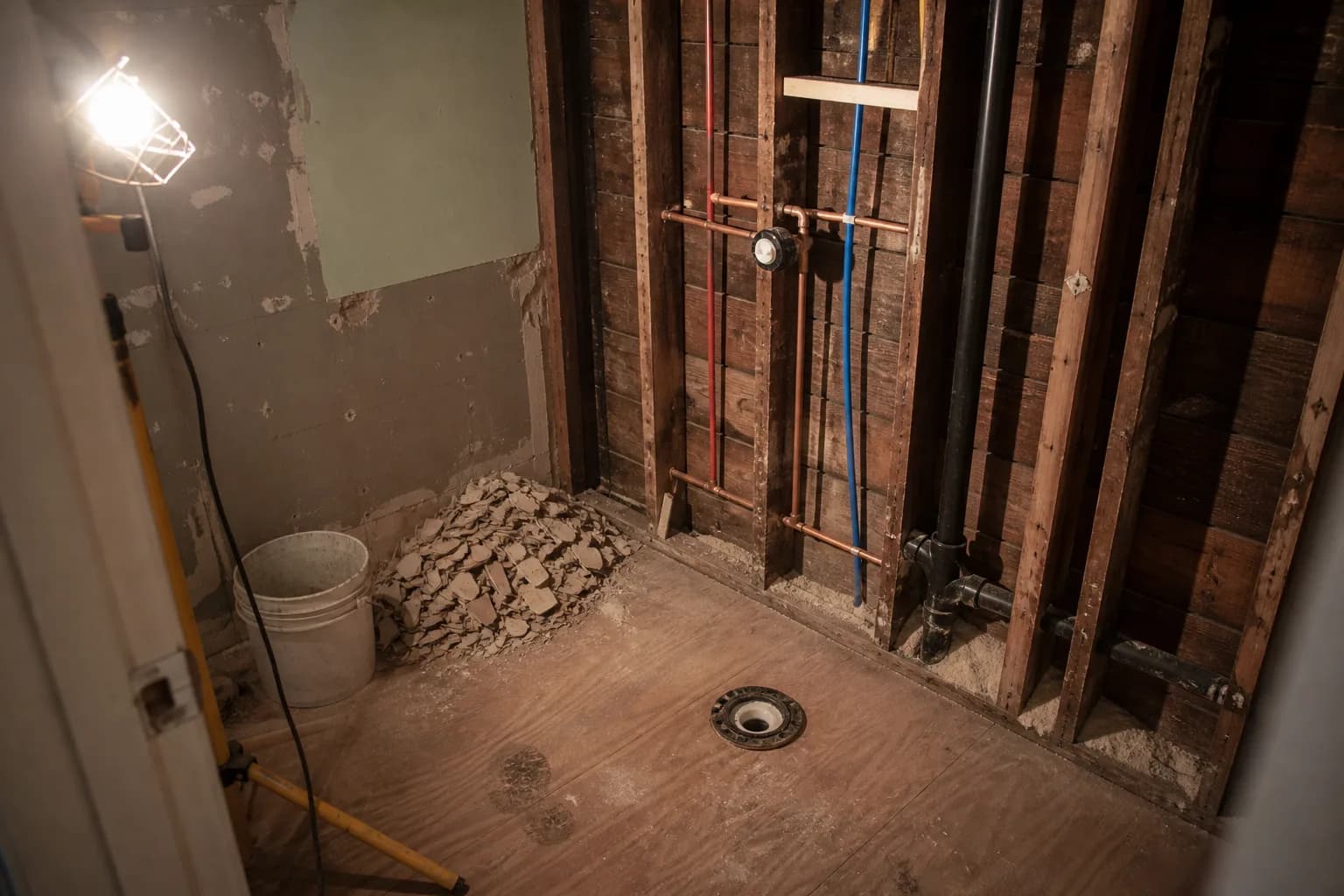
Minor Renovation ($3.5k to $7.5k)
$3.5k to $7.5k
- - New flooring
- - New vanity and fixtures
- - Fresh paint
- - Or a prefab shower stall added
Renology cost index
Wet-room rebuilds, tub-to-shower swaps, and spa-grade upgrades.
Reviewed by Dror Gigi. Updated 2026-09-26.
Quick answer
In 2026, Renology's published bathroom remodels cost guides put the planning range at $30k to $65k. The final number depends on local labor, site conditions, material tier, permits, demolition, access, and finish level.
Category
Indoor Remodels
Local guides
6
Materials tracked
5
Timeline
3 to 8 weeks
Budget tiers
Use tiers to understand what kind of scope each price band usually implies before comparing local bids.
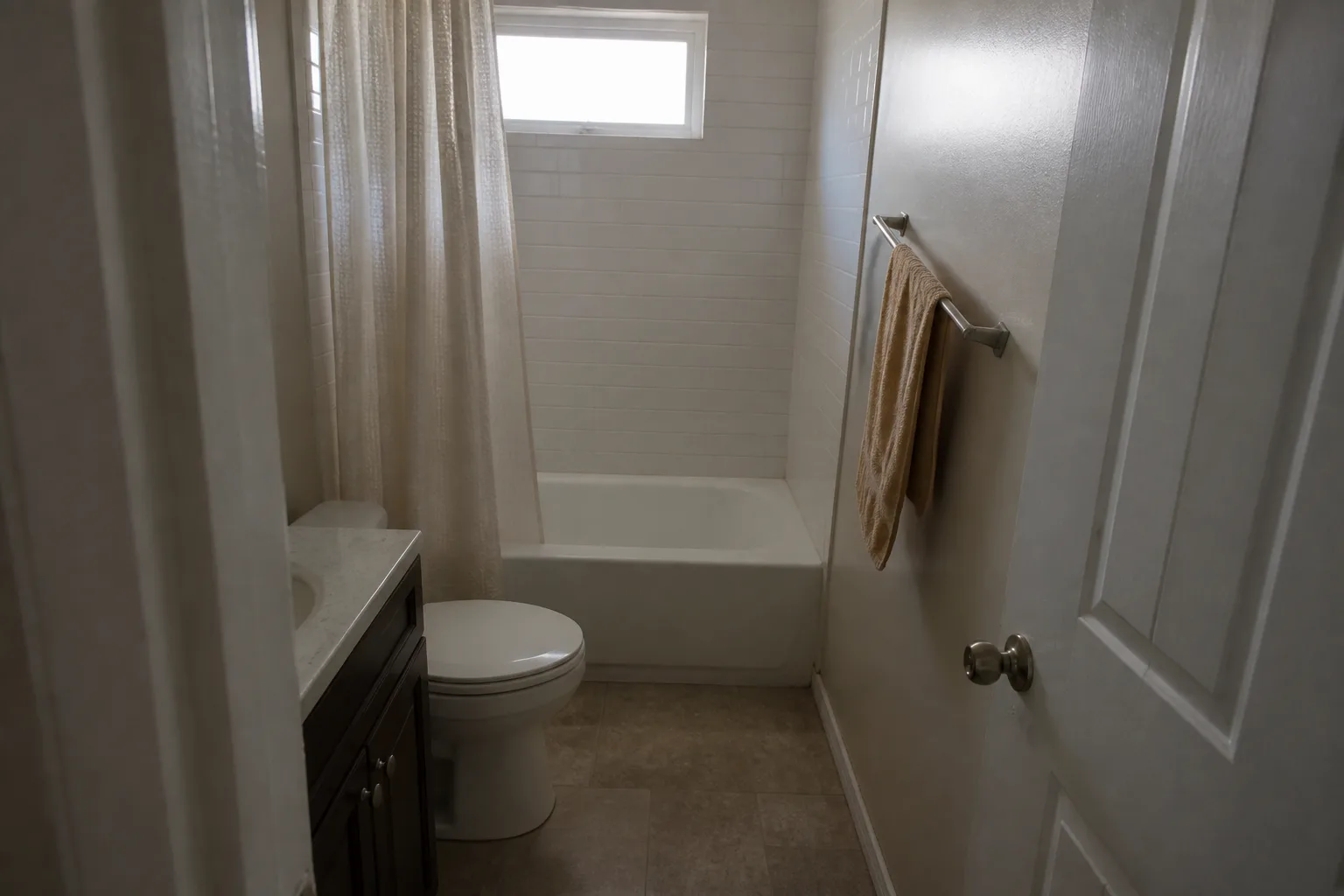
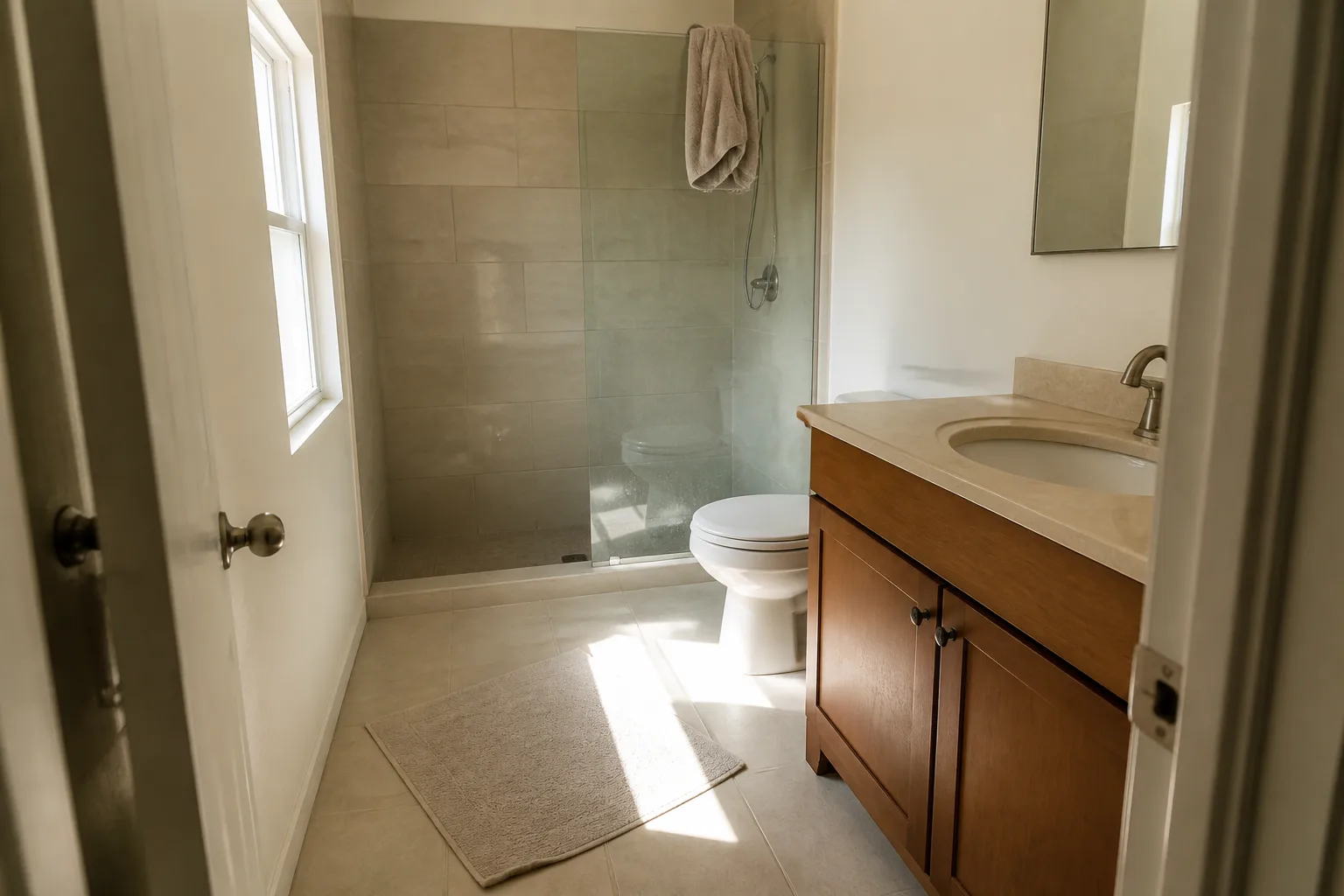
Minor Renovation ($3.5k to $7.5k)
Partial Remodel ($5.3k to $15k)
Full Remodel ($8.8k to $25k+)
The published figures
They are not contradicting each other. They are counting different projects, and none of them says so on the page.
Open three tabs on this question and you get three answers that are thousands of dollars apart. It looks like the internet cannot agree on what a bathroom costs. It can. What it has not done is tell you that each figure is measuring a different job, which is the only thing you need in order to know which one applies to yours.
Average spend
$12,146
Angi, 2026 data
Every bathroom job its members report, from a vanity swap to a gut. Its own stated range is $2,500 to $30,000, or $70 to $250 a square foot. The small jobs pull the average down, which is why it reads low against a full remodel.
Midrange remodel
$26,138
Cost vs Value 2025, Zonda, 119 markets
One defined scope, priced by contractors: replace most surfaces and fixtures inside the existing footprint. New floor, vanity with a solid-surface top, toilet, tub-to-shower or a new surround, better lighting. It recoups about 80% at resale, its best showing since 2007.
Median renovation spend
$20,000
Houzz & Home Study, 2025
What homeowners reported actually spending, down from $24,000 the year before. A median rather than an average, so it is not dragged by the largest projects.
Same question, three different projects. The spread between them is not disagreement, it is scope.
Per square foot
$70 to $250 a square foot
Angi, 2026. A 5 by 8 foot bathroom, the most common footprint in a mid-century house is about 40 square feet, which puts a full remodel of one at roughly $2,800 to $10,000 on that basis. Bathrooms are the densest room in a house: plumbing, waterproofing, ventilation and tile all land in the same few square feet, which is why the per-foot rate runs far above the rest of the home.
Read them together and the picture is consistent. A partial job, where you replace the vanity and the fixtures and leave the rest, runs in the low five figures. A full remodel inside the existing footprint sits in the mid twenties nationally. Anything that changes the room itself sits above that, and there is no ceiling on it.
Two things then move your own number off the national one. The first is where you live: California and Washington run above the national figure on labour alone, before a single tile is chosen, which is what the city ranges further down this page are for. The second is the decision in the next section, and it moves the number more than any material you will ever pick.
The decision that moves the price
Published ranges pool these two into one number. Los Angeles records which is which on the permit, so they can be counted.
Almost every cost guide leads with materials. Tile grade, whether the counter is quartz or marble, which brand of fixture. Those matter at the margin. The decision that actually sets the band you are in is whether anything has to be relocated, and it gets decided in the first ten minutes of the first conversation, usually without anyone noticing it was a decision.
Single-family permits, 2020 to 2025, whose work description names a bathroom and no other scope.
60.9%
Filed as a remodel with non-structural changes. Plumbing can move, a tub can become a walk-in shower, a doorway can shift.
39.1%
Filed as an interior remodel or repair with no changes in walls or openings. Same footprint, same plumbing locations, new everything else.
Nearly four in ten Los Angeles bathroom permits never touch a wall or an opening. That is the cheapest version of this project and it is far more common than the internet implies, because the pages selling you a remodel have no reason to tell you the smaller job exists.
Keeping the toilet, the tub and the vanity where the plumbing already is removes the rough plumbing, most of the drywall repair, and a whole inspection from the sequence. Move any one of them and you have opened a wall, which means a plumber, a framer, a drywaller and an inspector who all have to arrive in order. That is where the weeks go, and the weeks are most of where the money goes.
The practical version: before you price anything, decide whether the room stays as it is laid out. If it does, you are shopping in the lower band and your budget goes into finishes you will touch every day. If it does not, add the trades and the time before you add the tile.
Source: City of Los Angeles building permits (LADBS), retrieved 2026-08-27. Cohort and method described in the methodology section below.
By footprint
Almost every related search on this question is a set of dimensions. Here they are, on the published per-foot band.
A small bathroom is cheap in total and expensive per foot, and the second half of that surprises people. Shrinking the room does not shrink the job: the plumber, the tile setter, the electrician and the inspector each make the same number of visits whether the floor is thirty-five square feet or a hundred. What shrinks is the tile order.
| Room | Floor area | On the published band | What it usually is |
|---|---|---|---|
| 5 by 7 | 35 sq ft | $2,500 to $9,000 | The smallest full bathroom. A tub, a toilet, one vanity |
| 5 by 8 | 40 sq ft | $3,000 to $10,000 | The most common footprint in a mid-century house |
| 5 by 10 | 50 sq ft | $3,500 to $12,500 | Room for a longer vanity or a separate shower |
| 8 by 10 | 80 sq ft | $5,500 to $20,000 | A generous hall bath, or a small primary |
| 10 by 10 | 100 sq ft | $7,000 to $25,000 | A primary bathroom with a double vanity |
| 12 by 12 | 144 sq ft | $10,000 to $36,000 | A large primary with a separate tub and shower |
Floor area multiplied by the $70 to $250 a square foot Angi, 2026 publishes for 2026, rounded. It is a national band, so California and Washington sit toward the upper half of it before anything else is decided, and any change to the layout moves a room into the band above its own footprint.
Inside the number
Bands rather than points, because the published sources disagree by scope and resolving that quietly is how a cost page becomes fiction.
What every source does agree on is the shape. A bathroom is the most labour-heavy room in a house, and it is not close. Plumbing, waterproofing, tile, electrical and ventilation all land inside a few square feet, each one a separate trade arriving in a fixed order, and none of them can start before the one in front of it has passed.
Bars show the top of each band. Shares overlap because scopes differ; read them as weights, not as a pie that sums to 100.
Two things follow from that shape. The first is that material upgrades move the total less than people expect: doubling the price of the tile on a forty square foot floor moves a small fraction of the job. The second is that anything which adds a trade visit, or a waiting day between two visits, moves it more than any material can.
It is also why the cheapest real saving on a bathroom is not a cheaper fixture. It is deciding everything before demolition starts. A shower valve costs the same on Monday as it does on Thursday; changing your mind about it after the wall is closed costs a plumber, a drywaller, a tile setter and an inspection.
A number you will be shown
We checked it expecting to publish it as a cost. It does not survive the check, and that is worth knowing before someone quotes it at you.
Every Los Angeles building permit carries a declared construction value, and it is public. That makes it tempting: a real figure, filed by a real homeowner, on a real project. We pulled 5,053 permits covering exactly one bathroom and nothing else, expecting to publish the distribution the way we do for garage conversions.
The median came back at $7,000, which is far below what a bathroom costs here and below the bottom of our own city ranges on this page. That is the point at which you either publish it anyway, or find out why. Three things say it is a form-filling habit rather than a price.
Flat for six years, on thousands of filings a year. This is not what a price does.
Same dataset, same city, same years. This is what a price does.
Those two charts are the whole argument. They are drawn from one dataset, one city and one six-year window, using the same cohort rules. On garage conversions the most common single value covers only 12.3% of filings and the median climbed from $25,000 to $40,000. On bathrooms it does not move at all. The difference is not the city and it is not the years. It is that one of these numbers is being estimated and the other is being copied.
What to do with it. Declared value is what an applicant states so the city can calculate its fee. It is not a quote, it is not a budget, and it excludes design, permit fees, financing and most finish upgrades. If a contractor points at a permit to justify a price, or to argue that a neighbour's job cost $7,000, that is the wrong document. Ask for a line-item bid instead, and ask which trades are in it.
We are publishing a number we could not use because the reasoning is more useful than the figure would have been. Anything on this site that comes from permit data has been through this check. This one did not pass it.
State view
Aggregated from published city/service guides in each state.
Local guide index
Open a local guide when city labor, permits, climate, or housing stock materially affect the project.
San Francisco, California
$39,000-$65,000
Local range with city-specific planning context.
Encino, California
$36,000-$60,000
Local range with city-specific planning context.
Los Angeles, California
$36,000-$60,000
Local range with city-specific planning context.
San Diego, California
$33,000-$55,000
Local range with city-specific planning context.
Bellevue, Washington
$30,000-$50,000
Local range with city-specific planning context.
Seattle, Washington
$30,000-$50,000
Local range with city-specific planning context.
Material signals
Material pricing is not the whole bid, but it often explains why two scopes with the same project name price differently.
Both
$0.50 to $15
High-end tile can reach $35 per sq ft
Both
About $80
Labor is extra
Both
About $115
Quartz is priced the same; labor is extra
Both
About $950
Average for the door and installation
Both
$300 to $3,800
Prefab or custom, by size and material
Methodology
This page combines the Renology service guide for bathroom remodels, local city/service guides, material notes, budget tiers, and editorial review. It is designed for early planning and answer extraction, not as a contractor quote.
Compare this page with the full Renology Cost Index and the full Bathroom Remodels guide before requesting bids.
See the Renology Methodology for how sources are reviewed, how ranges are normalized, and where the limits of planning data begin.
Answered for search
Short answers for homeowners and AI answer systems.
It looks like everything staying where it is. At $10,000 you are replacing surfaces and fixtures inside the existing footprint: vanity, toilet, light fixtures, floor tile, a new tub surround or a tub-to-shower swap using the same drain. What it does not buy is moved plumbing, a widened doorway, a bigger shower pan or a second sink, because each of those adds rough plumbing, drywall work and another inspection. In California and Washington, where labour runs above the national figure, $10,000 is a refresh rather than a remodel.
Only a partial one, and usually with your own labour on part of it. $5,000 covers a vanity, a toilet, a mirror, lighting, paint and either the floor or the tub surround, not both at a tiled finish. Angi puts the bottom of its national range at $2,500, which is that kind of job. A full bathroom at $5,000 is not realistic in California or Washington at contractor rates, and a bid at that number for a full scope is worth reading line by line.
Yes, if the layout does not move. Nearly four in ten Los Angeles bathroom permits are filed with no changes to walls or openings, which is the version of this project that fits a five-figure budget. Once the toilet or the shower moves, the plumbing, the framing and the inspection sequence all change and the number goes up. The single biggest thing you control is whether anything has to be relocated.
It is a rule of thumb, not a standard: do not spend more than about 30% of your home’s value on any single renovation, and expect a bathroom to land nearer 5 to 10% of it. Treat it as a sanity check on scope rather than a budget. The more useful anchor is resale: the 2025 Cost vs Value report from Zonda puts a midrange bathroom remodel at $26,138 nationally and recoups about 80% of it, its strongest showing since 2007.
Not a full one at contractor rates in California or Washington. $5,000 buys a vanity, a toilet, a mirror, lighting, paint and one of either the floor or the tub surround at a tiled finish. Angi puts the bottom of its national range at $2,500, which is that kind of partial job. If a bid comes in at $5,000 for a complete bathroom, read it line by line and ask which trades are in it.
That is the full remodel, and it is the $26,138 midrange figure from the 2025 Cost vs Value report rather than the $12,146 average, because the average includes every partial job. Demolition itself is a small line. What makes the difference is whether the replacement puts everything back where it was, which 39.1% of Los Angeles bathroom permits do, or moves it, which is the other 60.9%.
It is enough for a bathroom that keeps its layout. Fixtures, surfaces and lighting inside the existing footprint fit a five-figure budget, and that is the version nearly four in ten Los Angeles homeowners actually permit. It is not enough to move plumbing, widen a doorway or enlarge a shower pan, because each of those adds rough plumbing, drywall work and another inspection.
Small does not mean cheap per foot, it means cheap in total. A 5 by 7 bathroom is 35 square feet, so at the $70 to $250 a square foot Angi reports it lands at roughly $2,500 to $8,750 for a light job and higher once the layout moves. The per-foot rate on a small bathroom usually runs at the top of the band rather than the bottom: the trades make the same number of visits whether the room is 35 feet or 100.
A 5 by 10 bathroom is 50 square feet. On the $70 to $250 a square foot range Angi publishes for 2026 that is roughly $3,500 to $12,500, before any change to the layout. Add a relocated toilet or a shower where the tub was and it moves into the band above, because that is a different permit and a different sequence of trades.
A 10 by 10 primary bathroom is 100 square feet, which on the same $70 to $250 band is roughly $7,000 to $25,000 for the work itself. Primary bathrooms usually sit at the upper end because of what goes in them rather than the floor area: a double vanity, a separate shower and tub, frameless glass and more lighting circuits all arrive together.
Between about 40 and 65 percent, and it is the highest labour share of any room in a house. A bathroom concentrates plumbing, waterproofing, tile, electrical and ventilation into a few square feet, and each of those is a separate trade making a separate visit in a fixed order. That is also why shrinking the room does not shrink the bill proportionally.
For anything beyond a like-for-like swap, yes. Los Angeles files bathroom work under two standard descriptions: an interior remodel with no changes to walls or openings, and a remodel with non-structural changes. Both are permitted. Replacing a vanity in place generally is not, but moving a drain, altering a wall or changing electrical almost always is, and an unpermitted bathroom is a common finding at resale.
Three to eight weeks of site time for most projects, and the calendar is set by sequence rather than by hours of work. Demolition, rough plumbing, an inspection, close the walls, waterproof, tile, then fixtures, glass and paint. Each stage waits on the one before, so a single missed delivery or a failed inspection moves everything behind it, which is why a schedule with float in it is worth more than a slightly lower bid.
A midrange one is among the better returns in the house. The 2025 Cost vs Value report from Zonda puts a midrange bathroom remodel at $26,138 nationally and recoups about 80% of it at resale, its strongest showing since 2007. Upscale remodels recoup materially less, and an unpermitted bathroom often does not appraise as finished space at all.
Usually geography and scope, in that order. California and Washington run above the national figure on labour before a single material is chosen, which is what the city ranges on this page reflect. Then check whether the quote moves anything: a bid that relocates the toilet or converts a tub to a curbless shower is not comparable to the national average for a like-for-like replacement, whatever both documents call themselves.
Demolition and disposal, rough plumbing with any relocations named, electrical and the number of circuits, waterproofing method, tile setting priced separately from tile supply, fixture allowances with a figure against each, glass, ventilation, paint, permit fees, and a contingency stated as a percentage. A single number for "bathroom remodel" is not a bid, it is a guess you cannot compare against another guess.
It is the figure the applicant states so the city can calculate its fee, and it is not the price of the job. Across 5,053 Los Angeles permits covering exactly one bathroom the median is $7,000, it has not moved in five years, and one value carries 20.3% of the whole set. It excludes design, permit fees, financing and most finish upgrades. If a contractor points at a permit to justify a price, ask for the line-item bid instead.
Keeping what is there is always cheaper, and a straight tub-to-shower conversion using the existing drain is the cheapest change you can make. It becomes expensive when the shower needs a bigger footprint or a curbless entry, because both mean moving the drain and cutting the floor, which turns a fixtures-only job into one that changes walls or openings.
Renology's 2026 planning range for bathroom remodels is $30k to $65k. Final bids depend on scope, existing conditions, materials, permits, access, and local labor.
The largest pricing swings usually come from demolition, prep work, structural or utility changes, material tier, finish level, waterproofing or weather exposure, permit requirements, and contractor availability.
No. The cost index is a planning benchmark, not a fixed quote. Homeowners should compare the index against 2 to 3 itemized bids once the scope is clear.
Related indexes
Related service indexes help homeowners understand tradeoffs before locking scope.