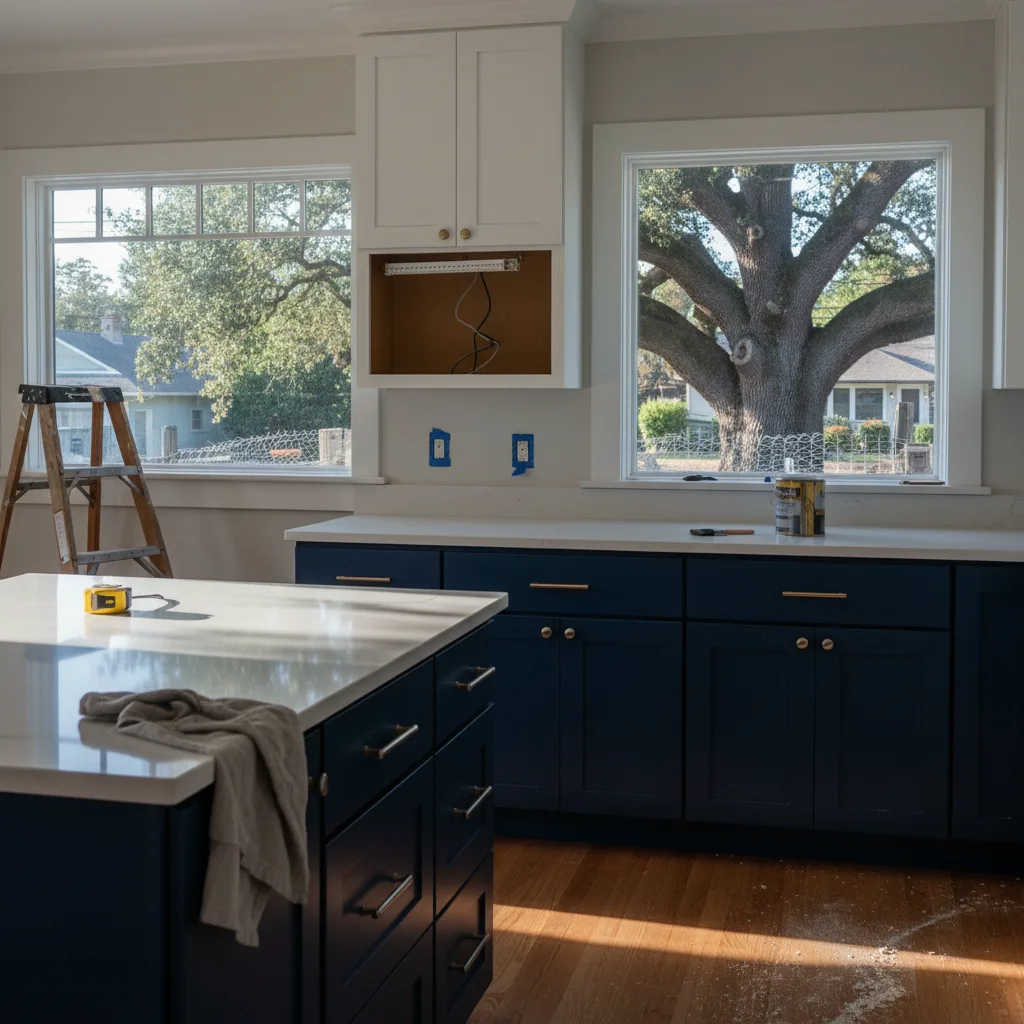
Planning a kitchen in Oakland? A full project typically runs $72,000 to $115,000 in 2026. Cosmetic refreshes start near $43,000, while premium custom work climbs past $140,000. This is what your budget actually covers, what drives the price up, and how to vet a contractor who knows Oakland permits.
The Honest 2026 Price for a Kitchen in Oakland
As the kitchens and baths editor for Renology, I review hundreds of project invoices each year. One truth is constant: national cost averages are misleading for the Bay Area. The unique combination of high labor costs, a discerning design culture, and a housing stock rich with character and complexity places Oakland in its own category. The figures we present here are not abstract estimates; they are grounded in real, itemized invoices from vetted local contractors in 2026.
A complete kitchen renovation in Oakland, the kind that involves taking the room down to the studs and rebuilding it, realistically starts around $72,000 and extends to $115,000 for a mid-range project. This "all-in" cost encompasses design fees, materials, skilled labor, permits, and a foundational contingency fund. For projects focused on surfaces and fixtures without altering the layout, costs can begin near $43,000. On the other end of the spectrum, a premium, custom-designed kitchen with structural changes and top-tier finishes will comfortably exceed $140,000, with many of the projects I track landing closer to $200,000.
Understanding these tiers is the first step. The second is recognizing that the final price tag is a direct reflection of thousands of small decisions, from the grade of plywood in your cabinet boxes to the complexity of the edge profile on your stone countertop.
What Drives Kitchen Costs in Oakland
See what a kitchen remodel actually costs in your Oakland zip.
Take 4 questions →The difference between a $70,000 and a $170,000 kitchen is not arbitrary. It is a calculated sum of specific choices in three key areas: labor, materials, and the unseen complexities of building in the East Bay.
Labor: The Bay Area Premium
Skilled labor is the single largest component of any Bay Area renovation budget, often accounting for 40 to 50 percent of the total cost. Oakland is home to some of the country's most talented carpenters, electricians, and plumbers, and their expertise comes at a premium. A general contractor is not just hiring hands; they are coordinating a team of specialized craftspeople. The labor required to install a perfectly aligned backsplash of handmade Zellige tile is substantially greater than for a simple sheet of back-painted glass. Similarly, scribing custom cabinetry to the quirks of a wavy 1920s plaster wall demands a higher level of carpentry skill, and more time, than installing stock cabinets in a new build.
Materials and Finishes: From Prefab to Bespoke
This is where your design vision directly translates to cost. The material palette offers a vast spectrum of price points, and every selection has a ripple effect on the budget.
- Cabinetry: The foundation of your kitchen's look and function. Stock cabinets from a big-box store represent the entry level. Semi-custom cabinets from brands like Medallion or Showplace offer more flexibility in size and finish and are the standard for mid-range projects. For a premium build, fully custom cabinetry, perhaps from a local Oakland woodworker in rift-cut white oak with grain-matched drawer fronts, offers limitless possibilities but at a significant cost increase.
- Countertops: A durable, entry-level quartz from a brand like Silestone is a practical and popular choice. Moving up, you encounter high-grade natural quartzite, known for its marble-like beauty and granite-like durability. At the top end, a thick, honed Calacatta Viola marble slab with dramatic veining becomes a piece of functional art, but requires more maintenance and a budget to match.
- Appliances: The cost difference between appliance packages is immense. A reliable suite from Bosch or KitchenAid might cost $10,000 to $15,000. A professional-grade set from Sub-Zero, Wolf, and Cove can easily triple that figure, reaching $40,000 or more for integrated refrigeration, steam ovens, and induction cooktops.
- Fixtures and Lighting: It's easy to overlook the small details, but they add up. A faucet from a quality brand like Brizo or Rohl can cost ten times more than a basic model. A single designer pendant light from a studio like Allied Maker or Cedar & Moss can cost more than all the recessed lighting in the room combined.
Permits, Engineering, and Code Compliance
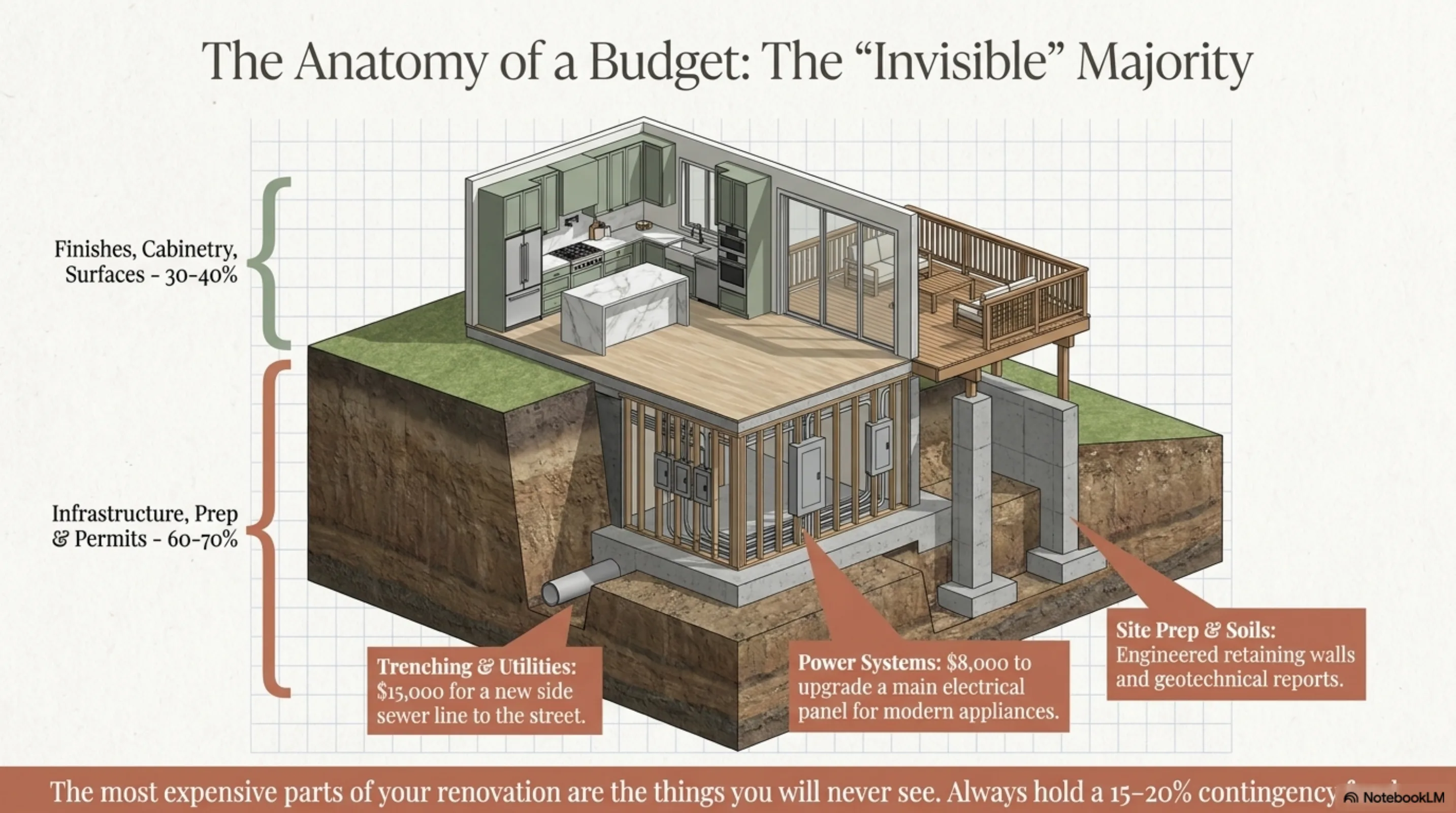
The "unseen" costs are critical to budget for. Any project that moves walls or alters plumbing and electrical systems requires a permit from the City of Oakland. This involves creating detailed plans, paying city fees, and undergoing inspections. If you remove a load-bearing wall, a structural engineer must be hired to calculate the new support system, adding several thousand dollars to the cost., California's strict Title 24 energy code dictates everything from the efficiency of your lighting to the insulation in your walls, which can influence material and fixture choices.
Oakland Kitchen by Tier: 3 Real Project Examples
To make these numbers concrete, let's look at three distinct project scopes we frequently see in Oakland. These examples illustrate how budget aligns with the depth of renovation, material quality, and project duration.
| Tier | Typical Scope | Cost Range (2026) | Timeline |
|---|---|---|---|
| Cosmetic Refresh | Keep existing layout. Reface or paint cabinets, new countertops (prefab or entry-level quartz), new sink/faucet, simple tile backsplash, new hardware, new paint. | $43,000 to $72,000 | 4 to 8 Weeks |
| Mid-Range Gut Renovation | Full demolition to studs. New semi-custom cabinets, new layout (minor changes), quartz or quartzite slab countertops, new appliances, updated electrical and plumbing, new flooring and lighting. | $72,000 to $115,000 | 10 to 16 Weeks |
| Premium Custom Build | Full gut with structural changes (e.g., removing walls). Custom cabinetry, premium natural stone, professional-grade appliances, designer lighting, extensive plumbing/electrical work, architectural plans. | $140,000 to $205,000+ | 16, 24+ Weeks |
Cosmetic Refresh: The High-Impact, Low-Scope Update
This tier is for a kitchen with good bones but a dated aesthetic. The goal is a significant visual upgrade without the cost and complexity of a full gut. A typical project might involve keeping the sturdy cabinet boxes but replacing the doors and drawer fronts with a modern Shaker profile. The old laminate countertops are replaced with a durable, pre-fabricated quartz slab. A classic subway tile backsplash, a new undermount sink with a quality faucet, and stylish new cabinet hardware complete the transformation. The key here is that no walls are moved, and plumbing and electrical points remain in their original locations, avoiding the need for extensive permits and trade work.
Mid-Range Gut Renovation: The Oakland Standard
This is the most common type of kitchen remodel in Oakland. It addresses both aesthetics and function. The project starts with a full demolition. This allows for updating the in-wall infrastructure, a critical step in older homes. The new layout might shift the refrigerator for a better work triangle or add a new peninsula for casual seating. We see homeowners selecting high-quality semi-custom cabinets, a durable quartzite island that can withstand family life, and a solid appliance package from a brand like Bosch or Thermador. New recessed LED lighting on dimmers, under-cabinet task lighting, and durable flooring like luxury vinyl plank or engineered hardwood are standard.
Editor's note
This tier often provides the best return on investment. According to the 2026 Cost vs. Value report from Remodeling Magazine, a minor kitchen remodel in the Pacific region recoups a significant portion of its cost at resale, making it a wise financial decision as well as a lifestyle improvement.
Premium Custom Build: The Architectural Digest Feature
This project is less of a renovation and more of a re-imagining of the space. It almost always begins with a collaboration between the homeowner, an architect or interior designer, and a high-end general contractor. The scope typically involves removing walls to create a smooth connection to living and dining areas, often requiring a concealed steel beam for support. Cabinetry is fully custom, built to the inch by a local craftsperson from materials like solid walnut or painted maple. Countertops are showstoppers, like a bookmatched slab of Paonazzo marble with a waterfall edge on the island. The appliance suite is professional-grade, featuring items like a 48-inch dual-fuel range and integrated wine refrigeration. Every detail, from the hand-forged cabinet pulls to the placement of designer sconces, is meticulously planned and executed.

Permits and Local Code in Oakland
Any substantive kitchen remodel in Oakland requires formal approval from the City of Oakland Planning & Building Department. This is not a step to be skipped. Working without a permit can lead to stop-work orders, fines, and major problems when you eventually sell your home.
A permit is generally required for any work that involves:
- Altering or adding to the electrical system (e.g., adding new circuits for an induction cooktop).
- Changing the plumbing supply or drain lines (e.g., moving a sink to an island).
- Removing or altering any wall, especially load-bearing ones.
- Changing the location of gas lines for a range or cooktop.
Your contractor will submit architectural plans and supporting documents for review. This process, known as plan check, can take anywhere from a few weeks for a simple project to several months for one with complex structural changes. During construction, a city inspector will visit at key milestones, such as after the rough electrical and plumbing is complete, to ensure the work complies with the California Residential Code (CRC). They will also verify compliance with California Title 24, the state's energy efficiency standards. This means all new lighting must be high-efficacy (almost always LED), and any new windows or skylights must meet specific performance criteria.
Key takeaway
The permitting process in Oakland adds time and cost to the front end of a project, but it ensures the work is safe, legal, and built to last. A good contractor will manage this entire process for you.
The Oakland Neighborhoods Where Kitchen Costs Diverge
Oakland is not a monolith. The city's diverse topography and architectural history create different challenges and opportunities from one neighborhood to the next, which directly impacts project costs.
Rockridge and Elmwood: Historic Charm, Hidden Costs
In the beautiful, tree-lined streets of Rockridge, you will find a high concentration of Craftsman, Tudor, and bungalow homes from the early 20th century. While stunning, these homes often hide a century of aging infrastructure. A kitchen remodel here frequently uncovers knob-and-tube wiring that must be completely replaced, or galvanized steel plumbing that has corroded from the inside out. Floors may have settled over time, requiring extensive shimming and leveling before new cabinets can be installed. Preserving the home's historic character while integrating modern amenities requires a delicate touch and a bigger budget for the unexpected. Access can also be a challenge on narrow lots, making material delivery and staging more complicated.
Montclair and the Oakland Hills: Hillside Logistics and Grand Designs
As you climb into the hills of Montclair or Piedmont Pines, the architecture shifts to Mid-Century Modern and large contemporary homes. These properties often feature expansive views and open-concept layouts, lending themselves to ambitious kitchen designs. However, the hillside locations introduce logistical hurdles. A winding, narrow street can make it difficult for delivery trucks carrying appliances or a massive slab of quartzite. Projects on sloped lots may require additional engineering and foundation work, especially if walls are being removed. The scale of these homes often supports a premium-tier renovation, with budgets reflecting the larger footprint and higher-end material selections.
I recently walked a project in Montclair where the homeowners wanted a 12-foot island with a single, smooth slab of granite. The cost of the crane required to lift the slab from the street over the house and in through a large picture window added nearly $5,000 to the budget before a single tool was picked up. That is the reality of hillside construction.
Timeline: Realistic Week-by-Week Expectations
A common point of frustration for homeowners is a timeline that stretches longer than anticipated. Understanding the distinct phases of a project is key to setting realistic expectations. A full renovation rarely takes less than three months from the first day of demolition to the final punch list.
Phase 1: Design and Selection (2 to 6 weeks)
This is the crucial planning stage. You will work with your contractor, and perhaps a designer, to finalize the layout, cabinet style, countertops, appliances, lighting, and every other finish. This is also when you will submit your plans to the city for permits.
Pro tip
Order your long-lead-time items now. Custom cabinets can take eight to twelve weeks to be fabricated and delivered. High-end or European appliances can have similar lead times. Ordering them before demolition begins is the single best way to keep your project on schedule.
Phase 2: Permitting and Procurement (2 to 8 weeks)
While you wait for the city to approve your plans, your contractor is ordering materials and scheduling their subcontractors. This phase can vary greatly depending on the complexity of your project and the workload at the Oakland Planning & Building Department.
Phase 3: Active Construction (6 to 14 weeks)
Once the permit is in hand, the real work begins. This phase has a predictable sequence:
- Weeks 1-2: Demolition and Framing. The old kitchen is removed, and any new walls are framed or old ones are removed.
- Weeks 2-4: Rough-in and Inspection. The plumber, electrician, and HVAC technicians run all the new lines in the walls. This phase concludes with a critical city inspection. Nothing can be covered up until the inspector signs off.
- Weeks 5-6: Insulation and Drywall. The walls are closed up, and the drywall is taped, mudded, and sanded to a smooth finish.
- Weeks 7-8: Flooring and Cabinet Installation. The new floor goes in, followed by the careful installation of your new cabinets.
- Weeks 9-10: Countertop Templating and Installation. After cabinets are in, the stone fabricator makes a precise digital template of your countertops. It typically takes one to two weeks from template to installation.
- Weeks 11-12: Finishes. This is when the kitchen starts to look complete. The backsplash is tiled, appliances are installed, the sink and faucet are connected, and light fixtures are hung.
- Weeks 13-14: Final Details. The final coat of paint goes on, cabinet hardware is installed, and you and your contractor create a "punch list" of any small items that need adjustment. After a final inspection from the city, your kitchen is officially complete.
How to Vet an Oakland Contractor
Choosing the right general contractor is the most important decision you will make. This person and their team will be in your home for months, and the quality of their work will impact your daily life for years. Look for a partner, not just the lowest price.
The best contractor isn't the cheapest; they're the one whose bid contains no surprises.
The Non-Negotiables: License and Insurance
Before you even discuss your project, verify these two items. A legitimate contractor in California must have a state license. For a kitchen remodel, you are typically looking for a Class B-General Building Contractor license. You can verify this in seconds on the California Contractors State License Board (CSLB) website. Also, ask for a certificate of insurance showing they carry at least $1 million in general liability coverage and have an active workers' compensation policy. This protects you from liability for any accidents on your property.
Questions to Ask Every Potential Contractor
When you interview the two or three contractors you are seriously considering, come prepared. Their answers will reveal a lot about their process and professionalism.
- Can you provide me with the addresses of three recent kitchen projects you completed in Oakland or a neighboring city like Berkeley or Alameda?
- Who will be the project manager and my daily point of contact? How will we communicate: text, email, a weekly meeting?
- How do you handle unforeseen issues, like finding dry rot after demolition? What does your change order process look like?
- Do you specialize in kitchens, or are they a small part of your business?
- Will you provide a detailed, itemized bid that breaks down the costs for labor, materials, and subcontractors?
- What is your typical payment schedule? (Be wary of anyone asking for a large sum upfront. California law limits the down payment to 10% of the contract price or $1,000, whichever is less.)
Red Flags to Watch For
Equally important is knowing what to avoid. Steer clear of any contractor who:
- Offers a bid that is dramatically lower than the others. This often means they have missed something, are using subpar materials, or plan to make up the difference with expensive change orders.
- Pressures you to sign a contract on the spot. A professional will give you time to review their proposal thoroughly.
- Is hesitant to provide a list of references or their license number.
- Suggests doing the work without a permit to "save money." This is a massive liability for you.
Renology Take
After analyzing hundreds of kitchen projects in Oakland, the most common pattern I see is homeowners focusing intently on the visible finishes while under-planning the invisible ones: layout and lighting. It is easy to fall in love with a particular marble or a specific style of cabinet door, but no material, no matter how beautiful, can fix a dysfunctional workspace. A kitchen with a poor work triangle, inadequate counter space next to the range, or insufficient task lighting will be a source of daily frustration. The most successful renovations I have seen are the ones where the homeowner invested time and resources upfront, often with a certified kitchen designer, to perfect the floor plan. A thoughtful layout with mid-range finishes will bring you more joy and function for years to come than a poorly designed space filled with expensive, ill-placed materials.
Sources & Methodology
These cost ranges are reconstructed from publicly available labor and permit data, the latest Remodeling Magazine cost-vs-value report, and Renology's own Project of the Day network, a rolling sample of real homeowner invoices we collect from Oakland-area contractors. Last refreshed April 2026.
- National Association of Home Builders (NAHB) Remodeling Market Index, Q1 2026
- California Department of Industrial Relations, Alameda County Prevailing Wage Data, 2026
- City of Oakland Planning & Building Department Permit Data, 2026
- Remodeling Magazine, 2026 Cost vs. Value Report (Pacific Region)
- National Kitchen & Bath Association (NKBA) Market Outlook, 2026
- Renology Project of the Day Network, aggregated 2026 contractor invoices in Oakland
Methodology
How Renology estimates kitchen costs in Oakland.
Renology treats this page as a planning benchmark for Oakland, California, not a final quote. We compare published local guide data, contractor scope patterns, permit-sensitive work, climate or site constraints, and finish-level assumptions.
Cost range
$72,000-115,000
Timeline
6-14 weeks
Source type
Editorial dataset
Local factor: Mediterranean cool-marine: 22 inches annual rain, mild year-round with persistent fog, narrow temperature swings.
Use these numbers to shape a scope and spot missing line items. Confirm permits, structural work, electrical, plumbing, gas, waterproofing, drainage, and code-sensitive details with the local building department and a licensed professional.
Compare against the full Renology Cost IndexOakland · pre-screened
Get 3 Oakland renovation bids in 48 hours.
Our editors already vetted Oakland contractors. Answer 4 questions and we send 3 written bids inside 48 hours, with the real price for your scope, not their inflated first-call number.
- Free, no commission
- Pre-screened locally
- Bids inside 48 hours
Takes about 60 seconds. We'll text you when bids arrive.