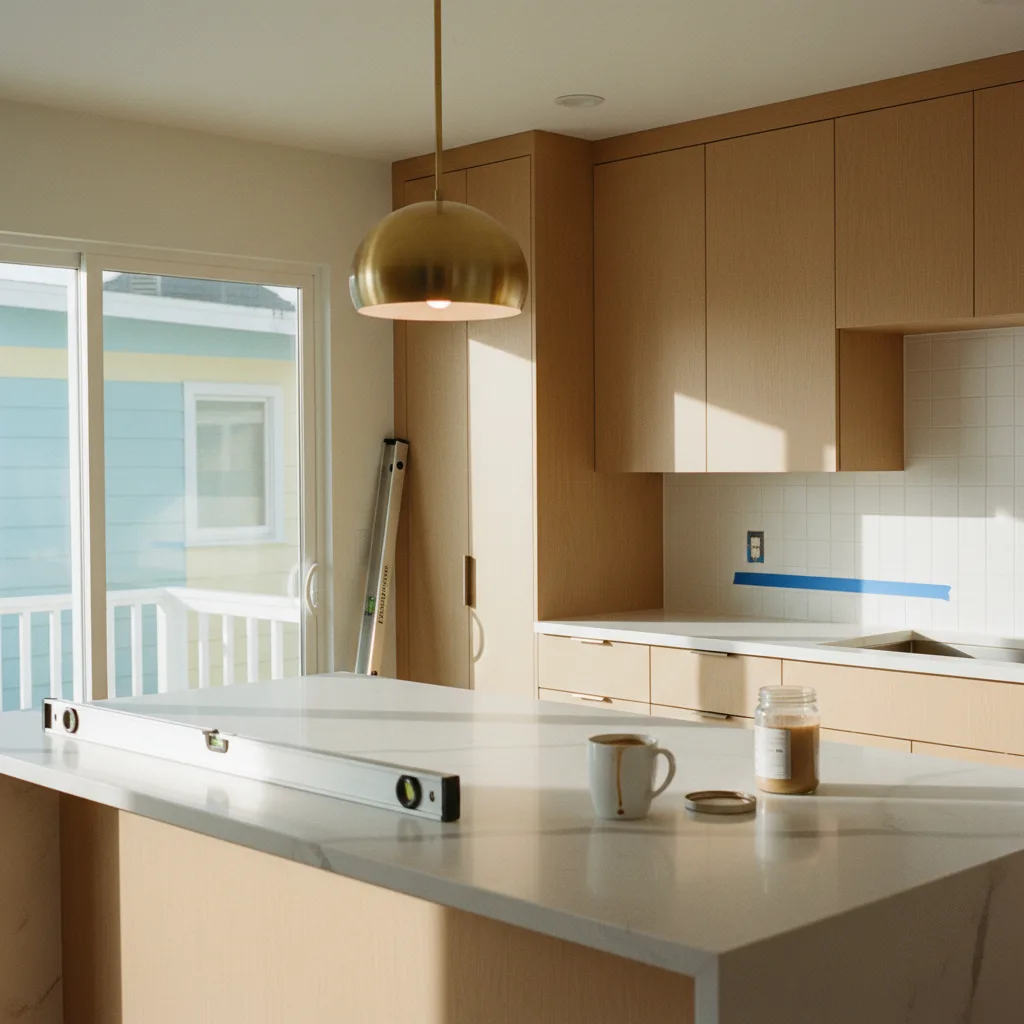
Planning a kitchen remodel in Long Beach? A full project typically runs $66,000 to $110,000 in 2026. Cosmetic refreshes start near $40,000, while premium custom work often climbs past $130,000. This is what your budget actually covers and how to find a pro who knows Long Beach permits.
The Honest 2026 Price for a Kitchen Remodel in Long Beach
As the kitchens and baths editor at Renology, I review hundreds of project invoices each year. My team’s analysis of the Long Beach market shows a clear and consistent pricing structure. While national cost estimators can be a starting point, they often fail to capture the specific economic realities of Southern California, from the high demand for skilled labor to the stringent state building codes. For a homeowner in Long Beach, this means budgeting with precision is not just a good idea, it is essential.
In 2026, the majority of full kitchen renovations in Long Beach fall within a predictable range of $66,000 to $110,000. This figure represents a complete overhaul: new cabinets, countertops, appliances, flooring, lighting, and paint. It assumes you are keeping the existing layout of plumbing and electrical fixtures. Projects on the lower end of this spectrum, around $40,000, are typically cosmetic refreshes. Think cabinet refinishing, new quartz countertops, and a classic subway tile backsplash, but not a full gut. At the premium end, starting at $130,000 and climbing to $200,000 or more, you are entering the realm of custom design. This involves structural changes like removing walls, relocating plumbing, and specifying high-end materials like custom rift-cut white oak cabinetry and integrated appliance packages from brands like Sub-Zero or Miele.
Editor's note
These costs reflect a turnkey project managed by a licensed general contractor. This includes all labor, materials, project management, insurance, and permits. Attempting to manage the project yourself by hiring individual subcontractors may seem cheaper initially, but it often leads to costly delays, coordination failures, and liability issues.
What Drives Kitchen Costs in Long Beach
See what a kitchen remodel actually costs in your Long Beach zip.
Take 4 questions →Understanding the anatomy of a bid is the first step toward a successful renovation. The total cost is a composite of several key factors, each influenced by our specific location in the greater Los Angeles area. It is not just about the cost of a quartz slab; it is about the cost of the licensed fabricator who templates, cuts, and installs it to perfection.
Labor: The Engine of Your Renovation
In Southern California, skilled labor is the single largest component of any kitchen budget, often accounting for 40 to 50 percent of the total cost. The region’s construction boom and high cost of living mean that experienced, licensed, and insured electricians, plumbers, and carpenters command a premium. According to the California Department of Industrial Relations, prevailing wages in Los Angeles County are among the highest in the nation. This is not a corner to cut. A properly installed plumbing drain or a correctly wired GFCI outlet is a matter of safety and code compliance, and quality work from a vetted professional is worth the investment.
Materials and Finishes: The Spectrum of Choice
This is where your design vision directly translates to your budget. The difference between a $60,000 kitchen and a $160,000 kitchen often comes down to the material specifications. Consider the core components:
- Cabinetry: Stock cabinets from a big-box store are the most affordable but offer limited sizes and finishes. Semi-custom cabinets provide more flexibility in style and dimension, often with durable factory-applied paint or stain. Custom cabinetry, built to your exact specifications by a local woodworker, offers unparalleled quality and design freedom, whether you envision sleek, handleless walnut fronts or classic beaded-inset doors.
- Countertops: The options are vast. Laminate is budget-friendly, while engineered quartz, like Caesarstone or Silestone, offers incredible durability and a consistent look. Natural stone is where the budget can expand significantly. A slab of common granite might be comparable to quartz, but a honed Calacatta Gold marble slab for an island can cost upwards of $15,000 installed.
- Appliances: A standard suite of stainless steel appliances from a reliable brand might cost $5,000 to $8,000. A pro-style package with a 48-inch range, a built-in refrigerator, and a whisper-quiet dishwasher from a luxury brand can easily exceed $30,000.
Permits and Professional Services
Do not forget the "soft costs." If your project involves changing the layout, you will likely need architectural plans, which can cost several thousand dollars. If you are removing a load-bearing wall, a structural engineer must be consulted. Finally, the permit fees themselves, paid to Long Beach Development Services, are a necessary part of the budget, ensuring your project is safe, legal, and properly inspected.
Long Beach Kitchens by Tier: Three Real Project Examples
To make these numbers tangible, I have tracked three distinct projects in Long Beach this past year. Each represents a different investment level and scope of work, providing a clear picture of what is achievable at each budget tier. From a simple surface-level update to a full architectural reconfiguration, these examples illustrate the trade-offs between cost, timeline, and transformation.
| Tier | Scope of Work | Cost Range | Timeline |
|---|---|---|---|
| Cosmetic Refresh | Keeping the existing layout and cabinet boxes. Scope includes professionally painting cabinets, installing new hardware, replacing countertops with pre-fabricated quartz, adding a new tile backsplash, installing a new sink and faucet, and fresh paint. | $40,000, $66,000 | 4, 7 Weeks |
| Mid-Range Gut Renovation | A full gut of the existing kitchen. Scope includes new semi-custom Shaker-style cabinets, a quartz slab island, a mid-range appliance package, new LVP flooring, updated LED lighting to meet Title 24, and all new plumbing fixtures. No major wall moves. | $66,000, $110,000 | 8, 14 Weeks |
| Premium Custom Remodel | Full gut plus structural changes, such as removing a wall to create an open-concept great room. Scope includes custom-built cabinetry (e.g., rift-cut white oak), a natural stone slab island, a pro-grade integrated appliance suite, new hardwood flooring, designer lighting fixtures, and architectural plans. | $130,000, $200,000+ | 16, 24+ Weeks |
Permits and Local Code in Long Beach
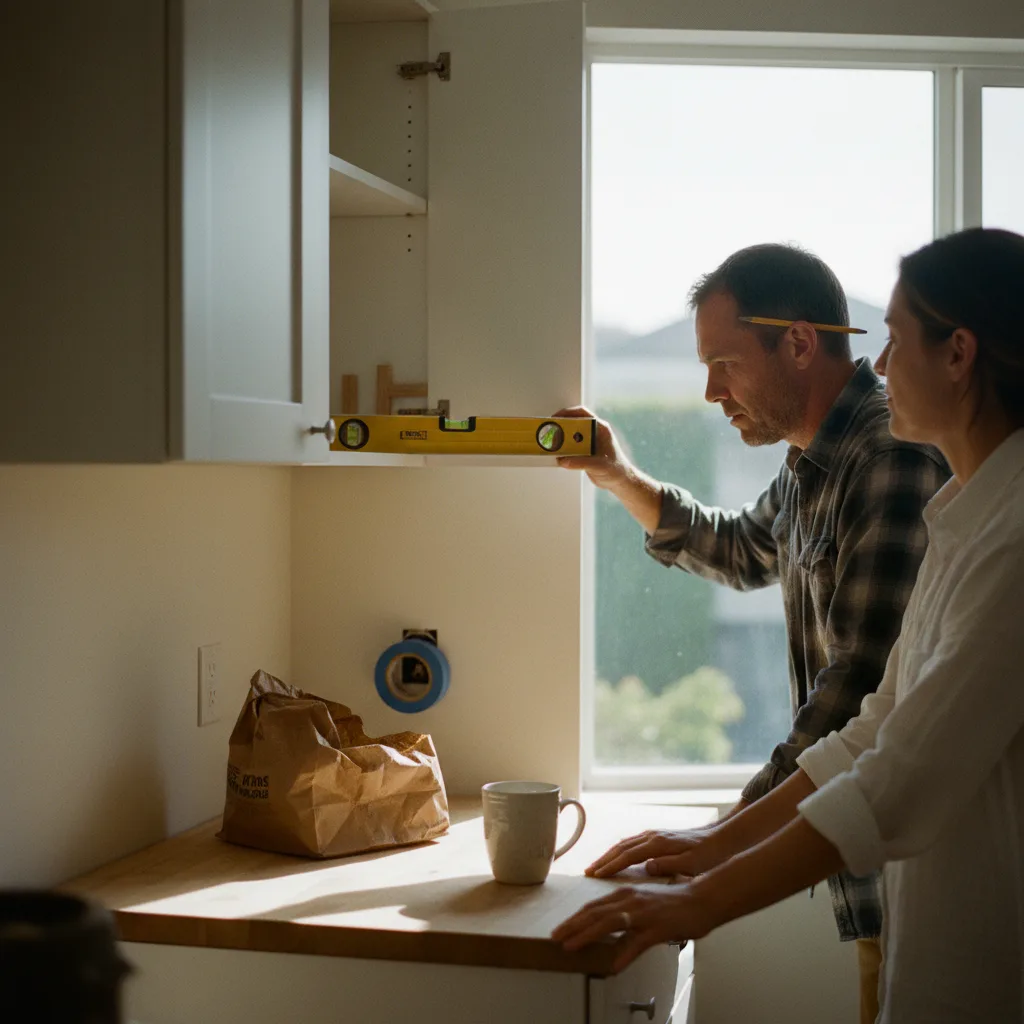
Any kitchen remodel that involves moving or adding electrical outlets, plumbing lines, or gas lines requires a permit. In Long Beach, this process is managed by Long Beach Development Services (LBDS). Ignoring this step is a significant risk; unpermitted work can lead to fines, stop-work orders, and major problems when you eventually sell your home. A qualified general contractor will handle the entire permitting process, from submitting the plans to scheduling the necessary inspections.
Pro tip
When your contractor submits plans to LBDS, ensure they are complete and detailed. Incomplete or vague plans are the number one cause of delays, as they trigger a cycle of corrections and resubmissions with the city plan checker.
Understanding California's Title 24
A key regulation that surprises many homeowners is California's Title 24 energy code. For a kitchen remodel, this has specific implications. All new lighting must be "high-efficacy," which in practice means LED. Any new windows or skylights must meet specific thermal performance standards. While it may seem like a bureaucratic hurdle, Title 24 ensures your new kitchen is more energy-efficient, which translates to lower utility bills over the long term. Your contractor and electrician should be well-versed in these requirements.
A locked-down scope of work before demolition begins is the single best predictor of a project that finishes on time and on budget.
The Long Beach Neighborhoods Where Kitchen Costs Diverge
Long Beach is not a monolith. The city’s diverse neighborhoods present unique architectural styles, lot sizes, and renovation challenges. A project’s cost and complexity can vary significantly depending on whether you are in a 1920s coastal bungalow or a 1960s suburban ranch.
Belmont Shore and Naples: Coastal Constraints
In the dense, sought-after coastal neighborhoods of Belmont Shore and Naples, homes are often older Craftsman or Spanish-style bungalows built between the 1920s and 1940s. Here, contractors frequently encounter challenges that add to the cost:
- Hidden Surprises: Decades-old plumbing and knob-and-tube wiring are common discoveries upon demolition, requiring complete system upgrades to meet modern code.
- Compact Footprints: With smaller kitchen layouts, every inch matters. This often calls for more creative, and sometimes more expensive, custom cabinetry solutions to maximize storage and functionality.
- Material Choices: Proximity to the salt air means specifying more durable, corrosion-resistant exterior materials if the remodel involves new windows or doors, such as fiberglass frames or stainless steel hardware.
Bixby Knolls and El Dorado Park: Mid-Century Opportunities
Further inland, neighborhoods like Bixby Knolls are characterized by larger mid-century modern homes and post-war ranch houses. These properties present a different set of considerations. The "bones" are often solid, but the layouts can feel dated. The primary goal for many homeowners here is creating an open-concept living space. This frequently involves removing a wall between the kitchen and dining room. While this dramatically improves flow and light, it also triggers a cascade of costs: a structural engineer's report, a new laminated veneer lumber (LVL) beam to carry the load, and more extensive flooring and drywall work to patch everything together seamlessly.
In my last walkthrough of a Cliff May-inspired ranch in El Dorado Park, the homeowner’s decision to remove a single wall added nearly $20,000 to the budget. However, the result was a stunning, light-filled great room that completely transformed how the family used their home. It was a significant investment, but one that delivered a high functional and aesthetic return.
Timeline: Realistic Week-by-Week Expectations
Patience is a renovator's greatest virtue. The construction phase you see on television is only one part of a much longer process. A well-planned kitchen remodel follows a predictable, multi-stage path. Rushing the planning phase is a recipe for expensive mid-project changes.
Important
This timeline begins *after* you have selected your contractor. Finding the right professional can take a month or more.
- Phase 1: Design and Selections (4-6 weeks): This is the crucial planning stage. You and your designer or contractor will finalize the layout, and you will select every single material: cabinets, countertops, backsplash tile, flooring, appliances, sink, faucet, and lighting. Orders for long-lead-time items, like custom cabinets and certain appliances, are placed now.
- Phase 2: Permitting (4-8 weeks): Your contractor submits the finalized plans to Long Beach Development Services. The timeline can vary depending on the complexity of your project and the city's current workload.
- Phase 3: Demolition and Rough-Ins (1-2 weeks): Once the permit is in hand, active construction begins. The old kitchen is removed, and any necessary framing changes are made. Plumbers and electricians run new lines in the open walls for the new layout. This is followed by the first city inspections.
- Phase 4: Installation Foundation (2-3 weeks): Drywall is installed, taped, and textured. The new flooring goes in, followed by the installation of the kitchen cabinets.
- Phase 5: Countertops and Finishes (2-3 weeks): A fabricator creates a precise template for your countertops. Installation happens about one to two weeks later. Once the counters are in, the backsplash can be tiled, and walls can be painted.
- Phase 6: Final Fit-Out (1-2 weeks): The final stage involves installing appliances, plumbing fixtures (sink, faucet, garbage disposal), and electrical fixtures (outlets, switches, lights). This is followed by the final city inspections. After the inspections pass, your contractor will walk through the project with you to create a "punch list" of any minor adjustments needed.
How to Vet a Long Beach Contractor
Choosing the right general contractor is the most important decision you will make. A great partner will guide you through the process, manage a complex schedule, and deliver high-quality work. A poor one can turn your dream project into a nightmare. Due diligence is non-negotiable.
Key Questions to Ask
When interviewing potential contractors, go beyond just asking for a price. A detailed conversation can reveal their professionalism, experience, and communication style.
- Can you show me your California State License Board (CSLB) number and proof of general liability and workers' compensation insurance?
- How many kitchen remodels have you completed in the Long Beach area in the last two years?
- Can I speak with three of your most recent clients?
- Who will be my primary point of contact and project manager on-site every day?
- How do you handle project changes? What does your change order process look like?
- What is not included in your bid? (This is a great question to uncover potential hidden costs).
Red Flags to Watch For
Be wary of contractors who exhibit any of these behaviors. They are often signs of inexperience, financial instability, or a lack of professionalism.
- An unusually low bid, significantly undercutting other estimates. This often means they have missed something in the scope or are using subpar labor.
- A request for a large upfront deposit. California law limits down payments to 10 percent of the contract price or $1,000, whichever is less.
- Vague or non-itemized bids. A professional bid will break down costs for labor, materials, and permits.
- High-pressure tactics or demands for an immediate decision.
- An inability or unwillingness to provide a CSLB license number, insurance certificates, or client references.
Renology Take
After analyzing thousands of kitchen projects, the most common pattern I see is a disconnect between aesthetics and ergonomics. Homeowners will spend months agonizing over the exact shade of veining in a quartz slab but only minutes thinking about the "work triangle" or the direction their refrigerator door swings open. The most successful and satisfying kitchen renovations are the ones that prioritize workflow first. Before you fall in love with a Zellige tile backsplash on Pinterest, map out your daily movements. Where do you set down grocery bags? Where is the trash and recycling pull-out in relation to your prep space? How many steps does it take to get from the sink to the stove? A beautiful kitchen that functions poorly is a design failure. Insist that your designer and contractor focus on the layout and the mechanics of use before they even present you with a finish sample. The enduring value of your new kitchen will be found in its daily ease of use, long after the novelty of the new finishes has worn off.
Sources & Methodology
These cost ranges are reconstructed from publicly available labor and permit data, the latest Remodeling Magazine cost-vs-value report, and Renology's own Project of the Day network, a rolling sample of real homeowner invoices we collect from Long Beach-area contractors. Last refreshed April 2026.
- National Association of Home Builders (NAHB) Remodeling Market Index, Q1 2026
- California Department of Industrial Relations, Los Angeles County Prevailing Wage Data, 2026
- Long Beach Development Services (LBDS) Permit Data, 2026
- Remodeling Magazine, 2026 Cost vs. Value Report
- Renology Project of the Day Network, aggregated 2026 contractor invoices in Long Beach
- California Building Standards Commission, Title 24 Energy Code
- California State License Board (CSLB) Contractor Database
Methodology
How Renology estimates kitchen costs in Long Beach.
Renology treats this page as a planning benchmark for Long Beach, California, not a final quote. We compare published local guide data, contractor scope patterns, permit-sensitive work, climate or site constraints, and finish-level assumptions.
Cost range
$66,000-110,000
Timeline
6-14 weeks
Source type
Editorial dataset
Local factor: Mediterranean (Köppen Csa): 14 inches annual rain, hot dry summers, mild winters. UV intensity is high year-round.
Use these numbers to shape a scope and spot missing line items. Confirm permits, structural work, electrical, plumbing, gas, waterproofing, drainage, and code-sensitive details with the local building department and a licensed professional.
Compare against the full Renology Cost IndexLong Beach · pre-screened
Get 3 Long Beach renovation bids in 48 hours.
Our editors already vetted Long Beach contractors. Answer 4 questions and we send 3 written bids inside 48 hours, with the real price for your scope, not their inflated first-call number.
- Free, no commission
- Pre-screened locally
- Bids inside 48 hours
Takes about 60 seconds. We'll text you when bids arrive.