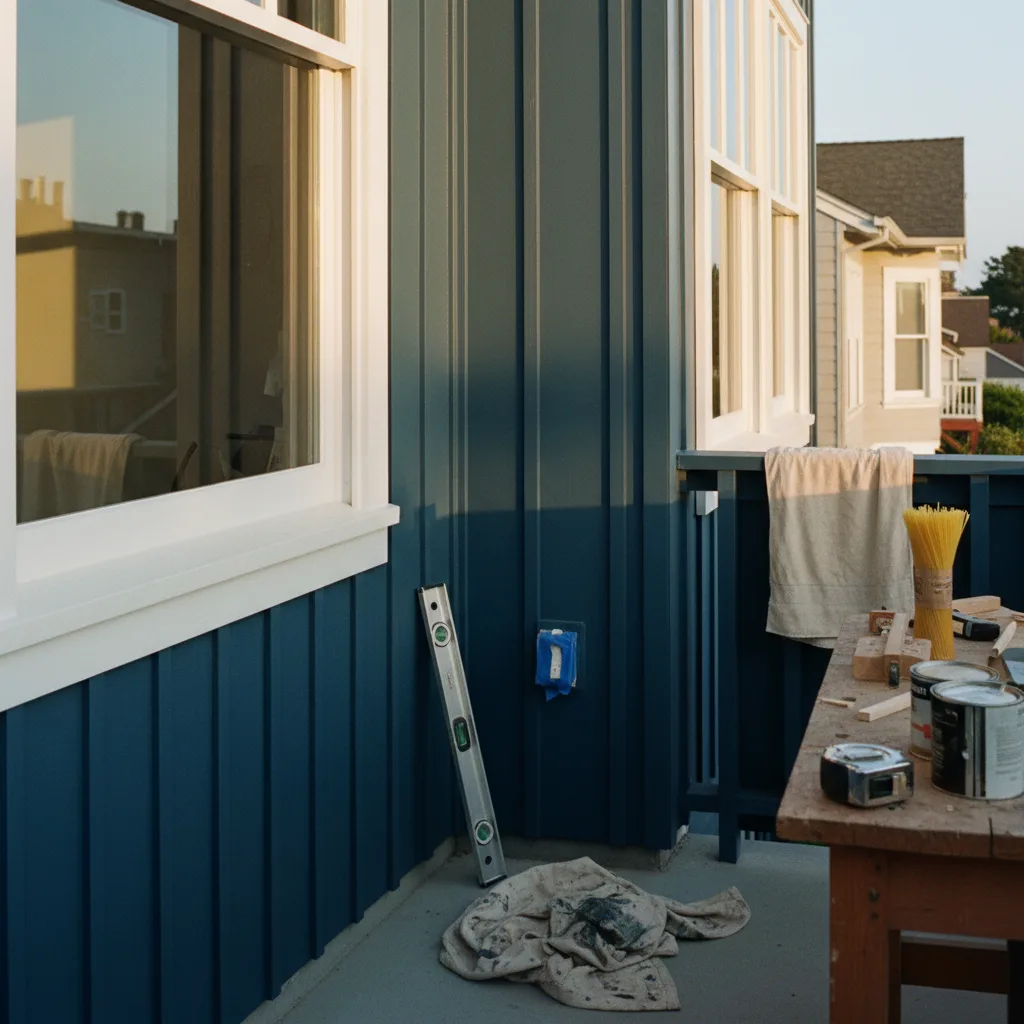
Replacing the siding on a San Francisco home costs between $22,000 and $95,000 in 2026, with most homeowners paying between $45,000 and $68,000 for a full replacement with fiber cement on a typical two-story residence. Costs can start lower, in the $14,000 to $20,000 range, for smaller townhouses, partial replacements, or simple stucco repairs. The median project cost, however, reflects the city's unique challenges, including complex logistics, high labor rates, and the frequent need for structural repairs discovered after the old siding is removed.
In a Nutshell
- Total Cost Range: $22,000, $95,000+
- Median Project Cost (Mid-Range): $56,500
- Typical Timeline: 4 to 7 weeks
- Biggest Surprise Line Item: Scaffolding and site access, which can account for 15 to 25 percent of the total project cost due to San Francisco's steep hills and dense housing.
What does siding actually cost in San Francisco?
Project costs for siding in San Francisco vary based on material choice, home size, and architectural complexity. The table below outlines three common project tiers for a 2,000-square-foot, two-story home. The bottom of the range, often cited in national estimators, typically applies to a partial replacement, a single-story home with simple geometry, or a stucco refresh, not a full replacement on a characteristic San Francisco property.
| Tier | Materials | Cost Range (2,000 sq. ft. home) | Description |
|---|---|---|---|
| Basic | Vinyl Siding / Stucco Repair & Repaint | $22,000, $38,000 | Focuses on function over aesthetics. Good for simple home styles or rental properties. Less common in historic districts. |
| Mid-Range | Fiber Cement (e.g., James Hardie) | $45,000, $68,000 | The most common choice for durability, fire resistance, and ability to mimic wood. Holds paint well in coastal fog. |
| Premium | Redwood or Cedar Shingles / High-End Stucco | $70,000, $95,000+ | Chosen for historical accuracy on Victorians or for high-end modern designs. Requires significant maintenance. |
A typical mid-range fiber cement siding project in San Francisco has the following cost distribution, according to an analysis of Renology project data:
- Labor: 45%
- Materials (Siding & Trim): 35%
- Scaffolding & Site Access: 12%
- Permits & Waste Disposal: 5%
- Sheathing & Weather Barrier: 3%
Why is it more expensive in San Francisco than the rest of the Bay Area?
Three factors drive siding costs in San Francisco significantly higher than in surrounding suburbs like Walnut Creek or San Mateo.
First, labor rates are among the highest in the nation. According to the California Department of Industrial Relations prevailing wage data for San Francisco County, the journeyman wage for carpenters, the primary trade for siding installation, is substantially higher than in adjacent counties. This premium reflects the high cost of living and operating a business within the city, directly impacting the 45 percent of your project budget allocated to labor.

Second, logistical complexity and site access are major cost drivers. Many homes in neighborhoods like Noe Valley or Bernal Heights are built on steep hills, requiring extensive and expensive scaffolding. Narrow streets, limited parking for work trucks and debris bins, and the need for daily site cleanup in dense areas add significant hours and operational costs for any siding contractor in San Francisco.
Third, regulatory and building code requirements add expense. San Francisco has numerous historic preservation districts, particularly in areas like Pacific Heights and Alamo Square. Projects in these zones require review, mandating specific materials and installation techniques to maintain historical character., all projects must adhere to strict seismic codes, which may require additional shear paneling and specific nailing patterns, and Title 24 energy efficiency standards, adding to material and inspection costs.
What do real San Francisco homeowners spend in 2026?
Three modeled project scenarios for 2026, built from the Renology Cost Index and typical local scopes. These are illustrative estimates, not completed client projects:
- Sunset District ($31,500): A 1,600 sq. ft. two-story row house required extensive stucco repair. The project involved chipping away damaged sections, repairing the underlying lathe, applying a new multi-coat stucco system, and finishing with elastomeric paint to protect against moisture intrusion from the nearby ocean. Scaffolding was only required on the front and rear facades.
- Noe Valley ($62,000): The owners of a 2,200 sq. ft. 1920s home replaced failing wood siding with pre-painted fiber cement lap siding. The cost was driven up by the need for multi-level scaffolding to work through the steep lot, extensive dry rot repair around window frames, and the installation of new shear paneling on one wall to meet current seismic requirements.
- Pacific Heights ($98,000): This project on a 3,000 sq. ft. Edwardian home involved a full replacement of deteriorated cedar shingles. To comply with historic preservation guidelines, custom-milled shingles were used. The scope included replacing intricate trim details, lead paint abatement, and specialized scaffolding that had to be carefully erected to protect mature landscaping.
Where does the money actually go?
3 San Francisco siding contractors, editor-screened. 4 questions.
See my 3 matchesA contractor's initial quote covers the basics, but the final cost often includes items discovered during demolition. Homeowners should anticipate these potential line items that are frequently excluded from the base price.
- Sub-structure Repair: $3,000, $12,000. Dry rot in framing or water damage to the wall sheathing is common in San Francisco's damp climate and is only visible after the old siding is removed.
- Lead Paint Abatement: $4,000, $10,000. Required for homes built before 1978. This involves containment, specialized removal procedures, and certified disposal.
- Complex Scaffolding: $5,000, $15,000. Standard scaffolding is in the quote, but navigating steep lots, power lines, and neighboring properties can require engineered solutions at a premium cost.
- Window and Door Trim Replacement: $3,500, $8,000. Existing trim may be damaged during siding removal or found to have its own rot issues, requiring full replacement.
- Gutter and Downspout Replacement: $2,000, $5,500. It's often more cost-effective to replace old gutters while the scaffolding is in place rather than as a separate project later.
- Permit and Inspection Fees: $1,500, $4,000. San Francisco Department of Building Inspection (SFDBI) fees can be higher than in other cities, especially if historic review is triggered.
- Waste Disposal Fees: $1,000, $2,500. The cost of a debris box and tonnage fees at the local transfer station.
What stops a San Francisco siding project from running over budget?
Three primary issues cause budget overruns on siding projects in the city. The most common is the discovery of hidden damage, such as dry rot or termite activity, once the walls are opened up. This is particularly prevalent in older housing stock. Second, scope creep, where the homeowner decides to add tasks like window replacement or exterior painting midway through the project, can significantly increase costs and extend timelines. Third, unforeseen code compliance issues, like the need for new shear walls or foundation anchoring discovered during an inspection, can add thousands to the budget. The National Association of Home Builders recommends a ten to fifteen percent contingency on renovations in homes over thirty years old. For a $55,000 siding project, this means setting aside an additional $5,500 to $8,250.
Navigating the Permit Process
Nearly all siding replacement projects in San Francisco require a permit from the SFDBI. The process ensures the work meets building, fire, and energy codes. Understanding the paperwork, inspection schedule, and potential for historic review is critical to keeping your project on track. For a complete walkthrough, see our guide: San Francisco Siding Permit Playbook 2026.
What should your San Francisco contractor include in the quote?
A detailed quote is your primary tool for comparing bids and preventing disputes. Insist that any quote from a siding contractor in San Francisco itemizes the following:
- Scope of work, including square footage of siding to be replaced.
- Exact brand, type, and color of siding materials.
- Specific type of house wrap or weather-resistive barrier to be used.
- Cost for tear-off and legal disposal of old siding materials.
- Cost for scaffolding erection and removal.
- Line items for trim, soffit, and fascia replacement.
- Labor costs, including the size of the crew and estimated duration.
- Policy and hourly rate for handling unforeseen structural repairs (e.g., dry rot).
- Cost of pulling all required SFDBI permits.
- Proof of liability insurance and workers' compensation coverage.
- Details on site cleanup procedures.
- Payment schedule tied to project milestones.
- Start date and projected completion date.
- Warranty details for both materials and labor.
Renology Take
The meta-pattern that causes the most budget and timeline issues for San Francisco siding projects is underestimating the project's logistical complexity. Homeowners often get quotes focused on materials and labor per square foot, which are national metrics, and fail to account for the “San Francisco premium.” This premium is driven by access: the cost of scaffolding on a 30-degree slope, the time spent finding parking for a work truck, the fees for a debris box permit on a public street, and the delicate work required in close proximity to neighboring homes. A successful project requires treating the job not just as a construction task, but as a complex logistical operation. The contractors who price this reality in from the start may seem more expensive, but they are often the ones who finish on time and on budget.
Sources & Methodology
Renology reviews public permit and labor signals, supplier pricing, remodeler quote patterns, comparable projects, the Renology Cost Index, and the Renology Methodology. Cost references are planning ranges for San Francisco siding projects, not fixed bids.
- Remodeling Magazine, 2026 Cost vs. Value Report (San Francisco, CA)
- National Association of Home Builders (NAHB) Remodeling Market Index, Q1 2026
- San Francisco Department of Building Inspection (SFDBI), Permit Fee Schedule, 2026
- California Department of Industrial Relations, Prevailing Wage Determinations (San Francisco County), 2026
- Bay Area Construction Cost Survey, Q2 2026
- Renology Project of the Day Network, San Francisco Data (2024-2026)
Frequently Asked Questions
How much value does new siding add to a San Francisco home?
What is the best siding material for San Francisco's climate?
Do I need a permit to replace siding in San Francisco?
How long does a typical siding project take in San Francisco?
What are the challenges of replacing siding on a historic Victorian home?
San Francisco · pre-screened
Get 3 San Francisco siding bids in 48 hours.
Our editors already vetted San Francisco siding contractors. Answer 4 questions and we send 3 written bids inside 48 hours, with the real price for your scope, not their inflated first-call number.
- Free, no commission
- Pre-screened locally
- Bids inside 48 hours
Takes about 60 seconds. We'll text you when bids arrive.
Sources
- Remodeling Magazine, 2026 Cost vs. Value Report (San Francisco, CA)
- National Association of Home Builders (NAHB) Remodeling Market Index
- San Francisco Department of Building Inspection (SFDBI), Permit Fee Schedule
- California Department of Industrial Relations, Prevailing Wage Determinations (San Francisco County)
- Bay Area Construction Cost Survey
- Renology Project of the Day Network, San Francisco Data