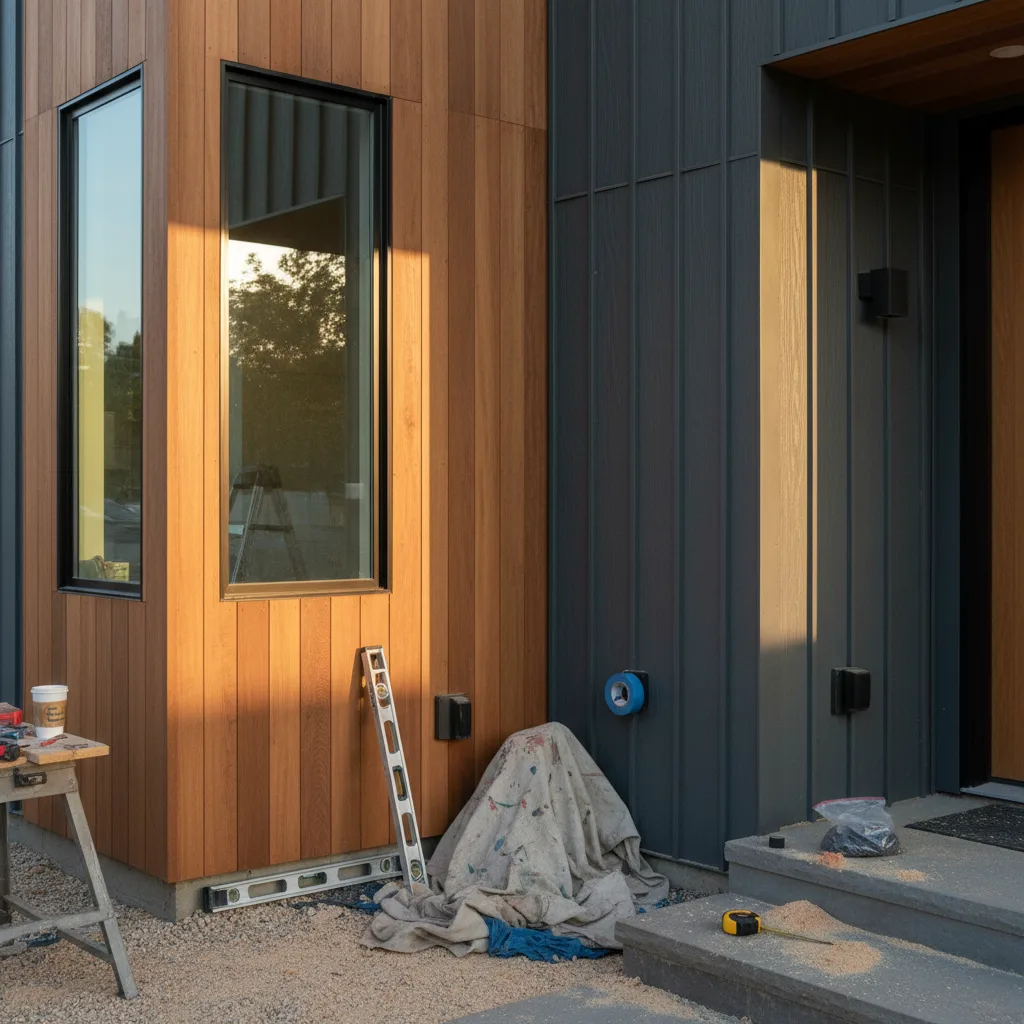
A full siding replacement for a median-sized home in Denver costs between $25,000 and $45,000 in 2026. This price reflects the common choice of fiber cement siding, prized for its resistance to the region's hail and intense sun. While a full replacement on a typical two-story home lands in this range, smaller projects can start lower. Siding repair or replacement on a smaller townhome, for instance, can begin closer to $9,000. These figures are based on an analysis of material costs and local labor rates for the Denver metro area.
In a Nutshell
- Total Cost Range: $9,000 to $75,000+
- Typical Mid-Range Project: $28,000, $42,000 for fiber cement siding on a 2,000 sq. ft. home.
- Project Timeline: Two to four weeks, depending on home size and extent of substrate repairs.
- Most Common Surprise Cost: Repairing rotted sheathing and wall studs discovered after old siding is removed, which can add $3,000 to $8,000 to the final bill.
What does siding actually cost in Denver?
The total cost of a siding project in Denver is driven primarily by the material selected and the complexity of the home's architecture. Below is a breakdown for a typical 2,000-square-foot, two-story house.
| Tier | Siding Type | Installed Cost Range | Best For |
|---|---|---|---|
| Basic | Vinyl Siding | $18,000, $28,000 | Budget-conscious projects where impact resistance is a lower priority. |
| Mid-Range | Fiber Cement (e.g., James Hardie) | $25,000, $45,000 | The Denver standard; excellent durability against hail, fire, and pests. |
| Premium | Engineered Wood, Composite, or Steel | $40,000, $75,000+ | High-end aesthetics with maximum durability and minimal maintenance. |
For a mid-range fiber cement project, the budget allocation is typically as follows, according to data from Renology's contractor network:
- Materials (Siding, Trim, House Wrap): 45%
- Labor: 35%
- Removal & Disposal of Old Siding: 8%
- Supplies (Fasteners, Flashing, Sealant): 5%
- Permits & Fees: 4%
- Contractor Overhead & Profit: 3%
The bottom of the cost range, around $9,000 to $15,000, typically applies to partial siding replacements, small single-story homes, or townhomes where only one or two exterior walls are being addressed.
Why is siding more expensive in Denver than surrounding regions?
Three primary factors contribute to higher siding costs in the Denver metro area compared to national figures or less demanding climates.
1. Labor Rates and Skill Demand
Skilled labor is the second-largest component of a siding budget. According to the Colorado Department of Labor and Employment for the Denver-Aurora-Lakewood MSA, experienced siding installers command higher wages than in many other parts of the country. The demand for crews proficient in installing heavier, more technical materials like fiber cement and engineered wood, which are necessary for Denver's climate, further constricts the labor pool and supports these higher rates. A typical siding crew's daily rate can range from $1,200 to $2,000.

2. Climate-Driven Material Requirements
Denver's high altitude, intense UV exposure, dramatic temperature swings (freeze-thaw cycles), and frequent hailstorms render basic vinyl siding a less viable long-term option. Homeowners and builders overwhelmingly choose more solid, and therefore more expensive, materials. Fiber cement siding costs 40-60% more than standard vinyl, while engineered wood or steel can be two to three times the price. This material premium is a non-negotiable part of building a durable exterior in the Front Range.
3. Neighborhood Logistics and Premiums
Operating costs for a siding contractor denver are higher in certain neighborhoods. In dense areas like Washington Park or Cherry Creek, logistical challenges such as limited street parking for dumpsters and equipment, tighter lot lines requiring more careful site management, and stricter noise ordinances increase labor hours and overall project costs. These factors can add 5-10% to the final invoice compared to projects in more spacious suburban developments in areas like Centennial or Littleton where site access is straightforward.
What do real Denver homeowners spend in 2026?
To provide a clear picture of siding cost in Denver, here are Three modeled project scenarios for 2026, built from the Renology Cost Index and typical local scopes. These are illustrative estimates, not completed client projects:
- Washington Park Bungalow (1,600 sq. ft.): This project involved removing old, damaged wood siding and replacing it with pre-finished fiber cement lap siding. The crew discovered moderate rot in the sheathing around two windows, requiring an additional $3,200 in structural repairs. The all-in cost, including new trim and soffits, was $36,800.
- Highlands Ranch Two-Story (2,400 sq. ft.): The homeowner upgraded from builder-grade vinyl to a premium engineered wood siding for better aesthetics and hail resistance. The project included replacing all gutters and downspouts as part of the scope. The total project cost, including the enhanced materials and gutter work, came to $51,500.
- Stapleton Modern Home (2,100 sq. ft.): This home featured a mix of materials. The owner replaced failing stucco sections with sleek metal accent siding and replaced the remaining original fiber cement panels that had sustained hail damage. The complexity of integrating multiple materials brought the total cost to $44,200.
Where does the money actually go?
3 Denver siding contractors, editor-screened. 4 questions.
See my 3 matchesA contractor's initial quote often covers the basics of tear-off and installation. However, several other line items frequently appear once work begins. Homeowners should be aware of these potential costs.
- Substrate and Framing Repair: $2,000, $8,000. This is the most common hidden cost, involving the replacement of water-damaged OSB sheathing or wall studs.
- Upgraded Weather-Resistive Barrier (WRB): $1,500, $3,000. Moving from standard house wrap to a more advanced fluid-applied or self-adhered membrane for superior air and water control.
- Lead Paint Abatement: $2,500, $7,000. For homes built before 1978, EPA-certified lead-safe work practices are required for removal and disposal, adding significant labor and compliance costs.
- Fascia and Soffit Replacement: $2,000, $6,500. Often, the wood behind the gutters and under the eaves has also sustained water damage and requires replacement.
- Window and Door Trim Capping or Replacement: $1,800, $4,000. Wrapping existing wood trim in aluminum or replacing it with composite material to match the new siding.
- Permit Fees and Plan Review: $600, $1,800. The cost charged by the Denver Community Planning and Development department for reviewing and approving the project.
- Waste Hauling and Disposal Fees: $700, $1,400. The cost of a roll-off dumpster and landfill tipping fees for the old siding and construction debris.
What stops a Denver siding project from running over budget?
Three main issues typically cause budget overruns on siding replacements in Denver.
- Discovery of Hidden Damage: The number one cause of budget increases is finding extensive rot, insect damage, or structural issues after the original siding is removed. A thorough initial inspection can help, but some problems are impossible to see until demolition.
- Scope Creep: Homeowners often decide to add related work “while you’re at it.” This includes replacing windows, adding exterior lighting, or painting trim that wasn't in the original contract. Each addition expands the budget and timeline.
- Material or Finish Upgrades: Changing your mind on a siding color, profile, or material type after the initial order can lead to restocking fees and higher material costs, especially for special-order items.
To prepare for these possibilities, it is wise to hold a contingency fund. The National Association of Home Builders recommends a ten to fifteen percent contingency on renovations in homes over thirty years old.
Navigating Denver Siding Permits
A building permit is almost always required for a full siding replacement in Denver, as it is considered an alteration to the building's exterior envelope. Navigating the Denver Community Planning and Development department's requirements can be complex. You can find the full process in our Denver siding permit playbook for 2026, which details the necessary drawings, forms, and inspection sequences.
What should your Denver contractor include in the quote?
A detailed, professional quote is the foundation of a successful project. Ensure your siding contractor denver provides a document that explicitly lists the following:
- The specific brand, product line, and color of the siding and trim materials.
- A clear breakdown of costs for materials versus labor.
- The scope of tear-off and disposal for the existing siding.
- The type of house wrap (weather-resistive barrier) to be installed.
- Detailed plans for flashing around windows, doors, and rooflines.
- Scope of work for soffits, fascia, and any other trim elements.
- Mention of how gutters and downspouts will be handled (removed and reinstalled, or replaced).
- Painting or finishing requirements for any new materials.
- Responsibility for acquiring and posting the city permit.
- A clear payment schedule tied to project milestones.
- An estimated start date and project duration.
- Proof of liability insurance and workers' compensation coverage.
- The contractor's license number.
- A clear description of the warranty, covering both materials and labor.
Renology Take
The most significant pattern we observe in Denver siding projects is a homeowner focus on the cost per square foot of the visible siding panel, while underestimating the importance of the complete wall assembly. A siding job is not just about the panels; it is a system comprising the sheathing, a weather-resistive barrier, proper flashing, and the cladding itself. Cheaper bids often cut corners on these less-visible components, such as using lower-grade house wrap or failing to properly tape seams and flash openings. This compromises the entire system, trapping moisture and leading to rot that can cost tens of thousands of dollars to remediate. The true cost of a siding project is not the initial price, but the long-term performance of the entire exterior envelope. Prioritizing the quality of the installation and the underlying layers over the price of the panel itself prevents far greater expenses down the road.
Sources & Methodology
Renology reviews public permit and labor signals, supplier pricing, remodeler quote patterns, comparable projects, the Renology Cost Index, and the Renology Methodology. Cost references are planning ranges for Denver siding projects, not fixed bids.

- Remodeling Magazine: 2025 Cost vs. Value Report (Projections to 2026)
- National Association of Home Builders (NAHB), Remodeling Market Index, Q1 2026
- Colorado Department of Labor and Employment, Denver-Aurora-Lakewood MSA Occupational Employment and Wage Statistics, 2025 Data
- Denver Community Planning and Development, Residential Permit Fee Schedule, 2026
- Home Innovation Research Labs, Annual Builder Practices Survey, 2025
- Renology Project of the Day Network, Denver Metro Analysis, 2025-2026
- Journal of Light Construction, Siding & Exterior Trim Cost Guide, 2025 Edition
Frequently Asked Questions
How much does fiber cement siding cost in Denver?
Does new siding increase home value in Denver?
How long does it take to replace siding on a Denver house?
What is the best siding material for Denver's hail and sun?
Do I need a permit to replace siding in Denver?
Denver · pre-screened
Get 3 Denver siding bids in 48 hours.
Our editors already vetted Denver siding contractors. Answer 4 questions and we send 3 written bids inside 48 hours, with the real price for your scope, not their inflated first-call number.
- Free, no commission
- Pre-screened locally
- Bids inside 48 hours
Takes about 60 seconds. We'll text you when bids arrive.
Sources
- Remodeling Magazine: 2025 Cost vs. Value Report (Projections to 2026)
- National Association of Home Builders (NAHB), Remodeling Market Index
- Colorado Department of Labor and Employment, Denver-Aurora-Lakewood MSA Occupational Employment and Wage Statistics
- Denver Community Planning and Development, Residential Permit Fee Schedule
- Home Innovation Research Labs, Annual Builder Practices Survey
- Renology Project of the Day Network, Denver Metro Analysis
- Journal of Light Construction, Siding & Exterior Trim Cost Guide, 2025 Edition