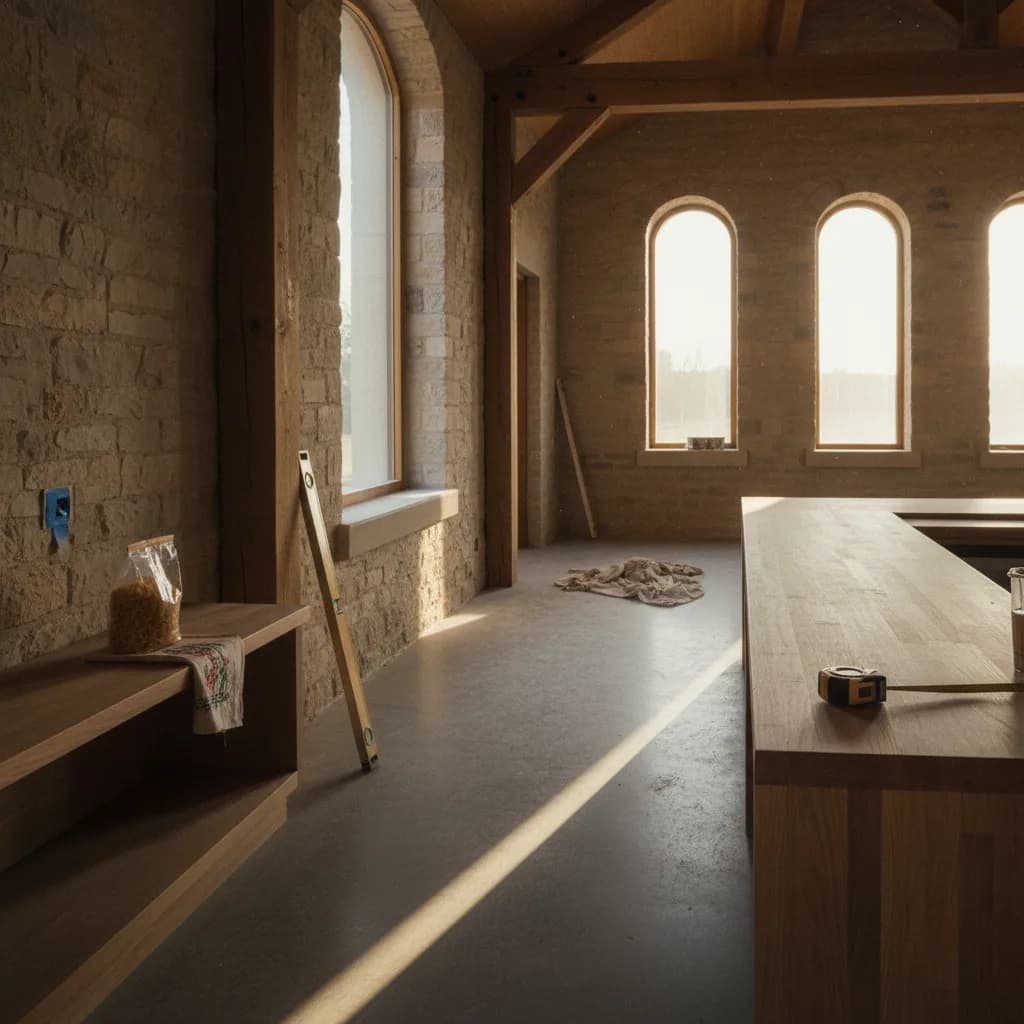
Read the allowance, the included work, and the exclusions separately
Illustrative example, not a customer quote or a price benchmark.
“Tile supply allowance: $1,200. Installation included. Shower glass excluded.”
The allowance is a budget placeholder for tile selection. Ask how a higher or lower selection changes the total. “Installation included” needs a defined scope: ask whether preparation, waterproofing, and disposal are included. Shower glass needs a separate price because this example explicitly excludes it.
Before comparing totals, ask each contractor to clarify those same items in writing. Check your own quote for scope gaps, then use the section-by-section guide below to prepare follow-up questions.
In this episode, we're tackling the one document that stands between your design dreams and demolition day: the contractor's quote. It's the question every American homeowner asks: what does this all mean, and is this a fair price? A recent National Association of Home Builders survey found that over 40% of homeowners feel overwhelmed by the format of a typical estimate. We'll break it down, line by line, so you can tell a detailed scope of work from a vague and risky proposal. We will show you how to read a contractor estimate with confidence. While major kitchen renovations can easily exceed $100,000 in many markets, remember that smaller cosmetic updates and condo projects can start lower.
What This Episode Is About
If you take three things away from our conversation today, let them be these key insights into the world of contractor bids.
- How to decode the key sections of any contractor quote, from the detailed scope of work and payment schedule to the allowances and exclusions.
- The critical difference between a fixed-price line item and a flexible allowance, and why that distinction can make or break your entire project budget.
- The most important questions to ask your contractor before you sign anything, ensuring total clarity and protecting your home and financial investment.
Learning how to read a contractor estimate involves three key steps. First, scrutinize the 'Scope of Work' for specific details on tasks and materials. Second, verify the 'Allowances' for items like tile and fixtures to ensure they align with your taste and budget. Finally, carefully review the 'Exclusions' section to understand what is not included.
The Real Numbers (National Picture)
Before we break down the document itself, let's ground ourselves in the financial reality of remodeling in 2026. Costs vary based on region, material choices, and project complexity, but national averages provide a helpful starting point. A significant portion of any budget, often 40% to 50%, is dedicated to skilled labor, with the remainder going to materials, permits, and overhead. Three modeled project scenarios for 2026, built from the Renology Cost Index and typical local scopes. These are illustrative estimates, not completed client projects:
- Mid-range Minor Kitchen Remodel: $25,000 to $45,000. This is often a cosmetic refresh, including cabinet refacing, new solid-surface or entry-level quartz countertops, a new sink, and updated lighting. You can find more details in our guide to kitchen remodel costs.
- Mid-range Major Kitchen Remodel: $75,000 to $150,000. This involves a full gut demolition, new semi-custom cabinets, stone countertops, a full suite of new appliances, and potentially moving plumbing or electrical lines to improve the work triangle.
- Upscale Major Kitchen Remodel: $150,000 to $250,000+. Here you'll find custom cabinetry in finishes like rift-cut white oak, premium countertops like honed quartzite, professional-grade appliances, and significant structural changes.
- Mid-range Bathroom Remodel: $20,000 to $40,000. This covers a standard 5x8 foot bathroom with a new vanity, toilet, and a reglazed or new tub with a tile surround. Our bathroom remodel cost guide provides a deeper look.
- Upscale Bathroom Remodel: $70,000 to $100,000+. This could include expanding the footprint, adding a steam shower, a freestanding tub, custom tile work, and high-end fixtures in finishes like unlacquered brass.
What Most Homeowners Get Wrong About This
The single biggest mistake a homeowner can make is comparing multiple contractor bids based only on the bottom-line price. It's a natural impulse, but it's a trap. A cheap quote is often a vague quote, and vagueness is the enemy of a successful renovation. An artificially low number may look appealing, but it often hides significant risks that lead to expensive change orders and budget overruns down the road.
A great quote is not just a price; it's a detailed project plan. A low bid is often missing critical information in three areas. First, a vague scope of work that doesn't specify material grades or installation methods. Second, unrealistic allowances for finishes that don't match your expectations. Third, missing line items for necessary work like demolition, debris removal, or daily site cleanup. These omissions will inevitably reappear as extra costs later. A higher, more detailed bid is almost always the more honest and realistic one. The National Association of Home Builders recommends a ten to fifteen percent contingency on renovations in homes over thirty years old for exactly these kinds of surprises.
The 3 Questions Every Homeowner Should Ask
3 pros, editor-screened. 4 questions.
See my 3 matchesOnce you have a detailed quote in hand, your work isn't done. Now it's time to interview the contractor behind the numbers. A quote can tell you a lot about their process, but a direct conversation reveals their communication style and professionalism. Here are three questions you must ask before signing any contract.
1. Can you walk me through your payment schedule and what project milestones trigger each payment?
Why this matters: This question protects your cash flow and ensures you are only paying for work that has been completed. It's a key indicator of a contractor's financial stability and project management skills.
What a good answer sounds like: "Our payments are tied to tangible progress. For example, a payment is due after demolition is complete, another after rough-in inspections pass, and so on. We avoid schedules based on arbitrary dates."

2. What is your formal process for handling change orders?
Why this matters: Changes are a normal part of almost any renovation. What matters is having a clear, predictable process for documenting and approving them to avoid disputes and surprise costs.
What a good answer sounds like: "Any change you request, or any unforeseen issue we discover, will be documented in a written change order. It will detail the new scope and cost, and we will not proceed with the work until you have reviewed and signed it."
3. Who is my primary point of contact, and how will we communicate?
Why this matters: Clear, consistent communication is the foundation of a low-stress project. You need to know who is responsible for answering your questions and providing daily updates.
What a good answer sounds like: "You'll have a dedicated project manager who will be on-site daily. You'll have their direct cell number, and we use a project management app to share daily logs and photos." We cover the documentation part of this in our national permit playbook.
What Changed in 2026
The remodeling landscape is always shifting, and the last couple of years have brought significant changes that affect your project and your contractor's quote. The interest rate environment has stabilized from the volatility of 2023 and 2024, making financing options like HELOCs more predictable for homeowners. This stability gives both homeowners and contractors more confidence in planning large-scale projects.
On the material front, supply chains have largely normalized. The long lead times for items like European cabinet hardware, specific brands of quartz countertops, and high-end appliances have shortened considerably, allowing for more accurate timelines in project planning. We're also seeing the Inflation Reduction Act (IRA) make a real impact on quotes. It's now common to see line items for energy-efficient upgrades like induction cooktops, heat pump water heaters, and improved insulation, often with notes about their eligibility for federal tax credits.
Looking ahead to 2027, the industry is preparing for the next cycle of building code updates. We expect these to continue the push toward electrification and require enhanced fire-resistant materials and construction methods, particularly in western states. These changes will influence project costs and material specifications in the coming years.
The Renology Take
A contractor's quote is more than a list of prices. It's a story about your future project and a reflection of the person you are about to partner with. For too long, homeowners accepted vague, one-page estimates as standard practice. I'm here to say that the minimalist decade is over. The most important trend in residential construction isn't a material like rift-cut white oak or a technology like smart lighting. It's transparency.
A detailed, multi-page quote that breaks down labor, materials, allowances, and profit isn't an inconvenience; it's a sign of respect. It shows that the contractor has thought deeply about your project, anticipated challenges, and created a realistic roadmap. The meta-pattern we see is that the best project outcomes don't come from the cheapest bid, but from the most thorough one. The most important line item on any quote isn't cabinetry or countertops. It's trust. And trust is built through detail.
Sources & Methodology
See the Renology Methodology for how sources are reviewed, ranges are normalized, and planning-data limits are handled.
- Remodeling Magazine: 2026 Cost vs. Value Report
- National Kitchen & Bath Association (NKBA): 2026 Market Outlook
- National Association of Home Builders (NAHB): Remodeling Market Index (RMI), Q1 2026
- U.S. Census Bureau: American Housing Survey, 2025 Data Release
- U.S. Bureau of Labor Statistics (BLS): Construction Occupational Employment and Wages, May 2025
- U.S. Department of Energy: Inflation Reduction Act (IRA) Home Energy Rebate Programs
- Renology Editorial Methodology and Project of the Day Data Analysis
Frequently Asked Questions
What is the difference between an estimate and a quote?
What is a typical allowance for kitchen countertops?
How should I compare multiple contractor bids?
Is a large down payment a red flag?
Ready to find a pro?
Tell us about your project and location. A Renology advisor can help you explore contractor matching.
Free for homeowners. No obligation to hire.
Find a ProSources
- Remodeling Magazine: 2026 Cost vs. Value Report
- National Kitchen & Bath Association (NKBA): 2026 Market Outlook
- National Association of Home Builders (NAHB): Remodeling Market Index (RMI)
- U.S. Census Bureau: American Housing Survey
- U.S. Bureau of Labor Statistics (BLS): Construction Occupational Employment and Wages
- U.S. Department of Energy: Inflation Reduction Act (IRA) Home Energy Rebate Programs
- Renology Editorial Methodology and Project of the Day Data Analysis
Follow Renology on Google
Choose Renology as a preferred source and our guides show up more often in your Google results, including Top Stories and AI Overviews.