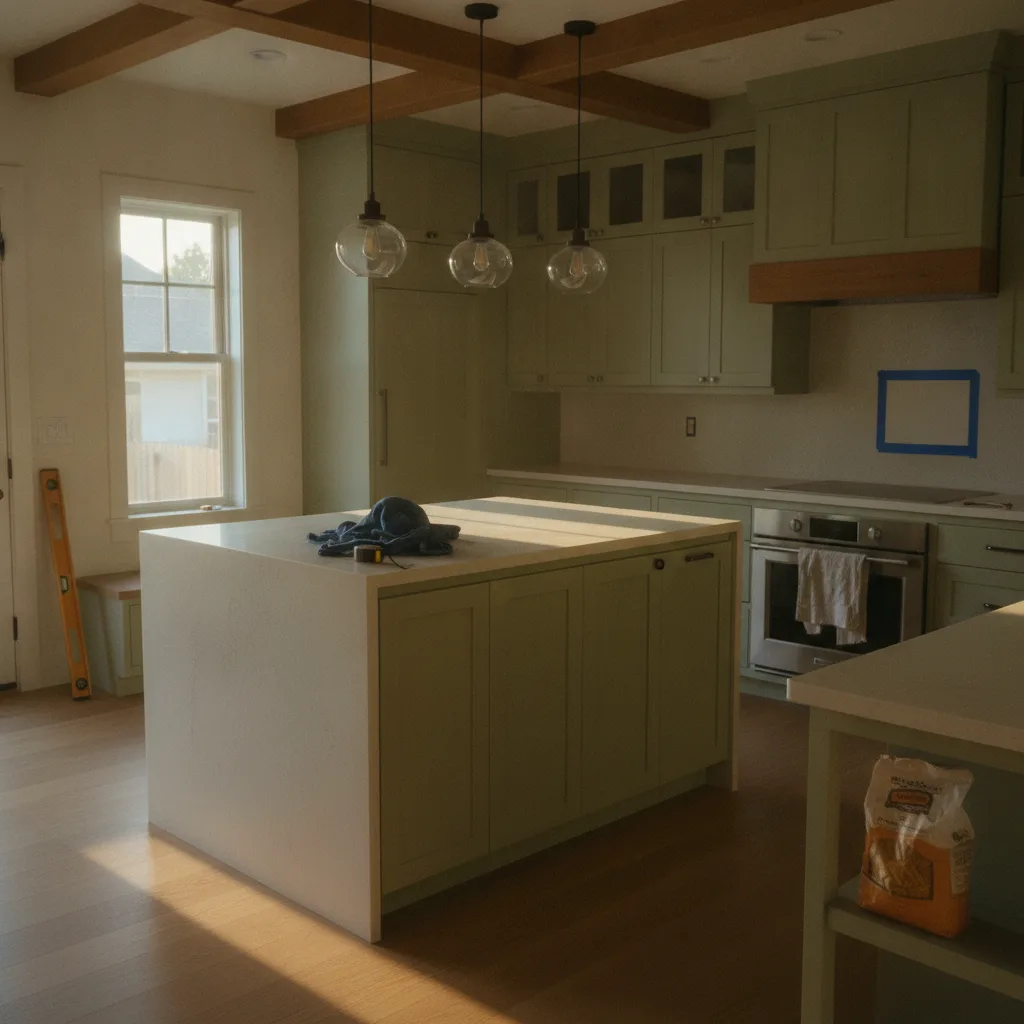
A complete kitchen remodel in Sacramento costs between $75,000 and $130,000 for a mid-range project in a single-family home, with upscale renovations easily exceeding $225,000 in 2026. These figures, derived from an analysis of local contractor bids and material costs, reflect a full gut renovation. Costs can start lower, in the $35,000 to $55,000 range, for cosmetic updates, galley kitchens in condos, or projects where the existing layout is preserved. For most homeowners in the Sacramento metro, however, the median project expenditure for a functional and aesthetically updated space falls squarely in the upper five figures.
In a Nutshell
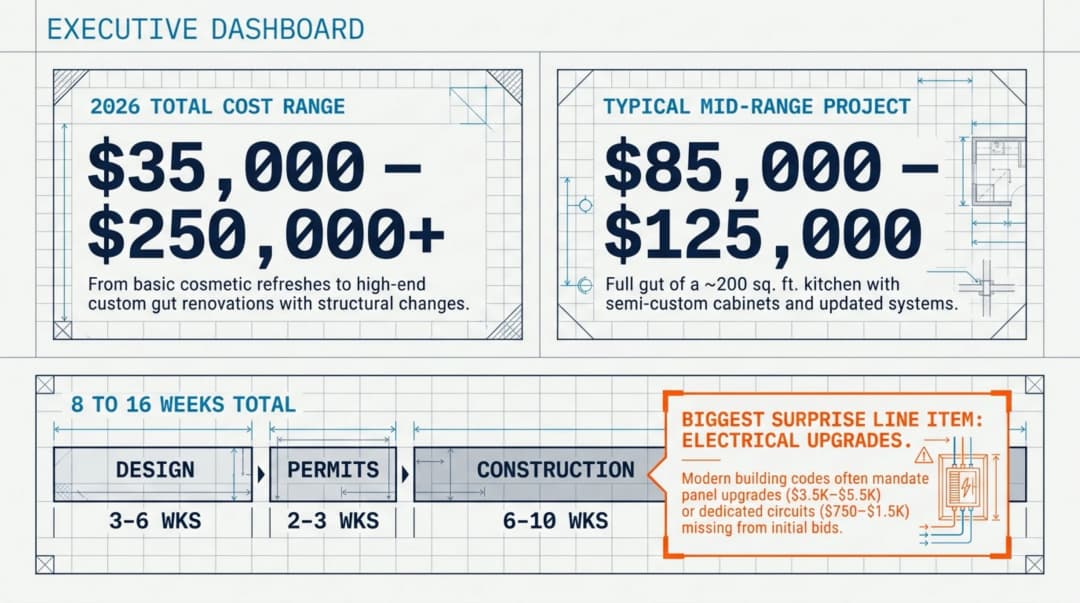
- Total Cost Range: $35,000 to $250,000+. A basic cosmetic refresh sits at the low end, while a high-end, custom gut renovation with structural changes defines the upper limit.
- Typical Mid-Range Project: $85,000, $125,000. This scope typically includes semi-custom cabinets, quartz countertops, new appliances, updated plumbing and electrical, and new flooring for a 200-square-foot kitchen.
- Project Timeline: 8 to 16 weeks. This includes three to six weeks for design and material selection, two to three weeks for permitting, and six to ten weeks for active construction.
- Biggest Surprise Line Item: Electrical system upgrades. Many bids for kitchen remodels in Sacramento's older housing stock fail to budget for a panel upgrade ($3,500, $5,500) or dedicated circuits for new appliances ($750, $1,500), which are often required by modern building codes.
What does a kitchen remodel actually cost in Sacramento?
The final cost of a Sacramento kitchen remodel is determined by three factors: the size of the space, the quality of materials, and the scope of structural changes. We have segmented project costs into three common tiers based on Renology's analysis of local project data. These ranges account for all materials, labor, and project management fees.
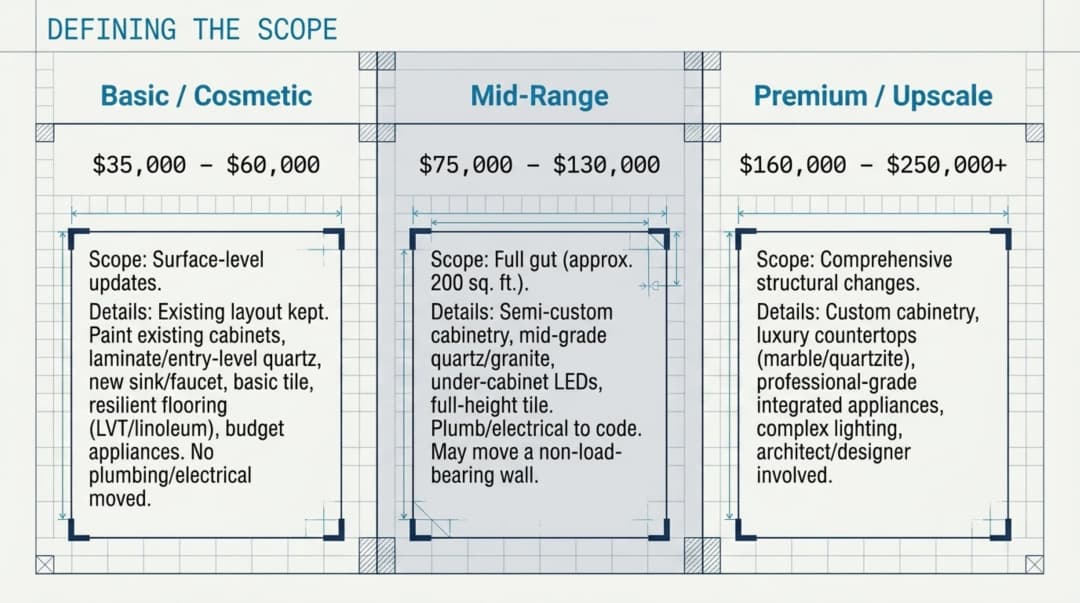
| Tier | Cost Range (2026) | Typical Scope |
|---|---|---|
| Basic / Cosmetic | $35,000, $60,000 | Focuses on surface-level improvements within the existing layout. Includes painting existing cabinets, installing a new laminate or entry-level quartz countertop, a new sink and faucet, a basic tile backsplash, new resilient flooring (LVT or linoleum), and replacing appliances with budget-friendly models. No plumbing or electrical is moved. This tier is common for rental property updates or preparing a home for sale. |
| Mid-Range | $75,000, $130,000 | A full gut remodel of a kitchen around 200 square feet. This includes semi-custom cabinetry, mid-grade quartz or granite countertops, a new undermount sink, and a full-height tile backsplash. It covers all new mid-range, energy-efficient appliances, including a ventilation hood. New lighting, including under-cabinet LEDs, is installed, and plumbing and electrical are updated to code. It may involve moving a non-load-bearing wall to improve flow. |
| Premium / Upscale | $160,000, $250,000+ | A comprehensive renovation often involving structural changes like removing load-bearing walls, relocating windows, or expanding the kitchen's footprint. Features high-end custom cabinetry with premium hardware, luxury countertops like marble or high-grade quartzite, and professional-grade, integrated appliances. Includes complex lighting design, high-end plumbing fixtures, and premium flooring like hardwood or natural stone. Often involves an architect or interior designer. |
For a typical mid-range project costing $95,000, the budget allocation is approximately:
- Cabinetry & Hardware: 33% ($31,350)
- Labor & Installation: 22% ($20,900)
- Appliances & Ventilation: 14% ($13,300)
- Countertops: 11% ($10,450)
- Plumbing & Electrical: 10% ($9,500)
- Flooring: 5% ($4,750)
- Lighting & Finishes: 5% ($4,750)
The bottom-of-range case, such as a $35,000 cosmetic refresh in a Midtown condo, is not representative of a full remodel. It involves keeping the existing kitchen layout and major systems intact while upgrading visible surfaces.
Why is a kitchen remodel more expensive in Sacramento than in the Central Valley?
While Sacramento offers a lower cost of living than the Bay Area, its construction costs are significantly higher than those in surrounding Central Valley communities. Three primary factors drive this price differential: skilled labor rates, regulatory complexity, and neighborhood-specific market pressures.
First, labor costs are the most significant driver. The demand for qualified, licensed, and insured tradespeople in the growing Sacramento metro area outstrips supply. According to the California Department of Industrial Relations prevailing wage data for Sacramento County, the total hourly compensation for a journeyman carpenter is between $98 and $115, and a licensed general electrician is between $110 and $145. These rates, which include wages, benefits, and overhead, are 15-25% higher than in adjacent counties like San Joaquin or Yuba. A kitchen remodel requires a coordinated team of at least five to seven different trades, and these premium labor costs are embedded in every phase of the project.
Second, material and logistical costs contribute to the higher price tag. Sacramento is an inland hub, and while it has good distribution networks, most high-end finishes, custom cabinetry, and specialized appliances are shipped from manufacturers or distributors in the Bay Area or Southern California. This adds a 5-8% freight premium compared to projects closer to major ports., California's Title 24 Building Energy Efficiency Standards impose strict requirements on lighting, insulation, and appliance performance. Compliance requires higher-specification, and thus more expensive, products that add several thousand dollars to a project's material budget compared to states with less stringent energy codes.
Finally, property values and homeowner expectations in specific neighborhoods create a price premium. Contractors working in affluent areas like Land Park, East Sacramento, or the wealthier suburbs of Granite Bay and Folsom often build higher overhead and management costs into their bids. This reflects expectations for a higher level of finish, more intensive project management, and greater insurance coverage. The cost of doing business, including permits and insurance, is simply higher in these markets, and that is reflected in the final quote to the homeowner.
What do real Sacramento homeowners spend in 2026?
To provide a clearer picture of actual project costs, we analyzed several recent kitchen remodels. Three modeled project scenarios for 2026, built from the Renology Cost Index and typical local scopes. These are illustrative estimates, not completed client projects:
Project 1: 1940s Bungalow in East Sacramento
- Total Cost: $98,500
- Scope: This was a full gut remodel of a 180-square-foot kitchen that had not been updated in over 30 years. The project involved removing a non-load-bearing wall between the kitchen and dining nook to create a more open feel. The homeowners selected semi-custom shaker-style cabinets, quartz countertops, and a classic subway tile backsplash. All plumbing and electrical systems were replaced, including running a new gas line for the range and adding four dedicated circuits to support modern appliances. The original hardwood floors were refinished to match the rest of the home.
- Key Takeaway: Working within the constraints of an older home added complexity. The discovery of knob-and-tube wiring during demolition required a $4,200 change order for a full rewire of the room, a cost not included in the initial bid but covered by the homeowner's contingency fund.
Project 2: 1990s Tract Home in Folsom
- Total Cost: $122,000
- Scope: The owners of this 2,500-square-foot home wanted to update their dated, builder-grade kitchen and improve its functionality for a large family. The 250-square-foot space was reconfigured by removing a clumsy peninsula and adding a large central island with seating and a prep sink. The project featured higher-end semi-custom cabinets, a quartzite countertop on the island, and a suite of high-performance appliances. Extensive lighting upgrades included recessed ceiling lights, under-cabinet task lighting, and statement pendant lights over the island.
- Key Takeaway: The project's cost was driven by the scale of the space and the higher-end material and appliance selections. The addition of a second sink in the island added approximately $3,800 in plumbing labor and materials.
Project 3: 2000s Condo in Midtown Sacramento
- Total Cost: $74,000
- Scope: This project focused on maximizing style and efficiency in a compact 120-square-foot galley kitchen. The layout was maintained to control costs, but all finishes were upgraded to a premium level. The remodel featured custom European-style flat-panel cabinets to maximize storage, integrated appliances for a smooth look, and a durable porcelain slab countertop and backsplash. New engineered hardwood flooring was installed, and the lighting was updated with sleek, low-profile fixtures.
- Key Takeaway: Even without structural changes, costs can be substantial when prioritizing high-end materials in a small space. Logistical challenges of working in a condo building, such as restricted work hours and elevator use, added approximately 10% to the labor costs compared to a single-family home project.
Where does the money actually go? Itemizing costs contractors often omit
3 Sacramento kitchen remodelers, editor-screened. 4 questions.
See my 3 matchesInitial quotes from a kitchen contractor in Sacramento often cover the major, visible components of a remodel. However, several necessary expenses are frequently left out of preliminary bids, leading to budget surprises. Homeowners should specifically ask about these items and ensure they are accounted for in the contract or their personal budget.
- Permit and Plan Review Fees: Any kitchen remodel that involves moving walls, altering plumbing, or changing electrical requires a permit from the Sacramento Community Development Department. These fees can range from $1,500 to $3,500, depending on the project's valuation and complexity.
- Design and Architectural Plans: For projects involving structural changes, a licensed architect or structural engineer must produce stamped drawings for the permit application. Professional design services can cost between $4,000 and $12,000, or 5-10% of the total project cost.
- Hazardous Material Abatement: Homes built before 1980 may contain asbestos in flooring, drywall compound, or insulation, as well as lead-based paint. Testing ($500, $1,000) and professional abatement ($2,500, $6,000) are legally required and crucial for safety, but are almost never in an initial bid.
- Subfloor and Dry Rot Repair: It is impossible to know the condition of the subfloor until the old cabinets and flooring are removed. Discovering water damage or dry rot is common, and repairs can cost $1,800 to $5,500 or more, depending on the extent of the damage.
- Upgrading Electrical Panel and Service: Modern kitchens with induction cooktops, double ovens, and high-powered microwaves often require more power than an older home's electrical panel can provide. Upgrading a panel to 200 amps costs $3,000 to $5,000.
- Temporary Kitchen Setup: A remodel can last for months. The cost of setting up a temporary kitchen in another room with a microwave, refrigerator, and temporary sink, plus the cost of eating out more frequently, can add $800 to $2,000 to a homeowner's total outlay.
- Waste Disposal and Dumpster Fees: The demolition of an entire kitchen generates a significant amount of debris. The rental of a construction dumpster and associated disposal fees typically range from $900 to $1,800 for the duration of the project.
- Final Professional Cleaning: Construction dust is pervasive. A thorough, professional cleaning of the new kitchen and adjacent living areas after the project is complete is essential and costs between $500 and $900.
Information Gain
What no one else covers in detail is the direct financial impact of California's Title 24 energy code on a Sacramento kitchen remodel. While many guides mention it vaguely, the specific, non-negotiable requirements add a documented $4,000 to $9,000 to a typical mid-range project. Contractors often bundle these costs under generic line items like "electrical" or "code compliance," masking their true impact. Understanding them is key to deciphering bids and budgeting accurately. Title 24 is not just a suggestion; it's a set of mandatory energy efficiency standards that are verified by a third-party HERS rater before your project can be finalized. The code impacts three main areas in the kitchen. First, lighting: 100% of the installed lighting must be "high-efficacy," which means LED., at least one primary lighting control must be a dimmer or vacancy sensor. This rules out simple toggle switches for main lights and requires specific, certified products. The cost premium for compliant fixtures and controls is typically $1,500 to $2,500 over basic, non-compliant options. Second, ventilation: Kitchen range hoods must vent to the outside and be certified by the Home Ventilating Institute (HVI) for both airflow (CFM) and sound (sones). This eliminates cheaper, recirculating hoods and requires models that are both powerful and quiet, adding $800 to $2,000 to the appliance budget. Third, and most surprisingly for some homeowners, any alteration that exposes wall cavities may trigger insulation requirements. If you move a wall, you must insulate it to current standards, adding costs for materials and labor. For a homeowner in Sacramento, this means that comparing bids requires checking if one contractor has properly specified Title 24 compliant components while another has not. The cheaper bid may simply be a non-compliant one that will lead to failed inspections and costly rework later.
What stops a Sacramento kitchen remodel from running over budget?
Budget overruns are common in remodeling, but they are not inevitable. In Sacramento, overages are typically traced back to three main causes: unforeseen conditions in the city's older housing stock, homeowner-driven scope changes, and poor planning around material selections.
First, discovering unexpected problems during demolition is the leading cause of budget increases. Many homes in neighborhoods like Curtis Park, Land Park, and Oak Park were built between the 1920s and 1960s. Once walls are opened, it is common to find outdated plumbing, faulty wiring, dry rot from slow leaks, or structural elements that do not meet modern seismic codes. Addressing these issues is not optional. The National Association of Home Builders recommends a ten to fifteen percent contingency on renovations in homes over thirty years old. For a $95,000 kitchen project, this means setting aside an additional $9,500 to $14,250 specifically for these types of surprises.
Second, scope creep is a significant factor. These are the additions and upgrades requested by the homeowner after the contract is signed and work has begun. A simple "while you're at it, can you also..." request to move an outlet, upgrade to a different countertop material, or add more recessed lights can seem small in isolation. However, each change generates a formal change order, which includes not only the cost of the new materials and labor but also a markup for the contractor's overhead and the potential cost of delaying other scheduled trades. These small changes can collectively add 10-20% to the final bill if not carefully managed.
Third, delays in selecting finishes and appliances can cause a cascade of expensive problems. If the specific tile for the backsplash is backordered or the homeowner is undecided on cabinet hardware, the project timeline can stall. This leaves the contractor's crew idle and can push back the schedules for the plumber, electrician, and countertop fabricator. Many contracts include clauses for daily fees if the project is delayed due to client indecision. Finalizing all material selections, from flooring to faucets, before construction begins is the most effective way to prevent these self-inflicted budget overruns.
Permitting Your Sacramento Kitchen Remodel
Navigating the permitting process with the Sacramento Community Development Department is a critical step for any significant kitchen renovation. A building permit is required for any project that alters the structure, plumbing, mechanical, or electrical systems of your home. This ensures the work is performed to current safety and building codes. Failing to secure a permit can result in fines, forced removal of unpermitted work, and complications when you sell your home. For a detailed walkthrough of the paperwork, inspection schedules, and typical review times, see our complete guide at /guides/sacramento-kitchens-permit-playbook-2026.
What should your Sacramento kitchen contractor include in the quote?
A detailed, itemized quote is the foundation of a successful remodeling project. Vague, one-page estimates are a red flag. A professional bid from a Sacramento kitchen contractor should be a comprehensive document that clearly outlines the scope of work and associated costs. Insist on a quote that includes the following line items:
- Detailed Scope of Work: A narrative description of the entire project from start to finish.
- Demolition: Specifies what will be removed (cabinets, flooring, drywall, etc.) and includes debris disposal.
- Framing and Structural Changes: Details any new walls to be built or walls to be removed, including the installation of beams or headers.
- Plumbing (Rough-in and Finish): Lists all work, including moving supply or drain lines, installing shutoff valves, and final fixture installation (sink, faucet, dishwasher, garbage disposal).
- Electrical (Rough-in and Finish): Itemizes all new wiring, outlets, switches, and dedicated circuits. Specifies installation of all lighting fixtures.
- HVAC Modifications: Details any work related to moving or installing vents for heating and air conditioning.
- Insulation and Drywall: Specifies the type and R-value of insulation, and the installation, taping, and texture of drywall.
- Cabinetry: Lists the brand, style, and finish of cabinets to be installed, including a cabinet layout plan.
- Countertops: Specifies the material, thickness, edge profile, and includes costs for templating, fabrication, and installation.
- Flooring: Details the type of flooring material, underlayment, and installation method.
- Appliance Installation: Confirms the installation of all owner-supplied or contractor-supplied appliances, noting any custom paneling or ventilation requirements.
- Backsplash and Tile Work: Specifies the tile material, layout pattern, and grout to be used.
- Painting and Finishing: Outlines the scope of painting (walls, ceiling, trim) and the number of coats.
- Project Management Fees: Clearly states the contractor's fee for supervising the project (typically 15-25% of the total cost).
Renology Take
The most common point of failure in a Sacramento kitchen remodel is a fundamental misunderstanding of what a general contractor’s fee actually buys. Homeowners often see the 15-25% markup as pure profit and are tempted to reduce it by managing the project themselves. This is a critical error. That fee is the price of professional project management, a complex service that involves the precise sequencing of six to eight independent trades. A kitchen cannot be tiled until the drywall is finished. The countertops cannot be templated until the cabinets are set perfectly. The final plumbing cannot be installed until the countertops are in. The contractor's primary job is to manage this intricate dependency chain. When homeowners try to coordinate trades themselves to save money, a single delayed subcontractor can create a domino effect of expensive downtime and scheduling chaos, quickly erasing any initial savings. The contractor's fee is not an expense to be minimized; it is insurance against the logistical breakdown that derails most projects.
Sources & Methodology
Renology reviews public permit and labor signals, supplier pricing, remodeler quote patterns, comparable projects, the Renology Cost Index, and the Renology Methodology. Cost references are planning ranges for Sacramento kitchen projects, not fixed bids.
- Remodeling Magazine: 2026 Cost vs. Value Report (Sacramento, CA Metro)
- National Association of Home Builders (NAHB): Remodeling Market Index (RMI), Q1 2026
- City of Sacramento Community Development Department: Building Permit Fee Schedule, 2026
- California Department of Industrial Relations: Sacramento County Prevailing Wage Determinations, 2026
- National Kitchen & Bath Association (NKBA): 2026 Kitchen & Bath Market Outlook
- U.S. Census Bureau: Monthly Construction Spending Survey, April 2026
- Harvard Joint Center for Housing Studies (JCHS): Leading Indicator of Remodeling Activity (LIRA), Q4 2025
- Renology Project of the Day (POTD) Network: Sacramento Project Cost Data, 2025-2026
This article is from The Renology Magazine, the renovation magazine and contractor-advisory for homeowners in Southern California, San Diego, and Greater Seattle. Want more renovation breakdowns? Search "The Renology Magazine" on Google.
Frequently Asked Questions
What is the ROI on a kitchen remodel in the Sacramento market?
Does a kitchen remodel require a permit in Sacramento?
How much do kitchen cabinets cost in Sacramento?
How long does a kitchen remodel in Sacramento actually take?
What are the most popular kitchen countertop materials in Sacramento and their costs?
How much can I save by keeping my existing kitchen layout?
Are IKEA kitchens a good option to save money in Sacramento?
What is the difference between a contractor's estimate and a quote?
Sacramento · pre-screened
Get 3 Sacramento kitchen bids in 48 hours.
Our editors already vetted Sacramento kitchen remodelers. Answer 4 questions and we send 3 written bids inside 48 hours, with the real price for your scope, not their inflated first-call number.
- Free, no commission
- Pre-screened locally
- Bids inside 48 hours
Takes about 60 seconds. We'll text you when bids arrive.
Sources
- Remodeling Magazine: 2026 Cost vs. Value Report (Sacramento, CA Metro)
- National Association of Home Builders (NAHB): Remodeling Market Index (RMI)
- City of Sacramento Community Development Department: Building Permit Fee Schedule
- California Department of Industrial Relations: Sacramento County Prevailing Wage Determinations
- National Kitchen & Bath Association (NKBA): 2026 Kitchen & Bath Market Outlook
- U.S. Census Bureau: Monthly Construction Spending Survey
- Harvard Joint Center for Housing Studies (JCHS): Leading Indicator of Remodeling Activity (LIRA)
- Renology Project of the Day (POTD) Network: Sacramento Project Cost Data
- California Energy Commission: Title 24 Building Energy Efficiency Standards
- Home Ventilating Institute (HVI): Certified Home Ventilating Products Directory