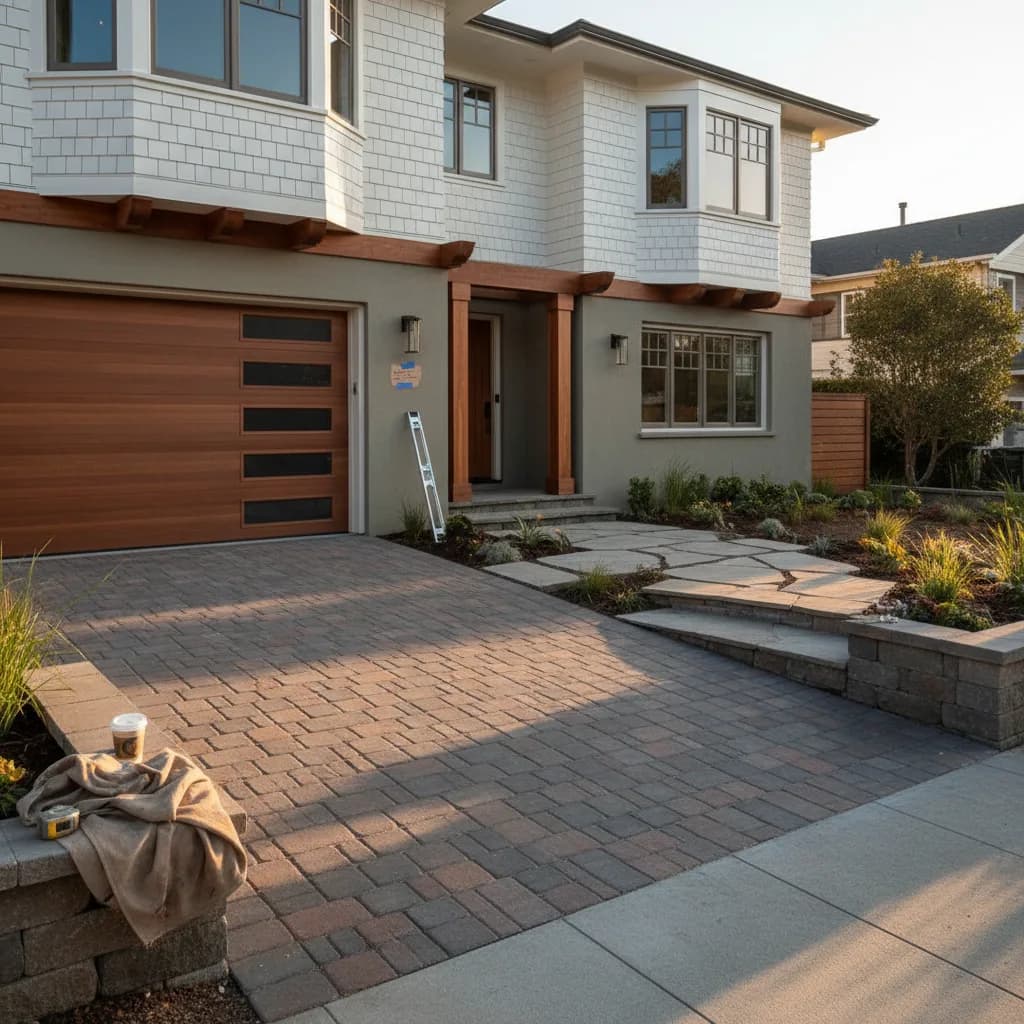
A new driveway in San Francisco costs between $16,000 and $32,000 in 2026 for a typical two-car concrete installation. Premium paver or steep-hillside projects can run well past $40,000. The total cost is driven by materials, site accessibility, and the significant grading required by the city’s topography. Costs can start lower, in the $7,000 to $11,000 range, for a simple asphalt resurfacing or a small, level replacement on a property with easy access, but this does not represent the typical full-scope project encountered in the city.
In a Nutshell
- Total Cost Range: $12,000 to $75,000+
- Typical Mid-Range Project: $16,000, $32,000 for a professionally installed, stamped concrete two-car driveway with moderate grading.
- Project Timeline: Four to ten days for demolition, preparation, and installation, plus two to six weeks for permitting.
- Biggest Surprise Cost: Site work. Grading on a sloped lot and installing proper drainage can easily exceed the cost of the materials and finishing labor combined.
What does a driveway actually cost in San Francisco?
The cost of a San Francisco driveway project is segmented by material choice, design complexity, and the extent of required site preparation. A standard driveway is approximately 600 square feet.
| Tier | Scope | Cost Range (2026) |
|---|---|---|
| Basic | Asphalt overlay or a simple, broom-finish concrete slab on a level lot with minimal demolition or grading. | $12,000, $20,000 |
| Mid-Range | Full demolition and replacement with colored or stamped concrete, including moderate grading, sub-base preparation, and basic drainage. | $21,000, $38,000 |
| Premium | High-end interlocking pavers or architectural concrete, extensive excavation for steep grades, retaining walls, integrated drainage systems, and potentially radiant heating. | $40,000, $75,000+ |
For a median mid-range project costing $29,500, the budget allocation is approximately:
- Labor (prep, forming, finishing): 40%
- Materials (concrete, rebar, pavers): 30%
- Site Prep (demolition, grading, hauling): 20%
- Permits & Fees: 5%
- Contractor Overhead & Profit: 5%
The bottom-of-range case, such as a simple asphalt resurfacing without excavation, applies to a small fraction of projects and should not be used for budgeting a full replacement.
Why is it more expensive in San Francisco than the Bay Area?
Installing a driveway in San Francisco carries a significant premium over surrounding counties. Three factors account for the majority of this difference.
First, labor rates are among the highest in the nation. According to the California Department of Industrial Relations prevailing wage data for San Francisco County, skilled construction labor commands hourly rates 15 to 25 percent higher than in Alameda or Contra Costa counties. This affects every stage, from demolition crews to concrete finishers.

Second, logistical constraints add hours and complexity. Narrow residential streets, limited staging areas for materials, and difficult parking for construction vehicles and debris bins translate directly into higher labor costs and potential fees. Projects in dense neighborhoods like the Mission District or North Beach often require specialized, smaller equipment and more manual labor than a suburban project.
Third, neighborhood-specific conditions introduce costs. The steep grades in areas like Noe Valley or Pacific Heights necessitate extensive grading, soil engineering, and retaining walls. The sandy or clay-rich soil found in parts of the city, particularly in seismic liquefaction zones near the Marina, may require a geotechnical report and a more solid, engineered sub-base, adding thousands to the project budget before a single bag of concrete is opened.
What do real San Francisco homeowners spend in 2026?
Three modeled project scenarios for 2026, built from the Renology Cost Index and typical local scopes. These are illustrative estimates, not completed client projects:
- Project 1: Sunset District ($24,500): A 550-square-foot driveway replacement. The project involved removing cracked concrete and significant tree roots. The new driveway was standard broom-finish concrete with proper rebar reinforcement and a new curb apron. The lot was relatively flat, which kept grading costs minimal.
- Project 2: Noe Valley ($41,000): A 620-square-foot project on a significant slope. This cost included demolition, extensive excavation to create a less severe grade, a small concrete retaining wall, and a channel drain system tied into the city storm sewer. The final surface was colored, stamped concrete to mimic stone.
- Project 3: Sea Cliff ($68,000): A 700-square-foot driveway using high-end permeable pavers. The cost was driven by the materials, the complex drainage system required for permeable surfaces, and the extensive site work needed to stabilize the coastal soil. The project also required a landscape architect and a soils engineer.
Where does the money actually go?
3 San Francisco driveway contractors, editor-screened. 4 questions.
See my 3 matchesInitial quotes from a driveway contractor in San Francisco often focus on materials and basic labor, leaving out critical line items. Homeowners should budget for these common expenses, which are rarely included in a per-square-foot estimate.
- Demolition and Hauling: $2,500, $5,000. Removing and legally disposing of an old concrete or asphalt driveway.
- Grading and Excavation: $4,000, $12,000. Essential on sloped lots to ensure proper drainage and a stable base. This is the most variable cost.
- Geotechnical Report: $2,000, $4,500. May be required by the city in areas with poor soil stability or on steep hillsides.
- Drainage Systems: $2,500, $7,000. Installing French drains, channel drains, or dry wells to manage water runoff is a building code requirement and critical for preventing foundation damage.
- Permitting Fees: $1,500, $3,500. This includes fees paid to the San Francisco Department of Building Inspection (SFDBI) for the permit itself, plus the contractor's time to manage the process.
- Curb Cut and Apron: $5,000, $9,000. If you are widening the driveway entrance, a separate permit and specialized work are required to cut the curb and pour a new apron that meets city specifications.
- Retaining Walls: $8,000, $20,000+. If the new grade requires soil retention, a concrete or block wall will be a substantial additional cost.
What stops a San Francisco driveway project from running over budget?
Three primary issues cause budget overruns on driveway projects in the city. The first is unforeseen site conditions. Discovering unstable soil, buried builder's debris, or undocumented utility lines during excavation can halt work and require costly engineering solutions. The National Association of Home Builders recommends a ten to fifteen percent contingency on renovations in homes over thirty years old.
The second cause is scope creep. A simple driveway replacement can expand to include new walkways, landscape lighting, or retaining walls. Each addition, while seemingly small, adds material and labor costs that were not part of the original bid. It is critical to finalize the full scope of work before signing a contract.
Finally, permitting complications are a frequent source of delays and added expense. The SFDBI may require plan revisions, structural calculations for retaining walls, or a drainage plan reviewed by a civil engineer. These requirements add professional fees and can push the project timeline, leading to increased costs for the contractor which are then passed on to the homeowner.
What should your San Francisco contractor include in the quote?
A detailed quote is the best tool to prevent misunderstandings and unexpected costs. A quote from a professional driveway contractor in San Francisco should be a multi-page document that specifies the following fourteen points:
- Detailed scope of work, including square footage.
- Cost of demolition and debris removal.
- Extent of excavation and grading included.
- Sub-base material type and compacted thickness (e.g., 4-6 inches of Class II base rock).
- Concrete strength (e.g., 4,000 PSI) and thickness (e.g., 4 inches).
- Reinforcement details (e.g., #3 rebar at 18-inch on-center grid).
- Type of finish (e.g., broom, salt rock, stamped pattern).
- Inclusion of control and expansion joints.
- Application of a cure-and-seal product.
- Details of any drainage systems (e.g., channel drain model, pipe size).
- Responsibility for securing and cost of permits.
- Site protection and cleanup plan.
- Payment schedule.
- Warranty information for materials and labor.
Navigating the permit process can be complex. For a detailed guide, see our San Francisco Driveway Permit Playbook.
Renology Take
The primary reason San Francisco driveway projects go wrong is a fundamental misunderstanding of what is being purchased. Homeowners believe they are buying a flat surface, so they compare quotes on a per-square-foot basis. Contractors, however, are actually selling a complex earthwork and water management solution that happens to be topped with concrete or pavers. The low-bid contractor is often the one who has underestimated the extreme challenges of San Francisco's geology and logistics. They plan for a flat, suburban installation and are unprepared for the grading, soil issues, and access problems that define work in the city. The successful project is one where the homeowner understands from the beginning that the majority of the cost and risk lies in the unseen preparation work below the surface, not the visible finish on top.
Sources & Methodology
Renology reviews public permit and labor signals, supplier pricing, remodeler quote patterns, comparable projects, the Renology Cost Index, and the Renology Methodology. Cost references are planning ranges for San Francisco driveway projects, not fixed bids.
- Remodeling Magazine, 2025 Cost vs. Value Report (San Francisco MSA)
- California Department of Industrial Relations, Prevailing Wage Determinations (San Francisco County, 2026)
- San Francisco Department of Building Inspection (SFDBI), Permit Fee Schedule (2026)
- National Association of Home Builders (NAHB), Construction Cost Survey (2025)
- HomeGuide, Driveway Cost Data (2026)
- Renology Project of the Day (POTD) Network, San Francisco Project Data (2024-2026)
- Concrete Network, Residential Concrete Specifications
Frequently Asked Questions
How long does it take to install a driveway in San Francisco?
Do I need a permit for a new driveway in San Francisco?
What driveway material is best for San Francisco's climate and hills?
How much value does a new driveway add to a San Francisco home?
What are the maintenance costs for different driveway types?
San Francisco · pre-screened
Get 3 San Francisco driveway bids in 48 hours.
Our editors already vetted San Francisco driveway contractors. Answer 4 questions and we send 3 written bids inside 48 hours, with the real price for your scope, not their inflated first-call number.
- Free, no commission
- Pre-screened locally
- Bids inside 48 hours
Takes about 60 seconds. We'll text you when bids arrive.
Sources
- Remodeling Magazine, 2025 Cost vs. Value Report (San Francisco MSA)
- California Department of Industrial Relations, Prevailing Wage Determinations (San Francisco County, 2026)
- San Francisco Department of Building Inspection (SFDBI), Permit Fee Schedule (2026)
- National Association of Home Builders (NAHB), Construction Cost Survey
- HomeGuide, Driveway Cost Data
- Renology Project of the Day (POTD) Network, San Francisco Project Data
- Concrete Network, Residential Concrete Specifications