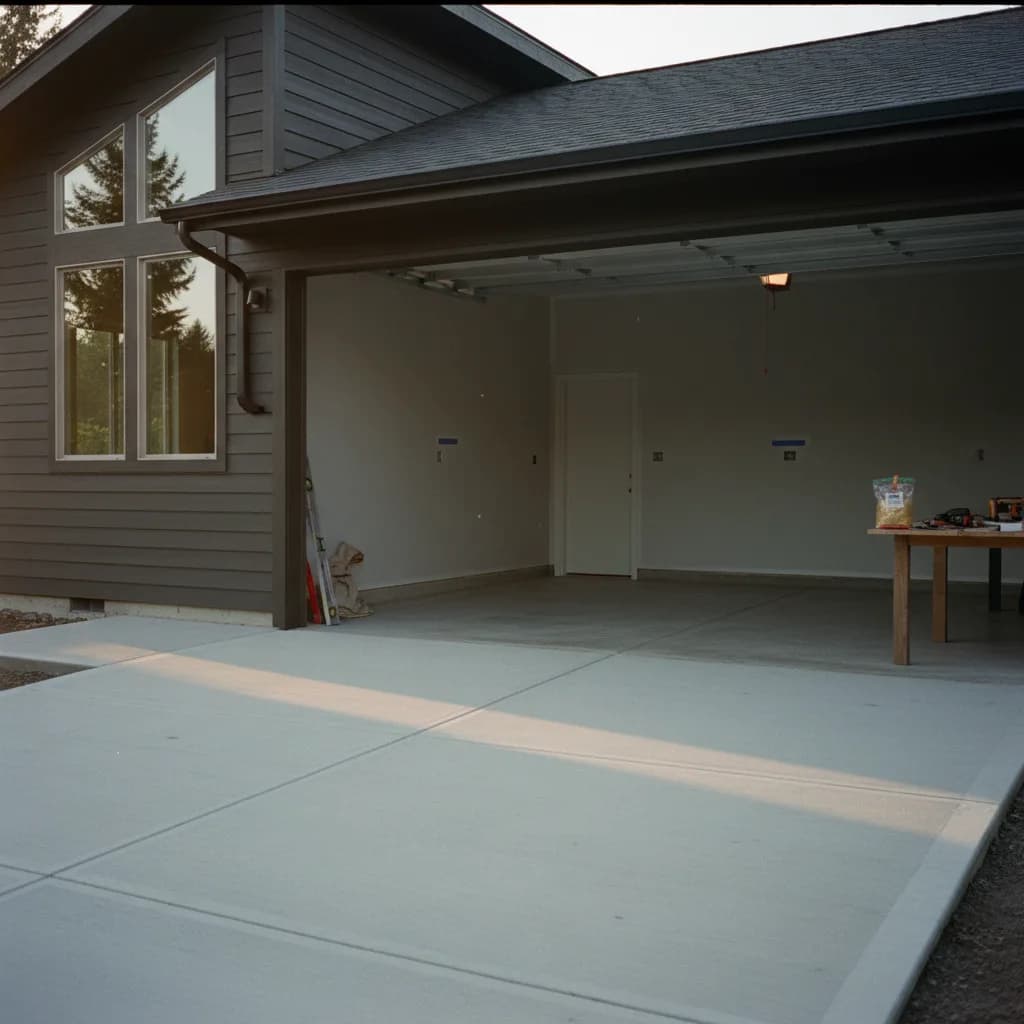
A new two-car driveway in Portland costs between $8,000 and $28,000 in 2026, with a median project price of approximately $14,500 for standard broom-finish concrete. This range covers the full replacement of an existing surface. Costs can start lower, from $4,500 to $7,500, for a simple asphalt resurfacing or a smaller repair project, which is a common scope for townhomes or properties with existing, stable sub-bases. However, for most single-family homes, the final price is driven by material choice, site preparation, and Portland's specific drainage requirements.
In a Nutshell
- Total Cost Range: $4,500 to $45,000+. The low end represents asphalt resurfacing, while the high end reflects projects using premium pavers, heated systems, and extensive excavation.
- Typical Mid-Range Project: $12,000, $19,000. This covers a standard 600-square-foot concrete driveway, including demolition of the old surface, proper sub-base preparation, and professional installation.
- Project Timeline: Four to ten working days. This includes demolition, grading, forming, pouring, and curing time. Paver installations can extend to two weeks.
- Biggest Surprise Line Item: Stormwater management. Portland's regulations and heavy rainfall often necessitate drainage systems or permeable pavers, adding $2,000 to $6,000 to the project total.
What does a driveway actually cost in Portland?
The total cost of a Portland driveway project depends on three main factors: materials, size, and the extent of site preparation required. Below are three tiers of project scopes and their associated 2026 cost ranges for a typical 600-square-foot driveway.
| Tier | Scope & Materials | Portland Cost Range (2026) |
|---|---|---|
| Basic | Asphalt Paving. Includes removal of old surface, minor grading, and installation of a standard 2.5-inch asphalt layer over a compacted gravel base. | $5,500, $11,000 |
| Mid-Range | Broom-Finish Concrete. Includes demolition, full excavation, 4-inch compacted gravel sub-base, rebar reinforcement, and a 4-inch slab of 4000 PSI concrete. | $12,000, $19,000 |
| Premium | Pavers or Stamped Concrete. Includes extensive site work, deep sub-base, engineered drainage, choice of high-end pavers or complex stamped/colored concrete, and sealing. | $22,000, $45,000+ |
For a mid-range concrete driveway, the budget allocation is typically distributed as follows, according to data from the Pacific Northwest Paving Cost Survey:
- Materials (Concrete, Gravel, Rebar): 45%
- Labor: 35%
- Excavation & Demolition: 15%
- Permits & Fees: 5%
The bottom-of-range case, such as a simple asphalt overlay without significant excavation, applies to situations where the underlying foundation is already sound and does not represent the cost of a full replacement.
Why is it more expensive in Portland than the surrounding region?
Installing a driveway in Portland proper often costs ten to twenty percent more than in outlying suburbs or rural areas of Oregon. This premium is the result of three core factors: labor rates, material logistics, and complex site conditions combined with stringent municipal codes.
1. Higher Labor Rates: The primary cost driver is skilled labor. According to the Oregon Bureau of Labor and Industries' occupational data for the Portland metro area, prevailing wages for cement masons, concrete finishers, and heavy equipment operators are among the highest in the state. A qualified driveway contractor in Portland must pay competitive rates, which are passed on to the consumer. These wages reflect a higher cost of living and strong demand for skilled construction trades within the city limits.

2. Material and Disposal Logistics: Portland's urban density increases the cost of both delivering materials and hauling away debris. Transporting aggregate, sand, and ready-mix concrete through city traffic costs more in fuel and time., tipping fees at regional facilities for disposing of old concrete and asphalt are higher than in less populated counties, adding several hundred dollars to the demolition phase of a typical project.
3. Site Complexity and Regulatory Hurdles: Many of Portland's established neighborhoods, such as Laurelhurst and the West Hills, feature properties with steep grades, challenging access, or expansive clay soils that require more extensive engineering and site preparation. More importantly, the Portland Bureau of Transportation (PBOT) and Bureau of Environmental Services (BES) enforce strict stormwater management rules. This often requires the installation of permeable surfaces, swales, or underground drainage systems to mitigate runoff, a requirement that can add thousands to the cost compared to a project in a municipality with less rigorous environmental codes.
What do real Portland homeowners spend in 2026?
Three modeled project scenarios for 2026, built from the Renology Cost Index and typical local scopes. These are illustrative estimates, not completed client projects:
- $16,500 in Eastmoreland: This project involved replacing a cracked, 650-square-foot concrete driveway. The scope included demolition and disposal, excavation of six inches of soil, installation of a four-inch compacted gravel base, rebar grid reinforcement, and a four-inch pour of 4,000 PSI concrete with a standard broom finish. The cost included permits but required minimal grading.
- $31,000 in Sellwood-Moreland: A 700-square-foot project to address significant drainage issues. The homeowner chose permeable pavers to comply with local stormwater regulations. The cost covered deep excavation (12 inches), a multi-layer aggregate base, the pavers themselves, edge restraints, and tying the system into a new French drain to direct water away from the home's foundation.
- $7,200 in Beaverton: For a home with a structurally sound but weathered asphalt driveway, this project was an asphalt resurfacing. The scope included extensive crack and pothole filling, application of a tack coat for adhesion, and a new two-inch overlay of hot-mix asphalt over the existing 550-square-foot surface. This avoided the high cost of demolition and excavation.
Where does the money actually go?
3 Portland driveway contractors, editor-screened. 4 questions.
See my 3 matchesA contractor's initial quote may not itemize every expense. Homeowners planning a driveway project in Portland should account for these common line items that are often bundled or emerge during the work.
- Demolition and Haul-Away ($1,500, $3,500): The cost to break up and transport the old driveway material to a certified disposal facility. Concrete is heavier and more costly to dispose of than asphalt.
- Sub-base Preparation ($2, $4 per square foot): This is the most critical step for longevity. It involves excavating soil and installing and compacting several inches of gravel to create a stable foundation that prevents shifting and cracking.
- Stormwater Management System ($2,000, $6,000): A significant Portland-specific cost. This can range from a simple French drain to a more complex system of permeable pavers, catch basins, or a dry well, as required by city code.
- Permits and Inspections ($400, $1,200): This includes fees paid to the Portland Bureau of Transportation for right-of-way permits (if the driveway apron is being modified) and potential inspections.
- Tree Root Mitigation ($800, $2,500): If mature trees are nearby, their roots may need to be professionally removed and a root barrier installed to prevent future damage to the new driveway.
- Adjacent Landscaping Repair ($750, $3,000): Heavy equipment can damage lawns, sprinkler heads, and garden beds. This cost covers the restoration of any disturbed areas adjacent to the worksite.
- Curb Cut Modification ($2,500, $5,000): If you are widening the driveway entrance, modifying the curb requires a separate permit and specialized work to meet city specifications, a significant expense.
What stops a Portland driveway project from running over budget?
Budget overruns on driveway projects are common and typically stem from a few predictable sources. Awareness of these issues is the first step in controlling costs.
First, unforeseen site conditions are the leading cause. During excavation, a contractor might discover unstable or expansive soil that requires deeper digging and more base material than quoted. Buried utility lines, old septic tanks, or massive tree roots can also halt work and require costly solutions. Second, scope creep initiated by the homeowner is a frequent factor. A decision to add a matching walkway, a retaining wall, or upgrade from broom-finish concrete to a stamped pattern mid-project will directly increase material and labor costs. Third, permitting complications can cause delays and require plan revisions. If the initial plan does not meet PBOT's specific requirements for slope, width, or drainage, the project may require re-engineering. The National Association of Home Builders recommends a ten to fifteen percent contingency on renovations in homes over thirty years old.
What should your Portland contractor include in the quote?
A detailed quote is the best tool to prevent misunderstandings and unexpected costs. A quote from a professional driveway contractor in Portland should be a comprehensive document, not a simple handshake agreement. Securing the correct permits from the Portland Bureau of Transportation (PBOT) is a critical step; you can find a detailed walkthrough in our Portland Driveways Permit Playbook 2026. Insist that your contractor's proposal includes the following line items:
- Detailed scope of work, including square footage.
- Cost of demolition and debris removal.
- Depth of excavation and sub-base preparation.
- Type and thickness of base material (e.g., 4 inches of compacted ¾-minus gravel).
- For concrete: PSI strength (4,000 PSI minimum recommended), thickness in inches, and type of reinforcement (rebar or wire mesh).
- For asphalt: Thickness of binder and top layers.
- For pavers: Type of paver, brand, and pattern.
- Details of the drainage plan (e.g., slope, drains, permeable sections).
- Finish details (e.g., broom finish, stamped pattern, color additives, sealer).
- Proof of liability insurance and worker's compensation.
- Permit acquisition responsibility and associated costs.
- Project timeline with start and estimated completion dates.
- Payment schedule, clearly stating deposit and milestone payments.
- Warranty information covering materials and workmanship.
Renology Take
The central misunderstanding for homeowners planning a driveway in Portland is viewing it as a simple paving project. In this region, it is a civil engineering project focused on water management. The freeze-thaw cycles of Pacific Northwest winters and the sheer volume of annual rainfall mean that a driveway's longevity is determined not by the surface you see, but by the unseen foundation and drainage beneath it. Most budget surprises and premature failures of Portland driveways trace back to underestimating the cost and complexity of the sub-base and water mitigation. Homeowners fixate on surface materials like pavers versus concrete, but the more critical decision is allocating ten to thirty percent of the total budget to ensure water is directed properly and the base is deep and stable enough to survive decades of wet weather.
Sources & Methodology
Renology reviews public permit and labor signals, supplier pricing, remodeler quote patterns, comparable projects, the Renology Cost Index, and the Renology Methodology. Cost references are planning ranges for Portland driveway projects, not fixed bids.
- Remodeling Magazine: 2025-2026 Cost vs. Value Report
- National Association of Home Builders (NAHB): Construction Cost Survey, Q4 2025
- Portland Bureau of Transportation (PBOT): Driveway and Curb Cut Permit Fee Schedule, 2026
- Oregon Bureau of Labor and Industries (BOLI): Prevailing Wage Rates for Public Works Projects, 2026
- Pacific Northwest Paving Cost Survey: Regional Contractor Pricing Analysis, 2025
- Renology Research: Project of the Day Network, Portland Metro Data 2025-2026
Frequently Asked Questions
Do I need a permit for a driveway in Portland?
How long does a new driveway last in the Pacific Northwest climate?
Is concrete or asphalt better for Portland weather?
What is a permeable paver and why is it recommended in Portland?
Ready to find a pro?
Tell us about your project and location. A Renology advisor can help you explore contractor matching.
Free for homeowners. No obligation to hire.
Find a ProSources
- Remodeling Magazine: 2025-2026 Cost vs. Value Report
- National Association of Home Builders (NAHB): Construction Cost Survey, Q4 2025
- Portland Bureau of Transportation (PBOT): Driveway and Curb Cut Permit Fee Schedule, 2026
- Oregon Bureau of Labor and Industries (BOLI): Prevailing Wage Rates for Public Works Projects, 2026
- Pacific Northwest Paving Cost Survey: Regional Contractor Pricing Analysis, 2025
- Renology Research: Project of the Day Network, Portland Metro Data 2025-2026
Follow Renology on Google
Choose Renology as a preferred source and our guides show up more often in your Google results, including Top Stories and AI Overviews.