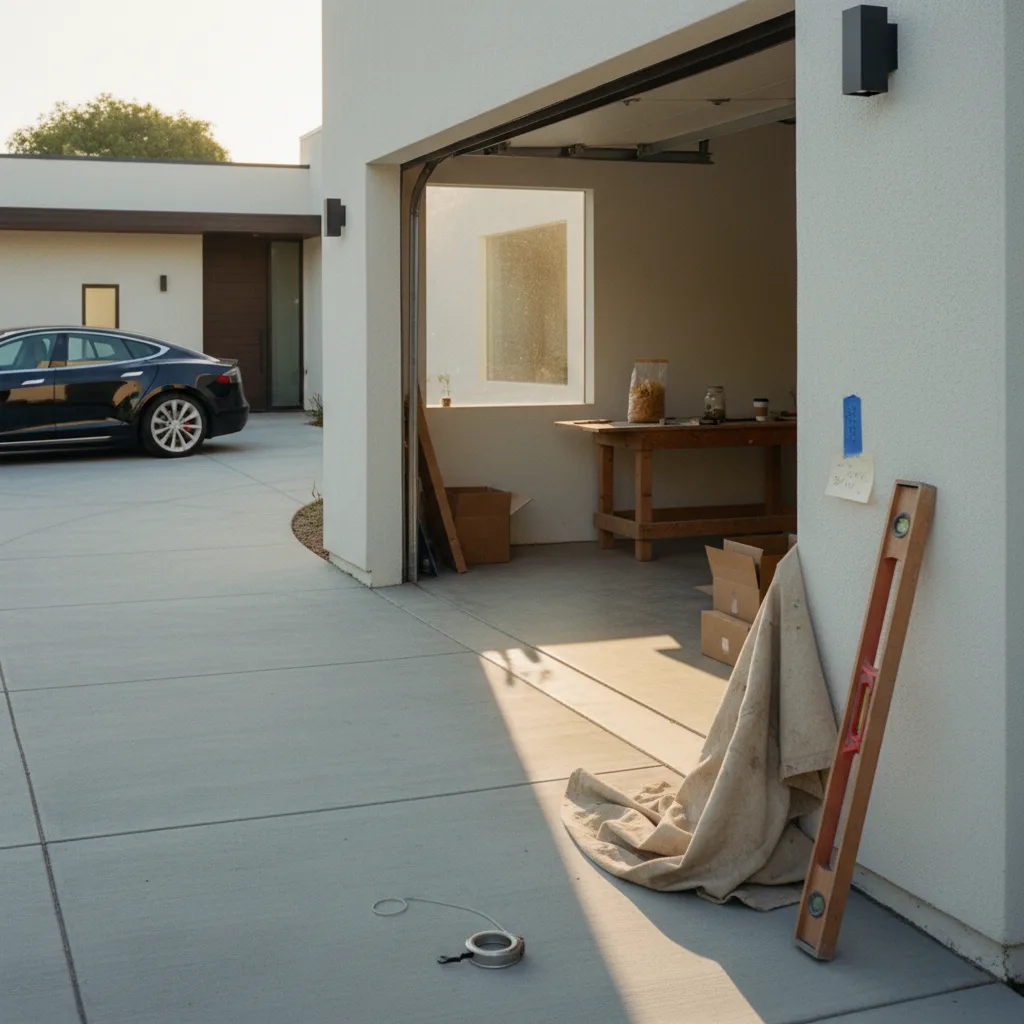
A new driveway in Los Angeles costs between $14,000 and $30,000 in 2026, with a median project cost of $22,000 for a standard 600-square-foot brushed concrete installation. Total project costs can start lower, from $4,000 to $7,000, for simple resurfacing, gravel installations, or repairs on smaller properties. However, for a full demolition and replacement, most homeowners should anticipate a five-figure expenditure. High-end projects using premium pavers, extensive drainage, and custom lighting can exceed $55,000.
In a Nutshell
- Typical Cost Range: A full replacement of a standard two-car driveway typically falls between $14,000 and $30,000.
- Mid-Range Project: A homeowner replacing a cracked asphalt driveway with new poured concrete or standard interlocking pavers on a level lot will pay $15,000 to $24,000.
- Timeline: Two to four days for demolition and preparation, followed by one to three days for installation. Curing time for concrete can add another seven to twenty-eight days before full vehicle use. The total project duration is typically five to fifteen working days.
- Biggest Surprise Line Item: Site preparation and drainage. Excavation for poor soil, removing large tree roots, or installing a proper drainage system can add $3,000 to $8,000, an expense often underestimated in initial quotes.
What does a driveway actually cost in Los Angeles?
The final cost for a Los Angeles driveway is determined by size, material choice, site accessibility, and the condition of the underlying soil. A project's scope can be categorized into three tiers. The figures below represent a typical 600-square-foot, two-car driveway.
| Tier | Cost Range (2026) | Scope & Materials |
|---|---|---|
| Basic | $6,000, $11,000 | Asphalt replacement, decomposed granite, or basic gravel. Minimal grading and no complex drainage. |
| Mid-Range | $12,000, $28,000 | Poured concrete (brushed or stamped finish) or standard interlocking concrete pavers. Includes demolition of old driveway, proper base preparation, and basic reinforcement. |
| Premium | $29,000, $55,000+ | High-end natural stone or permeable pavers, custom concrete staining, integrated heating elements, extensive French drains, retaining walls, and landscape lighting. |
For a mid-range paver driveway project costing $22,000, the budget allocation is typically:
- Materials (Pavers & Edging): 35% ($7,700)
- Labor: 30% ($6,600)
- Demolition & Site Preparation: 15% ($3,300)
- Base Material (Gravel & Sand): 10% ($2,200)
- Permits & Waste Disposal: 5% ($1,100)
- Equipment Rental: 5% ($1,100)
The bottom of the cost range, around $4,000, typically applies to resurfacing an existing asphalt driveway or installing a simple gravel surface on a small, pre-graded lot, not a full replacement which is the more common scenario for single-family homes.
Why is a driveway more expensive in Los Angeles than surrounding regions?
Three primary factors contribute to the higher cost of Los Angeles driveways compared to national figures.
1. Labor Rates: The cost of skilled labor is the most significant driver. According to the California Department of Industrial Relations prevailing wage data for Los Angeles County, hourly rates for key trades are substantial. As of early 2026, cement masons command $68 to $85 per hour (including benefits), while operating engineers for excavation equipment earn $75 to $95 per hour. These state-mandated rates for public works projects heavily influence private sector wages, resulting in labor costs 25-40% higher than in many other metropolitan areas.
2. Site Complexity and Soil Conditions: Much of the Los Angeles basin contains expansive clay soil, which swells when wet and shrinks when dry. This geological reality necessitates deeper excavation and a more solid, engineered sub-base of compacted gravel, adding $2 to $5 per square foot in site preparation costs., hillside properties in areas like the Hollywood Hills or Pacific Palisades require extensive grading, retaining walls, and complex drainage solutions to manage water runoff and soil erosion, significantly increasing project complexity and cost.
3. Permitting and Neighborhood Premiums: Navigating the Los Angeles Department of Building and Safety (LADBS) adds administrative time and cost. Permits are required for any new driveway, especially when altering a curb cut, which involves additional review from the Bureau of Engineering. Contractors operating in affluent neighborhoods like Beverly Hills, Bel Air, or Santa Monica often carry higher insurance premiums and face stricter logistical constraints (e.g., limited work hours, constrained site access), which are factored into their pricing structure. These operational overheads can add 10-20% to the total project cost.
What do real Los Angeles homeowners spend in 2026?
Three modeled project scenarios for 2026, built from the Renology Cost Index and typical local scopes. These are illustrative estimates, not completed client projects:
1. Sherman Oaks - $18,500: A 650-square-foot cracked asphalt driveway was demolished and replaced with reinforced, poured concrete with a standard broom finish. The project included removal of several large ficus tree roots and installation of a new curb apron to meet city code. The soil was stable, requiring only a standard four-inch gravel base.
2. Eagle Rock - $31,200: This project involved replacing a crumbling concrete driveway on a slight slope with 700 square feet of interlocking permeable pavers. The higher cost was driven by the need for deeper excavation (12 inches) to create a reservoir base for stormwater management, plus the installation of a French drain along the side of the house to prevent water intrusion into the foundation.
3. Mar Vista - $24,600: The homeowner chose a modern design combining smooth-finish concrete pads with decomposed granite inserts for a 600-square-foot area. The cost included significant grading to correct a drainage issue that was causing water to pool near the garage. The project also required a new concrete walkway to the front door to match the driveway's aesthetic.
Where does the money actually go?
3 Los Angeles driveway contractors, editor-screened. 4 questions.
See my 3 matchesContractor quotes often summarize costs, leaving homeowners unclear on specific line items. These are six common expenses that are part of the total cost but may not be explicitly itemized.
- Demolition and Hauling: $1,800, $4,000. This covers the labor and equipment to break up the old driveway and the cost of legally disposing of the concrete or asphalt debris.
- Excavation and Grading: $2,500, $6,000. Beyond simple removal, this involves digging to the required depth for the new base and ensuring the proper slope (at least a 2% grade) away from the home’s foundation.
- Engineered Sub-Base: $1,500, $3,500. This is the crushed rock or gravel layer beneath the surface material. For LA's expansive soils, this may require a thicker, multi-layer base.
- Drainage System: $2,800, $7,500. A simple channel drain might be at the lower end, while a comprehensive French drain system with a sump pump will be at the higher end. This is non-negotiable for properties with water issues.
- Permit Fees and Plans: $600, $1,800. This includes the cost of drawing up plans to submit to LADBS and the permit fees themselves. Altering a curb cut significantly increases this cost.
- Tree Root Mitigation: $900, $2,500. If mature trees are nearby, this involves removing invasive roots and installing root barriers to prevent future damage to the new driveway.
What stops a Los Angeles driveway project from running over budget?
Three primary issues cause budget overruns on driveway projects: unforeseen site conditions, scope creep, and permit complications.
First, discovering buried utilities, a high water table, or exceptionally poor soil after excavation has begun can halt work and require costly solutions. Second, homeowners often expand the project mid-stream, adding a matching walkway, landscape lighting, or a retaining wall. While individually small, these changes collectively inflate the budget. Third, a plan rejected by LADBS can cause delays and require revised architectural drawings, adding professional fees and extending the project timeline. The National Association of Home Builders recommends a ten to fifteen percent contingency on renovations in homes over thirty years old. For driveway projects involving significant excavation, a similar contingency is prudent.
What should your Los Angeles contractor include in the quote?
A detailed quote is the best tool for preventing misunderstandings. To properly compare bids from any driveway contractor in Los Angeles, ensure the proposal includes these line items. You can learn more about navigating the city's requirements in our Los Angeles Driveway Permit Playbook for 2026.
- Proof of license and insurance (C-8 Concrete or C-12 Earthwork and Paving).
- Total square footage of the project.
- Detailed scope of demolition and debris removal plan.
- Depth of excavation for the sub-base.
- Type and compacted depth of the base material (e.g., 4 inches of Class II aggregate).
- Specifications of surface material (e.g., concrete PSI, paver brand and model).
- Details on reinforcement (e.g., rebar grid spacing, fiber mesh).
- Plan for drainage, including slope and any specified drains.
- Inclusion of all permit acquisition and inspection scheduling.
- Cleanup plan and site protection measures.
- Project timeline with start and estimated completion dates.
- Payment schedule.
- Detailed warranty on materials and labor.
Renology Take
The most common point of failure for a Los Angeles driveway project is a disproportionate focus on the visible surface material at the expense of the unseen foundation. Homeowners spend weeks comparing paver colors or concrete stamp patterns but spend minutes discussing the sub-base, compaction, and drainage with their contractor. The sub-base preparation accounts for nearly 40% of the project's labor and is the single greatest determinant of the driveway's longevity. A beautiful paver installation on an improperly compacted or too-thin base will shift, sink, and fail within five years, especially with LA's combination of intense sun and occasional atmospheric rivers. The key to a durable, long-lasting driveway is not the surface you see, but the structural work you don't.
Sources & Methodology
Renology reviews public permit and labor signals, supplier pricing, remodeler quote patterns, comparable projects, the Renology Cost Index, and the Renology Methodology. Cost references are planning ranges for Los Angeles driveway projects, not fixed bids.
- Remodeling Magazine, 2025 Cost vs. Value Report (Los Angeles data)
- California Department of Industrial Relations, Prevailing Wage Determinations for Los Angeles County (2026)
- Los Angeles Department of Building and Safety (LADBS), Driveway and Curb Cut Permit Requirements (2026)
- National Association of Home Builders (NAHB), Construction Cost Survey (2025)
- Interlocking Concrete Pavement Institute (ICPI), Residential Paver Installation Guidelines
- Renology Project of the Day Network, Los Angeles Metro Data (2024-2026)
Frequently Asked Questions
How much value does a new driveway add to a home in Los Angeles?
Do I need a permit to replace my driveway in Los Angeles?
What is the best driveway material for the Los Angeles climate?
How long does a new concrete driveway need to cure before I can park on it?
Can I save money by resurfacing my old driveway instead of replacing it?
Los Angeles · pre-screened
Get 3 Los Angeles driveway bids in 48 hours.
Our editors already vetted Los Angeles driveway contractors. Answer 4 questions and we send 3 written bids inside 48 hours, with the real price for your scope, not their inflated first-call number.
- Free, no commission
- Pre-screened locally
- Bids inside 48 hours
Takes about 60 seconds. We'll text you when bids arrive.
Sources
- Remodeling Magazine, 2025 Cost vs. Value Report
- California Department of Industrial Relations, Prevailing Wage Determinations for Los Angeles County
- Los Angeles Department of Building and Safety (LADBS), Driveway and Curb Cut Permit Requirements
- National Association of Home Builders (NAHB), Construction Cost Survey
- Interlocking Concrete Pavement Institute (ICPI), Residential Paver Installation Guidelines
- Renology Project of the Day Network, Los Angeles Metro Data