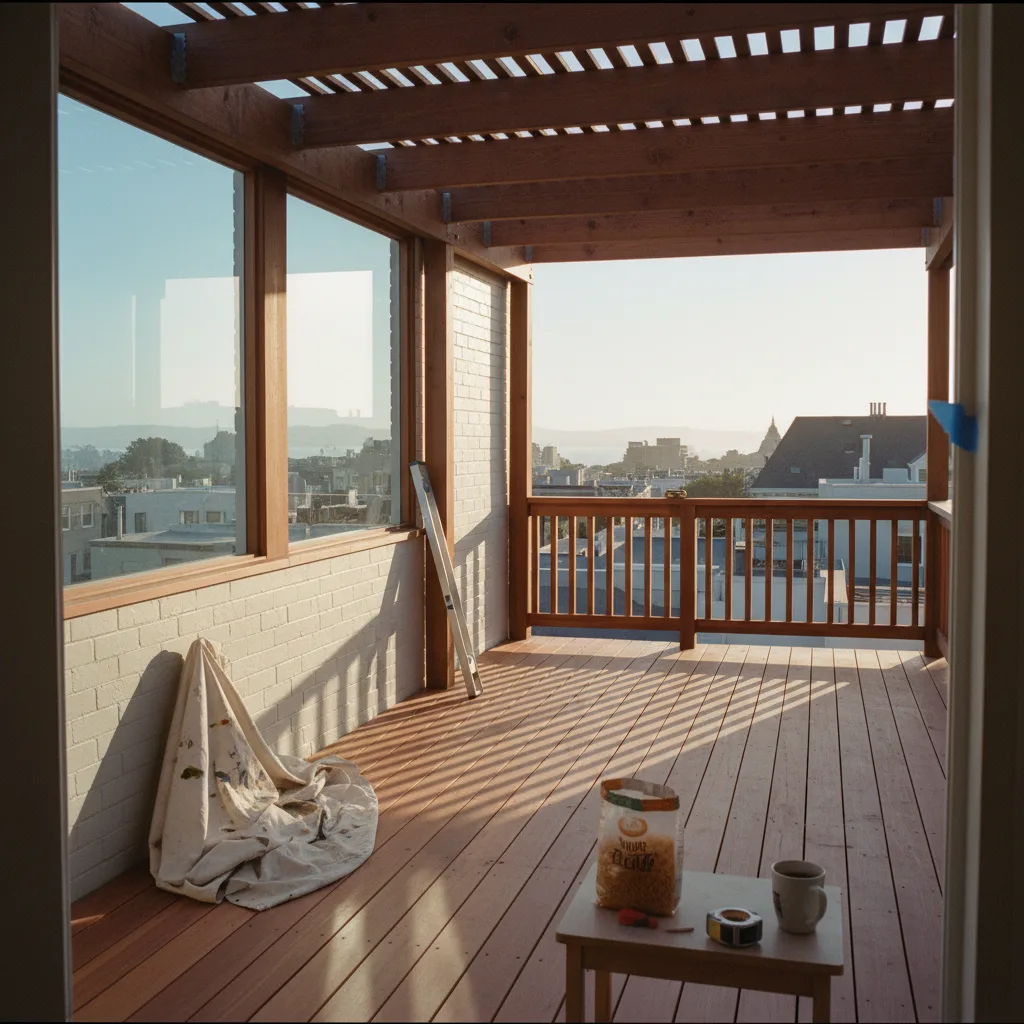
A mid-range 300-square-foot composite deck with a simple pergola costs between $20,000 and $46,000 to build in San Francisco in 2026. According to Renology's analysis of city permit data, most projects at this scope land near the middle of that range. Costs can start lower for resurfacing an existing structure or a small, ground-level deck for a condominium patio, while premium multi-level builds on the city's characteristic hillside lots can run well past $100,000.
In a Nutshell
- Total Cost Range: $20,000 (basic resurface) to $175,000+ (premium hardwood, multi-level).
- Typical Mid-Range Project: $20,000, $46,000 for a 300-sq-ft composite deck with a pergola.
- Project Timeline: Eight to sixteen weeks, with four to seven weeks for permitting and engineering alone.
- Biggest Surprise Cost: Structural engineering and geotechnical reports, which can add $5,000 to $13,000 before construction begins.
What does a deck and pergola actually cost in San Francisco?
Project costs in San Francisco are driven by materials, site complexity, and structural requirements. The following table outlines three common budget tiers for a 250 to 400-square-foot project. The bottom of the range, often cited in national guides, applies to simple deck resurfacing or small, ground-level platforms, not the typical hillside construction required for most homes in the city.
| Tier | Cost Range (2026) | Materials & Features |
|---|---|---|
| Basic | $28,000, $55,000 | Pressure-treated pine or basic composite, simple square design, standard railings, minimal site prep, no pergola. |
| Mid-Range | $20,000, $46,000 | Mid-grade composite (Trex, TimberTech), simple wood or aluminum pergola, cable or metal railings, basic LED lighting. |
| Premium | $100,000, $175,000+ | Hardwood (Ipe, Cumaru), custom aluminum pergola with retractable cover, glass panel railings, built-in seating and planters, outdoor kitchen hookups. |
For a typical mid-range project costing $33,000, the budget allocation is as follows:
- Materials (Decking, Framing, Hardware): 35%
- Labor: 30%
- Foundation & Structural (Piers, Footings): 15%
- Permits & Engineering: 10%
- Pergola Structure: 5%
- Finishes & Electrical: 5%
Why is it more expensive in San Francisco than the Bay Area?
Three primary factors contribute to San Francisco's higher costs for decks and pergolas compared to surrounding cities like San Jose or Oakland.
1. Labor Rates: San Francisco has one of the highest construction labor costs in the nation. According to the California Department of Industrial Relations prevailing wage data for San Francisco County, a journeyman carpenter commands a total hourly compensation of $115 to $130 when accounting for wages, benefits, and contractor overhead. This is fifteen to twenty-five percent higher than rates in adjacent counties, directly impacting the 30% of the project budget allocated to labor.

2. Site Logistics and Neighborhood Premiums: The city's topography and density create significant logistical challenges. Steep hillsides, narrow streets, and limited site access often require manual transport of materials and debris, increasing labor hours. Projects in affluent, dense neighborhoods like Pacific Heights and Noe Valley often carry a premium of ten to twenty percent due to parking restrictions, limited staging areas, and stricter homeowners' association rules.
3. Stringent Building Codes: San Francisco's building codes are among the most rigorous in the country, largely due to seismic risks and coastal conditions. The San Francisco Department of Building Inspection (SFDBI) enforces strict requirements for foundation depth, ledger board attachment, and lateral bracing to withstand earthquakes., proximity to the coast means materials must resist moisture and salt air, often requiring stainless steel hardware and more durable composites or hardwoods, which adds five to ten percent to material costs.
What do real San Francisco homeowners spend in 2026?
Three modeled project scenarios for 2026, built from the Renology Cost Index and typical local scopes. These are illustrative estimates, not completed client projects:
1. Sunset District ($68,500): A 320-square-foot, single-level deck using Trex composite decking. The project included standard cable railings and a simple redwood pergola. The lot was flat, which simplified foundation work, but required extensive flashing and waterproofing where the deck attached to the stucco home to prevent moisture intrusion from coastal fog.
2. Bernal Heights ($89,000): A 280-square-foot Ipe hardwood deck on a moderately sloped lot. The cost was higher due to the premium material and the need for deeper, engineered concrete piers to ensure stability on the hillside. The project also included built-in benches and integrated low-voltage lighting, adding to the electrical scope.
3. Glen Park ($112,000): A multi-level 400-square-foot deck built with TimberTech Azek composite. The significant cost driver was the complex engineering required for the steep hillside location, including a geotechnical report and reinforced retaining walls. The project featured a custom-fabricated steel frame pergola and glass panel railings to preserve views.
Where does the money actually go?
3 San Francisco deck builders, editor-screened. 4 questions.
See my 3 matchesContractor quotes often focus on materials and labor, but a San Francisco deck project includes many other necessary costs. Homeowners should budget for these line items, which are rarely detailed in an initial bid.
- Structural Engineering Plans: $3,500, $8,000. Required for any deck over 30 inches high or attached to the house.
- Geotechnical (Soils) Report: $2,500, $6,000. Often required by engineers for projects on hillsides to determine soil stability and foundation requirements.
- SFDBI Permit Fees: $2,000, $5,500. This includes plan review, site inspections, and administrative fees.
- Demolition and Haul-Away: $3,000, $6,000. Cost to remove and dispose of an existing deck or concrete patio.
- Site Access Equipment: $1,500, $7,000. If materials cannot be carried by hand, this may include crane rental or specialized equipment for hillside work.
- Ledger Board Waterproofing: $1,000, $2,500. Critical for preventing water damage to the home's structure, involving specialized flashing and membranes.
- Utility Location and Relocation: $500, $9,000. Locating and potentially moving gas, water, or electrical lines that run through the proposed deck area.
What stops a San Francisco deck project from running over budget?
Three primary issues cause budget overruns on San Francisco deck projects. Addressing them during the planning phase is the most effective way to control costs.
1. Unforeseen Site Conditions: The most common cause is discovering poor soil quality or rot on the home's exterior wall once demolition begins. On a hillside lot, poor soil can require deeper, more expensive piers. The National Association of Home Builders recommends a ten to fifteen percent contingency on renovations in homes over thirty years old.
2. Engineering and Permitting Revisions: The SFDBI plan review process is thorough. If the initial plans submitted by the engineer or architect are rejected or require modification, the associated revision fees and project delays can add thousands to the cost. This is a common occurrence for complex hillside designs.
3. Mid-Project Scope Changes: Deciding to upgrade materials, add built-in seating, or install an outdoor heater after construction has started is the surest way to inflate the budget. These changes create a ripple effect, requiring new material orders, change order fees from the contractor, and potentially revised plans and permits.
Understanding the full permitting process is key to managing your budget. For a detailed walkthrough, see our guide to navigating San Francisco's deck and pergola permit process in 2026.
What should your San Francisco contractor include in the quote?
A detailed quote is a sign of a professional decks pergola contractor in San Francisco. Ensure the following line items are explicitly listed to avoid ambiguity and unexpected charges.
- Detailed scope of work, including square footage and design specifics.
- All associated engineering and architectural fees.
- Cost of all permits from the San Francisco Department of Building Inspection.
- Demolition, site clearing, and debris disposal fees.
- Specific brand and model of decking material (e.g., Trex Transcend Lineage, Ipe).
- Type of framing lumber (e.g., pressure-treated Douglas Fir).
- Foundation specifications (e.g., number and depth of concrete piers).
- Hardware specifications (e.g., 316 stainless steel for coastal areas).
- Railings and pergola material and design specifications.
- Waterproofing and flashing details, especially at the ledger board.
- Electrical scope, including lighting, outlets, and any necessary subpanel work.
- Stain or sealant application if using wood.
- Payment schedule tied to project milestones.
- Projected start date and estimated completion timeline.
Renology Take
The most significant pattern we observe with decks pergola San Francisco cost overruns is a fundamental misunderstanding of the project's true nature. Homeowners often perceive it as a carpentry project, focusing their research on decking materials and aesthetic design. In reality, a deck project in this city is primarily a structural and geotechnical engineering project. The costs and timeline are dictated not by the choice between composite and Ipe, but by the soil on your hillside, the seismic bracing requirements, and the meticulous review process at the SFDBI. Successful projects are those where the homeowner allocates as much attention and budget to the pre-construction phase (engineering, soils reports, permitting) as they do to the construction itself. Underinvesting in this upfront work is the leading cause of delays and budget inflation.
Sources & Methodology
Renology reviews public permit and labor signals, supplier pricing, remodeler quote patterns, comparable projects, the Renology Cost Index, and the Renology Methodology. Cost references are planning ranges for San Francisco deck projects, not fixed bids.
- Remodeling Magazine, 2025 Cost vs. Value Report (San Francisco, Pacific Region)
- California Department of Industrial Relations, Prevailing Wage Determinations for San Francisco County, 2026
- San Francisco Department of Building Inspection (SFDBI), Permit Fee Schedule, 2026
- National Association of Home Builders (NAHB), Construction Cost Survey, Q4 2025
- Dunn-Edwards, Bay Area Construction Cost Trends Report, 2026
- Renology Project of the Day (POTD) Network, San Francisco Metro Data, 2024-2026
Frequently Asked Questions
How much value does a deck add to a San Francisco home?
Do I need a permit for a deck or pergola in San Francisco?
What is the cost difference between composite and hardwood decking in San Francisco?
How long does it take to build a deck in San Francisco?
What are the key seismic requirements for decks in San Francisco?
San Francisco · pre-screened
Get 3 San Francisco deck bids in 48 hours.
Our editors already vetted San Francisco deck builders. Answer 4 questions and we send 3 written bids inside 48 hours, with the real price for your scope, not their inflated first-call number.
- Free, no commission
- Pre-screened locally
- Bids inside 48 hours
Takes about 60 seconds. We'll text you when bids arrive.
Sources
- Remodeling Magazine, 2025 Cost vs. Value Report (San Francisco, Pacific Region)
- California Department of Industrial Relations, Prevailing Wage Determinations for San Francisco County
- San Francisco Department of Building Inspection (SFDBI), Permit Fee Schedule
- National Association of Home Builders (NAHB), Construction Cost Survey
- Dunn-Edwards, Bay Area Construction Cost Trends Report
- Renology Project of the Day (POTD) Network, San Francisco Metro Data