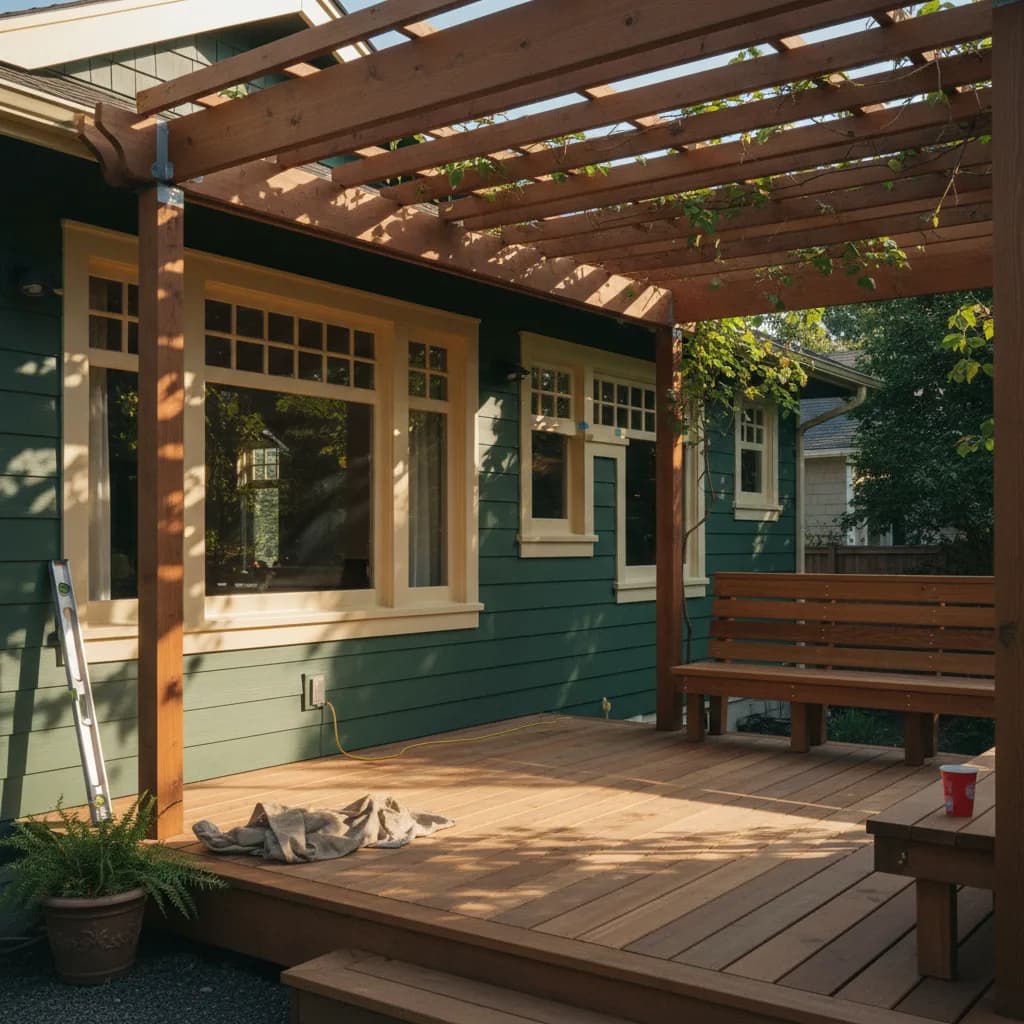
Building a deck in Portland costs between $19,000 and $38,000 for a mid-range composite project in 2026, with premium hardwood or multi-level structures exceeding $75,000. While a simple pressure-treated wood deck or a resurfacing project can start lower, around $8,000 to $12,000, most homeowners find the median all-in cost for a complete build lands near $27,500. These figures account for Portland's specific labor rates, material preferences for its wet climate, and permitting requirements from the Bureau of Development Services.
In a Nutshell
- Total Cost Range: $8,000 to $85,000+
- Typical Mid-Range Project: $19,000, $38,000 for a 300-square-foot composite deck.
- Project Timeline: Three to six weeks from final design approval to completion, with permitting adding two to four weeks upfront.
- Biggest Surprise Line Item: Site preparation and concrete footings, which can cost $3,000, $7,000 alone, especially on sloped lots common in the West Hills.
What does a deck actually cost in Portland?
The total cost of a Portland deck or pergola project is determined by three factors: size, materials, and complexity. We have compiled 2026 cost data into three representative tiers. The bottom of the basic range typically represents a resurfacing project on an existing frame, not a full new build.
| Tier | Scope & Materials | Typical Size | Cost Range (2026) |
|---|---|---|---|
| Basic | Pressure-treated pine decking, simple rectangular design, wood railings, minimal site prep. | 150, 250 sq. ft. | $8,000, $15,000 |
| Mid-Range | Composite decking (Trex, TimberTech), aluminum or composite railings, single level with stairs, integrated bench. | 250, 400 sq. ft. | $19,000, $38,000 |
| Premium | Premium hardwood (Ipe, Tigerwood) or top-tier composite, multi-level design, custom pergola, low-voltage lighting, glass or cable railings, complex site work. | 400+ sq. ft. | $45,000, $85,000+ |
For a median mid-range project costing approximately $27,500, the budget allocation is typically as follows:
- Materials (decking, framing, hardware): 45%
- Labor: 35%
- Site Prep & Footings: 10%
- Permits, Design & Engineering: 5%
- Finishes & Waste Disposal: 5%
Why is it more expensive in Portland than the surrounding region?
Building a deck in the Portland metro area carries a premium compared to other parts of Oregon. Three primary factors drive this cost difference.
First, labor rates are higher. The consistent demand for skilled residential construction labor keeps wages competitive. According to the Oregon Bureau of Labor and Industries, Portland metro occupational data for 2026 shows that experienced carpenters and deck builders command hourly rates of $70 to $105. This is ten to twenty percent higher than in smaller markets like Salem or Eugene, directly impacting the 35% of the project budget allocated to labor.

Second, material selection is dictated by the climate. Portland's persistent rain and humidity make rot and moisture damage a significant concern. This pushes contractors and homeowners toward more expensive, durable materials like high-grade Western Red Cedar, dense hardwoods like Ipe, or high-performance composite decking. Cheaper pressure-treated pine requires more maintenance and has a shorter lifespan here, making it a less common choice for long-term value despite its lower upfront cost.
Third, neighborhood premiums and challenging topography increase costs. In affluent areas like Laurelhurst and the Pearl District, contractors face higher operational costs and client expectations., many homes in the West Hills are built on steep slopes, requiring extensive excavation, complex concrete footings, and often a structural engineer's stamp on the plans. This foundational work can add $5,000 to $15,000 to a project before the first deck board is laid.
What do real Portland homeowners spend in 2026?
Three modeled project scenarios for 2026, built from the Renology Cost Index and typical local scopes. These are illustrative estimates, not completed client projects:
- $29,500 in Beaverton: A 320-square-foot, single-level composite deck replacing an old, failing wood structure. The project used Trex Select decking, standard black aluminum railings, and one set of stairs. The site was flat and accessible, which kept site preparation costs to a minimum. The total project duration was just under four weeks.
- $44,000 in Laurelhurst: A 400-square-foot cedar deck designed to match the home's historic character. This project involved custom-milled cedar railings, a built-in bench, and a small privacy screen. Permitting was more complex due to the home's location. The choice of premium clear-grain cedar over standard composite was the primary cost driver.
- $76,000 in the West Hills: A 450-square-foot, multi-level Ipe hardwood deck on a steep slope. The budget included $12,000 for engineered plans and deep, reinforced concrete footings to ensure stability. The project also featured a cable railing system, integrated low-voltage lighting on stairs and posts, and an attached 12x12 cedar pergola.
Where does the money actually go?
3 Portland deck builders, editor-screened. 4 questions.
See my 3 matchesA contractor's initial quote covers the visible structure, but several necessary line items are often discussed later or omitted entirely. Homeowners should account for these potential costs from the start.
- Demolition and Haul-Away: Removing an existing concrete patio or wood deck. Cost: $1,200, $3,000
- Structural Engineer Fees: Required for decks over a certain height, on steep slopes, or with complex designs. Cost: $800, $2,200
- Site Grading and Drainage: Ensuring water flows away from the foundation is critical in Portland's climate. Cost: $1,500, $5,000
- Permitting Fees: The City of Portland Bureau of Development Services charges for plan review and inspections. Cost: $600, $1,500
- Premium Railing Systems: Upgrading from standard wood or composite to cable, glass, or custom metal railings. Cost: Adds $120, $250 per linear foot
- Low-Voltage LED Lighting: For stairs, posts, and perimeter. Cost: $2,500, $6,000
- Substructure Upgrades: Using pressure-treated Glulam beams for longer spans or steel framing for enhanced durability. Cost: Adds 15-25% to framing material cost
- Stain or Sealer Application: For wood decks, professional application is key for longevity. Cost: $3, $5 per square foot
What stops a Portland deck from running over budget?
Three issues commonly cause budget overruns on deck projects in the Portland area. The first is unforeseen ground conditions. During excavation for footings, contractors may discover poor soil composition, large rocks, or old debris that requires extra labor and equipment to address. This is particularly common on infill lots or older properties.
The second cause is scope creep. It is easy to add features once the project is underway. A simple request to add a bench, widen the stairs, or include a privacy screen can add thousands of dollars in materials and labor, disrupting the project schedule. Finalize all design decisions before construction begins.
Finally, material price volatility can impact the budget if materials are not purchased upfront. While less of an issue than in previous years, a signed contract should ideally lock in material prices. The National Association of Home Builders recommends a ten to fifteen percent contingency on renovations in homes over thirty years old. For a deck project, a 10% contingency is prudent for any property.
What should your Portland contractor include in the quote?
A detailed quote is the foundation of a successful project. It prevents misunderstandings and protects both you and the contractor. Securing the right permits is a critical step; you can find detailed guidance in our Portland decks and pergolas permit playbook for 2026. Your contractor's proposal should be a detailed scope-of-work document, not a one-page estimate. It must include:
- A detailed site plan or drawing with dimensions.
- Specific brand and model names for all major materials (decking, railings, fasteners).
- Footing specifications (depth, diameter, concrete PSI).
- Framing material specifications (e.g., pressure-treated #2 grade lumber).
- Joist spacing (e.g., 16 inches on center).
- Fastener type (e.g., hidden clips, color-matched composite screws).
- Details on stair construction and railing system.
- Confirmation that the price includes all permits, inspections, and associated fees.
- A clear statement on demolition and debris removal.
- A project timeline with start and estimated completion dates.
- A clear payment schedule tied to project milestones.
- Proof of liability insurance and worker's compensation.
- Warranty information for both materials and labor.
Renology Take
The most significant pattern we observe in Portland deck projects is a disconnect between the homeowner's budget focus and the project's primary risk. Homeowners understandably focus on the visible surface materials, like the color of the composite boards or the grain of the cedar. These materials, however, represent less than half the cost and risk. The real challenges in Portland are subterranean and structural: soil stability, water management, and the integrity of the footings and frame. A deck built on an inadequate foundation will fail regardless of whether it is surfaced with $5 per-square-foot pine or $25 per-square-foot Ipe. The wisest expenditure is on the unseen elements, ensuring the substructure is solid enough to handle decades of rain, soil movement, and use. Prioritizing the foundation over the finishes is the key to a structure that lasts.
Sources & Methodology
Renology reviews public permit and labor signals, supplier pricing, remodeler quote patterns, comparable projects, the Renology Cost Index, and the Renology Methodology. Cost references are planning ranges for Portland deck projects, not fixed bids.
- City of Portland Bureau of Development Services, Permit Fee Schedule (2026)
- Remodeling Magazine, 2026 Cost vs. Value Report (Pacific Region)
- Oregon Bureau of Labor and Industries, Portland Metropolitan Area Occupational Wage Data (2025-2026)
- National Association of Home Builders (NAHB), Construction Cost Survey (2026)
- Dunn Lumber / Parr Lumber, Regional Material Cost Analysis (Q1 2026)
- Renology Project of the Day (POTD) Network, Portland Project Data (2024-2026)
Frequently Asked Questions
What is the ROI on a new deck in Portland?
Do I need a permit for a deck in Portland?
What is the best decking material for Portland's rainy climate?
How much does a pergola add to a deck project?
How long does it take to build a deck in Portland?
Portland · pre-screened
Get 3 Portland deck bids in 48 hours.
Our editors already vetted Portland deck builders. Answer 4 questions and we send 3 written bids inside 48 hours, with the real price for your scope, not their inflated first-call number.
- Free, no commission
- Pre-screened locally
- Bids inside 48 hours
Takes about 60 seconds. We'll text you when bids arrive.
Sources
- City of Portland Bureau of Development Services, Permit Fee Schedule
- Remodeling Magazine, 2026 Cost vs. Value Report (Pacific Region)
- Oregon Bureau of Labor and Industries, Portland Metropolitan Area Occupational Wage Data
- National Association of Home Builders (NAHB), Construction Cost Survey
- Dunn Lumber / Parr Lumber, Regional Material Cost Analysis
- Renology Project of the Day (POTD) Network, Portland Project Data