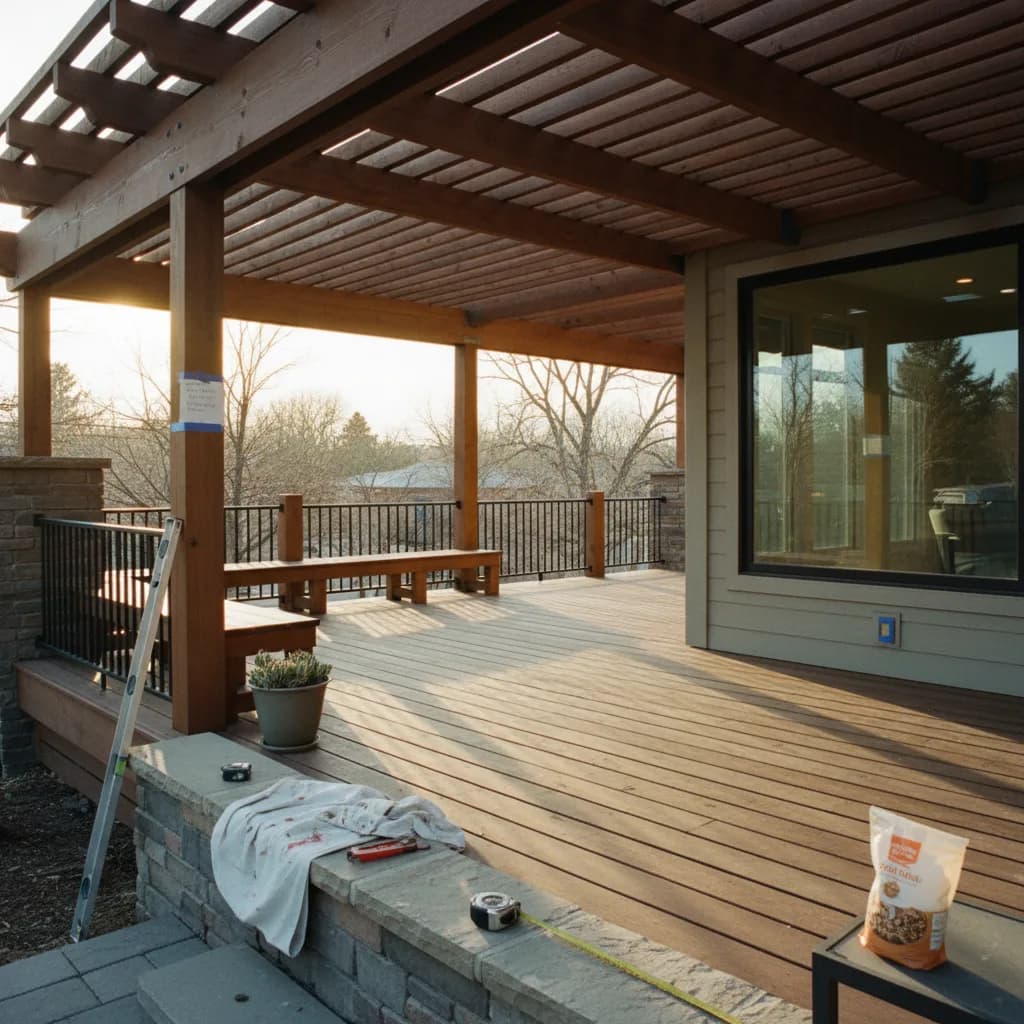
A professionally installed deck or pergola in Denver costs between $22,000 and $55,000 in 2026, with the median project for a 300-square-foot composite deck landing at $38,500. Costs can start lower, in the $12,000 to $18,000 range, for replacing deck boards on an existing frame, or for simple ground-level platforms that do not require extensive railings or footings. However, most new builds for single-family homes, which require engineering, permits, and stairs, will fall squarely within the primary range. Final costs are driven by material choices, site complexity, and added features.
In a Nutshell: Denver Deck & Pergola Costs
- Total Cost Range: $12,000 to $85,000+
- Median Mid-Range Project: $38,500 for a 300 sq. ft. composite deck with standard aluminum railings.
- Typical Timeline: Four to seven weeks from signed contract to final inspection.
- Biggest Surprise Line Item: Foundation and footings. Due to Denver's expansive clay soils and frost line requirements, engineered footings can cost $4,000 to $8,000, a figure often underestimated by homeowners.
What a Deck Actually Costs in Denver
The cost of Denver decks and pergolas varies based on size, materials, and complexity. We have categorized projects into three tiers to provide a clearer picture of what homeowners actually pay. The bottom of the Basic range typically represents a resurfacing project or a small, simple ground-level deck, not a full new build.
| Tier | Cost Range (2026) | Typical Scope |
|---|---|---|
| Basic | $15,000, $25,000 | Under 200 sq. ft. pressure-treated pine, simple rectangular design, minimal stairs, wood railings. |
| Mid-Range | $25,000, $55,000 | 250-400 sq. ft. composite decking (Trex or similar), aluminum or composite railings, single staircase, picture-frame border. |
| Premium | $55,000, $85,000+ | Over 400 sq. ft. premium composite or Ipe hardwood, multi-level design, custom railings (glass or cable), integrated low-voltage lighting, attached pergola, rough-ins for an outdoor kitchen. |
For a typical mid-range $38,500 project, the cost breakdown is as follows:
- Materials (Decking, Framing, Hardware): 45%
- Labor: 35%
- Foundation & Footings: 10%
- Permits, Engineering & Design: 5%
- Finishes (Railings, Stairs): 5%
Why Is It More Expensive in Denver Than in the Surrounding Region?
Building a deck in Denver proper carries a premium over projects in outlying suburbs or other parts of Colorado. Three main factors contribute to the higher decks pergola denver cost.
1. Labor Rates: A persistent shortage of skilled labor in the Denver metro area drives up wages. According to the Colorado Department of Labor and Employment's data for the Denver-Aurora-Lakewood MSA, experienced carpenters and framing contractors command median hourly wages of $28 to $45. When factoring in contractor overhead, insurance, and profit, the billable hourly rate for a qualified deck builder is between $75 and $120. This is ten to twenty percent higher than in Colorado Springs or Fort Collins.

2. Climate and Code Requirements: Denver's climate dictates specific, non-negotiable construction standards. Decks must be engineered to support a snow load of at least 30 pounds per square foot (psf). Footings must be dug to a minimum depth of 36 inches to get below the frost line, preventing heave during freeze-thaw cycles., the high-altitude sun's intense UV radiation degrades wood and lower-quality composites faster, pushing consumers toward more durable, and therefore more expensive, materials.
3. Neighborhood Premiums and Logistics: Contractor pricing often includes a premium for working in high-demand, affluent neighborhoods like Cherry Creek, Hilltop, and Washington Park. Logistical challenges such as limited street parking for work vehicles, smaller lot sizes restricting material storage, and stricter HOA architectural reviews can add five to ten percent to the total project cost compared to a project in a newer suburban development with easier access.
What Do Real Denver Homeowners Spend in 2026?
Three modeled project scenarios for 2026, built from the Renology Cost Index and typical local scopes. These are illustrative estimates, not completed client projects:
- $29,500 in Sloan's Lake: This project involved replacing an old, failing wood deck with a new 250-square-foot structure. The homeowners chose a mid-grade composite decking (Trex Select) in a standard color. The design was a simple rectangle with one set of stairs and black aluminum railings. The price included demolition of the old deck, new concrete caisson footings, and all permits.
- $52,000 in Central Park: For a newer home, this project created a 400-square-foot outdoor living space. It featured two levels, a main deck area and a lower landing, using a higher-end composite (TimberTech AZEK) with a contrasting picture-frame border. A 12x12-foot cedar pergola was built over the main section, and the railings were a composite material to match the deck.
- $81,000 in Hilltop: This was a premium build on a larger property. The 550-square-foot deck was constructed with Ipe, a Brazilian hardwood, requiring specialized fasteners and installation techniques. The project included a multi-level design with wide, sweeping stairs, tempered glass panel railings for an unobstructed view, and a full low-voltage lighting package integrated into the stair risers and post caps.
Where Does the Money Actually Go?
3 Denver deck builders, editor-screened. 4 questions.
See my 3 matchesA contractor's initial quote may not capture all the expenses required for a safe, code-compliant deck. Homeowners should be prepared for these line items, which are often billed separately or emerge during construction.
- Structural Engineering Plans: $800, $2,500. Required by the city of Denver for most decks over 200 square feet or 30 inches off the ground.
- Permit Fees: $500, $1,500. This covers the city's plan review and inspection process.
- Old Deck Demolition and Haul-Away: $1,500, $3,000. The cost to safely dismantle and dispose of an existing structure.
- Site Preparation and Grading: $1,000, $4,000. If the build site is sloped or uneven, excavation and grading are necessary to ensure proper drainage and a stable foundation.
- Soil Testing: $600, $1,800. In areas with highly expansive soils, a geotechnical report may be needed to design the correct footing system.
- Ledger Board Flashing and Waterproofing: $400, $1,000. Critical for preventing water intrusion where the deck attaches to the house, a common point of failure.
- Utility Location Services: $300, $800. Before digging footings, all underground gas, water, and electrical lines must be marked.
What Stops a Denver Deck From Running Over Budget?
Cost overruns on deck projects in Denver typically stem from three main sources.
First, unforeseen site conditions are the most common issue. Hitting a buried utility line not on city maps or discovering that the soil requires more extensive pier systems can add thousands to the foundation cost. Second, scope creep initiated by the homeowner, such as deciding to add a pergola or built-in benches after the project has started, will invariably increase both material and labor costs. Third, material price fluctuations, especially for lumber and composites, can affect projects with long lead times between the quote and the build start date. A reputable decks pergola contractor in Denver will use an escalation clause to account for this.
To prepare for these possibilities, it is wise to hold a contingency fund. The National Association of Home Builders recommends a ten to fifteen percent contingency on renovations in homes over thirty years old.
Securing the right permits is a critical step in keeping a project on track and avoiding costly fines. For a detailed walkthrough of the local requirements, see our guide: The Denver Decks & Pergolas Permit Playbook 2026.
What Should Your Denver Contractor Include in the Quote?
A detailed, itemized quote is the best tool for comparing bids and preventing misunderstandings. An incomplete quote is a red flag. Ensure your proposal from a Denver decks and pergolas specialist includes these fourteen points:
- Detailed scope of work, including square footage and dimensions.
- Breakdown of all material costs, specifying brands, colors, and types (e.g., Trex Enhance vs. Trex Transcend).
- Cost for demolition and disposal of any existing structures.
- Plan and cost for foundation, including footing depth, diameter, and concrete psi.
- Framing plan, including lumber type (e.g., pressure-treated pine), joist spacing, and hardware (galvanized vs. stainless).
- Labor costs, specified as a fixed price or hourly rate with an estimated total.
- Cost of permits and engineering drawings.
- Allowance for railings, specifying material and style.
- Cost for stairs, including number of treads and riser height.
- Details on ledger board attachment and waterproofing methods.
- Project timeline with start and estimated completion dates.
- Payment schedule tied to project milestones.
- Proof of liability insurance and workers' compensation.
- Warranty information for both materials and labor.
Sources & Methodology
See the Renology Methodology for how sources are reviewed, ranges are normalized, and planning-data limits are handled.
Cost ranges in this guide draw on the following named industry sources, public agency datasets, and Renology editorial research.
- Remodeling Magazine: 2026 Cost vs. Value Report (Mountain Region) (2026)
- Denver Community Planning and Development, Building Permits Division (2026)
- Colorado Department of Labor and Employment, Denver-Aurora-Lakewood MSA Occupational Employment and Wage Statistics (2025)
- National Association of Home Builders (NAHB) Home Building Geography Index (Q1 2026)
- Trex Company, Decking Cost Calculator (2026)
- Renology Project of the Day (POTD) Network, Denver Metro Data (2024-2026)
Renology Take
The most significant pattern we observe in Denver deck projects is a financial and structural mismatch between the visible surface and the hidden foundation. Homeowners spend considerable time selecting decking colors and railing styles, but the long-term success of the structure is determined by what happens below ground. Denver's expansive clay soil and deep frost line are unforgiving. Undersized or shallow footings, common in low-bid proposals, will lead to deck heaving and structural instability within three to five years. The cost to remedy a failed foundation is often greater than the initial cost of the entire deck. The wisest expenditure in any Denver decks pergola 2026 project is on proper geotechnical assessment and over-engineered footings. The part of the deck you cannot see is the part that matters most.
Frequently Asked Questions
How much value does a new deck add to a home in Denver?
Is composite or wood better for the Denver climate?
Do I need a permit for a deck or pergola in Denver?
How long does it take to build a deck in Denver?
What is the best material for a pergola in Denver?
Denver · pre-screened
Get 3 Denver deck bids in 48 hours.
Our editors already vetted Denver deck builders. Answer 4 questions and we send 3 written bids inside 48 hours, with the real price for your scope, not their inflated first-call number.
- Free, no commission
- Pre-screened locally
- Bids inside 48 hours
Takes about 60 seconds. We'll text you when bids arrive.
Sources
- Remodeling Magazine: 2026 Cost vs. Value Report (Mountain Region)
- Denver Community Planning and Development, Building Permits Division
- Colorado Department of Labor and Employment, Denver-Aurora-Lakewood MSA Occupational Employment and Wage Statistics
- National Association of Home Builders (NAHB) Home Building Geography Index
- Trex Company, Decking Cost Calculator
- Renology Project of the Day (POTD) Network, Denver Metro Data