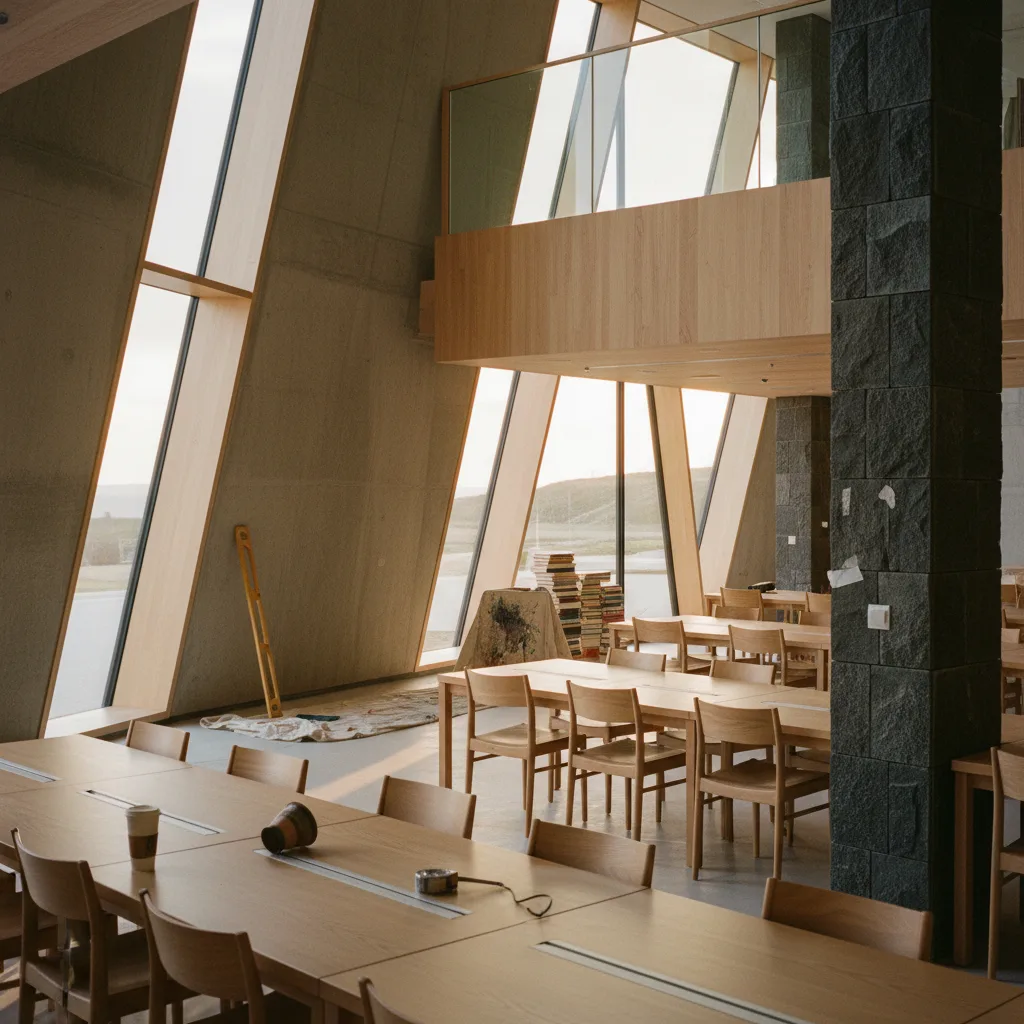
In this episode, we're tackling the big one: Is it smarter to bump out, go up, or build detached? Every homeowner with a growing family and a shrinking house asks this. The sticker shock is real. A recent survey shows the national median for a primary suite addition now tops $200,000, but that number hides the real story. The true home addition cost depends entirely on your existing foundation, your roofline, and your tolerance for surprises. We'll break down the real-world trade-offs for each path, so you can decide which expansion makes sense for your property and your wallet. While costs can start lower for simpler conversions, a full addition is a major capital project.
What This Episode Is About
A typical mid-range primary suite home addition costs between $185,000 and $220,000 nationally. However, the final home addition cost varies widely. Factors include project type (bump-out, second story, or detached unit), structural complexity, material choices, and local labor rates. Simpler conversions can start for less.
If you take three things from this episode, make it these:
- Foundation dictates everything. Your existing slab or crawlspace determines if you can go up or out without a total teardown. The cost of a new foundation is where budgets break.
- Going up is not always cheaper. It saves on excavation but demands massive reinforcement of the floor below. The structural work to carry a second story often costs more than a simple bump-out.
- Detached units have different math. An Accessory Dwelling Unit (ADU) has its own foundation and utilities, which adds cost. But it offers rental income potential and less disruption to your life during construction.
The Real Numbers (National Picture)
3 pros, editor-screened. 4 questions.
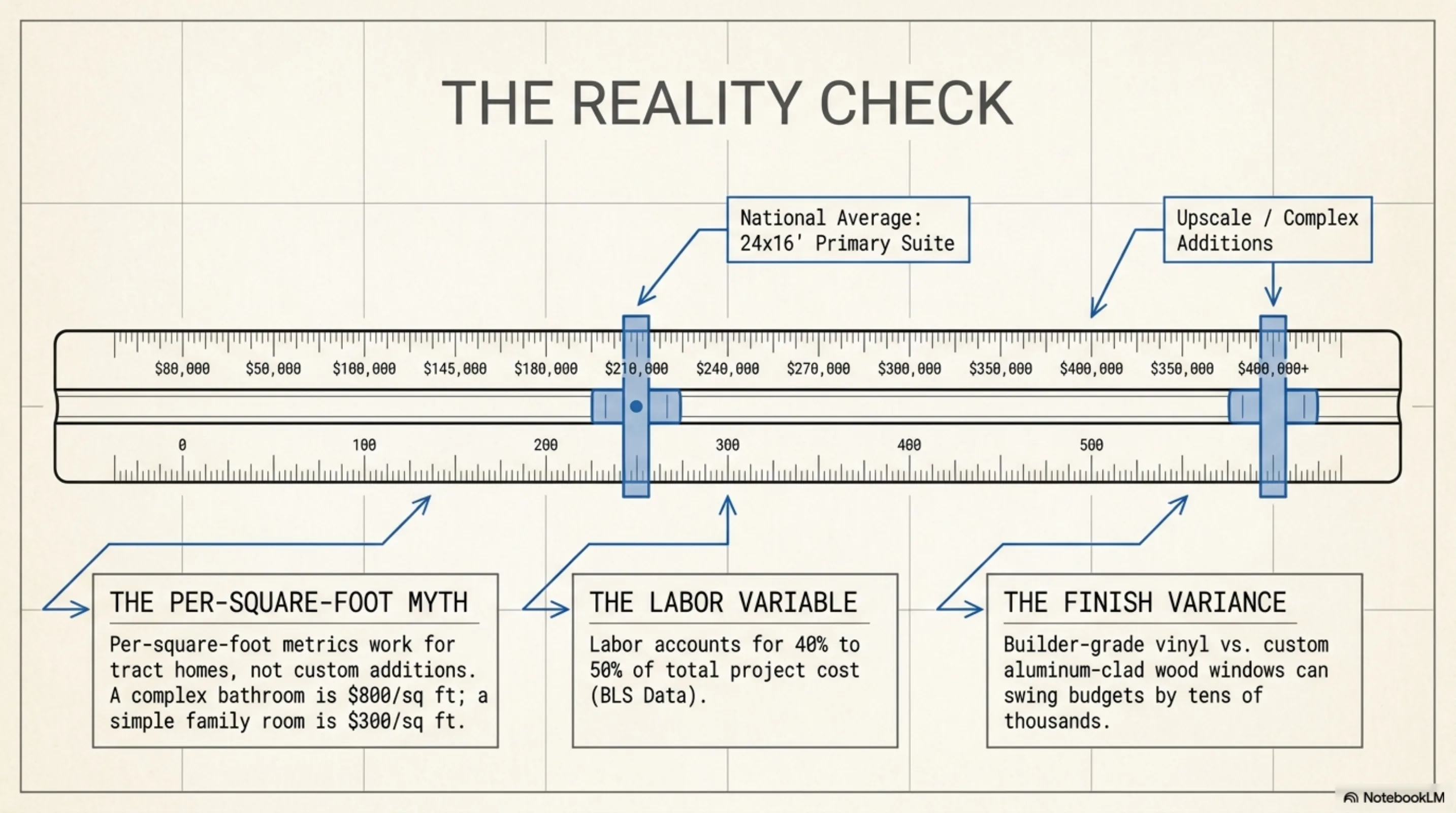
See my 3 matchesLet's get into the numbers. When you see a home addition cost quoted per square foot, be skeptical. That metric is useful for tract home builders, not for custom additions. A small, complex bathroom addition can run $800 per square foot, while a simple family room might be $300. The national average for a 24x16 foot primary suite addition sits around $210,000. For an upscale version with a larger bathroom and custom finishes, that number can easily climb past $400,000.
Why the big range? First, labor. Construction wages vary significantly across the country, a fact reflected in the Bureau of Labor Statistics Occupational Employment and Wage Statistics data. Labor can account for 40 to 50 percent of the total project cost. Second, structure. Building on a flat lot with good soil is straightforward. Building on a hillside or in an area with expansive clay soil requires expensive engineered foundations. Finally, finishes. The difference between builder-grade vinyl windows and custom aluminum-clad wood windows is tens of thousands of dollars. A good general contractor is essential to manage these variables. You can learn more in our guide to hiring a contractor.
What Most Homeowners Get Wrong About This
The biggest mistake homeowners make is focusing on the finishes instead of the shell. You can spend weeks picking out tile, but the items that destroy a budget are the ones you can't see. The real costs are buried in the ground or hidden in the walls. Most people underestimate three key areas:
- Soft Costs: This is everything you pay for before a hammer swings. Think architectural drawings, structural engineering reports, soil tests, and permit fees. These can easily add up to $15,000 to $30,000 before you even break ground.
- Site Work: If you're bumping out or building detached, you have to prepare the land. This means excavation, grading, and potentially trenching for new sewer and water lines. If your main panel can't handle the new load, that's another $5,000 for an electrical service upgrade.
- Structural Surprises: Opening up the walls of an older home is always a gamble. You might find dry rot, outdated knob-and-tube wiring, or framing that isn't up to modern code. The National Association of Home Builders recommends a ten to fifteen percent contingency on renovations in homes over thirty years old. I think that's the bare minimum. You can find out what to expect by reading our home addition permit playbook.
The 3 Questions Every Homeowner Should Ask
When you're vetting contractors, don't just ask for references. Ask hard questions about process and structure. If they can't answer these three, they aren't the right builder for your job.
1. Can you walk me through the load path for this addition?
Why this matters: This question tells you if they think like a builder or a salesman. A continuous load path, from the roof rafters down through the walls and into the foundation, is what keeps your house standing. An experienced contractor can trace it for you on the plans. What a good answer sounds like: "The new roof trusses will bear on this doubled-up top plate, carrying the load down through these 2x6 studs to the rim joist, which is secured to the new foundation wall with seismic ties." It shows they understand the structure. Learn more in our guide to foundations.
2. What is your plan for site access and material staging?
Why this matters: An addition requires heavy equipment and mountains of material. A thoughtless contractor can destroy your driveway, your landscaping, and your relationship with your neighbors. You need a clear logistics plan from day one. What a good answer sounds like: "We'll lay down plywood to protect the driveway for the concrete truck. The excavator will access the backyard through this side gate. All material deliveries will be staged here on the parkway, and the site will be cleaned daily."
3. What is the scope-lock date for selections?
Why this matters: Change orders are the number one cause of budget overruns. A professional firm will give you a hard deadline to finalize all your decisions on things like plumbing fixtures, tile, and paint colors. This allows them to order materials and schedule subcontractors efficiently. What a good answer sounds like: "We need all your plumbing and electrical fixture selections finalized by the end of week four, right after the rough-in inspection is signed off. Any changes after that date will require a formal change order and may impact the schedule."
What Changed in 2026
The construction world is always changing. If you got a quote back in 2024, the landscape looks a little different now in 2026. First, the financing environment has stabilized. The volatile interest rates of the post-pandemic years have settled, and HELOCs are generally available in the more predictable 4 to 5 percent range. This makes budgeting for your home addition cost much more straightforward.
On the materials front, the supply chain has largely caught up. Lead times for windows, trusses, and engineered lumber are back to a more normal six to eight weeks, down from the six-month waits we saw a few years ago. This helps keep projects on schedule. The Inflation Reduction Act (IRA) tax credits are still a factor. If your addition includes new high-efficiency windows, doors, or a heat pump HVAC system, you can still claim significant federal credits, which helps offset the initial cost.
Finally, building codes continue to get stricter. More jurisdictions have now adopted the 2024 International Residential Code (IRC). This means more stringent requirements for insulation, air sealing, and in some regions, seismic or hurricane reinforcement. It adds a little cost but results in a safer, more efficient home.
The Renology Take
Here's the bottom line. An addition is not a cosmetic upgrade. It is a structural project, first and foremost. Homeowners get fixated on the fun stuff: the walk-in shower, the kitchen island, the flooring. But none of that matters if the box it sits in isn't sound. The real project, and the real home addition cost, is in the concrete, the bolts, and the beams.
The decision to go up, out, or detached should be made based on the structural capacity of your existing house and the constraints of your lot. A deck that doesn't ledger into solid framing isn't a deck, it's a porch waiting to fall. The same is true for an addition. A solid, weatherproof, and properly tied-in shell is ninety percent of the job. Get that right, and the finishes are easy. Get it wrong, and you've built a very expensive problem. For more on this, see our complete roofing guide.
Sources & Methodology
- Remodeling Magazine, 2026 Cost vs. Value Report
- National Association of Home Builders (NAHB), Remodeling Market Index (RMI)
- U.S. Census Bureau, Monthly Construction Spending Survey
- U.S. Bureau of Labor Statistics (BLS), Occupational Employment and Wage Statistics
- International Code Council (ICC), 2024 International Residential Code (IRC)
- U.S. Department of Energy, Inflation Reduction Act of 2022 Homeowner Resources
- Renology editorial team's analysis of national project data and contractor interviews.
Get 3 renovation bids in 48 hours.
Our editors already screened contractors. Answer 4 questions; we send 3 written bids inside 48 hours, with the real price for your scope, not their inflated first-call number.
Send my 3 bidsFree. No commission. If a match doesn't fit, we'll send another.