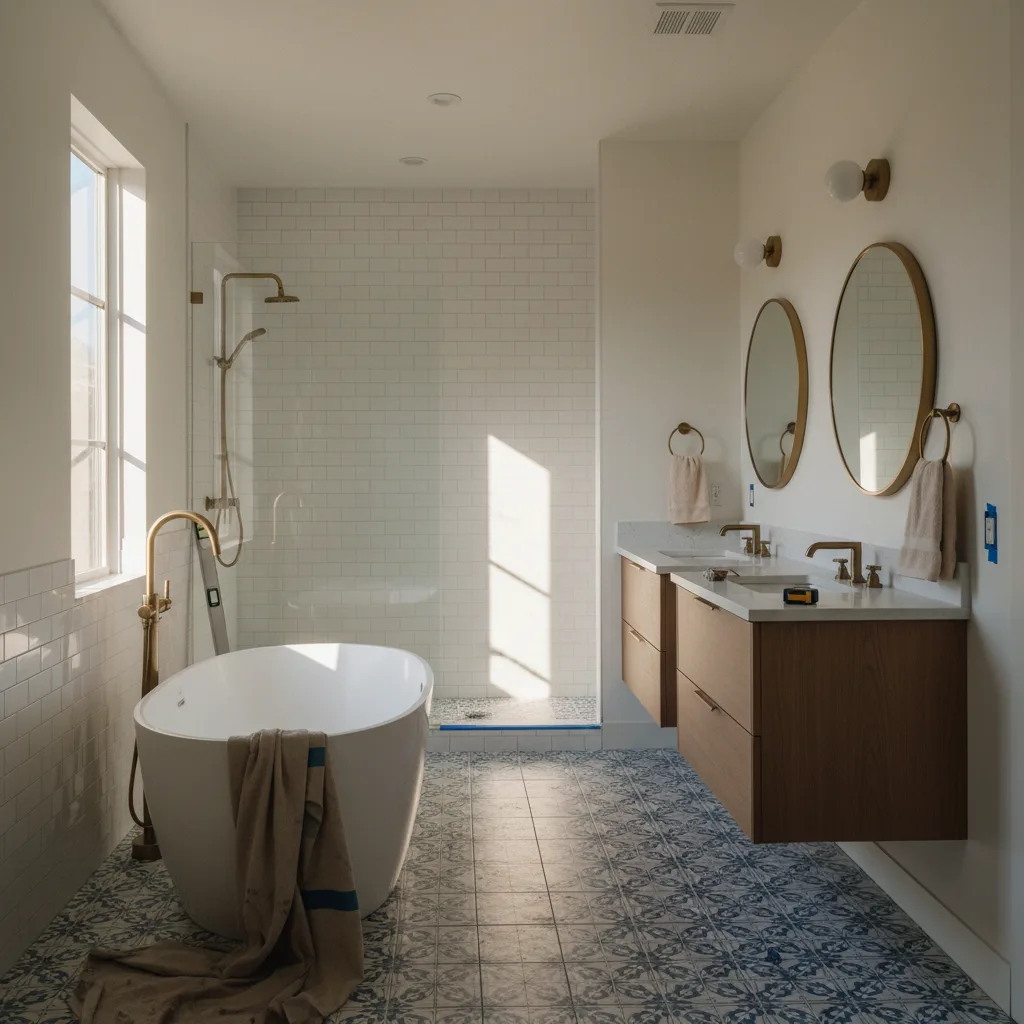
A full bathroom remodel in San Diego costs between $35,000 and $70,000 in 2026, with a median project cost of approximately $48,000 for a mid-range renovation. This price point reflects a complete gut and replacement of a standard five-by-nine-foot bathroom. Costs can start lower, in the $22,000 to $35,000 range, for cosmetic updates or projects in smaller condominium units that do not involve moving plumbing or electrical lines. High-end, luxury renovations in premium neighborhoods frequently exceed $100,000, especially when reconfiguring the layout or expanding the footprint.
In a Nutshell
- Total Cost Range: $22,000 (cosmetic refresh) to $125,000+ (luxury expansion).
- Typical Mid-Range Project: $35,000, $70,000 for a full gut remodel of a 45-70 square foot bathroom.
- Project Timeline: Four to nine weeks, depending on permit approvals and material lead times.
- Biggest Surprise Line Item: Advanced waterproofing systems, such as a liquid-applied membrane or foam shower base, can add $1,500, $4,000, a critical cost for preventing moisture damage in San Diego's coastal climate.
What does a bathroom remodel actually cost in San Diego?
The total cost for a San Diego bathroom remodel is determined by the scope of work, material quality, and labor complexity. We've segmented project costs into three common tiers based on data from San Diego contractors and national benchmarks from the National Kitchen & Bath Association (NKBA).
| Tier | Cost Range (2026) | Typical Scope |
|---|---|---|
| Basic / Refresh | $22,000, $35,000 | Cosmetic updates in a small (under 45 sq. ft.) bathroom. Includes new paint, pre-fabricated vanity, standard toilet, reglazed tub, and budget-friendly ceramic or porcelain tile. Plumbing and electrical layouts remain unchanged. |
| Mid-Range | $35,000, $70,000 | Full gut renovation of a 45-70 sq. ft. bathroom. Includes semi-custom vanity, quartz or granite countertop, mid-grade porcelain tile, new tub or shower conversion with glass enclosure, updated toilet, and new lighting fixtures. May include moving one plumbing fixture. |
| Premium / Luxury | $70,000, $125,000+ | Major renovation or expansion. Includes custom cabinetry, natural stone countertops and tile, a freestanding tub, a curbless walk-in shower with multiple showerheads, smart toilet, radiant floor heating, and significant plumbing and electrical reconfiguration. |
For a typical mid-range project costing $48,000, the budget allocation is approximately:
- Labor: 45% ($21,600)
- Fixtures (tub, toilet, sinks, faucets): 18% ($8,640)
- Cabinetry & Vanity: 15% ($7,200)
- Tile & Surfaces (including countertops): 12% ($5,760)
- Plumbing & Electrical: 7% ($3,360)
- Finishes, Permits & Other: 3% ($1,440)
The bottom-of-range case, often seen in marketing, typically applies to a surface-level refresh in a small condominium bathroom, not the comprehensive renovation most single-family homeowners undertake.
Why is it more expensive in San Diego than the national median?
A bathroom remodel in San Diego costs fifteen to thirty percent more than the national median. This premium is driven by three primary factors: labor rates, material specifications for the coastal environment, and neighborhood-specific logistics.
1. Skilled Labor Rates: San Diego has one of the highest construction labor costs in the country. According to the California Department of Industrial Relations prevailing wage data for San Diego County, the total hourly compensation for journeyman tradespeople in 2026 is substantial. A union plumber can cost the contractor $100, $125 per hour, an electrician $95, $115 per hour, and a skilled tile setter $80, $100 per hour. These rates, which include benefits and overhead, directly contribute to the 45-50% labor portion of a project budget.

2. Material and Permitting Standards: The coastal climate, with its salt air and humidity, necessitates higher-grade materials and more rigorous waterproofing methods. Contractors often specify corrosion-resistant fixtures (316 stainless steel or PVD finishes), vapor barriers, and advanced waterproofing systems like Schluter-Kerdi or RedGard, which add to material costs. the City of San Diego Development Services Department has stringent code requirements, particularly for plumbing and electrical work, that increase both permitting fees and the labor hours needed for compliance.
3. Neighborhood Premiums and Site Access: Project costs see a significant uplift in affluent coastal neighborhoods. A bathroom contractor in San Diego will factor in higher operating costs, stricter HOA rules, and logistical challenges like limited parking and site access in areas such as La Jolla, Del Mar, and Coronado., renovating older homes, common in neighborhoods like North Park and Mission Hills, often uncovers the need for extensive plumbing and electrical upgrades to replace outdated cast iron or galvanized pipes, adding thousands to the final bill.
What do real San Diego homeowners spend in 2026?
Three modeled project scenarios for 2026, built from the Renology Cost Index and typical local scopes. These are illustrative estimates, not completed client projects:
- East Village Condo ($38,500): The owner of a 750-square-foot condo needed to update a single, 40-square-foot bathroom. To keep costs down, the layout was not altered. The project included a new pre-fabricated vanity, quartz countertop, porcelain tile floor and shower surround, a new toilet, and updated LED lighting. The bathtub was reglazed instead of replaced. The project took four weeks and was managed to avoid major disruptions in the multi-unit building.
- North Park Craftsman ($56,000): This project involved a full gut remodel of a 60-square-foot hall bathroom in a 1920s home. The work required replacing old galvanized plumbing with copper and PEX, a common issue in the area. The design featured period-appropriate hex tile on the floor, subway tile in the new walk-in shower, a custom-built vanity to match the home's style, and new fixtures. Unforeseen termite damage in the subfloor added $2,800 to the budget.
- Carmel Valley Primary Suite ($95,000): In this larger suburban home, the primary bathroom was expanded from 90 to 120 square feet by incorporating an adjacent closet. This luxury project included a freestanding soaking tub, a large curbless shower with a linear drain and dual showerheads, custom rift-sawn oak cabinetry, marble countertops, and radiant floor heating. The significant plumbing and structural changes required detailed plans and a longer permit review process, extending the project timeline to ten weeks.
Where does the money actually go?
3 San Diego bathroom remodelers, editor-screened. 4 questions.
See my 3 matchesA contractor's initial quote often focuses on visible items like tile and fixtures. However, a significant portion of the budget is allocated to less obvious but critical line items. Homeowners should ensure these are accounted for to avoid surprises.
- Demolition and Debris Removal: $1,500, $3,000
- Permitting Fees: $800, $2,500 (depending on scope; higher if structural changes are involved)
- Advanced Waterproofing: $1,500, $4,000 (for shower pans, walls, and flooring)
- Ventilation Upgrades: $750, $1,800 (for a new, properly sized, and vented exhaust fan to meet code)
- Plumbing Modifications: $2,000, $5,000 (to move a toilet or shower drain)
- Electrical Work: $1,500, $4,000 (to add new circuits for lighting, heated floors, or a dedicated outlet)
- Hazardous Material Abatement: $500, $3,000+ (for testing and professional removal of asbestos or lead paint found in older homes)
- Subfloor Repair/Reinforcement: $1,000, $3,500 (to fix water damage or reinforce joists for a heavy tub)
What stops a San Diego bathroom project from running over budget?
Budget overruns in bathroom renovations are common, typically stemming from three sources: unforeseen conditions, scope creep, and material delays.
First, uncovering hidden problems like mold, wood rot, or outdated plumbing after demolition is the leading cause of budget increases. The National Association of Home Builders recommends a ten to fifteen percent contingency on renovations in homes over thirty years old. For a $50,000 project, this means setting aside $5,000 to $7,500.
Second, scope creep, where homeowners add or upgrade elements mid-project, can rapidly inflate costs. Deciding to add a heated floor or upgrade from porcelain to marble tile after the work has begun requires a formal change order, which includes additional material and labor costs, plus contractor overhead.
Third, delays in material selection and delivery can cause expensive scheduling disruptions. If a specific tile or a custom vanity is backordered, it can halt progress and force tradespeople to be rescheduled, often at a premium. Finalizing all material selections before demolition begins is the most effective strategy to prevent this.
What permits are required for a bathroom remodel?
Determining which permits are needed from the City of San Diego Development Services Department is a critical first step. Generally, cosmetic updates like painting or replacing a faucet do not require a permit. However, most full remodels do. You can find a detailed breakdown of the specific triggers for plumbing, electrical, and building permits in our guide. For a complete overview, see our San Diego Bathroom Permit Playbook 2026.
What should your San Diego contractor include in the quote?
A detailed, itemized quote is the foundation of a successful project. A vague proposal is a red flag. Your quote from a bathroom contractor in San Diego should clearly list the following:
- Scope of Work: A detailed narrative of the project.
- Demolition: Specification of what will be removed and how debris will be handled.
- Framing and Structural Changes: Any modifications to walls or joists.
- Plumbing: Details on all new pipes, drains, valves, and fixture installations.
- Electrical: All new wiring, outlets, switches, and lighting installations.
- Mechanical: Ventilation fan installation and ducting.
- Insulation and Drywall: Type and finish level.
- Waterproofing: Specific products and methods to be used in wet areas.
- Tile and Stone Work: Includes prep, installation, grout, and sealant.
- Cabinetry and Vanity Installation: Details on sourcing (custom, semi-custom, stock) and installation.
- Countertop Fabrication and Installation: Material specified.
- Finish Carpentry: Baseboards, trim, and door installation.
- Painting: Surfaces to be painted, number of coats, and paint grade.
- Permit and Inspection Coordination: Specifies who is responsible for pulling permits and scheduling inspections.
The Renology Take
The most significant challenge in a bathroom remodel is not picking the right tile; it is managing the complex interplay of specialized trades in a confined, wet environment. Homeowners often focus on the finish materials, which represent only 20-30% of the total cost. The real project risk and expense lie in the other 70-80%: the labor for demolition, plumbing, electrical, and waterproofing. A successful project hinges on a contractor who excels at sequencing these trades. The plumber cannot set the drain until the framer is done, the tile setter cannot work until the waterproofing is cured, and the electrician needs access at multiple stages. This logistical complexity is the primary source of timeline delays and budget overruns. Prioritizing a contractor's project management and communication skills over a slightly lower bid is the most critical decision a homeowner will make.
Sources & Methodology
See the Renology Methodology for how sources are reviewed, ranges are normalized, and planning-data limits are handled.
Cost ranges in this guide draw on the following named industry sources, public agency datasets, and Renology editorial research.
- Remodeling Magazine, 2026 Cost vs. Value Report (Pacific Region) (2026)
- National Association of Home Builders (NAHB), Remodeling Market Index (Q1 2026)
- California Department of Industrial Relations, San Diego County Prevailing Wage Data (2026)
- National Kitchen & Bath Association (NKBA), 2026 Design Trends Report (2026)
- City of San Diego Development Services Department, Permit Fee Schedule (2026)
- Renology Project of the Day (POTD) Network, San Diego Metro Data (2025-2026)
Frequently Asked Questions
What is the ROI on a bathroom remodel in San Diego?
How long does a typical bathroom remodel take in San Diego?
Can I save money by doing some of the work myself (DIY)?
What are the most common hidden costs in a bathroom remodel?
San Diego · pre-screened
Get 3 San Diego bathroom bids in 48 hours.
Our editors already vetted San Diego bathroom remodelers. Answer 4 questions and we send 3 written bids inside 48 hours, with the real price for your scope, not their inflated first-call number.
- Free, no commission
- Pre-screened locally
- Bids inside 48 hours
Takes about 60 seconds. We'll text you when bids arrive.
Sources
- Remodeling Magazine, 2026 Cost vs. Value Report (Pacific Region)
- National Association of Home Builders (NAHB), Remodeling Market Index
- California Department of Industrial Relations, San Diego County Prevailing Wage Data
- National Kitchen & Bath Association (NKBA), 2026 Design Trends Report
- City of San Diego Development Services Department, Permit Fee Schedule
- Renology Project of the Day (POTD) Network, San Diego Metro Data