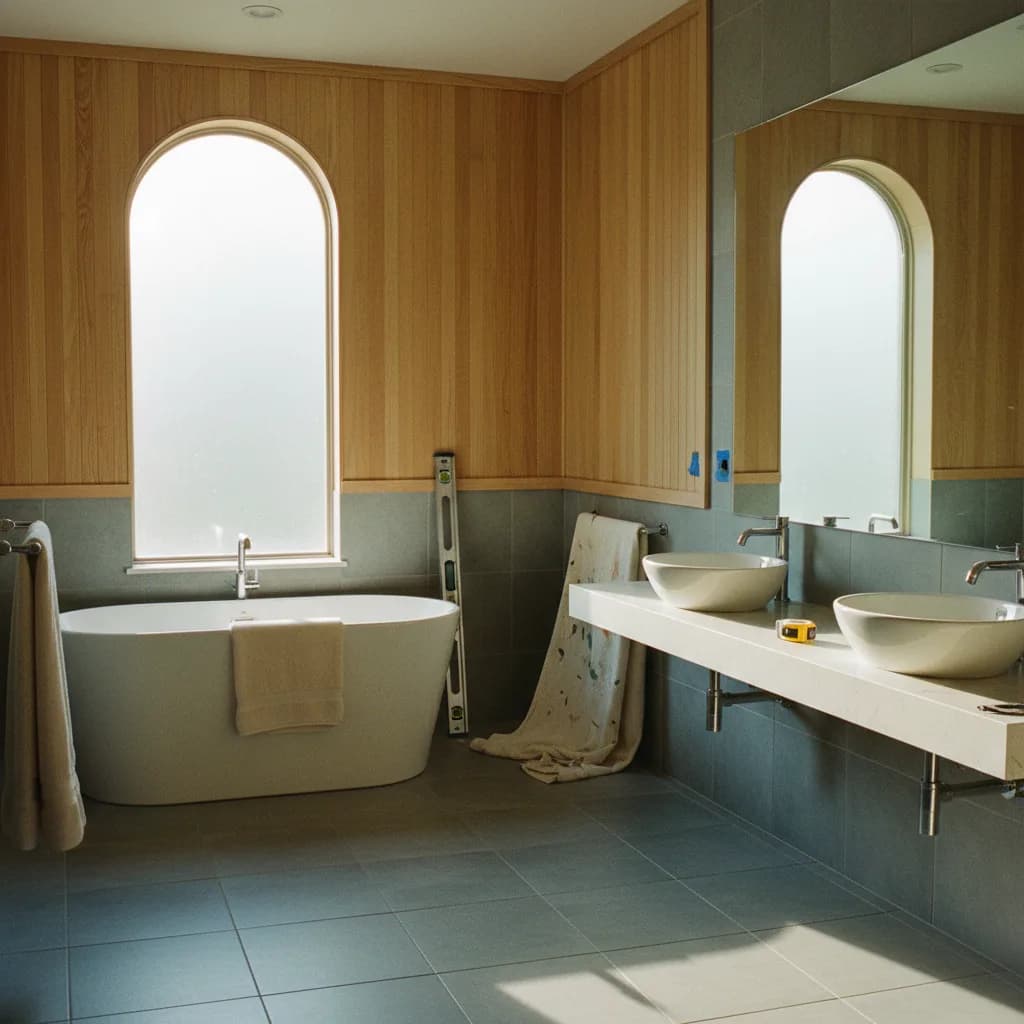
A mid-range bathroom remodel in Houston costs $24,500 to $41,000 in 2026. While a basic refresh of a small bathroom in Houston can start lower, around $11,000 for cosmetic updates in a condo, most full renovations involving licensed contractors and fixture relocation land squarely in this higher range. Costs reflect local labor rates, material sourcing, and the critical need for moisture-resistant construction suitable for the Gulf Coast climate.
In a Nutshell
- Total Cost Range: $11,000, $95,000+
- Mid-Range Project Cost: $32,750 (median)
- Typical Timeline: 4, 9 weeks
- Biggest Surprise Line Item: High-capacity ventilation and waterproofing systems ($2,500, $6,000) to combat Houston's pervasive humidity.
What Does a Bathroom Remodel Actually Cost in Houston?
The total cost of a bathroom remodel in Houston hinges on three factors: the size of the space, the quality of materials, and the extent of changes to the existing layout. We have segmented project costs into three tiers based on a standard five-by-eight-foot bathroom. These figures, derived from Renology's project data and the National Kitchen & Bath Association (NKBA) 2026 market outlook, provide a clear baseline for budgeting.
| Tier | Cost Range (2026) | Scope of Work |
|---|---|---|
| Basic / Refresh | $11,000, $18,500 | Cosmetic updates. Retains existing layout. Includes new paint, pre-fabricated vanity, standard toilet, reglazed tub, and ceramic tile floor. |
| Mid-Range | $24,500, $41,000 | Full gut renovation. May involve moving some plumbing. Includes a new vanity with stone countertop, porcelain tile, new shower system, and upgraded ventilation. |
| Premium / Luxury | $55,000, $95,000+ | Layout reconfiguration. Includes custom cabinetry, natural stone surfaces, a high-end shower system (e.g., steam shower), radiant floor heating, and designer fixtures. |
For a typical mid-range project in Houston, the budget allocation is as follows, according to Remodeling Magazine's 2026 Cost vs. Value report:
- Labor: 35%
- Cabinetry & Vanity: 20%
- Plumbing Fixtures: 15%
- Tilework (Floor & Walls): 12%
- Countertops: 8%
- Electrical & Lighting: 5%
- Finishes & Paint: 5%
The lower end of the cost spectrum, under $18,500, typically applies to a cosmetic refresh in a smaller guest bathroom or condo where the plumbing and electrical layouts are not altered. Most projects that homeowners undertake with a general contractor fall into the mid-range or higher.
Why Is a Bathroom Remodel More Expensive in Houston?
Project costs in the Houston metro area are consistently ten to twenty percent higher than in smaller Texas cities. This premium is driven by a combination of skilled labor demand, neighborhood economics, and climate-specific building requirements.
1. Skilled Labor Rates
A persistent demand for skilled tradespeople in the booming Houston construction market keeps labor rates elevated. According to the Texas Workforce Commission's Gulf Coast WDA occupational wage data for 2026, experienced plumbers, electricians, and tile setters command hourly wages that are among the highest in the state. A reputable bathroom contractor in Houston must pay these rates to retain qualified, licensed, and insured crews, a cost that is passed directly to the homeowner.

2. Neighborhood Premiums
Contractor pricing adjusts to the local real estate market. In affluent neighborhoods like River Oaks and West University Place, or historically significant areas like The Heights, project costs are higher. This reflects increased contractor overhead for insurance, logistics, and compliance with stricter homeowners' association (HOA) rules. Client expectations in these areas also trend toward higher-end materials and finishes, further pushing up the median project cost.
3. Climate and Soil Considerations
Houston's subtropical climate and expansive clay soil necessitate specific, non-negotiable construction methods. The high humidity requires advanced waterproofing systems (beyond a simple topical membrane) and powerful ventilation fans to prevent mold and mildew, adding $2,500 to $6,000 to a project., Houston's infamous gumbo soil can cause foundation shifts, requiring contractors to build in flexibility and potentially reinforce subflooring to prevent cracked tile and broken plumbing lines over time. These climate-driven requirements are not optional upgrades but essential components of a durable Houston bathroom.
What Do Real Houston Homeowners Spend in 2026?
Three modeled project scenarios for 2026, built from the Renology Cost Index and typical local scopes. These are illustrative estimates, not completed client projects:
- Project 1: The Heights Bungalow Primary Bath ($38,500)
A full gut renovation of a 70-square-foot primary bathroom in a 1930s bungalow. The project involved updating knob-and-tube wiring and cast-iron plumbing to meet current code. The budget included a custom-built vanity to fit a non-standard space, porcelain tile designed to look like historic hex tile, a walk-in shower with a frameless glass door, and a high-CFM exhaust fan vented directly outside. - Project 2: Sugar Land Primary Suite Expansion ($72,000)
This project expanded the primary bathroom into an adjacent closet, increasing the footprint to 150 square feet. Costs included significant structural work, relocating all plumbing fixtures, and adding a new electrical subpanel. The finishes were premium: a freestanding soaking tub, a large steam shower with multiple heads, quartz countertops, custom cabinetry, and designer lighting. - Project 3: Memorial High-Rise Condo Guest Bath ($16,500)
A cosmetic refresh of a 40-square-foot guest bathroom. The layout remained the same. Work included replacing the vanity with a high-quality pre-fabricated unit, installing a new toilet and sink fixtures, reglazing the existing cast-iron tub, new paint, and installing new luxury vinyl tile (LVT) flooring over the existing tile. All work had to comply with strict building management rules for noise and water shutoffs.
Where Does the Money Actually Go? The Hidden Costs
3 Houston bathroom remodelers, editor-screened. 4 questions.
See my 3 matchesA contractor's initial quote often covers the visible elements. However, several critical line items may only appear later as change orders or separate expenses. Homeowners should budget for these possibilities from the start.
- Permit Fees: A permit from the Houston Permitting Center is required for any project that alters plumbing, electrical, or structural systems. Expect costs of $450 to $900.
- Advanced Waterproofing System: Standard topical sealants are insufficient for Houston's humidity. A full system like Schluter-KERDI adds $1,500 to $3,000 but is essential for longevity.
- High-Capacity Ventilation: A simple fan is not enough. A properly sized, ducted exhaust fan rated for the bathroom's cubic footage costs $800 to $2,200 installed.
- Subfloor Repair or Replacement: Water damage is common in older bathrooms. Replacing rotted or unstable subflooring can cost $1,200 to $4,500.
- Plumbing Relocation: Moving a toilet or shower is complex work. Each fixture relocation can add $3,000 to $6,500 to the plumbing bill.
- Mold Remediation: If demolition reveals mold, work must stop for professional remediation. This can add an unexpected $2,500 to $7,000 and delay the project by a week or more.
- Asbestos or Lead Abatement: In homes built before 1980, disturbing flooring, insulation, or paint may require certified abatement services, costing $1,800 to $5,500.
- Waste Disposal: Demolition debris removal via a dumpster rental or hauling service can cost $500 to $1,200.
What Stops a Houston Bathroom Remodel From Running Over Budget?
Budget overruns are common, but they are not inevitable. Most issues stem from three primary sources. Understanding them allows for proactive planning.
- Unforeseen Conditions: Houston's climate is tough on buildings. Opening up walls frequently reveals hidden water damage, termite activity, or deteriorating cast-iron plumbing. These issues are impossible to quote upfront and must be addressed, adding cost and time. The National Association of Home Builders recommends a ten to fifteen percent contingency on renovations in homes over thirty years old. For a $30,000 bathroom, this means having an extra $3,000 to $4,500 set aside.
- Scope Creep: This happens when homeowners make changes or additions after the project has begun. Deciding to add a heated floor or upgrade from porcelain to marble tile mid-project creates a cascade of effects on materials, labor, and timeline. Locking in all selections before demolition begins is the most effective way to prevent this. A detailed remodeling budget is key.
- Vague Contractor Agreements: A quote that says "Install new shower" is not sufficient. A detailed scope of work should specify the brand of valve, the type of waterproofing membrane, the tile pattern, and the grout type. Ambiguity in the contract leads to disputes and unexpected charges for items the homeowner assumed were included.
What No One Else Covers
Many cost guides focus on national averages for tile and fixtures but fail to address the specific engineering challenges of building in Houston. The two most under-budgeted elements are ventilation and subfloor preparation, both directly related to the local climate and geology.
First, ventilation is not just about a fan. It's about air changes per hour (ACH). In a high-humidity environment, a bathroom needs a mechanical ventilation system capable of replacing the entire volume of air eight to ten times per hour to prevent moisture from lingering and penetrating drywall. This requires a fan with a specific cubic feet per minute (CFM) rating, properly sized ducting, and a clear path to the exterior. A cheap, low-CFM fan from a big-box store simply recirculates damp air, creating a breeding ground for mold. A proper system is a non-negotiable cost for a durable bathroom in this city.
Second, the ground itself is a factor. Houston's expansive clay soil causes foundations to shift, a phenomenon local homeowners know well. For a bathroom, this means a standard subfloor installation may not be adequate. Contractors may need to add extra reinforcement or install an uncoupling membrane (like Schluter-DITRA) beneath the tile. This membrane allows the tile floor to float independently of the subfloor, absorbing differential movement and preventing cracks in the tile and grout lines. This is a technical detail often skipped in basic quotes, but it's the difference between a floor that lasts five years and one that lasts twenty-five.
Securing a Permit for Your Houston Bathroom Remodel
Any bathroom remodel in Houston that involves altering the plumbing, electrical, or structural systems requires a permit from the Houston Permitting Center. This is not an optional step; it ensures the work is done to code and is safe. The process involves submitting detailed plans for review, undergoing several inspections during the project (e.g., rough-in plumbing, electrical), and a final inspection upon completion. Navigating this process can be complex. For a detailed walkthrough of the application, required documents, and inspection schedules, see our complete Houston bathroom permit playbook for 2026. A good bathroom contractor in Houston will typically handle the permit application process as part of their fee.
What Should Your Houston Contractor Include in the Quote?
An acceptable quote is a detailed scope of work, not a one-page estimate. It should break down the project into specific line items. Your quote from a prospective bathroom contractor in Houston should include:
- Detailed Scope of Work: A full description of all tasks to be performed.
- Demolition: Specifies what will be removed and how debris will be handled.
- Framing and Structural Changes: Any modifications to walls or joists.
- Plumbing (Rough-in and Final): Specifies moving or adding lines and installing fixtures. Should name fixture brands or allowances.
- Electrical (Rough-in and Final): Details on new wiring, outlets, switches, and lighting installation.
- HVAC: Installation of a new exhaust fan and any ducting work.
- Insulation: Type and R-value of insulation to be used.
- Drywall and Cement Board: Installation, taping, and finishing.
- Waterproofing: Specifies the exact system and materials to be used in wet areas.
- Tilework: Includes layout, type of tile, grout, and sealant.
- Cabinetry and Countertops: Details on vanity and countertop installation.
- Painting and Finishing: Specifies paint grades and number of coats.
- Project Timeline: A start date and an estimated completion date.
- Payment Schedule: Clear breakdown of when payments are due.
Renology Take
The most significant pattern we observe in Houston bathroom remodels is a misalignment of budget priorities. Homeowners understandably focus on the aesthetic and functional elements they will see and touch every day: the tile, the vanity, the shower fixtures. Consequently, budgets are often heavily weighted towards these finishes. The critical, unseen systems, however, are where underinvestment leads to failure. In Houston's climate, the waterproofing membrane behind the tile and the ventilation fan ducted to the outside are more important than the specific brand of faucet. A beautiful bathroom with a failed waterproofing system is a gut remodel waiting to happen in three to five years. The Renology take is to allocate ten to fifteen percent of your total budget specifically to creating a 'high-performance envelope' for the room: best-in-class waterproofing and mechanical ventilation. This is the most valuable part of any bathroom cost in Houston.
Sources & Methodology
Renology reviews public permit and labor signals, supplier pricing, remodeler quote patterns, comparable projects, the Renology Cost Index, and the Renology Methodology. Cost references are planning ranges for Houston bathroom projects, not fixed bids.
The data and methodologies used in this guide are compiled from a range of industry and government sources to provide a comprehensive view of bathroom remodeling costs in Houston for 2026.
Frequently Asked Questions
How much does a small bathroom remodel cost in Houston?
What is the ROI on a bathroom remodel in Houston?
Do I need a permit for a bathroom remodel in Houston?
How long does a bathroom remodel take in Houston?
What are the biggest labor costs for a Houston bathroom?
How can I save money on my Houston bathroom remodel?
Is it more expensive to remodel a bathroom in an older Houston home?
What materials are best for a humid climate like Houston's?
How much does it cost to convert a tub to a walk-in shower in Houston?
Should I hire a designer for my bathroom remodel?
Houston · pre-screened
Get 3 Houston bathroom bids in 48 hours.
Our editors already vetted Houston bathroom remodelers. Answer 4 questions and we send 3 written bids inside 48 hours, with the real price for your scope, not their inflated first-call number.
- Free, no commission
- Pre-screened locally
- Bids inside 48 hours
Takes about 60 seconds. We'll text you when bids arrive.
Sources
- Remodeling Magazine, 2026 Cost vs. Value Report
- National Kitchen & Bath Association (NKBA) Market Outlook
- Texas Workforce Commission, Gulf Coast WDA Occupational Wage Data
- National Association of Home Builders (NAHB) Remodeling Market Index
- City of Houston, Houston Permitting Center Fee Schedule
- U.S. Census Bureau, Building Permits Survey
- Harvard Joint Center for Housing Studies (JCHS), Leading Indicator of Remodeling Activity (LIRA)
- Renology Project of the Day (POTD) Network Data, Houston MSA
- Environmental Protection Agency (EPA), Lead-Safe Renovation Rules