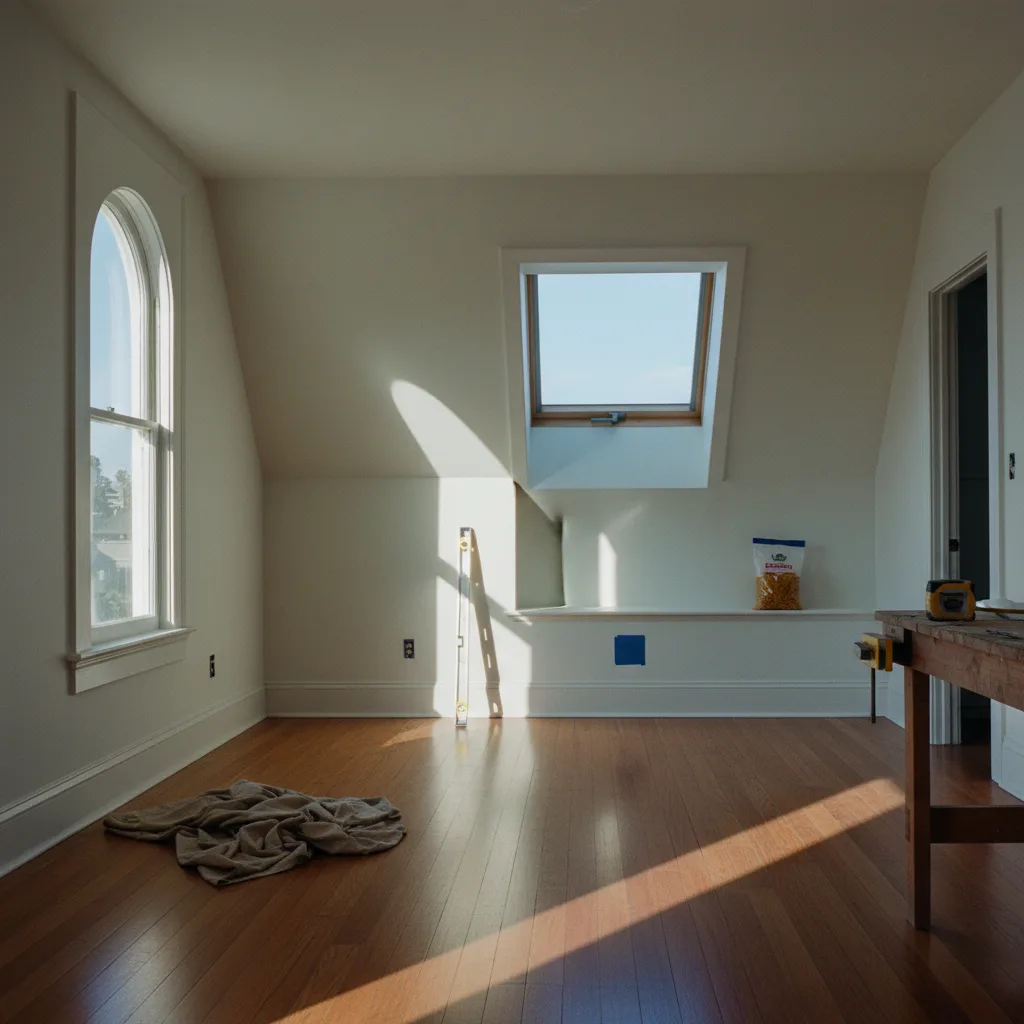
The era of the disposable 20-year asphalt shingle is officially over in San Francisco. In its place, a new mandate for resilience and integration is defining the city's rooftops. More than one in four roof replacements specified in Presidio Heights for 2026 now include integrated solar, a quiet but definitive shift from a passive covering to an active home system that anticipates the future of energy and climate.
In a Nutshell: The Resilient Roof
- The Big Picture: The roof is no longer just a shield. It's a high-performance, integrated system for power generation, weather resilience, and architectural expression.
- The Big Three Trends: Integrated Solar Shingles, Standing Seam Metal, 'Fortified' Building Standards.
- What's Being Replaced: Standard-grade 3-tab asphalt shingles, high-maintenance wood shake, inefficient built-up roofing (BUR).
- What's Next: Roofs that can qualify for insurance discounts, generate more power than they cost, and last fifty years or more.
Trend 1: Integrated Solar Shingles Are the New Standard
The clunky, rack-mounted solar panels of the last decade are giving way to a sleeker, fully integrated solution. Nailable solar shingles, led by products like GAF's Timberline Solar, are installed directly by roofers, blending into the roof plane for a smooth aesthetic. Data from Bay Area roofing suppliers shows a 40% year-over-year increase in orders for integrated solar systems. We're seeing this trend take hold in extensive remodels in Noe Valley and Pacific Heights, where curb appeal is paramount. Expect this to become the default for any premium roofing project by 2028.
Trend 2: Standing Seam Metal's Refined Profile
The utilitarian look of corrugated metal has been replaced by the crisp, clean lines of standing seam metal roofing. Formed from Kynar-coated steel or aluminum in finishes like Matte Black and Dark Bronze, these roofs offer a Class A fire rating, a critical feature for dense urban areas. Two major architectural suppliers in the Design District report that standing seam panels now outsell all other metal profiles for residential projects. This modern, durable choice is defining new construction and major renovations in the Dogpatch and Potrero Hill. Its longevity, often exceeding 50 years, justifies the higher initial roofing cost in San Francisco.
Trend 3: 'Fortified' Roofs as the New Baseline
Homeowners are now demanding resilience. The 'Fortified' standard, developed by the Insurance Institute for Business & Home Safety (IBHS), is a set of building techniques that strengthen a roof against high winds and water intrusion. This includes ring-shank nails, sealed roof decks, and locked starter strips. While designed for hurricane zones, its principles offer significant protection against the Bay Area's winter storms and seismic risks. A leading roofing contractor in San Francisco noted that specifying a Fortified roof can lead to significant insurance premium discounts, making it a popular upgrade in coastal areas like Sea Cliff.
Trend 4: Title 24 'Cool Roofs' Go Mainstream
California's energy code, Title 24, has long mandated cool roofs for low-slope commercial buildings, but the standard is now driving residential choices. These roofs use materials with a high Solar Reflectance Index (SRI) to reflect solar heat, reducing air conditioning load and mitigating the urban heat island effect. Manufacturers like Owens Corning and CertainTeed have expanded their lines of SRI-compliant architectural shingles in lighter colors like 'Foggy Day' and 'Oyster Shell'. We're seeing widespread adoption in the sunnier Sunset and Richmond districts as homeowners replace older, dark asphalt roofs.
Trend 5: Composite Slate & Shake Replicas Perfect the Look
3 San Francisco roofers, editor-screened. 4 questions.
See my 3 matchesThe classic elegance of slate and cedar shake is undeniable, but so are the maintenance, weight, and fire risks. High-end composite materials from brands like DaVinci Roofscapes and Brava have finally closed the authenticity gap. Made from resilient polymers, these tiles offer the texture and color variation of their natural counterparts with a 50-year warranty and a Class A fire rating. In historic neighborhoods like Presidio Heights, where architectural review boards hold sway, these composites are becoming the go-to solution for maintaining character while upgrading performance.
Trend 6: Low-Slope Roofs Embrace TPO & PVC Membranes
For the thousands of flat and low-slope roofs found on San Francisco's multi-family buildings and modern homes, the era of messy, failure-prone tar-and-gravel is ending. Single-ply membranes like TPO (Thermoplastic Polyolefin) and PVC (Polyvinyl Chloride) are the new standard. Typically installed in a heat-reflective white, these membranes are heat-welded at the seams to create a monolithic, waterproof barrier. Their durability and energy efficiency are driving their adoption for apartment buildings in the Marina and modern single-family homes in South Beach.
Trend 7: The Return of Terracotta & Clay Tiles
A clear rejection of the gray-on-gray minimalism of the last decade, authentic clay and terracotta tiles are making a strong comeback. This trend honors California's Spanish architectural heritage with modern performance. Manufacturers like Boral and Ludowici are producing tiles that are stronger and more precisely engineered than their predecessors. While a structural engineer's assessment is often required to handle the weight, the unmatched character and longevity are making them a statement choice for custom homes in Russian Hill and the Mission District.
Trend 8: Gutters as a Deliberate Design Element
Gutters are no longer a purely functional afterthought. The new default is a system that complements the roof and facade. We're seeing a surge in smooth K-style aluminum gutters finished in the same Matte Black or Dark Bronze as window frames and standing seam metal roofs. Paired with minimalist rectangular downspouts or even sculptural rain chains, the water management system is now treated as a key finishing detail. It's a small choice that signals a comprehensive design vision, framing the entire roofline with intention.
The Renology Take
Across San Francisco, from the foggy avenues of the Richmond to the sun-drenched slopes of Bernal Heights, the conversation around roofing has fundamentally changed. It's no longer just about keeping the rain out. The eight trends we see defining 2026 are all facets of a single, larger movement: treating the roof as a critical, high-performance asset. This is a direct response to rising energy costs, climate uncertainty, and the city's high property values. A roof is now expected to generate power, lower insurance premiums, and endure for half a century. The new San Francisco roof is an investment in self-sufficiency and long-term resilience, a quiet declaration that the home is a fortress against uncertainty.
Frequently Asked Questions about Roofing in San Francisco
Sources & Methodology
See the Renology Methodology for how sources are reviewed, ranges are normalized, and planning-data limits are handled.
Cost ranges in this guide draw on the following named industry sources, public agency datasets, and Renology editorial research.
- California Dept. of Industrial Relations, Prevailing Wage Data (2026)
- Insurance Institute for Business & Home Safety (IBHS), Fortified Home Standard (2025)
- Remodeling Magazine, Cost vs. Value Report (2025)
- National Association of Home Builders (NAHB), Housing Market Index (Q1 2026)
- Renology Project of the Day (POTD) Field Interviews, SF Bay Area (2025-2026)
- California Energy Commission, Title 24 Building Energy Efficiency Standards (2025)
Frequently Asked Questions
How much does roofing San Francisco cost in 2026?
How long does a full roof replacement take in San Francisco?
What are 'cool roof' requirements in San Francisco?
How do I choose a qualified roofing contractor San Francisco trusts?
San Francisco · pre-screened
Get 3 San Francisco roof bids in 48 hours.
Our editors already vetted San Francisco roofers. Answer 4 questions and we send 3 written bids inside 48 hours, with the real price for your scope, not their inflated first-call number.
- Free, no commission
- Pre-screened locally
- Bids inside 48 hours
Takes about 60 seconds. We'll text you when bids arrive.
Sources
- California Dept. of Industrial Relations, Prevailing Wage Data
- Insurance Institute for Business & Home Safety (IBHS), Fortified Home Standard
- Remodeling Magazine, Cost vs. Value Report
- National Association of Home Builders (NAHB), Housing Market Index
- Renology Project of the Day (POTD) Field Interviews, SF Bay Area
- California Energy Commission, Title 24 Building Energy Efficiency Standards