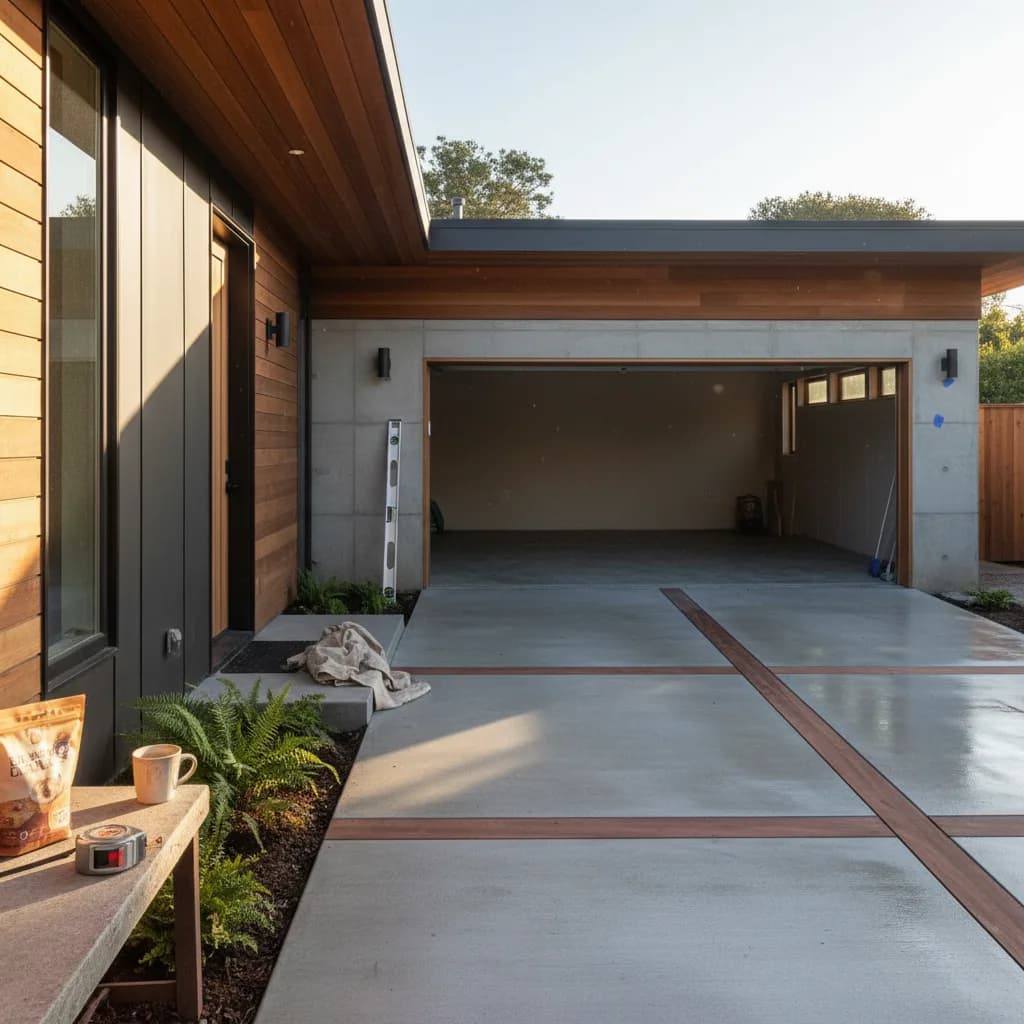
A botched driveway installation in San Francisco doesn't just look bad. It costs, on average, an extra $12,000 to fix and can delay a project by six weeks. While a simple resurfacing project can start lower for a condo or townhome, most full replacements go wrong for the same seven reasons. The homeowners who avoid them save thousands on their San Francisco driveways.
In a Nutshell
- The Cost of Getting it Wrong: Expect to pay 40-60% more to tear out and replace a failed driveway within five years. That's money spent with nothing to show for it.
- Three Most Common Mistakes: Ignoring San Francisco's unique soil and grades, choosing aesthetics over performance for the foggy climate, and failing to plan for water drainage.
- Your Counter-Move This Week: Before you call a single contractor, use the San Francisco Public Works street grade map to understand your property's slope. Knowledge of your site is your best defense against a generic, one-size-fits-all quote.
Mistake #1: Ignoring San Francisco's Soil and Grade
Most homeowners see a flat-looking patch and assume a standard four-inch gravel base is sufficient. This is a critical error. San Francisco is built on hills with expansive clay soil, which swells dramatically with winter rains and shrinks in the summer, cracking any driveway without a properly engineered, reinforced sub-base. The fix is a full tear-out, costing you the entire project budget a second time. Instead, insist your contractor performs a soil assessment and designs the sub-base for your specific grade and soil type, not a generic standard. For a sloped lot in a neighborhood like the Sunset, this might mean a six or eight-inch base with geogrid fabric.
Mistake #2: Choosing Materials for Looks, Not Fog
Many people select a porous, light-colored paver they saw in a magazine based in a dry, sunny climate. This is wrong for our coastal environment. San Francisco's persistent fog and damp air mean porous materials become a breeding ground for moss and mildew, creating a slick, hazardous surface within two years. Aggressive power washing to remove the growth strips sealants and damages the joint sand between pavers. The fix is to choose dense, non-porous materials from the start. Consider Belgard's porcelain pavers or a classic broom-finished concrete with a high-quality penetrating sealer like Siloxa-Tek 8500. These finishes resist moisture and algae growth, holding up to the Bay Area climate.
Mistake #3: Underestimating Drainage Requirements
The common assumption is that water will just run off into the street. On a steep Noe Valley or Twin Peaks slope, uncontrolled runoff erodes landscaping, undermines the driveway's edges, and can flood your garage. The city also has strict stormwater management rules that can result in fines if your property creates excess runoff. A failing drainage system can mean a mandated and expensive rebuild. You must demand a formal drainage plan from your driveway contractor in San Francisco. This could mean channel drains at the garage entrance, French drains along the edges, or specifying permeable pavers that are installed correctly over a deep gravel bed. A good plan directs water away from your home's foundation and into appropriate city storm drains or a rain garden.
Mistake #4: Skipping the Permit Process
3 San Francisco driveway contractors, editor-screened. 4 questions.
See my 3 matchesSome contractors will say a permit isn't needed for a "simple replacement." This is a major red flag. In San Francisco, any work involving a new curb cut, changing the driveway's width at the sidewalk, or altering the public right-of-way requires a permit from San Francisco Public Works (SFPW). Getting caught without one leads to stop-work orders, fines, and potentially tearing out the finished work at your own expense. You must verify permit needs yourself by checking the SFPW website. Your contract should explicitly state who is responsible for securing all necessary permits. For a full guide, see Renology's San Francisco driveway permit playbook for 2026.
Mistake #5: Hiring the Wrong Driveway Contractor
The easiest mistake to make is hiring the first contractor who provides a low-ball quote over the phone. An unqualified contractor will not understand San Francisco's specific challenges with soil, grade, or permit laws. This is how you end up with a cracked driveway in eighteen months. The low price is based on cutting corners on sub-base depth, rebar spacing, and drainage materials. The fix is to vet every potential driveway contractor in San Francisco rigorously. Get three quotes. Check three references. Visit one finished job before signing. Verify their C-8 (Concrete) or A (General Engineering) license is active and in good standing with the California Contractors State License Board (CSLB).
Mistake #6: Failing to Specify Every Detail in Writing
Homeowners often agree to a "new concrete driveway" on a one-page estimate. This vague scope is an invitation for endless change orders and disputes. Does "new driveway" include demolition, hauling debris, sub-base compaction, rebar grid spacing, concrete PSI strength, the specific type of sealer, and final site cleanup? If it is not in the contract, it is not in the price. You must demand a multi-page, detailed scope of work. It should specify materials down to the brand and product line. It must also detail the thickness of the sub-base and the concrete slab, plus the type and application method of the sealant.

Mistake #7: Not Budgeting for the Real San Francisco Cost
Many homeowners use a national cost average for budgeting and are shocked by local quotes. The driveway cost in San Francisco is significantly higher due to labor, complex logistics, and high disposal fees. Labor is the single largest factor. According to the California Department of Industrial Relations prevailing wage data for San Francisco County, skilled construction labor rates are among the highest in the nation. This isn't a contractor padding the bill; it's the market reality for a 2026 project. The National Association of Home Builders recommends a ten to fifteen percent contingency on renovations in homes over thirty years old. This is essential for any older Richmond or Marina District home.
Three modeled project scenarios for 2026, built from the Renology Cost Index and typical local scopes. These are illustrative estimates, not completed client projects:
- $18,500 (Sunset District): Resurfacing an existing 600-square-foot concrete driveway with a decorative overlay and adding a new channel drain at the garage.
- $34,000 (Richmond District): Full tear-out and replacement of a 750-square-foot driveway with new broom-finished, 4000 PSI concrete, including a new six-inch sub-base and minor grading.
- $55,000+ (Pacific Heights): New 900-square-foot driveway with high-end permeable pavers, extensive drainage work on a sloped lot, a new curb cut permit, and engineered retaining walls.
Sources & Methodology
See the Renology Methodology for how sources are reviewed, ranges are normalized, and planning-data limits are handled.
Cost ranges in this guide draw on the following named industry sources, public agency datasets, and Renology editorial research.
- California Department of Industrial Relations, Prevailing Wage Data, San Francisco County (2026)
- San Francisco Public Works, Driveway and Curb Cut Permit Guidelines (2026)
- National Association of Home Builders (NAHB), Remodeling Market Index (Q1 2026)
- California Contractors State License Board (CSLB), License Classifications (2026)
- Interlocking Concrete Pavement Institute (ICPI), Residential Paver Installation Guide (2025)
- The Concrete Network, Residential Concrete Slab Specifications (2025)
Renology Take
The meta-mistake is impatience. Homeowners want the project done now and rush the planning phase. They skip the soil reports, the detailed contractor vetting, and the line-by-line contract review because it feels like a delay. That front-end work is the project. A properly installed driveway in San Francisco is eighty percent planning and preparation, twenty percent installation. The contractors who get glowing reviews are the ones who insist on this methodical approach. The ones with bad reviews are the ones who let you rush them. Slow down. The money and time you save will be your own.
Frequently Asked Questions
What's the most expensive mistake in a driveway installation?
How do I know if my driveway contractor in San Francisco is padding the quote?
When should I walk away from a driveway quote?
What's the fastest way to blow a driveway budget in San Francisco?
San Francisco · pre-screened
Get 3 San Francisco driveway bids in 48 hours.
Our editors already vetted San Francisco driveway contractors. Answer 4 questions and we send 3 written bids inside 48 hours, with the real price for your scope, not their inflated first-call number.
- Free, no commission
- Pre-screened locally
- Bids inside 48 hours
Takes about 60 seconds. We'll text you when bids arrive.
Sources
- California Department of Industrial Relations, Prevailing Wage Data, San Francisco County
- San Francisco Public Works, Driveway and Curb Cut Permit Guidelines
- National Association of Home Builders (NAHB), Remodeling Market Index
- California Contractors State License Board (CSLB), License Classifications
- Interlocking Concrete Pavement Institute (ICPI), Residential Paver Installation Guide
- The Concrete Network, Residential Concrete Slab Specifications