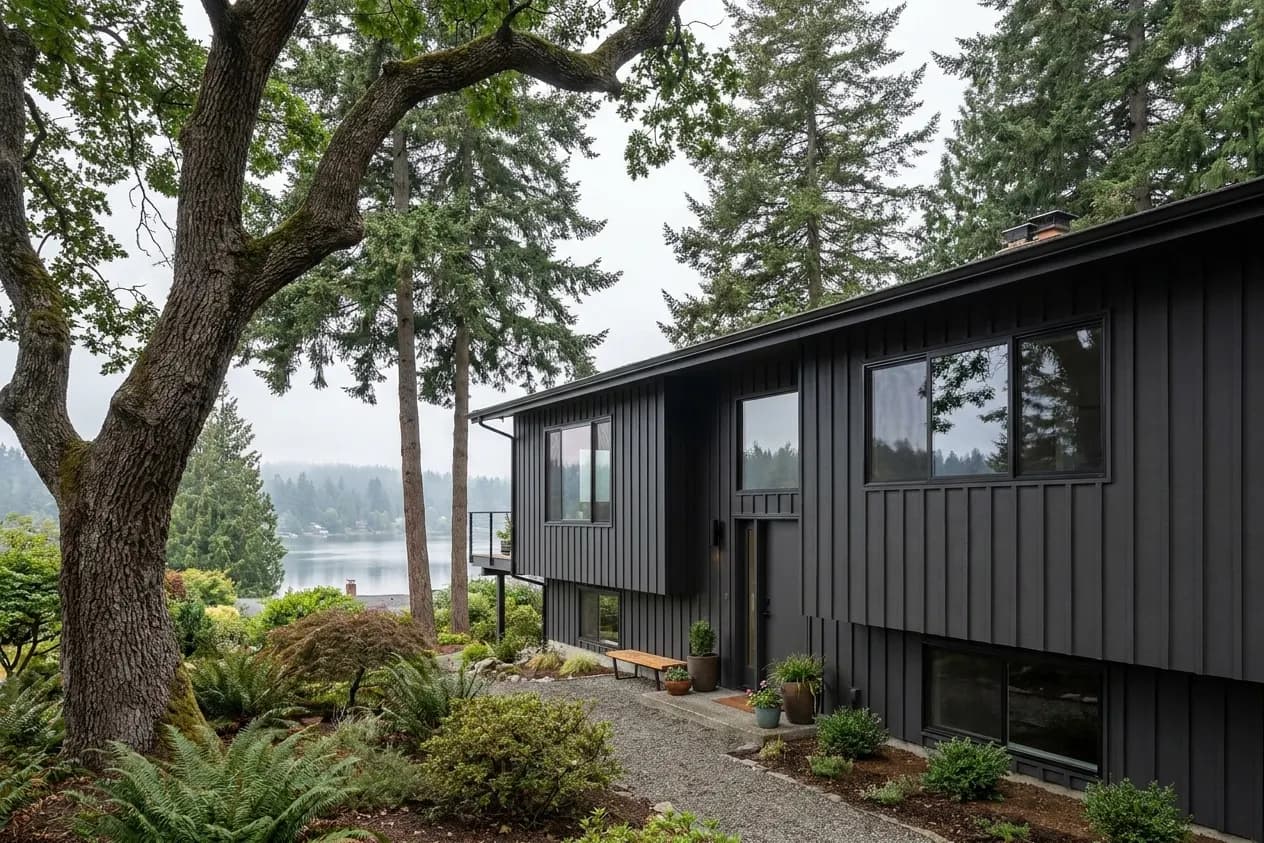
What changes a remodel in Lakewood.
Half of Lakewood's homes were built between 1950 and 1979
Census Bureau survey data for 2020 to 2024 counts 28,591 housing units in Lakewood. Fifteen percent date from the 1950s, and 18.3 percent each from the 1960s and the 1970s, so 51.6 percent were built in those three decades. The median year built is 1975. Houses of that age often need panel upgrades, new windows and insulation, and many still have their original bathrooms. Only 7.3 percent of Lakewood homes were built before 1950.
Source: Census ACS 2020-2024, Year Structure Built, Lakewood
Garry oaks are protected in Lakewood down to a 4 inch trunk
The Oregon white oak, also called the Garry oak, is Washington's only native oak. Lakewood counts one as a significant tree once its trunk reaches 4 inches across at 4.5 feet above the ground, against 9 inches for other trees. The oaks are also a regulated critical area under state law. On a lot under 10,000 square feet, the presence of an Oregon white oak can be enough to require a tree removal permit, so plan additions and driveways around them.
Source: City of Lakewood, P7 Tree Preservation and Protection
Shoreline rules reach 200 feet back from Lakewood's lakes
Lakewood's Shoreline Master Program covers American Lake, which is over 1,000 acres, plus Gravelly Lake, Lake Louise, Steilacoom Lake and Waughop Lake, and Clover and Chambers Creeks. Its reach extends 200 feet landward from the ordinary high water mark, the line the water normally reaches. Inside that zone, the city requires a permit for a structure or new paved surface of any size in the shoreline buffer, including a patio under 18 inches high.
What a remodel costs in Lakewood in 2026.
$10,000
Lakewood's median owner-occupied home was valued at $461,200 in Census data for 2020 to 2024, below Tacoma and Puyallup, and 51.6 percent of its homes date from the 1950s through the 1970s. That puts a real remodel in perspective: a $40,000 kitchen is a bigger share of a Lakewood house than of one in a pricier town nearby. The lot can add costs of its own. A Garry oak with a 4 inch trunk counts as a significant tree, and near the lakes, a structure or paved surface of any size in the shoreline buffer needs a permit.
Survey figures show what owners across the Seattle-Tacoma-Bellevue area paid. In the Census Bureau's 2023 American Housing Survey, the median bathroom remodel was $10,000, the kitchen $13,710 and the roofing job $15,000, counting both hired and do-it-yourself work. Wages carry much of that: the median electrician in the metro earned $48.93 an hour in May 2025 and the median carpenter $36.74, against $30.38 and $29.12 nationally. Paying Lakewood permit fees by card online adds a 2.9 percent convenience fee.
| Figure | Value | What it measures |
|---|---|---|
| Median bathroom remodel | $10,000 | Seattle-Tacoma-Bellevue metro, all bathroom remodels in the prior two years, hired and do-it-yourself (Census American Housing Survey 2023, Table 16) |
| Median kitchen remodel | $13,710 | Every kitchen remodel by Seattle-metro owners over two years, hired or DIY, 2023 survey (Census American Housing Survey 2023, Table 16) |
| Median roofing project | $15,000 | Roofing jobs by owners across the Seattle-Tacoma-Bellevue metro in the two years before 2023 (Census American Housing Survey 2023, Table 16) |
| Median home value | $461,200 | Owner-occupied homes in Lakewood, Census ACS 2020-2024 (Census ACS 2020-2024, Median Value, Lakewood) |
| Median electrician wage | $48.93 an hour | Seattle-Tacoma-Bellevue, May 2025, against $30.38 nationally (BLS Occupational Employment and Wage Statistics, May 2025) |
| Median carpenter wage | $36.74 an hour | Seattle-Tacoma-Bellevue, May 2025, against $29.12 nationally (BLS Occupational Employment and Wage Statistics, May 2025) |
Who issues permits in Lakewood.
Inside city limits, building permits come from the City of Lakewood Planning and Public Works Department, through its Online Permit Center. Lakewood is not a full-service agency, in the city's own words. Electrical permits and inspections, sewer, water and fire safety review come from outside agencies such as Washington Labor and Industries, Pierce County, the Lakewood Water District and West Pierce Fire and Rescue.
- City of Lakewood Planning and Public Works, Permit Center
Building permits, tree removal permits and shoreline review inside Lakewood city limits
- Washington State Department of Labor and Industries, Electrical Permits
Electrical permits and inspections in Lakewood, which does not run its own electrical program
- Lakewood exempts sheds and playhouses only up to 120 square feet, smaller than the 200 square foot limit in many nearby cities. A storage building with a heat pump, generator or other equipment needs a permit at any size.
- Fences need no permit up to 4 feet in a front yard and 6 feet in a rear yard, unless they sit near a critical area or a shoreline.
- A deck is exempt only if it is freestanding, under 30 inches high, under 200 square feet and not the main entry. On a shoreline lot the height limit drops to 18 inches.
- Garage door replacement, gutters, painting, tile, carpet, cabinets and countertops need no permit. Any addition that adds square footage does.
- On a single-family lot over 10,000 square feet, removing a significant tree needs a tree removal permit. Lots of 10,001 to 30,000 square feet can remove 2 such trees a year and 4 in five years.
- Paying permit fees by card in the Online Permit Center adds a 2.9 percent convenience fee. Checks and cash are taken at City Hall.
- Under Washington's 2023 ADU law, Lakewood must allow two ADUs on each residential lot, with a size cap no lower than 1,000 square feet and no owner-occupancy rule.
What Lakewood homeowners plan most.
Bathroom remodel
Many Lakewood homes from the 1960s and 1970s still have their first bathroom. The regional median bathroom remodel was $10,000 in the 2023 housing survey.
Kitchen remodel
A mid-century kitchen often needs a new electrical panel and circuits, and in Lakewood the electrical permit comes from Labor and Industries, not the city.
Roofing
The regional median roofing job was $15,000. Our Seattle roofing guide deals with the same wet climate; in Lakewood, any permit comes from the city.
Landscaping and tree work
Garry oaks count as significant trees at a 4 inch trunk, and lots over 10,000 square feet need a permit to remove significant trees.
Deck or patio on a lakefront lot
Near American Lake and the other lakes, a deck is exempt only under 18 inches high, and any new surface in the shoreline buffer needs a permit.
Window replacement
Replacing the original windows is a common first project in a house from the 1950s to the 1970s.
Before you start.
How much does a bathroom remodel cost in Lakewood WA?
Lakewood is in the Seattle-Tacoma-Bellevue metro, where the Census Bureau's 2023 housing survey put the median bathroom remodel at $10,000 and the median kitchen remodel at $13,710. Those medians include smaller updates and do-it-yourself work. Labor runs high here: the median metro plumber earned $45.78 an hour in May 2025.
Do I need a permit to build a shed in Lakewood WA?
Only if it is larger than 120 square feet, or if it will have mechanical equipment such as a heat pump or generator. That limit is smaller than the 200 square feet many nearby cities allow. A structure of any size in a shoreline buffer or critical area also needs a permit.
Can I cut down a tree on my property in Lakewood?
It depends on the lot and the tree. Single-family lots over 10,000 square feet need a tree removal permit for significant trees, and lots of 10,001 to 30,000 square feet can remove 2 a year. Garry oaks count as significant at a 4 inch trunk and are regulated more strictly on any lot.
Who issues electrical permits in Lakewood WA?
Not the city. Lakewood's permit center says it is not a full-service agency, and electrical permits and inspections come from outside agencies. In Washington that is the Department of Labor and Industries. Sewer, water and fire reviews also go to outside agencies such as Pierce County, the Lakewood Water District and West Pierce Fire and Rescue.
What permits do I need to build on a lakefront lot in Lakewood?
Lakewood's shoreline rules reach 200 feet back from the normal high water line of American Lake, Gravelly Lake, Lake Louise, Steilacoom Lake and Waughop Lake. A structure or new paved surface of any size inside the shoreline buffer needs a permit, including a patio under 18 inches high.
Explore regions, cities & neighborhoods →
Renovating in Lakewood?
Tell us what you are planning. A Renology advisor talks it through and introduces a vetted contractor who works in Lakewood. Free, with no obligation.
Find a contractor in Lakewood →Already have a bid? The quote-review tool checks its scope and exclusions, wherever you live.
Sources
- Census ACS 2020-2024, Year Structure Built, Lakewood
- City of Lakewood, P7 Tree Preservation and Protection
- City of Lakewood, P3 Shoreline Development
- Census American Housing Survey 2023, Table 16
- Census ACS 2020-2024, Median Value, Lakewood
- BLS Occupational Employment and Wage Statistics, May 2025
- BLS Occupational Employment and Wage Statistics, May 2025
- City of Lakewood, B4 Do I Need a Building Permit?
- City of Lakewood, Apply for a Permit
- Washington State Department of Commerce, Accessory Dwelling Units
- BLS OEWS May 2025, Seattle-Tacoma-Bellevue plumbers