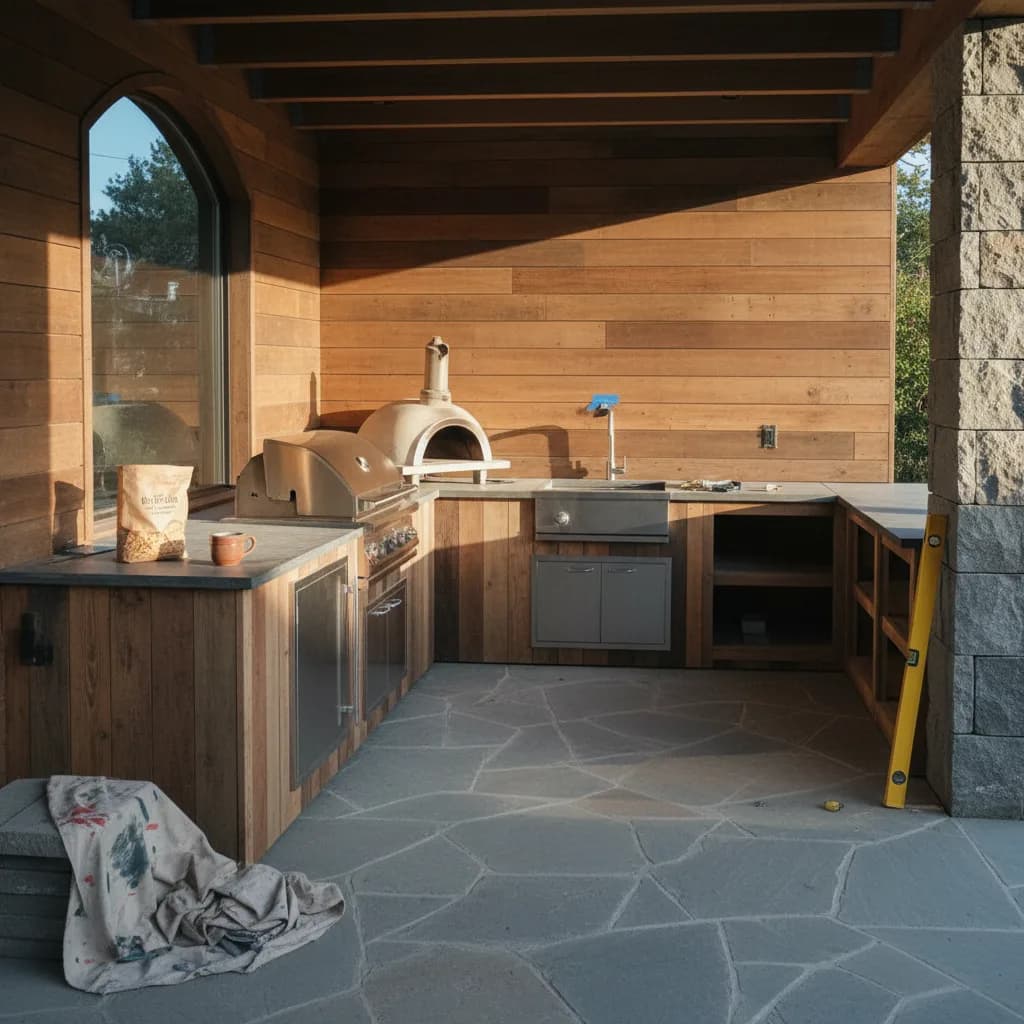
A complete outdoor kitchen in San Francisco costs between $29,000 and $52,000 for a mid-range project in 2026. Premium installations with extensive masonry, high-end appliances, and roof structures regularly exceed $120,000. Costs can start lower, in the $18,000 to $25,000 range, for simpler prefabricated islands or additions to existing patios with utilities already in place. The median project cost, according to Renology project data for the Bay Area, falls near the middle of that range and includes appliances, utilities, and a modest pergola or covering.
In a Nutshell
- Total Cost Range: $18,000 (basic prefabricated) to $150,000+ (custom luxury).
- Typical Mid-Range Project: $29,000 to $52,000 for a semi-custom build with a grill, sink, refrigerator, and stone countertops.
- Project Timeline: Four to seven months from design approval to completion, with permitting taking six to ten weeks of that time.
- Biggest Surprise Cost: Utility line extension. Trenching and running new gas, water, and electrical lines can add $8,000, $15,000 to the project total before any construction begins.
What does an outdoor kitchen actually cost in San Francisco?
The cost is determined by the scope of site preparation, appliance quality, and finish materials. A project on an existing, level patio with accessible utilities will cost significantly less than one requiring a new concrete foundation, retaining walls, and long utility runs. Below are three tiers of project costs for a 120-square-foot outdoor kitchen in San Francisco.
| Tier | Cost Range | Features |
|---|---|---|
| Basic | $18,000, $35,000 | Prefabricated island, drop-in grill, outdoor-rated refrigerator, tile countertop, connection to existing utilities. Assumes existing patio. |
| Mid-Range | $35,000, $75,000 | Semi-custom masonry or wood frame structure, built-in grill, sink, refrigerator, granite or quartzite countertops, new concrete pad, basic lighting, simple pergola. |
| Premium | $75,000, $150,000+ | Fully custom masonry, luxury appliance suite (grill, side burners, pizza oven, ice maker), natural stone countertops, roof structure with heating and lighting, bar seating, extensive site work. |
For a median mid-range project costing $58,500, the budget allocation is typically as follows:
- Appliances: 25% ($14,625)
- Labor & Installation: 25% ($14,625)
- Cabinetry & Structure: 20% ($11,700)
- Countertops: 10% ($5,850)
- Utilities (Plumbing, Gas, Electrical): 10% ($5,850)
- Site Work & Foundation: 5% ($2,925)
- Permits & Design Fees: 5% ($2,925)
The bottom of the range, often seen in marketing, represents a minimal refresh or the installation of a prefabricated unit onto a prepared site, not a full construction project, which is the more common scenario for San Francisco homeowners.
Why is it more expensive in San Francisco?
Constructing an outdoor kitchen in San Francisco carries a premium of twenty to thirty-five percent over national figures. This is driven by three primary factors: labor rates, logistical challenges, and stringent building codes combined with difficult site conditions.
1. Labor Rates: The cost of skilled labor is the single largest driver of higher project costs. According to the California Department of Industrial Relations prevailing wage data for San Francisco County, a journeyman plumber earns $95, $110 per hour and a mason earns $80, $95 per hour in 2026. These rates, which include benefits and overhead, are among the highest in the nation and directly impact the 25% of the budget allocated to labor.

2. Logistics and Material Delivery: The city's density, narrow streets, and limited parking make material delivery and debris removal difficult and expensive. Contractors often must use smaller trucks, schedule deliveries for off-peak hours, and sometimes require special street-use permits. These logistical hurdles add hours and fees to the project, costs that are passed on to the homeowner.
3. Neighborhood Premiums and Site Conditions: Building in affluent neighborhoods like Pacific Heights or Noe Valley often involves higher contractor overhead and expectations for premium finishes. More importantly, many San Francisco properties feature steep slopes, limited backyard access, and clay soil. This necessitates more extensive site work, including grading, retaining walls, and deeper foundations engineered to seismic Zone four standards, adding thousands to the base construction cost.
What do real San Francisco homeowners spend in 2026?
Three modeled project scenarios for 2026, built from the Renology Cost Index and typical local scopes. These are illustrative estimates, not completed client projects:
Project 1: Sunset District - $48,500
A 10-foot L-shaped stucco island on an existing concrete patio. The project included a mid-range 36-inch built-in gas grill, a stainless steel sink, and an outdoor refrigerator. The primary cost driver was a 40-foot trench to run new gas and water lines from the side of the house. Quartzite countertops and simple low-voltage lighting completed the build.
Project 2: Noe Valley - $82,000
This project required removing a section of a failing wooden deck and pouring a new concrete foundation with engineered footings due to the sloped yard. The 15-foot straight kitchen featured a premium grill with a rotisserie, a power burner, custom-built teak cabinetry, and soapstone countertops. A new redwood pergola was built overhead, and significant electrical work was needed for dedicated circuits and integrated heaters.
Project 3: Pacific Heights - $135,000
A comprehensive outdoor entertainment space. This involved excavating part of the yard and building a small retaining wall. The U-shaped kitchen was finished in stacked stone and included a luxury grill, a pizza oven, an ice maker, and a beverage center. The countertops were Dekton, and the project included a full roof structure with recessed lighting, ceiling fans, and infrared heaters, all tied into the home's automation system.
Where does the money actually go?
3 San Francisco outdoor kitchen builders, editor-screened. 4 questions.
See my 3 matchesInitial quotes from an outdoor kitchen contractor in San Francisco often focus on the visible elements like appliances and countertops. The line items below are frequently omitted from preliminary discussions but represent significant real-world costs.
- Structural Engineering Plans: $2,500, $5,000. Required for any new foundation, retaining wall, or roof structure to meet seismic and soil condition requirements.
- Permit and Expediting Fees: $1,500, $4,000. The base permit fees from the San Francisco Department of Building Inspection (SFDBI), plus the cost of a permit runner to manage the submission and revision process.
- Utility Trenching and Hookup: $8,000, $15,000. This covers digging, laying conduit for gas, water, and electrical lines, backfilling, and final connection by licensed tradespeople. Cost varies with distance and surface material (dirt vs. concrete).
- Site Grading and Drainage: $3,000, $7,500. San Francisco's hills and clay soil often require professional grading and the installation of French drains or catch basins to prevent water from pooling around the new structure.
- Electrical Subpanel: $2,000, $4,500. Outdoor kitchens with multiple appliances, refrigerators, and lighting often require more power than can be pulled from an existing exterior circuit, necessitating a new subpanel.
- Seismic Anchoring and Footings: $2,500, $6,000. All permanent structures must be properly anchored to foundations designed to withstand seismic activity, an additional materials and labor cost specific to the region.
- Debris Hauling and Disposal: $1,000, $3,000. The cost of renting a dumpster and paying for disposal of soil, concrete, and construction waste, which is higher in San Francisco due to landfill fees and logistics.
What stops a San Francisco outdoor kitchen from running over budget?
Budget overruns on outdoor projects are common, typically stemming from three sources. Understanding them is the first step to controlling project costs.
1. Unforeseen Site Conditions: Digging in a San Francisco backyard can reveal anything from unexpected utility lines to serpentine rock. Hitting bedrock requires expensive excavation, while poor soil may necessitate deeper, more solid foundations than planned. These discoveries can halt work and add 5-10% to the project cost instantly.
2. Scope Creep: The most common cause of budget inflation is homeowner-driven changes. Deciding to add a pergola midway through the project, upgrading an appliance after it has been ordered, or extending the patio size seems small in isolation, but these changes create a cascade of rework, new material orders, and change order fees from the contractor.
3. Permitting Delays and Revisions: If plans are incomplete or don't fully comply with SFDBI's specific requirements, the city can demand revisions. Each round of changes can take weeks, during which contractor schedules can shift and material prices can change. The National Association of Home Builders recommends a ten to fifteen percent contingency on renovations in homes over thirty years old.
A detailed plan is the best defense. You can learn more about the local requirements in our guide to San Francisco outdoor kitchen permits.
What should your San Francisco contractor include in the quote?
A detailed, fixed-price quote is essential. It should move beyond a simple total and break down the project into specific line items. Insist that your outdoor kitchen contractor in San Francisco provides the following:
- Detailed scope of work, including drawings and dimensions.
- Site preparation, including demolition, excavation, and grading.
- Foundation work, specifying concrete thickness and reinforcement.
- Framing and structure materials (e.g., steel studs, concrete block).
- Finish materials specified by brand and type (e.g., Eldorado Stone 'Mountain Ledge').
- Countertop material, thickness, and edging details.
- Appliance model numbers and costs.
- Plumbing scope, including materials for water and gas lines and sink/faucet models.
- Electrical scope, including number of outlets, lighting fixtures, and any subpanel work.
- Drainage plan and materials.
- Permit acquisition costs and responsibility.
- Debris removal and site cleanup plan.
- A clear payment schedule tied to project milestones.
- Project timeline with start and estimated completion dates.
Sources & Methodology
See the Renology Methodology for how sources are reviewed, ranges are normalized, and planning-data limits are handled.
Cost ranges in this guide draw on the following named industry sources, public agency datasets, and Renology editorial research.
- Remodeling Magazine, 2026 Cost vs. Value Report (Pacific Region) (2026)
- National Kitchen & Bath Association (NKBA), Outdoor Kitchen Design Guidelines (2025)
- San Francisco Department of Building Inspection (SFDBI), Permit Fee Schedule (2026)
- California Department of Industrial Relations, Prevailing Wage Determinations (San Francisco County) (2026)
- National Association of Home Builders (NAHB), Construction Cost Survey (2025)
- Renology Project of the Day (POTD) Network, San Francisco Metro Data (2024-2026)
Renology Take
Homeowners planning an outdoor kitchen in San Francisco consistently underestimate the cost and complexity of the 'unseen' infrastructure. The focus naturally gravitates toward the grill, the countertops, and the layout. However, in this city, the majority of budget risk and project delays come from below the surface. Utilities, drainage, and foundations are not accessories; they are the project. A gas line that needs to be run 70 feet from the meter, a yard that requires a French drain to stay dry in winter, or a foundation that needs deeper footings for seismic stability can collectively cost more than the entire appliance package. The most successful projects are those where the homeowner and contractor allocate as much planning time to the site work and utility plan as they do to the finishes and fixtures. Get the foundation right, and the rest follows predictably.
Frequently Asked Questions
Does an outdoor kitchen add value to a San Francisco home?
How long does it take to get permits for an outdoor kitchen in SF?
What materials are best for San Francisco's coastal climate?
Can I build an outdoor kitchen on a rooftop deck in San Francisco?
San Francisco · pre-screened
Get 3 San Francisco outdoor kitchen bids in 48 hours.
Our editors already vetted San Francisco outdoor kitchen builders. Answer 4 questions and we send 3 written bids inside 48 hours, with the real price for your scope, not their inflated first-call number.
- Free, no commission
- Pre-screened locally
- Bids inside 48 hours
Takes about 60 seconds. We'll text you when bids arrive.
Sources
- Remodeling Magazine, 2026 Cost vs. Value Report (Pacific Region)
- National Kitchen & Bath Association (NKBA), Outdoor Kitchen Design Guidelines
- San Francisco Department of Building Inspection (SFDBI), Permit Fee Schedule
- California Department of Industrial Relations, Prevailing Wage Determinations (San Francisco County)
- National Association of Home Builders (NAHB), Construction Cost Survey
- Renology Project of the Day (POTD) Network, San Francisco Metro Data