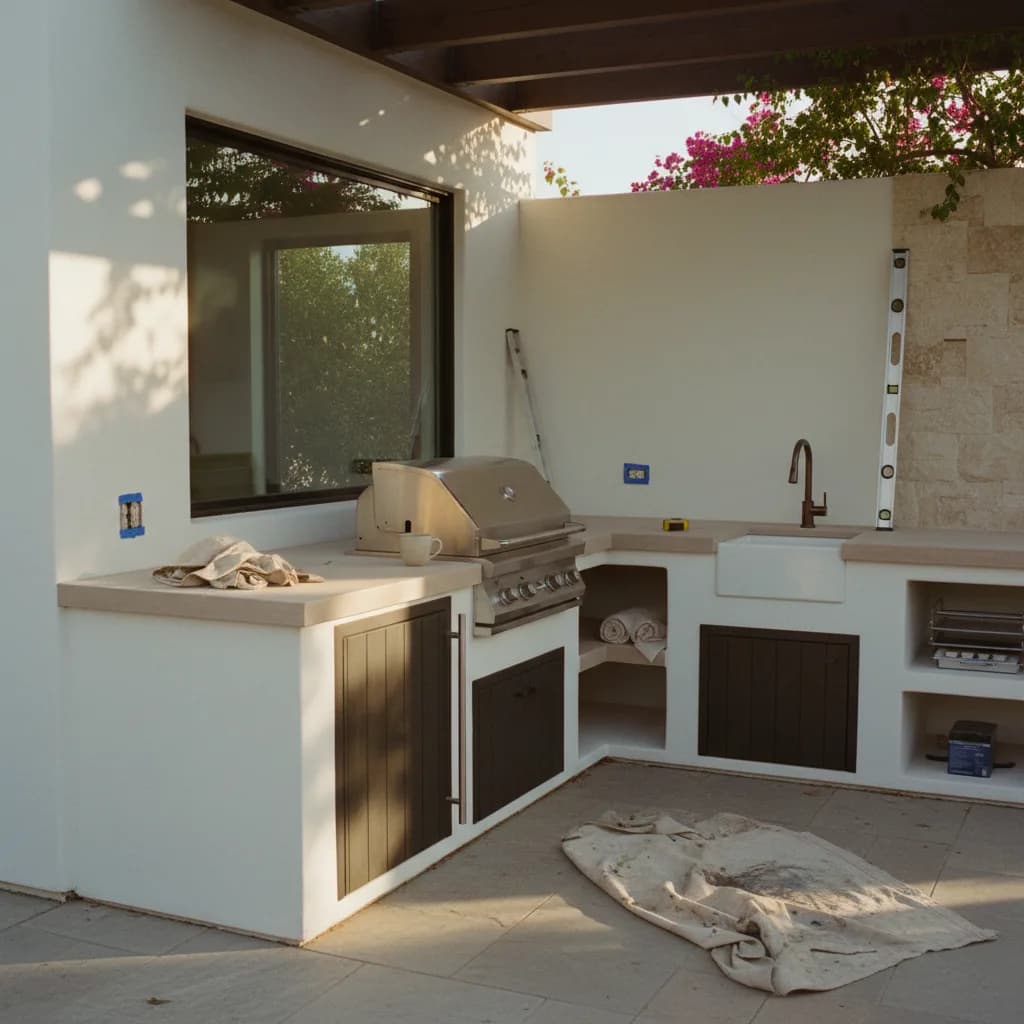
A complete outdoor kitchen in San Diego costs between $24,000 and $44,000 for a median mid-range project in 2026. Premium installations with extensive features, custom masonry, and roof structures regularly exceed $120,000. While a basic prefabricated island with a drop-in grill can start lower, around $15,000 to $25,000, this figure typically excludes the utility lines, site preparation, and permitting that constitute a full installation. According to Renology project data, the median spend for a fully contracted outdoor kitchen in San Diego County is $34,000.
In a Nutshell
- Typical Cost Range: $24,000 to $44,000 for most homeowners.
- Mid-Range Project Cost: The median cost for a mid-range outdoor kitchen featuring a built-in gas grill, sink, outdoor refrigerator, and stone veneer is $34,000.
- Typical Timeline: Six to sixteen weeks from design finalization to completion, including three to five weeks for permitting with the City of San Diego Development Services Department.
- Biggest Surprise Cost: Utility trenching. Extending gas, water, and electrical lines can add $4,500 to $11,000, a cost frequently underestimated in initial homeowner budgets.
What Does an Outdoor Kitchen Actually Cost in San Diego?
The cost of San Diego outdoor kitchens is best understood across three tiers, primarily defined by size, appliance quality, and the complexity of the structure. The final price tag is a function of materials, appliance selection, and the labor required to run utilities and construct the unit.
| Tier | Cost Range (2026) | Typical Scope |
|---|---|---|
| Basic | $15,000, $30,000 | Prefabricated island, drop-in 3-burner grill, access doors, minimal granite or tile countertop, existing patio placement. Utilities may be stubbed out from the house. |
| Mid-Range | $30,000, $75,000 | Custom masonry or steel frame construction, stone or stucco veneer, 4-5 burner grill, outdoor refrigerator, sink with faucet, granite or quartz countertops, bar seating, dedicated electrical circuit. |
| Premium | $75,000, $120,000+ | Extensive custom layout, luxury-grade appliances (e.g., pizza oven, side burners, warming drawers), sink with hot/cold water, ice maker, extensive low-voltage lighting, pergola or permanent roof structure, entertainment system. |
For a median mid-range project costing $34,000, the allocation of funds is typically as follows:
- Appliances: 35% ($11,900)
- Structure & Masonry: 25% ($8,500)
- Labor: 20% ($6,800)
- Utilities (Plumbing, Gas, Electrical): 10% ($3,400)
- Countertops: 5% ($1,700)
- Permits & Finishes: 5% ($1,700)
The bottom-of-range case, often seen in marketing, applies to a simple prefabricated island placed on an existing patio with no new utility runs, which is not representative of a fully integrated outdoor kitchen project.
Why is an Outdoor Kitchen More Expensive in San Diego?
Three primary factors drive the higher cost of outdoor kitchens in San Diego compared to national figures: labor rates, material durability requirements, and neighborhood-specific premiums.
First, skilled labor is a significant cost driver. According to the California Department of Industrial Relations prevailing wage data for San Diego County, hourly rates for journeyman trades are substantial: electricians command $65 to $95, plumbers $70 to $105, and skilled masons $55 to $80. These rates, inclusive of overhead and insurance, are 20-35% higher than in many other metropolitan areas, directly impacting the final cost of any construction project.

Second, San Diego's coastal environment necessitates more expensive, corrosion-resistant materials. Proximity to the ocean in neighborhoods like La Jolla and Point Loma means salt air can rapidly degrade lower-grade stainless steel, wood, and metal fasteners. Contractors specify 304-grade or even marine-grade 316 stainless steel for appliances and hardware, which carries a 15-25% cost premium over standard options. Powder-coated aluminum or Ipe wood for structural elements also adds to the material budget to ensure longevity.
Finally, property values and logistical challenges in affluent areas contribute to higher project costs. In communities such as Rancho Santa Fe and Del Mar, contractors face stricter HOA architectural review processes, limited work hours, and access constraints that increase overhead. This can add a 10-20% premium to the total project cost compared to inland neighborhoods like Rancho Bernardo or Poway.
What Do Real San Diego Homeowners Spend in 2026?
Three modeled project scenarios for 2026, built from the Renology Cost Index and typical local scopes. These are illustrative estimates, not completed client projects:
- Point Loma ($62,000): A 12-linear-foot L-shaped kitchen on a new concrete pad. The scope included a 36-inch built-in grill, an outdoor refrigerator, a sink, and significant storage. The cost was driven up by the use of 316-grade stainless steel for all components and a stucco finish matched precisely to the home's exterior. Utility runs were 40 feet from the main house.
- Rancho Bernardo ($54,500): This 10-foot linear kitchen was built to complement an existing pool and patio. The homeowner selected a mid-range appliance package and stacked stone veneer. The cost was contained by shorter utility runs (under 25 feet) and the use of a pre-cast concrete countertop instead of natural stone.
- Carlsbad ($71,000): A 15-foot galley-style kitchen with a raised bar for seating. This project featured a higher-end grill, a dedicated side burner, and an under-counter ice maker. The primary cost drivers were the extensive electrical work for outlets and task lighting, plus a premium granite countertop with a waterfall edge.
Where Does the Money Actually Go?
3 San Diego outdoor kitchen builders, editor-screened. 4 questions.
See my 3 matchesInitial quotes from an outdoor kitchen contractor in San Diego may focus on the structure and appliances, leaving out necessary ancillary costs. Homeowners should budget for these items separately to avoid surprises.
- Permits: $1,200, $2,500. City of San Diego building permits are required for any new gas, electrical, and plumbing lines. Structural plans may also be required.
- Utility Trenching and Hookup: $4,500, $11,000. This is the cost to dig trenches, run new gas, water, and electrical conduits from the house to the kitchen location, and make the final connections. Longer distances or hardscape demolition increase this cost significantly.
- Site Preparation and Grading: $2,000, $5,000. If the area is not perfectly level, the site must be graded and prepared. This may involve minor excavation and soil compaction before a concrete foundation can be poured.
- Concrete Foundation/Slab: $1,500, $4,000. A proper outdoor kitchen requires a reinforced concrete slab foundation, a cost not always included in the price of the kitchen structure itself.
- Outdoor-Rated Electrical: $1,800, $3,500. This includes running a dedicated circuit, installing GFCI outlets, and task lighting. All components must be rated for outdoor, wet locations.
- Drainage Solutions: $1,000, $3,000. A sink requires a drainage plan. This can be a connection to the main sewer line (most expensive), a dry well, or a greywater system, depending on local codes.
- Patio and Hardscape Integration: $3,000, $10,000+. The cost to blend the new kitchen area with existing patios, including matching pavers or pouring new concrete, is a separate landscaping or hardscaping expense.
What Stops a San Diego Outdoor Kitchen from Running Over Budget?
Budget overruns on outdoor kitchens typically stem from three sources: unforeseen site conditions, scope creep, and underestimated utility costs.
First, discovering hardpan soil, large rocks, or undocumented utility lines during trenching can halt progress and require expensive equipment or rerouting, adding thousands to the budget. This is common in some of San Diego's older neighborhoods with varied topography.
Second, scope creep is a major factor. Deciding to add a pergola for shade, upgrading from a standard grill to one with a rotisserie and sear zone, or adding a sound system mid-project can inflate costs by 25-50%. Finalizing all selections before construction begins is the most effective control.
Third, under-budgeting for the non-kitchen elements is the most frequent misstep. The costs of landscaping, lighting, and drainage are often as much as the kitchen structure itself. The National Association of Home Builders recommends a ten to fifteen percent contingency on renovations in homes over thirty years old to cover these unexpected expenses.
How to Secure a Complete Quote
To ensure an apples-to-apples comparison, your outdoor kitchen contractor San Diego quote should be comprehensive. A detailed plan is the first step in getting your project permitted correctly; our guide to navigating the San Diego outdoor kitchen permit process provides a full breakdown. Make sure any bid includes line items for the following:
- Detailed site plan and construction drawings
- Permit application fees and processing
- Demolition and site preparation
- Foundation and concrete work (slab)
- Framing material (steel or masonry block)
- Veneer material and installation (stone, stucco, etc.)
- Countertop material, fabrication, and installation
- Appliance models, part numbers, and costs
- Plumbing labor and materials for sink and gas lines
- Electrical labor and materials for outlets and lighting
- All necessary hardware (access doors, vents, etc.)
- Waste removal and site cleanup
- Labor costs with itemized rates or lump sum
- Project management fees
Sources & Methodology
See the Renology Methodology for how sources are reviewed, ranges are normalized, and planning-data limits are handled.
Cost ranges in this guide draw on the following named industry sources, public agency datasets, and Renology editorial research.
- Renology Project of the Day Network Data (2025-2026)
- Remodeling Magazine, Cost vs. Value Report, Pacific Region (2026)
- California Department of Industrial Relations, San Diego County Prevailing Wage Rates (2026)
- National Kitchen & Bath Association (NKBA), Outdoor Kitchen Design Guidelines (2025)
- City of San Diego Development Services Department, Permit Fee Schedule (2026)
- National Association of Home Builders (NAHB), Construction Cost Survey (2025)
Renology Take
The primary pattern leading to budget and timeline issues with San Diego outdoor kitchens is a failure to treat them as small-scale home additions. Homeowners often perceive them as simple hardscaping projects, focusing on the grill and countertops. They underestimate the complexity and cost of the infrastructure: the gas, water, electrical, and drainage lines that transform a patio island into a functional kitchen. These utility runs are subject to building codes, require licensed tradespeople, and often involve significant disruption to existing landscaping. A successful project begins with a utility plan and a budget that allocates 15-25% of the total cost to this foundational work. Viewing the project through this lens from the start prevents the most common and costly surprises.
Frequently Asked Questions
How much resale value does an outdoor kitchen add in San Diego?
What are the permit requirements for an outdoor kitchen in the City of San Diego?
What materials are best for an outdoor kitchen in San Diego's coastal climate?
Can I save money by building an outdoor kitchen myself?
What is the difference between a prefabricated and a custom-built outdoor kitchen?
San Diego · pre-screened
Get 3 San Diego outdoor kitchen bids in 48 hours.
Our editors already vetted San Diego outdoor kitchen builders. Answer 4 questions and we send 3 written bids inside 48 hours, with the real price for your scope, not their inflated first-call number.
- Free, no commission
- Pre-screened locally
- Bids inside 48 hours
Takes about 60 seconds. We'll text you when bids arrive.
Sources
- Renology Project of the Day Network Data
- Remodeling Magazine, Cost vs. Value Report, Pacific Region
- California Department of Industrial Relations, San Diego County Prevailing Wage Rates
- National Kitchen & Bath Association (NKBA), Outdoor Kitchen Design Guidelines
- City of San Diego Development Services Department, Permit Fee Schedule
- National Association of Home Builders (NAHB), Construction Cost Survey