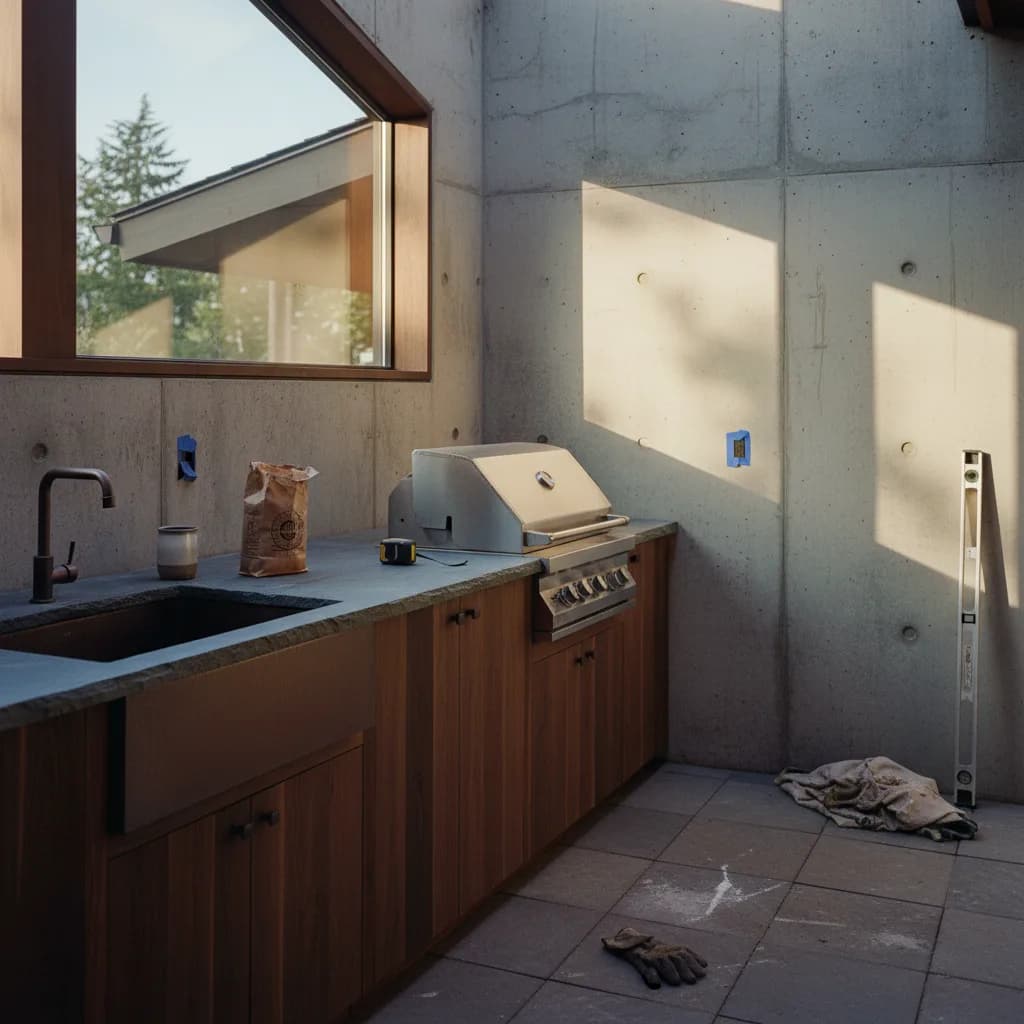
A complete outdoor kitchen in Portland, Oregon costs between $22,000 and $95,000 in 2026, with most homeowners spending in the $45,000 to $70,000 range for a mid-tier project. While a basic grill island can start lower, around $18,000, a typical project involves significant utility work, hardscaping, and durable materials suited for the Pacific Northwest climate. According to Remodeling Magazine’s 2025 Cost vs. Value Report, a mid-range outdoor kitchen in the Pacific region recoups approximately 55-65% of its cost at resale, making it a functional upgrade with a measurable, though not total, return.
In a Nutshell
- Total Cost Range: $22,000, $95,000+
- Typical Mid-Range Project: $45,000, $70,000 for a built-in grill, sink, refrigerator, stone countertops, and a connected patio.
- Project Timeline: Six to fourteen weeks from design approval to final inspection, depending on permit lead times and weather.
- Biggest Surprise Cost: Utility trenching. Running gas, water, and electrical lines from the house can cost $4,000, $9,000 alone.
What Does an Outdoor Kitchen Actually Cost in Portland?
The total cost is a function of project size, appliance quality, and site complexity. We have segmented project costs into three common tiers based on Renology's analysis of Portland-area projects.
| Tier | Typical Scope & Features | 2026 Cost Range |
|---|---|---|
| Basic | Prefabricated grill island on an existing patio, drop-in grill, minimal counter space, no utilities. | $18,000, $30,000 |
| Mid-Range | Custom masonry structure, built-in gas grill, outdoor sink, refrigerator, granite or concrete countertops, dedicated gas and water lines, paver patio extension. | $31,000, $65,000 |
| Premium | Expansive layout with high-end appliances (smoker, pizza oven), bar seating, pergola or roof structure, extensive lighting, sink with hot water, icemaker, significant hardscaping. | $66,000, $100,000+ |
For a typical mid-range $55,000 project, the budget allocation is as follows:
- Appliances & Equipment: 35% ($19,250)
- Masonry & Hardscaping (structure, patio): 25% ($13,750)
- Labor: 20% ($11,000)
- Utilities (Plumbing, Gas, Electrical): 15% ($8,250)
- Finishes (Countertops, Lighting): 5% ($2,750)
The bottom of the range, under $20,000, typically applies to prefabricated units placed on an existing patio with no new utility connections, a scope more common for a refresh than a new build.
Why Is an Outdoor Kitchen More Expensive in Portland?
Costs in the Portland metro area are consistently ten to twenty percent higher than in other parts of Oregon. Three factors drive this premium.
1. Skilled Labor Rates: The primary cost driver is the high demand for and cost of skilled trades. According to the Oregon Bureau of Labor and Industries' Portland metro occupational data for 2025, licensed plumbers, electricians, and journeyman masons command hourly rates of $85 to $130. This is significantly higher than rates in smaller markets like Eugene or Bend, directly impacting the 35-45% of a project's budget allocated to labor and utility installation.

2. Material Costs and Climate Requirements: Portland's climate, with its heavy winter rainfall and freeze-thaw cycles, demands durable, weather-resistant materials. This means specifying marine-grade 304 stainless steel for appliances and cabinets, non-porous countertop materials like sealed granite or Dekton, and solid foundations that can withstand soil movement. Sourcing these premium materials, combined with regional freight costs, adds five to ten percent to the material budget compared to drier climates.
3. Neighborhood Premiums and Site Complexity: Contractor pricing often includes a premium for projects in high-demand, affluent neighborhoods like Lake Oswego, West Linn, and Dunthorpe, where logistical challenges and higher client expectations are standard., many properties in the West Hills have challenging topography, requiring extensive site grading, retaining walls, and complex drainage solutions that can add $5,000 to $15,000 to the project before the kitchen construction even begins.
What Do Real Portland Homeowners Spend in 2026?
Three modeled project scenarios for 2026, built from the Renology Cost Index and typical local scopes. These are illustrative estimates, not completed client projects:
- Laurelhurst Craftsman ($52,500): This project involved a 150-square-foot extension of an existing paver patio. The L-shaped kitchen island featured a mid-range 36-inch built-in gas grill, a sink with a cold-water line, an outdoor refrigerator, and concrete countertops. The structure was clad in cultured stone to match the home's foundation. The cost included all utility runs and three GFCI outlets.
- Pearl District Rooftop ($89,000): For a condominium terrace, this project required significant engineering and crane services for material delivery. The compact kitchen used premium, marine-grade stainless steel cabinetry, a high-end infrared grill, an under-counter icemaker, and quartz countertops. The budget was driven by extensive electrical work for integrated lighting, heat lamps, and the need to meet strict building codes for weight and drainage on a rooftop structure.
- Beaverton Suburb ($68,000): This larger, 250-square-foot installation was built under a new cedar pergola. It included a 42-inch grill, a power burner for pots, a sink, a refrigerator, and extensive bar seating with granite countertops. The project's cost also covered a dedicated gas line for a fire pit adjacent to the kitchen, creating a complete outdoor entertainment zone.
Where Does the Money Actually Go?
3 Portland outdoor kitchen builders, editor-screened. 4 questions.
See my 3 matchesInitial quotes often focus on the visible components like appliances and countertops. However, a significant portion of the budget is consumed by foundational and utility work that contractors may list as allowances or exclude entirely.
- Site Preparation and Grading: Clearing the area, ensuring proper slope for drainage, and compacting the sub-base. Cost: $2,500, $6,000
- Utility Trenching: Digging trenches for gas, water, waste, and electrical conduit from the house to the kitchen site. Cost: $4,000, $9,000
- Permitting and Design Fees: Architectural plans, structural engineering (if covered), and city permit fees. Cost: $1,800, $5,500
- Footings and Foundation: A proper concrete slab or frost-proof footings required by code to prevent shifting. Cost: $3,000, $7,000
- Drainage Systems: Installing French drains or catch basins to manage Portland's heavy rainfall and prevent water damage. Cost: $2,500, $5,000
- Overhead Structures: A simple pergola or a fully waterproof roof structure adds significant cost. Cost: $6,000, $28,000
- Task and Ambient Lighting: Low-voltage, outdoor-rated lighting for safety and usability after dark. Cost: $1,500, $4,000
- Debris Hauling and Site Cleanup: Renting a dumpster and labor for removal of soil and construction waste. Cost: $900, $2,200
What Stops a Portland Outdoor Kitchen From Running Over Budget?
Outdoor construction projects are susceptible to budget increases due to their exposure to unforeseen conditions. Three issues cause the majority of budget overruns in Portland.
First is discovering poor soil conditions or large basalt formations during excavation, requiring extra labor and equipment for removal and proper base preparation. Second, scope creep is common, as homeowners decide to add a fire pit, more seating, or a sound system once the project is underway. Each change order adds material and labor costs. Third, utility connection points can be more complex or distant than initially assessed, increasing trenching and material costs. The National Association of Home Builders recommends a ten to fifteen percent contingency on renovations in homes over thirty years old to cover such surprises.
Securing the correct permits is a critical step; you can find a detailed walkthrough in our Portland outdoor kitchens permit playbook for 2026.
What Should Your Portland Contractor Include in the Quote?
A detailed quote is the best tool for preventing unexpected costs. Ensure your contractor's proposal is a fixed-price bid, not an estimate, and itemizes the following:
- Detailed scope of work with architectural drawings or plans.
- Site preparation, including excavation, grading, and soil removal.
- Foundation and footing specifications, including concrete PSI and rebar schedule.
- Framing and structure materials (e.g., steel studs, concrete block).
- Masonry or veneer material and installation method.
- Countertop material, thickness, and edge finishing.
- A specific list of all appliances by make and model number.
- Plumbing scope, including materials for supply and drain lines.
- Gas line scope, including pipe material, size, and pressure testing.
- Electrical scope, including number of circuits, outlets, and lighting fixtures.
- Cost and responsibility for securing all required permits from the Bureau of Development Services.
- Waste and debris removal plan.
- Warranty information for both labor and materials.
- A project timeline with key milestones and a payment schedule.
Sources & Methodology
See the Renology Methodology for how sources are reviewed, ranges are normalized, and planning-data limits are handled.
Cost ranges in this guide draw on the following named industry sources, public agency datasets, and Renology editorial research.
- Remodeling Magazine, 2025 Cost vs. Value Report (Pacific Region) (2025)
- Oregon Bureau of Labor and Industries, Portland Metro Occupational Data (2025)
- National Association of Home Builders (NAHB), Construction Cost Survey (2025)
- City of Portland, Bureau of Development Services, Permit Fee Schedule (2026)
- National Kitchen & Bath Association (NKBA), Outdoor Kitchen Design Guidelines (2024)
- Houzz & Home Study, Portland Metro Area Data (2025)
- Renology Project of the Day (POTD) Network, Portland Project Data (2024-2026)
Renology Take
The most common miscalculation Portland homeowners make is budgeting for an outdoor kitchen as if it were a patio accessory. It is not. It is a small, utility-intensive building project. The core costs are not in the grill but in the infrastructure required to make it function like a kitchen: the gas line, the hot and cold water, the sanitary drain, and the dedicated electrical circuits. These four utility runs are complex, require licensed tradespeople, and must pass city inspection. Homeowners who anchor their budget to the cost of appliances are often surprised when the masonry, patio work, and utility connections cost two to three times as much as the equipment itself. Approaching the project as a small construction job, with a focus on site prep and infrastructure, leads to more realistic budgeting and a smoother process.
Frequently Asked Questions
How much value does an outdoor kitchen add to a home in Portland?
Do I need a permit for an outdoor kitchen in Portland?
What materials work best for an outdoor kitchen in Portland's rainy climate?
How long does it take to build an outdoor kitchen in Portland?
Can you build an outdoor kitchen during the winter in Portland?
Portland · pre-screened
Get 3 Portland outdoor kitchen bids in 48 hours.
Our editors already vetted Portland outdoor kitchen builders. Answer 4 questions and we send 3 written bids inside 48 hours, with the real price for your scope, not their inflated first-call number.
- Free, no commission
- Pre-screened locally
- Bids inside 48 hours
Takes about 60 seconds. We'll text you when bids arrive.
Sources
- Remodeling Magazine, 2025 Cost vs. Value Report (Pacific Region)
- Oregon Bureau of Labor and Industries, Portland Metro Occupational Data
- National Association of Home Builders (NAHB), Construction Cost Survey
- City of Portland, Bureau of Development Services, Permit Fee Schedule
- National Kitchen & Bath Association (NKBA), Outdoor Kitchen Design Guidelines
- Houzz & Home Study, Portland Metro Area Data
- Renology Project of the Day (POTD) Network, Portland Project Data