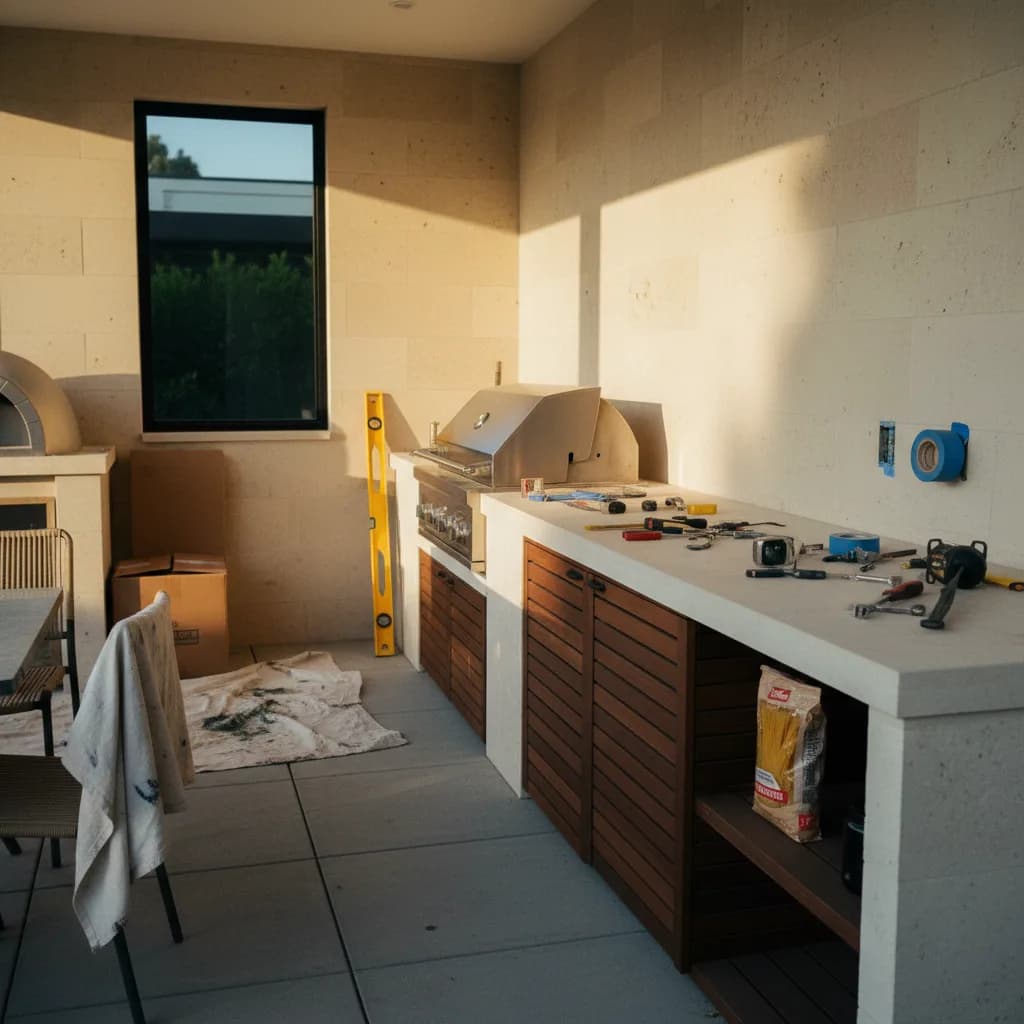
An outdoor kitchen in Los Angeles costs between $26,000 and $48,000 in 2026 for a typical, professionally installed mid-range project. While simpler, prefabricated island setups can start lower, a fully integrated outdoor kitchen involves significant utility work, masonry, and permitting. According to the National Kitchen & Bath Association (NKBA), demand for these spaces continues to rise, with homeowners viewing them as a functional extension of their living area, not just a place for a grill.
In a Nutshell: Los Angeles Outdoor Kitchen Costs
- Typical Cost Range: $26,000, $48,000
- High-End Projects: Custom builds with professional-grade appliances can run well past $75,000
- Project Timeline: 6 to 14 weeks from design to completion
- Biggest Surprise Cost: Utility trenching for gas, water, and electrical lines can cost $4,000, $9,000 and is frequently underestimated in initial homeowner budgets.
What Does an Outdoor Kitchen Actually Cost in Los Angeles?
The total cost of a Los Angeles outdoor kitchen project is dictated by size, appliance quality, and structural complexity. We have segmented the costs into three common tiers based on 2026 project data.
| Tier | Cost Range | Scope of Work |
|---|---|---|
| Basic | $22,000, $38,000 | Prefabricated or simple block-frame island, drop-in gas grill, under-counter refrigerator, minimal electrical work, paver or concrete pad. |
| Mid-Range | $45,000, $65,000 | Custom L-shaped masonry structure, built-in grill and side burner, sink with hot/cold water, granite countertops, dedicated gas and water lines, GFCI outlets, and integrated lighting. |
| Premium | $75,000, $95,000+ | Extensive custom build with stone veneer, professional-grade appliances (grill, pizza oven, smoker), bar seating, pergola or roof structure, outdoor television, and extensive landscape integration. |
A typical mid-range project's budget breaks down as follows:
- Appliances: 35%
- Masonry & Countertops: 25%
- Labor: 20%
- Utilities & Permits: 15%
- Finishes & Lighting: 5%
The bottom of the cost range typically applies to smaller, prefabricated units installed on an existing patio, which require minimal site work and utility connections.
Why is an Outdoor Kitchen More Expensive in Los Angeles?
Building costs in Los Angeles are consistently higher than in surrounding regions. Three factors drive this premium for outdoor kitchens.
1. Labor Rates: Skilled labor is the single largest variable. According to the California Department of Industrial Relations prevailing wage data for Los Angeles County, certified plumbers, electricians, and masons command hourly rates 15-25% higher than the national median. This ensures projects meet California's strict building codes but adds thousands to a project's bottom line.

2. Material & Permitting Complexity: Los Angeles building codes, especially in hillside areas or designated fire zones (Wildland-Urban Interface areas), mandate specific, often more expensive, non-combustible materials. The permitting process through the Los Angeles Department of Building and Safety (LADBS) is rigorous, requiring detailed plans that often necessitate hiring a designer or architect, adding to upfront costs.
3. Neighborhood Premiums and Site Access: Project costs see a notable increase in neighborhoods like Santa Monica, Pacific Palisades, and Sherman Oaks. This is due to a combination of logistical challenges like tight site access for equipment, stricter homeowners' association (HOA) regulations, and higher property values that correlate with higher-end material selections and client expectations. Hillside properties often require costly geotechnical reports and engineered foundations.
What Do Real Los Angeles Homeowners Spend in 2026?
Three modeled project scenarios for 2026, built from the Renology Cost Index and typical local scopes. These are illustrative estimates, not completed client projects:
- A $52,500 Outdoor Kitchen in Sherman Oaks: This project featured a 12-foot straight island with a stucco finish to match the main house. The scope included a mid-range 36-inch built-in gas grill, a sink with a pull-down faucet, an outdoor-rated refrigerator, and granite countertops. The cost covered a new concrete pad, running new gas and water lines from the house, and installing three GFCI outlets and two overhead lights.
- A $78,000 Outdoor Kitchen in Pasadena: This larger, L-shaped kitchen was built on an existing flagstone patio. It included a premium grill, a separate power burner for woks, and a wood-fired pizza oven. The structure was finished with a stacked stone veneer and topped with quartzite countertops. The project also included a new cedar pergola, extensive low-voltage landscape lighting, and connection to the home's main drain line, which required significant trenching.
- A $39,000 Outdoor Kitchen in Mar Vista: To accommodate a smaller backyard, this homeowner opted for a compact 8-foot island. They saved on plumbing costs by omitting a sink. The budget focused on high-quality components: a professional-grade infrared grill, durable stainless steel access doors, and custom-poured concrete countertops. The cost included the gas line extension and electrical work for the refrigerator and outlets.
Where Does the Money Actually Go? 7 Line Items Contractors Leave Out
3 Los Angeles outdoor kitchen builders, editor-screened. 4 questions.
See my 3 matchesInitial quotes from an outdoor kitchen contractor in Los Angeles may not capture all associated costs. Homeowners should budget for these common omissions:
- LADBS Plan Check & Permit Fees: $1,500, $3,500. This covers the city's review of your plans and the issuance of building, plumbing, electrical, and gas permits.
- Utility Trenching & Hookups: $4,000, $9,000. The cost to dig trenches and run new gas, water, and electrical lines from your house to the kitchen location. This is often subcontracted and billed separately.
- Site Preparation & Grading: $2,500, $6,000. If the site isn't perfectly level or requires demolition of old concrete, this work is essential for a stable foundation.
- Structural Engineering: $3,000, $7,500. Required for kitchens on raised decks, hillsides, or with complex roof structures to ensure they meet seismic and load-bearing codes.
- Gas Line Upgrade: $2,000, $5,000. If your existing gas line or meter cannot support the additional BTU load of a high-power grill and side burners, an upgrade from SoCalGas is necessary.
- Drainage Solutions: $1,800, $4,500. To prevent water from pooling around the kitchen or flooding the sink drain, a French drain or other system may be needed.
- Waste Hauling & Site Cleanup: $1,000, $2,500. The cost to remove excavated dirt, construction debris, and professionally clean the site upon completion.
What Stops a Los Angeles Outdoor Kitchen from Running Over Budget?
Three primary issues cause budget overruns in outdoor kitchen projects:
- Unforeseen Site Conditions: During excavation, crews may encounter hardpan soil, large rocks, or old utility lines that were not on any plans. This can halt work and require expensive equipment or rerouting of the kitchen's footprint.
- Mid-Project Changes: Deciding to add a pizza oven, upgrade from a 36-inch to a 42-inch grill, or change countertop materials after the initial order can create a cascade of change orders, labor delays, and restocking fees.
- Appliance and Material Availability: Supply chain disruptions can delay key components like grills or specific stone veneers. This can leave labor crews idle and extend the project timeline, leading to increased costs for site management.
To mitigate these risks, it is critical to include a financial buffer. The National Association of Home Builders recommends a ten to fifteen percent contingency on renovations in homes over thirty years old.
Navigating the city's requirements is a critical step; our guide to Los Angeles outdoor kitchen permits outlines the full process.
What Should Your Los Angeles Contractor Include in the Quote?
A detailed quote is your primary tool for controlling costs and ensuring a clear scope of work. A comprehensive proposal from a qualified outdoor kitchen contractor in Los Angeles should itemize the following:
- Site preparation, including any necessary demolition and grading.
- Foundation specifications (e.g., concrete slab thickness and reinforcement).
- Framing materials (e.g., galvanized steel studs).
- Masonry or veneer details, including material type and installation method.
- Countertop material, thickness, and edge profile.
- Specific make and model numbers for all appliances.
- Scope of plumbing work, including supply and drain lines.
- Scope of gas line work, including pipe size and pressure testing.
- Scope of electrical work, including number of outlets, lighting fixtures, and connection to the main panel.
- All fees for permit application, management, and inspections.
- A detailed project timeline with key milestones.
- A clear payment schedule tied to project milestones.
- Information on material and labor warranties.
- Costs for daily site cleanup and final debris removal.
Renology Take
The most common miscalculation Los Angeles homeowners make is underestimating the “kitchen” component of an “outdoor kitchen.” They budget for the grill, the stone, and the countertops, which are the visible, aesthetic elements. They fail to adequately budget for the infrastructure: the gas lines, the water supply, the wastewater drainage, and the electrical circuits. This utility work is complex, heavily regulated by LADBS and LADWP, and often constitutes 30% to 40% of the total project cost. It is the invisible foundation upon which the entire project rests. Focusing on the finishes while treating the utilities as an afterthought is the primary reason outdoor kitchen projects go significantly over budget and schedule. A successful project allocates a substantial portion of the initial budget to getting this core infrastructure right.
Sources & Methodology
Renology reviews public permit and labor signals, supplier pricing, remodeler quote patterns, comparable projects, the Renology Cost Index, and the Renology Methodology. Cost references are planning ranges for Los Angeles outdoor kitchen projects, not fixed bids.
- Remodeling Magazine: 2026 Cost vs. Value Report
- National Kitchen & Bath Association (NKBA): 2026 Outdoor Kitchen Market Report
- California Department of Industrial Relations, Prevailing Wage Determinations (Los Angeles County, 2026)
- Los Angeles Department of Building and Safety (LADBS) Permit Fee Schedule, 2026
- National Association of Home Builders (NAHB) Remodeling Market Index
- HomeAdvisor True Cost Guide: Outdoor Kitchens (2026 Data)
- Renology Project of the Day Network: Los Angeles (2025-2026 Data)
Frequently Asked Questions
Do I need a permit for an outdoor kitchen in Los Angeles?
What adds the most value to an outdoor kitchen for resale?
How long does it take to build an outdoor kitchen in Los Angeles?
What materials work best for the Los Angeles climate?
Can I save money by using a prefabricated outdoor kitchen island?
Ready to find a pro?
Tell us about your project and location. A Renology advisor can help you explore contractor matching.
Free for homeowners. No obligation to hire.
Find a ProSources
- Remodeling Magazine: 2026 Cost vs. Value Report
- National Kitchen & Bath Association (NKBA): 2026 Outdoor Kitchen Market Report
- California Department of Industrial Relations, Prevailing Wage Determinations (Los Angeles County, 2026)
- Los Angeles Department of Building and Safety (LADBS) Permit Fee Schedule, 2026
- National Association of Home Builders (NAHB) Remodeling Market Index
- HomeAdvisor True Cost Guide: Outdoor Kitchens (2026 Data)
- Renology Project of the Day Network: Los Angeles (2025-2026 Data)
Follow Renology on Google
Choose Renology as a preferred source and our guides show up more often in your Google results, including Top Stories and AI Overviews.