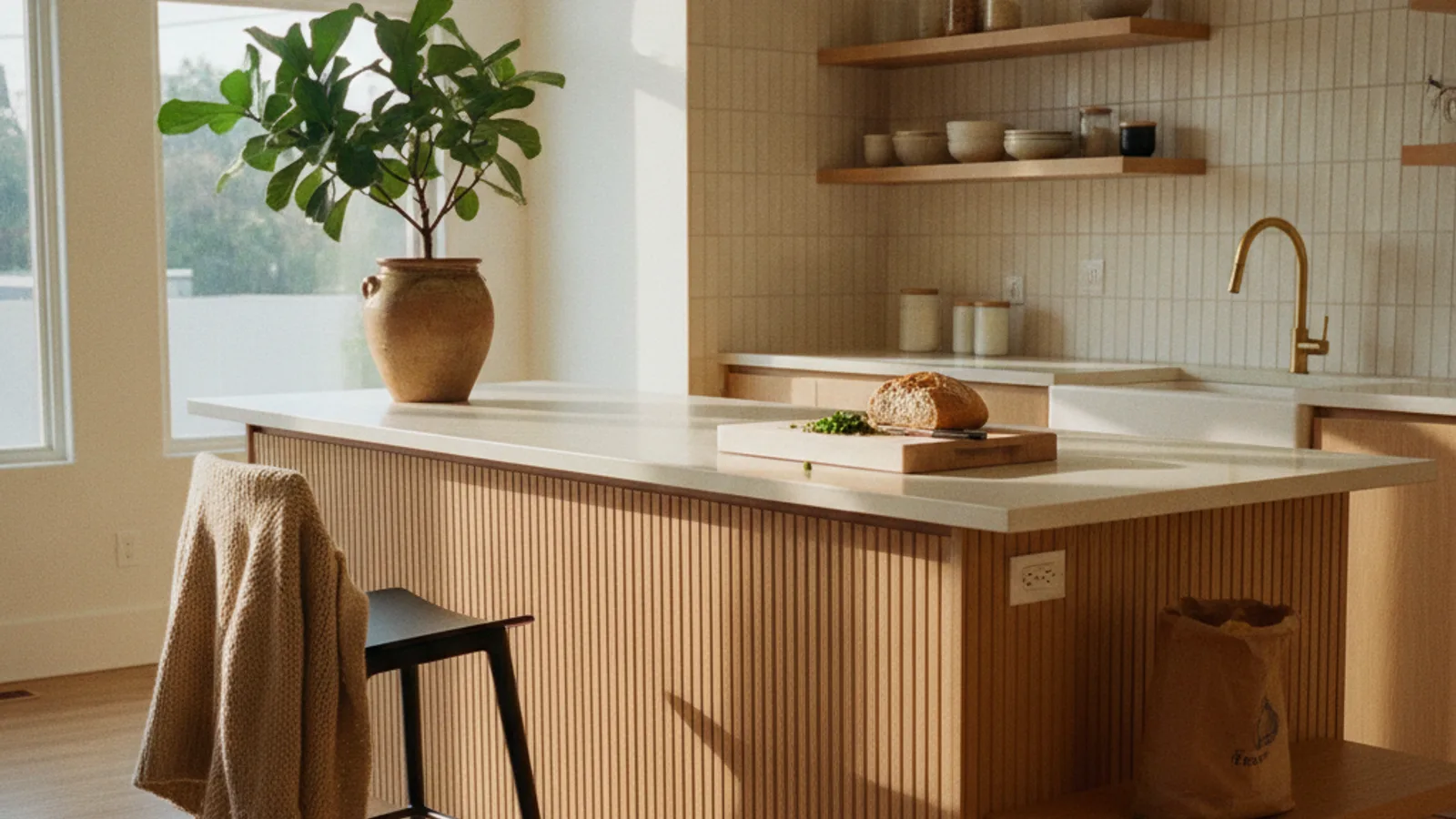
A complete kitchen remodel in Los Angeles costs between $75,000 and $180,000 in 2026, with upscale projects in neighborhoods like Santa Monica or Pasadena frequently exceeding $250,000. This range can start lower, from $35,000 to $55,000, for cosmetic refreshes in condominiums or smaller single-family homes that do not involve moving walls or rerouting utilities. These lower-cost projects typically focus on cabinet refacing, new countertops, a tile backsplash, and appliance replacement within the existing layout. The majority of Los Angeles homeowners, however, undertake more substantial renovations that involve reconfiguring the kitchen's footprint, which places their costs squarely in the $75,000 to $180,000 bracket. These figures account for materials, labor, permits, and contractor overhead. They do not typically include the cost of architectural plans, structural engineering if required, or a contingency fund for unforeseen issues, which are critical additions to any realistic budget.
In a Nutshell
- Median Major Kitchen Remodel Cost (2026): $115,000, $145,000. This covers a full gut renovation with semi-custom cabinets, stone countertops, new appliances, and updated electrical and plumbing systems in a 200-square-foot kitchen.
- Typical Project Timeline: Ten to sixteen weeks from demolition to final inspection. This duration is heavily influenced by the Los Angeles Department of Building and Safety (LADBS) plan check and inspection schedules.
- Key Cost Driver: Labor. Skilled labor rates in Los Angeles County are among the highest in the nation, accounting for 20% to 25% of the total project cost.
- Los Angeles Specifics: All significant remodels must comply with California's Title 24 energy code and local seismic safety standards, which adds complexity and cost compared to other regions.
- Resale Value Recouped: Homeowners can expect to recoup 48% to 55% of the cost of a major kitchen remodel upon sale, according to analysis of Pacific region data.
- Permitting: Permits from LADBS are required for any project that alters structural, electrical, mechanical, or plumbing systems. Fees typically range from $1,200 to $4,000.
The Cost of a Kitchen Remodel in Los Angeles for 2026
The total expenditure for a kitchen remodel in Los Angeles is best understood when segmented by project scope. Based on data from the National Kitchen & Bath Association (NKBA) and localized cost indices, we project the following ranges for 2026. A minor, or cosmetic, kitchen refresh in Los Angeles ranges from $35,000 to $55,000. This scope typically includes refacing existing cabinet boxes with new doors and hardware, installing new laminate or quartz countertops, adding a new tile backsplash, repainting the walls, and replacing appliances in their original locations. It does not involve changing the layout, moving utilities, or taking down walls. This is a popular option for homeowners in areas like the San Fernando Valley looking for a high-impact update on a controlled budget.
A mid-range, major kitchen remodel costs between $75,000 and $180,000. This is the most common project type for single-family homes in Los Angeles. It involves a full demolition of the existing kitchen. The scope includes semi-custom cabinetry, natural stone or high-end quartz countertops, a functional island, new appliances which may be relocated, and comprehensive updates to plumbing and electrical systems to meet current code. This level of renovation often requires architectural plans and a full permit set from LADBS. The median cost for such a project settles between $115,000 and $145,000.
An upscale, or luxury, kitchen remodel in Los Angeles starts at $180,000 and can easily exceed $300,000. These projects are common in affluent areas like Beverly Hills or coastal communities. They feature fully custom cabinetry, premium materials like marble or quartzite countertops with waterfall edges, professional-grade appliances (e.g., Sub-Zero, Wolf, Miele), extensive custom lighting plans, and often structural changes like removing walls to create an open-concept great room. The cost also includes high-end finishes, designer fees, and potentially significant structural or seismic engineering work.
Cost Breakdown: Where Does the Money Go?
Understanding the allocation of funds in a mid-range Los Angeles kitchen remodel provides clarity on project budgeting. The percentages are based on NKBA data models, adjusted for Southern California's market conditions. Cabinetry and hardware represent the largest single expense, consuming 30% to 35% of the total budget. This reflects the high demand for both semi-custom and custom solutions that maximize storage in varied home layouts. Labor, including demolition, installation, and project management, is the second-largest component, accounting for 20% to 25%. This is significantly higher than the national median due to regional wage scales.
Appliances and ventilation follow, comprising 12% to 15% of the budget. Los Angeles homeowners often opt for energy-efficient models to comply with Title 24 and reduce utility bills from the Los Angeles Department of Water and Power (LADWP). Countertops make up approximately 10% of the cost, with quartz remaining the dominant material choice for its durability and style. Plumbing and electrical work each account for roughly 5% to 7% of the total. This can increase if significant rerouting is needed or if the home's existing systems are outdated and require a full replacement to meet code. Finally, flooring, lighting, backsplash tile, and paint collectively represent the remaining 8% to 12% of the project cost. These figures do not include the recommended 10-15% contingency fund.
Three Representative Los Angeles Kitchen Projects from 2026
Three modeled project scenarios for 2026, built from the Renology Cost Index and typical local scopes. These are illustrative estimates, not completed client projects:
1. The Condominium Refresh in Mar Vista: $52,500. The owner of a 1,100-square-foot condominium sought to update a dated 1980s kitchen without altering the layout. The project involved refacing the existing solid cabinet boxes with new Shaker-style doors, adding new pulls, and installing new soft-close hinges. The budget included $9,000 for mid-grade stainless steel appliances, $7,500 for quartz countertops and a new undermount sink, and $3,000 for a ceramic tile backsplash. Labor costs were $14,000. The project required no permits from LADBS as no plumbing or electrical locations were moved, keeping costs and timelines contained. The entire process took five weeks.
2. The Mid-Range Gut Remodel in Sherman Oaks: $138,000. A family in a 1950s ranch-style home required a complete kitchen overhaul to improve function and flow. The project involved demolishing the entire 220-square-foot kitchen and removing a non-load-bearing wall to open the space to the dining room. The budget allocated $45,000 for semi-custom cabinetry, including a nine-foot island with seating. Another $22,000 was spent on a suite of higher-end appliances. The project required significant electrical work, including a subpanel upgrade and new dedicated circuits, costing $11,000. Plumbing was rerouted for the island prep sink at a cost of $8,500. LADBS permits and plans cost $4,200. The project duration was fourteen weeks from demolition to final inspection.
3. The Upscale Expansion in Santa Monica: $265,000. The goal for this 1920s Spanish-style home was to create a professional-grade kitchen that connected to an outdoor patio. The project expanded the kitchen's footprint by 100 square feet. It featured fully custom walnut cabinetry ($85,000), quartzite countertops with a waterfall edge on the island ($28,000), and a professional appliance package including a 48-inch range and integrated refrigerator ($45,000). A key feature was a large bi-fold window opening to a new outdoor counter. The structural work required engineering plans and triggered a seismic retrofit of the foundation cripple walls, adding $18,000 to the cost. The total project timeline, including architectural design and permitting, was seven months.
Why Los Angeles Kitchens Cost More Than the National Median
Several economic and regulatory factors converge to make kitchen remodeling in Los Angeles more expensive than in most other U.S. metropolitan areas. The primary driver is the high cost of skilled labor. According to the California Department of Industrial Relations prevailing wage data for Los Angeles County, hourly rates for licensed electricians, plumbers, and finish carpenters are 20% to 35% higher than the national median. This premium directly impacts the 20% to 25% of the project budget allocated to labor. General contractors in Los Angeles also carry higher overhead costs, including insurance, licensing, and vehicle expenses, which are passed on to the consumer.
Regulatory compliance is another significant cost layer. California's stringent building codes, particularly the California Building Code (CBC) and Title 24 energy standards, impose requirements not present in other states. For kitchens, Title 24 mandates high-efficacy lighting, specific ventilation fan performance, and often affects appliance selection., because much of Los Angeles is in a high seismic zone, any remodel that involves moving or altering walls may trigger requirements for seismic retrofitting, such as foundation bolting or shear wall installation. These measures, while critical for safety, add thousands of dollars to a project's cost.
Finally, logistics and material costs contribute to the higher price tag. The sheer density and traffic of the Los Angeles basin can increase the time required for material deliveries and for tradespeople to travel to job sites. These hours are billed to the project. While some materials are sourced locally, many high-end finishes and fixtures are transported from other parts of the country or overseas, and the associated freight costs are higher for West Coast destinations.
Neighborhood-Specific Trends in Los Angeles Kitchens
Kitchen design trends in Los Angeles are not monolithic; they vary significantly by neighborhood, reflecting the area's diverse architecture and lifestyles. In coastal communities like Santa Monica and Venice, the focus is on creating light, airy spaces that emphasize indoor-outdoor living. Homeowners here favor natural materials like light-toned woods, durable quartz countertops that mimic marble, and large windows or pass-throughs to patios. Because of the corrosive salt air, materials are chosen for durability; marine-grade stainless steel for outdoor kitchen components and high-quality finishes on fixtures are common expenditures.
In neighborhoods with a high concentration of historic homes, such as Pasadena, Hancock Park, and Silver Lake, the trend is toward sensitive renovations. Homeowners aim to integrate modern functionality while preserving the home's original character. This often means specifying period-appropriate cabinetry (like Shaker or custom inset styles), using materials like soapstone or marble, and sometimes restoring original elements like hardwood floors. The challenge and cost in these projects lie in seamlessly blending new systems (electrical, plumbing) within the constraints of older construction.
Conversely, in the San Fernando Valley, in areas like Sherman Oaks and Studio City, kitchens are the hub of family life. Renovations prioritize function, size, and durability. Large central islands with ample seating are nearly standard. Storage solutions are a major focus, with walk-in pantries and extensive cabinetry. Materials are chosen for their ability to withstand heavy use, making engineered quartz and durable porcelain tile flooring popular choices. These projects often involve removing walls to create large, open-concept spaces that can accommodate family gatherings and entertaining, reflecting a more suburban lifestyle compared to the denser parts of the city.

Top Three Kitchen Upgrade Categories in Los Angeles
3 Los Angeles kitchen remodelers, editor-screened. 4 questions.
See my 3 matchesAnalysis of renovation permits and project specifications reveals three dominant upgrade categories in Los Angeles kitchens for 2026. First, the kitchen island has evolved from a simple workspace to a multifunctional centerpiece. Homeowners are investing in oversized islands, typically nine to twelve feet long, that incorporate seating for four to six people, a secondary prep sink, an under-counter microwave drawer, and dedicated recycling and compost bins. The cost to add such an island ranges from $8,000 to $20,000, depending on the countertop material (with waterfall edges adding a premium), plumbing and electrical requirements, and the complexity of the cabinetry.
Second, a focus on specialized storage and custom cabinetry is paramount. Standard builder-grade cabinets are frequently replaced with semi-custom or fully custom solutions to maximize every square inch. Popular features include floor-to-ceiling pantry cabinets with pull-out shelves, dedicated drawers for spices and utensils, corner cabinet solutions like lazy susans or blind corner pull-outs, and integrated charging stations for electronic devices. The upgrade from stock cabinets to a semi-custom line for a medium-sized kitchen typically adds $15,000 to $25,000 to the budget. Fully custom cabinetry can double that figure.
Third, the integration of smart and energy-efficient technology is a clear priority. This extends beyond just appliances. Homeowners are specifying app-controlled, multi-zone LED lighting systems that comply with Title 24, touchless faucets, and powerful, quiet ventilation hoods. Induction cooktops are gaining significant traction due to their efficiency, safety, and the push toward electrification. A full suite of high-end smart appliances can cost $20,000 to $40,000, but homeowners often justify the expense through the convenience they offer and potential long-term energy savings on their LADWP utility bills.
Information Gain: The Hidden Costs of Title 24 Compliance
What many contractors' initial quotes for Los Angeles kitchens fail to itemize are the specific, non-negotiable costs associated with California's Building Energy Efficiency Standards, known as Title 24. While a contractor might mention that the project will be "built to code," the financial implications of Title 24 are often a source of budget creep through change orders. For a kitchen remodel, Title 24 has three primary areas of impact: lighting, ventilation, and appliance power.
First, lighting must be high-efficacy. In practice, this means all installed lighting must be LED. The code also contains prescriptive requirements for lighting controls. For example, all lighting must be controlled by a dimmer or a vacancy sensor. This means you cannot simply install a standard on/off switch. This requirement alone can add $40 to $80 per switch location., under-cabinet lighting must be controlled separately from ceiling lighting. Failing to plan for this specific wiring and control scheme during the design phase can lead to costly drywall repair and electrical rework. The total added cost for a Title 24-compliant lighting system over a non-compliant one can range from $1,500 to $4,000 for a typical kitchen.
Second, kitchen ventilation is strictly regulated. Any new or replacement range hood must be certified by the Home Ventilating Institute (HVI) and meet specific efficacy ratings (measured in cubic feet per minute per watt). This eliminates many cheap, inefficient models. More importantly, if a range hood is rated to move more than 400 CFM, the code requires a dedicated make-up air system to be installed to prevent the house from becoming dangerously depressurized. This is a complex and expensive addition, costing $2,500 to $6,000, that is almost never included in an initial bid unless the specific high-CFM hood has already been selected. This is a common "gotcha" for homeowners who choose a professional-style range.
Homeowners should demand that their kitchen contractor provide a line-item budget for Title 24 compliance, detailing the specific fixtures, controls, and ventilation equipment they plan to use. This forces a conversation about these requirements upfront and prevents them from becoming surprise costs later in the project.
Resale Value: A Los Angeles Kitchen Remodel's Return
When considering the cost of a kitchen remodel, homeowners in Los Angeles rightly question the return on that expenditure at the time of sale. Analysis from Remodeling Magazine's 2025 Cost vs. Value report, when adjusted for 2026 market projections, provides a clear financial picture for the Pacific region, which includes California. For a mid-range, major kitchen remodel with a median cost of approximately $98,000 in the region, the expected resale value added is about $56,800. This represents a cost recoupment of 58%. For an upscale kitchen remodel, the numbers are less favorable. A project costing a median of $182,000 might only add $87,300 in value, a 48% return.
These figures demonstrate that a kitchen remodel is not a cost that is fully recovered at sale. However, the analysis does not capture the value derived from using and enjoying the new kitchen for several years. It also does not account for the marketing advantage a newly remodeled kitchen provides in a competitive real estate market like Los Angeles. A home with a modern, functional kitchen is likely to sell faster and for a price closer to asking than a comparable home with a dated kitchen. Real estate agents consistently report that the kitchen is one of the most important rooms for potential buyers. Therefore, while the direct dollar-for-dollar return is below 100%, the project's worth is a combination of tangible resale value and the intangible benefits of improved usability and marketability.
Selecting a Kitchen Contractor in Los Angeles
Choosing the right kitchen contractor in Los Angeles is the most critical decision a homeowner will make. The contractor's competence directly affects the project's cost, quality, and timeline. The first step is to verify the contractor's license with the Contractors State License Board (CSLB). A licensed contractor in California must carry a bond and, in most cases, workers' compensation insurance. Homeowners should request and verify certificates of both general liability insurance and workers' compensation. A minimum of $1 million in liability coverage is standard.
Beyond licensing, seek a contractor with specific experience in Los Angeles kitchens. Ask for a portfolio of at least three to five completed kitchen projects in the area and speak with those references. Inquire about their experience with the LADBS permitting process. An experienced local contractor will have established relationships with plan checkers and inspectors, which can smooth the process. They will also be familiar with the common challenges of older LA homes, such as outdated plumbing or ungrounded electrical systems. When comparing bids, do not default to the lowest price. A significantly lower bid often indicates that the contractor has omitted key items, is using lower-quality materials, or is uninsured. A detailed, itemized bid is the mark of a professional. For a detailed guide on verifying contractor credentials and understanding the necessary paperwork, see our Los Angeles kitchens permit playbook for 2026. This resource provides a checklist for vetting potential hires and interpreting bids.
The Permitting Process with LADBS
Navigating the permitting process is a mandatory step for most kitchen remodels in Los Angeles. The Los Angeles Department of Building and Safety (LADBS) is the agency responsible for issuing permits and conducting inspections. A permit is required whenever you are changing the structure of the home, or altering the electrical, plumbing, or mechanical systems. This means that cosmetic updates like painting or replacing a faucet do not require a permit, but moving a sink, adding an electrical outlet, or removing a wall absolutely does.
The process typically begins with the submission of architectural plans. For a simple kitchen remodel, these plans may be drawn by a designer or draftsman. For projects involving structural changes, a licensed architect or engineer must prepare and stamp the plans. LADBS offers an online portal for plan submission, but the review process, known as plan check, can take anywhere from four to twelve weeks. Once the plans are approved, the permit is issued, and work can begin. The cost of the permit itself is based on the valuation of the project and typically falls between $1,200 and $4,000.
During construction, a series of inspections are required at critical stages. An LADBS inspector will need to visit the site to approve the framing, plumbing, electrical, and mechanical rough-ins before any drywall is installed. A final inspection is required upon completion of the project. Passing these inspections is crucial for ensuring the work is safe, up to code, and officially documented by the city, which is important for both insurance purposes and future home sales.
Common Budget Overruns and How to Plan for Them
Even with meticulous planning, budget overruns can occur during a kitchen remodel. The most effective way to manage this risk is by establishing a contingency fund from the outset. The National Association of Home Builders recommends a ten to fifteen percent contingency on renovations in homes over thirty years old. For a $138,000 kitchen project in an older Sherman Oaks home, this means setting aside an additional $13,800 to $20,700 in a separate account. This fund is not for upgrades or additions; it is strictly for addressing unforeseen problems.
The most common sources of unexpected costs arise during demolition. When walls and floors are opened up, contractors may discover issues that were impossible to detect beforehand. These can include dry rot or mold from a slow plumbing leak, termite damage, outdated and unsafe knob-and-tube wiring, or asbestos-containing materials that require professional abatement. In Los Angeles, another common discovery is the lack of proper structural support in walls that are intended to be removed, requiring the costly addition of a new beam and foundation footings.
Another frequent cause of budget creep is homeowner-initiated changes to the scope of work after construction has begun. Deciding to upgrade from quartz to marble countertops or changing the cabinet layout mid-project will generate a change order from the contractor. A change order details the additional cost for the new work and can also extend the project timeline. To minimize these changes, it is critical to finalize all material selections, from cabinet pulls to grout color, before the first hammer swings. A handful of Los Angeles builders now go further and sell a fixed-price remodeling contract tied to a signed 3D design, which kills most change orders before they can happen.
Sources & Methodology
See the Renology Methodology for how sources are reviewed, ranges are normalized, and planning-data limits are handled.
Cost ranges in this guide draw on the following named industry sources, public agency datasets, and Renology editorial research.
- Remodeling Magazine, 2025 Cost vs. Value Report (Pacific Region) (2025)
- National Kitchen & Bath Association (NKBA) Market Outlook (2026)
- California Department of Industrial Relations, Prevailing Wage Determinations (Los Angeles County) (2026)
- Los Angeles Department of Building and Safety (LADBS) Permit Fee Schedule (2025)
- U.S. Bureau of Labor Statistics, Occupational Employment and Wage Statistics (Los Angeles-Long Beach-Anaheim MSA) (2025)
- California Building Standards Code, Title 24, Part 6 (Energy Code) (2022)
- National Association of Home Builders (NAHB), Remodeling Market Index (Q1 2026)
- U.S. Census Bureau, Monthly Construction Spending (2026)
- Home Ventilating Institute (HVI) Certified Products Directory (2026)
- Contractors State License Board (CSLB) California (2026)
Renology Take
The central challenge of a kitchen remodel in Los Angeles is not the design or material selection, but the successful navigation of a complex regulatory environment. The meta-pattern most homeowners miss is that the lowest bid often reflects the path of least regulatory resistance, not the best value or the correct process. Contractors who gloss over the specifics of LADBS permitting or Title 24 compliance are shifting significant financial and legal risk onto the homeowner. An unpermitted project can create major problems during a future sale and may not be covered by insurance. The most successful projects are those where the homeowner budgets for professional plan creation and permit processing as a distinct, primary phase of the project. This front-loading of due diligence ensures that the true, all-in cost is understood from the beginning and that the final product is safe, legal, and a fully realized asset.
This article is from The Renology Magazine, the renovation magazine and contractor-advisory for homeowners in Southern California, San Diego, and Greater Seattle. Want more renovation breakdowns? Search "The Renology Magazine" on Google.
Frequently Asked Questions
How long does a kitchen remodel take in Los Angeles?
Do I need an architect for a kitchen remodel in LA?
What are the most popular countertop materials in Los Angeles kitchens?
Is an all-electric kitchen a good idea in Los Angeles?
What's the cost difference between custom and semi-custom cabinets?
How much do permits for a kitchen remodel cost in Los Angeles?
What are the seismic requirements for a kitchen remodel in Los Angeles?
How can I save money on my LA kitchen remodel?
Los Angeles · pre-screened
Get 3 Los Angeles kitchen bids in 48 hours.
Our editors already vetted Los Angeles kitchen remodelers. Answer 4 questions and we send 3 written bids inside 48 hours, with the real price for your scope, not their inflated first-call number.
- Free, no commission
- Pre-screened locally
- Bids inside 48 hours
Takes about 60 seconds. We'll text you when bids arrive.
Sources
- Remodeling Magazine, 2025 Cost vs. Value Report (Pacific Region)
- National Kitchen & Bath Association (NKBA) Market Outlook
- California Department of Industrial Relations, Prevailing Wage Determinations (Los Angeles County)
- Los Angeles Department of Building and Safety (LADBS) Permit Fee Schedule
- U.S. Bureau of Labor Statistics, Occupational Employment and Wage Statistics (Los Angeles-Long Beach-Anaheim MSA)
- California Building Standards Code, Title 24, Part 6 (Energy Code)
- National Association of Home Builders (NAHB), Remodeling Market Index
- U.S. Census Bureau, Monthly Construction Spending
- Home Ventilating Institute (HVI) Certified Products Directory
- Contractors State License Board (CSLB) California