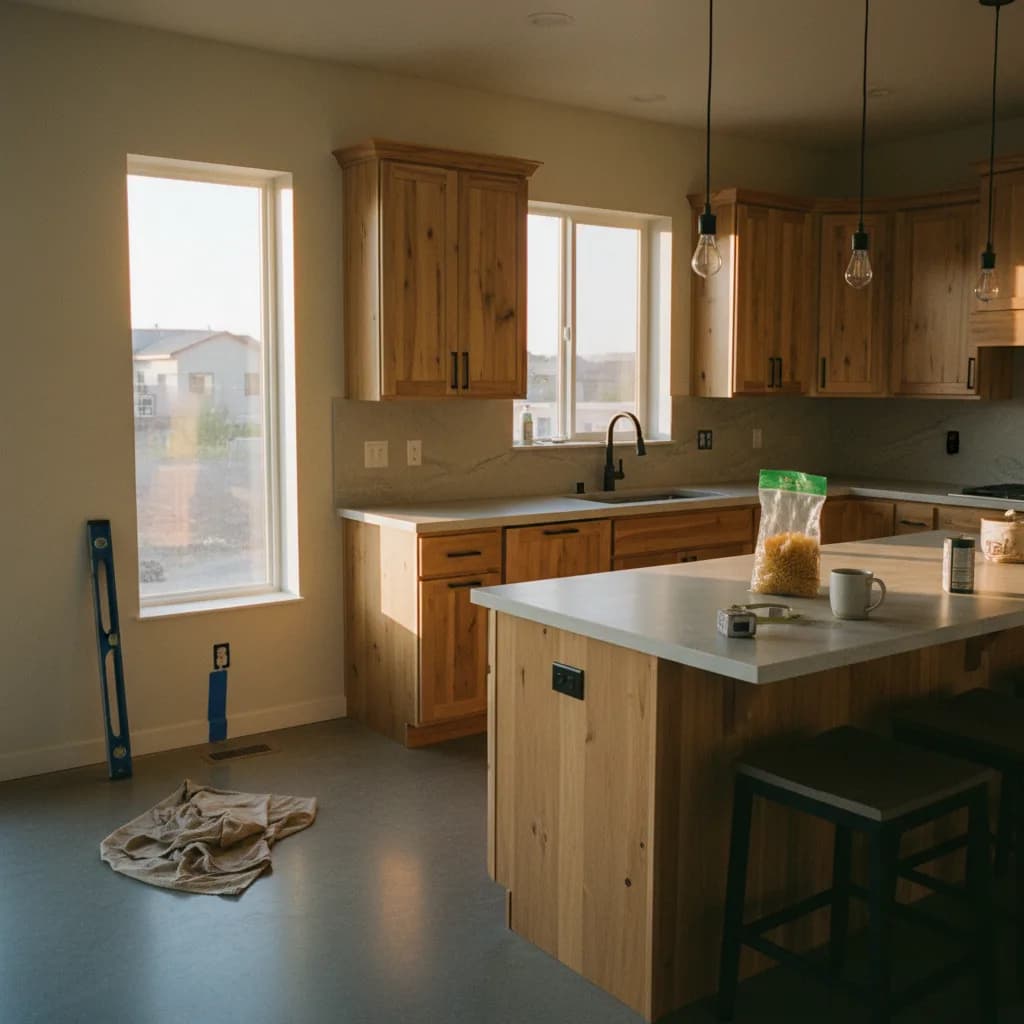
A major kitchen remodel in Denver costs between $70,000 and $120,000 in 2026, with the median project landing near $88,000. This price reflects a full gut renovation in a typical single-family home. Costs can start lower, in the $45,000 to $70,000 range, for a cosmetic refresh or a project in a smaller condominium space that does not involve moving walls or utilities. Understanding the key cost drivers, from labor rates in the Denver-Aurora-Lakewood metro to the age of your home, is the first step in building a realistic budget.
In a Nutshell
- Total Cost Range: $45,000 to $175,000+. A cosmetic refresh without layout changes can fall below this range, while extensive, high-end projects regularly exceed it.
- Mid-Range Project Cost: $70,000, $120,000. This typically includes new semi-custom cabinets, stone countertops, a tile backsplash, new appliances, and updated plumbing and electrical fixtures.
- Typical Timeline: Eight to sixteen weeks from demolition to final inspection for a mid-range project. Design and permitting can add another four to eight weeks upfront.
- Biggest Surprise Cost: Upgrading plumbing and electrical systems in older homes to meet current building codes. This can add $5,000 to $15,000 that is not always detailed in initial contractor bids.
What does a kitchen remodel actually cost in Denver?
Costs for a kitchen remodel in Denver fall into three distinct tiers, determined by the scope of work, material quality, and level of customization. The following table outlines the expected costs and scope for each level in 2026.
| Tier | Cost Range (2026) | Typical Scope |
|---|---|---|
| Basic / Minor Remodel | $45,000, $70,000 | Cabinet refacing or painting, new laminate or quartz countertops, new sink and faucet, new mid-range appliances in existing locations, new LVP flooring, interior paint. No layout changes. |
| Mid-Range / Major Remodel | $70,000, $120,000 | Full demolition, new semi-custom cabinets, natural stone or quartz countertops, new appliances, tile backsplash, undermount sink, moving some plumbing or electrical, new wood or tile flooring. |
| Premium / Upscale Remodel | $120,000, $175,000+ | Structural changes (e.g., removing walls), fully custom cabinetry, high-end quartzite or marble countertops, professional-grade appliances, extensive lighting plan, plumbing and electrical relocation. |
For a typical mid-range project valued at $88,000, the budget allocation is as follows:
- Cabinetry and Hardware: 35% ($30,800)
- Labor and Installation: 22% ($19,360)
- Countertops: 12% ($10,560)
- Appliances: 10% ($8,800)
- Plumbing: 8% ($7,040)
- Electrical: 7% ($6,160)
- Finishes (flooring, tile, paint): 6% ($5,280)
Projects at the bottom of the range, below $45,000, are almost always cosmetic updates in smaller spaces like condos or townhomes, where the existing layout is sound and major systems do not require replacement.
Why is a kitchen remodel more expensive in Denver?
Three primary factors contribute to the higher cost of Denver kitchens compared to national figures: skilled labor rates, material logistics, and the characteristics of the local housing stock.
1. Skilled Labor Rates
Denver's construction market is competitive, commanding high wages for skilled trades. According to the Colorado Department of Labor and Employment's 2025 occupational wage data for the Denver-Aurora-Lakewood MSA, hourly rates for residential construction specialists are substantial. Experienced carpenters command $32 to $48 per hour, licensed electricians bill between $38 and $60 per hour, and plumbers range from $35 to $58 per hour. These rates, which do not include contractor overhead or profit, directly inflate the 22 percent of the project budget allocated to labor.

2. Material Sourcing and Logistics
As an inland hub, Denver incurs higher transportation costs for materials, particularly for specialized or imported items like custom cabinetry, natural stone slabs, and high-end appliances. These logistical costs are passed on to the consumer. Supply chain disruptions continue to affect availability and pricing for specific components, requiring either budget flexibility or longer project timelines.
3. Neighborhood Premiums and Regional Factors
Contractor pricing often includes a premium for projects in affluent neighborhoods like Cherry Creek and Washington Park, reflecting higher operational costs and client expectations., much of Denver's housing stock, especially in popular areas like the Highlands and Park Hill, dates back to the early 20th century. These older homes frequently hide outdated knob-and-tube wiring, galvanized steel plumbing, and potential structural issues that must be addressed to meet modern building codes. the region's expansive clay soils can cause foundation shifts over time, sometimes necessitating sub-floor leveling and structural reinforcement during a kitchen gut renovation, adding unexpected costs.
What do real Denver homeowners spend in 2026?
Three modeled project scenarios for 2026, built from the Renology Cost Index and typical local scopes. These are illustrative estimates, not completed client projects:
- Washington Park Bungalow ($92,500): The owners of a 1920s brick bungalow undertook a major mid-range remodel to open the small, enclosed kitchen to the dining room. The cost included removing a non-load-bearing wall, extensive electrical work to replace old wiring, and new plumbing lines. They chose semi-custom shaker cabinets, quartz countertops, and durable hardwood flooring to match the rest of the home. About $12,000 of the budget was dedicated to system upgrades required by code.
- Central Park Modern ($78,000): In a home built in the early 2000s, this project focused on aesthetics and functionality over system replacement. The layout remained the same, but all finishes were upgraded. The project included high-end, panel-ready appliances, waterfall quartz countertops on the island, and custom lighting. By keeping the existing plumbing and electrical locations, the homeowners allocated more of their budget toward premium materials.
- Highland Victorian ($115,000): This project in a 1890s Victorian involved significant structural work, including installing a steel beam to remove a load-bearing wall. The budget covered custom cabinetry to fit the home's unique dimensions, soapstone countertops, and restoration of original wood flooring found under layers of linoleum. A significant portion of the cost, nearly $20,000, was for architectural plans, engineering, and the structural modifications themselves.
Where does the money actually go?
3 Denver kitchen remodelers, editor-screened. 4 questions.
See my 3 matchesInitial quotes from a kitchen contractor in Denver often focus on the visible items. Homeowners should budget for these frequently omitted or underestimated line items:
- Permit Fees: City and County of Denver permit fees for a project of this scope range from $900 to $2,800, depending on the total valuation.
- Architectural or Engineering Plans: If you are moving walls or altering window placements, expect fees of $2,500 to $7,000 for stamped plans.
- Hazardous Material Abatement: Testing and removal of asbestos (common in flooring and drywall texture in homes built before 1980) or lead paint can cost $1,500 to $5,000.
- Plumbing and Electrical Upgrades: Bringing systems up to code, such as adding dedicated circuits for appliances or replacing old pipes, can range from $4,000 to $12,000.
- Temporary Kitchen Setup: Costs for a microwave, hot plate, and utility sink, plus the increased cost of dining out for two to four months, can add $1,000 to $3,000.
- Drywall Repair and Texture Matching: After electrical and plumbing work, patching and matching existing wall texture is a specialized skill that can cost $1,200 to $3,500.
- Debris Removal: A dedicated construction dumpster and haul-away fees typically cost $700 to $1,500 for the duration of the project.
What stops a Denver kitchen project from running over budget?
Three issues consistently cause budget overruns in Denver kitchen remodels: unforeseen conditions, scope creep, and material price volatility.
First, discovering hidden problems like water damage, termite activity, or foundation issues after demolition can halt a project and require immediate, unbudgeted expenses. This is particularly common in Denver's older neighborhoods. The National Association of Home Builders recommends a ten to fifteen percent contingency on renovations in homes over thirty years old.
Second, scope creep, which involves homeowners adding tasks or upgrading materials mid-project, is a primary driver of cost increases. A decision to add under-cabinet lighting might require a new circuit, which then requires more drywall work, escalating costs through a chain reaction of change orders.
Finally, material costs can fluctuate between the quoting phase and the purchasing phase. Locking in prices with suppliers by placing deposits early can mitigate this risk, but requires decisive planning.
For a detailed overview of the local requirements, see our guide to navigating the city's building department: The Denver Kitchen Permit Playbook 2026.
What should your Denver contractor include in the quote?
A detailed scope of work is your primary tool against unexpected costs. A bid from a qualified kitchen contractor in Denver should itemize the following, at minimum:
- Detailed scope of work describing each phase
- Demolition and debris removal plan
- Framing or structural modifications
- Rough-in plumbing work and materials
- Rough-in electrical work and materials
- HVAC modifications (if any)
- Insulation and drywall installation and finishing
- Cabinetry brand, style, and installation costs
- Countertop material, fabrication, and installation costs
- Flooring material and installation costs
- Tile and backsplash material and installation costs
- Painting and final finishing labor and materials
- Appliance installation and connection
- Final plumbing and electrical fixture installation
- Allowances for fixtures you will select (e.g., faucets, lighting)
- Statement of compliance with all local building codes
- Projected timeline with key milestones
- Payment schedule
Renology Take
The most common point of failure in a Denver kitchen remodel budget is underestimating the cost of system modernization. Homeowners focus on the aesthetic finishes, which account for roughly half the budget, and are often surprised when a contractor's quote includes $15,000 for work that will be hidden behind walls. In a city with a high proportion of pre-1970s housing, it is pragmatic to assume your project will involve significant electrical and plumbing upgrades. The difference between a $70,000 kitchen and a $100,000 kitchen is rarely the cabinet quality alone; it is the cost of building a safe, compliant foundation of modern utilities upon which the new kitchen rests. Budgeting for this invisible infrastructure from day one is the most effective strategy for keeping the project on track financially.
Sources & Methodology
Renology reviews public permit and labor signals, supplier pricing, remodeler quote patterns, comparable projects, the Renology Cost Index, and the Renology Methodology. Cost references are planning ranges for Denver kitchen projects, not fixed bids.
- Remodeling Magazine, 2025 Cost vs. Value Report (Mountain Region)
- National Association of Home Builders (NAHB), Remodeling Market Index (Q1 2026)
- City and County of Denver, Community Planning and Development, Permit Fee Schedule (2026)
- Colorado Department of Labor and Employment, Occupational Employment and Wage Statistics, Denver-Aurora-Lakewood MSA (2025 data)
- National Kitchen & Bath Association (NKBA), 2026 Kitchen & Bath Market Outlook
- HomeAdvisor, True Cost Report: Denver Kitchen Remodel (2026)
- Renology Project of the Day Network, Denver Metro Data (2025-2026)
Frequently Asked Questions
How much value does a kitchen remodel add in Denver?
How long does a kitchen remodel take in Denver?
Do I need a permit for a kitchen remodel in Denver?
What is the biggest mistake homeowners make when remodeling a kitchen in Denver?
Can I save money by acting as my own general contractor?
Denver · pre-screened
Get 3 Denver kitchen bids in 48 hours.
Our editors already vetted Denver kitchen remodelers. Answer 4 questions and we send 3 written bids inside 48 hours, with the real price for your scope, not their inflated first-call number.
- Free, no commission
- Pre-screened locally
- Bids inside 48 hours
Takes about 60 seconds. We'll text you when bids arrive.
Sources
- Remodeling Magazine, 2025 Cost vs. Value Report (Mountain Region)
- National Association of Home Builders (NAHB), Remodeling Market Index
- City and County of Denver, Community Planning and Development, Permit Fee Schedule
- Colorado Department of Labor and Employment, Occupational Employment and Wage Statistics, Denver-Aurora-Lakewood MSA
- National Kitchen & Bath Association (NKBA), 2026 Kitchen & Bath Market Outlook
- HomeAdvisor, True Cost Report: Denver Kitchen Remodel
- Renology Project of the Day Network, Denver Metro Data