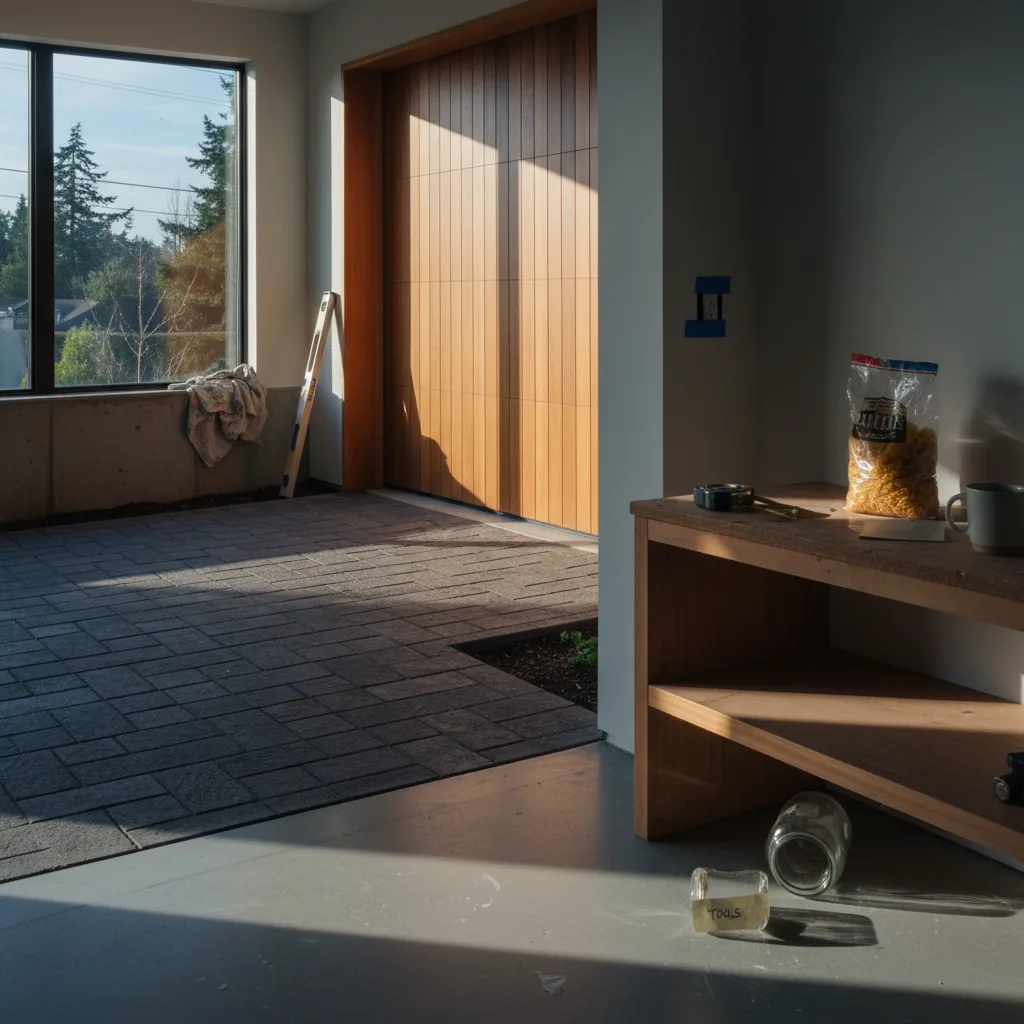
A new driveway in Seattle is a four to eight-week job, from the first call to the final cure. The timeline can start lower for a simple asphalt overlay, maybe two weeks once the crew is on site. But for a full tear-out and replacement in a neighborhood like Ballard, the biggest single delay cause is always the same: water. Managing Seattle's rain during excavation, grading, and pouring is the whole game. An unexpected week of downpour can halt subgrade compaction or ruin a fresh pour, pushing your entire schedule back. You don't fight Seattle weather; you schedule around it. This is the first thing a good driveway contractor in Seattle learns.
In a Nutshell
- Total Timeline: Four to eight weeks for a full replacement; two to three for a simple resurfacing.
- The Four Phases: Design and Permits; Site Prep and Demolition; Forming and Pouring; Curing and Final Details.
- Biggest Delay Risk: Weather. Seattle's notorious rainfall can halt excavation, sub-base preparation, and concrete pours for days at a time.
- Contingency Advice: Hold back ten to fifteen percent of your total budget for surprises. The National Association of Home Builders (NAHB) recommends this for a reason, especially with outdoor projects where sub-surface issues are common.
Phase 1: Design and Permits (weeks 1, 3)
3 Seattle driveway contractors, editor-screened. 4 questions.
See my 3 matchesThis phase is all paperwork and planning. It moves as fast as the city and your decisiveness allow. Your primary interaction is with the Seattle Department of Construction & Inspections (SDCI). For most simple replacements, a permit might not be needed, but if you're altering a curb cut, expanding the driveway's footprint, or changing the grade significantly, you'll need to pull a permit. This is where the driveway seattle cost can start to climb before a single shovel hits the dirt.
- What Happens: A site plan is drawn up showing dimensions, materials, and crucially, a drainage plan. Seattle has strict rules about impervious surfaces to manage stormwater runoff. Your plan must show that water will be handled on your property and not sheet-flow into the street.
- Who Does What: Your driveway contractor seattle professional or a designer will create the plans. The contractor typically handles the permit submission as part of their scope. You, the homeowner, provide final sign-off on the design and materials before anything is submitted.
- Common Holdups: An incomplete drainage plan is the number one reason for rejection. Second is an improperly documented curb cut request. Either can add two weeks of back-and-forth with the SDCI plan reviewer.
Phase 2: Site Prep and Demolition (weeks 3, 4)
Once the permit is in hand, the real work begins. This phase is loud, messy, and foundational to the project's success. The old driveway is broken up and hauled away, and the site is excavated to the required depth for the new sub-base and surface material. This is where you find the expensive surprises.
- What Happens: A jackhammer or skid-steer with a breaker attachment demolishes the old surface. An excavator digs out several inches of soil. The subgrade is then compacted and graded for proper drainage. Before any work, a call to 811 is made to locate public utility lines.
- Who Does What: The contractor's crew handles all demolition and excavation. You need to ensure the work area is clear of vehicles, equipment, and personal items. You may need to coordinate with Seattle Public Utilities (SPU) if any water or sewer lines are close to the work area.
- Common Holdups: Discovering extremely soft, unstable soil that requires extra excavation and fill. Hitting an unmarked private utility line (like for an old sprinkler system) or massive tree roots. And, of course, heavy rain turning the entire site into a mud pit.
Phase 3: Forming and Sub-base (week 5)
This is the structural heart of the job. A driveway's lifespan isn't determined by the concrete on top, but by the compacted base underneath. A solid, well-drained foundation prevents the cracking and heaving that destroys Seattle driveways. The 'rough-in' for a driveway includes setting the forms that will contain the concrete, laying down and compacting the gravel sub-base, and placing steel rebar for reinforcement.
- What Happens: Wooden forms are built around the perimeter of the driveway. Four to six inches of crushed rock are spread, graded, and compacted with a heavy plate compactor. A grid of steel rebar is then laid and tied, suspended on small chairs to ensure it sits in the middle of the future concrete slab.
- Who Does What: The contractor's crew does all the physical work. An SDCI inspector must visit the site to approve the formwork, sub-base depth, and rebar placement before any concrete is poured. This is a critical checkpoint.
- Common Holdups: Failing the pre-pour inspection. If the inspector's notes on the card show insufficient gravel depth or incorrect rebar spacing, the crew has to fix it and call for a re-inspection, which can cost a day or two.
Phase 4: Pour, Finish, and Cure (weeks 6, 8)
This is the day the project starts to look like a finished product. The concrete truck arrives, and a skilled crew works quickly to place, level, and finish the surface before it begins to set. If you're using pavers, this phase involves laying them over the compacted base and sand setting bed. The final, and most patient, step is the cure. A new concrete driveway isn't ready for a car the next day.
- What Happens: Concrete is poured, spread, and screeded level. Finishers then float and trowel the surface, adding a broom finish for traction. Control joints are cut to manage cracking. The new slab is then left to cure, a chemical hardening process that takes time. For pavers, this is when they are laid, cut, and jointed with sand.
- Who Does What: The concrete crew and finishers handle the pour. The homeowner's main job is to keep everyone, including pets and kids, off the fresh concrete.
- Common Holdups: A sudden rainstorm during the pour can ruin the surface finish. Pouring on a day that's too hot can cause the concrete to cure too quickly, leading to weakness and shrinkage cracks. The final sign-off from SDCI confirms the project is complete per the approved plans.
Three Representative Projects from 2026
Three representative projects from 2026, scoped similarly, reconstructed from Renology's Project of the Day network and used here in aggregate form:

- Queen Anne Hill Teardown: A 900 sq. ft. cracked asphalt driveway was demolished. The steep grade required extensive excavation and a new concrete pour with a heavy rebar grid and thickened edges. Total cost: $28,500. Total time: seven weeks, including a one-week delay for a failed subgrade inspection.
- West Seattle Permeable Pavers: A 650 sq. ft. driveway replacement to meet impervious surface limits. The project used permeable pavers over a deep gravel sub-base to manage stormwater on-site. Total cost: $32,000. Total time: six weeks, with permitting taking up three of those weeks.
- Capitol Hill Parking Pad: A simple 400 sq. ft. concrete parking pad replacement behind a townhouse. Easy access and flat grade kept things simple. No permit was required for a like-for-like replacement. Total cost: $14,000. Total time: four weeks from contract to final cure.
What Can Compress This Timeline
The homeowner who saves two weeks on their driveway seattle 2026 project does three things before the contract is signed. First, they choose all materials and finalize the design upfront. No mid-project changes. Changing from broom-finish concrete to stamped concrete after the forms are set is a recipe for delay. Second, they prepare the site. Clear access for trucks and equipment is non-negotiable. If a contractor has to spend half a day moving your stored boat, that's half a day you've lost. Third, they understand the permit triggers. If staying within your existing footprint avoids a three-week permit review with SDCI, that's the fastest way to save time. A simple replacement is always faster than a complex expansion.
What Blows It Up
Three things reliably turn a six-week project into a ten-week headache. First, unforeseen ground conditions. Hitting a layer of undocumented fill or peat soil means digging it all out and replacing it with structural gravel, adding thousands of dollars and a week of work. Second, scope creep. Adding a walkway or a new patio halfway through the job wrecks the schedule. The contractor has to stop, re-quote, and re-sequence their crews. Third, weather. You cannot pour concrete in a Seattle downpour. A week of solid rain means a week of paying for equipment that sits idle. The National Association of Home Builders recommends a ten to fifteen percent contingency on renovations in homes over thirty years old. For outdoor work in Seattle, I consider that the minimum.
What Should Be in Your Contractor's Schedule
Your contractor's proposal should include a detailed schedule. It's a sign of a pro who has thought through the job. Don't sign a contract without it. Look for these specific line items:
- Scope-lock date (when all your decisions are final).
- Permit submission date.
- Anticipated permit approval date.
- Demolition and excavation start/end dates.
- Sub-base and forming start/end dates.
- Pre-pour inspection date with SDCI.
- Concrete pour date (weather permitting).
- Curing period duration (minimum seven days for light traffic, 28 for full strength).
- Final inspection and project closeout.
A detailed schedule is your best tool for tracking progress. For more on the paperwork, see our [permit playbook](/guides/seattle-driveways-permit-playbook-2026).
Renology Take
The brochure from a driveway contractor seattle company will show a project timeline of one to two weeks. That's the on-site construction time in a perfect world with no rain, no inspection delays, and no surprises under the ground. It's marketing, not reality. The real timeline for new seattle driveways, from signing a contract to parking your car, is closer to six weeks. Anything less is a happy accident. The work isn't just about finishing concrete; it's about managing Seattle's soil, its water, and its rulebook at the SDCI. The professional you hire isn't just selling you a slab of concrete. They're selling risk management. Their higher price reflects their experience with what can go wrong and their ability to keep a project moving when it does. That's what you're paying for.
Sources
- National Association of Home Builders (NAHB) Remodeling Market Index, Q1 2026
- Seattle Department of Construction & Inspections (SDCI), Driveway and Parking Standards, 2026
- Washington State L&I, Prevailing Wage Data for King County, 2026
- American Concrete Institute (ACI), Residential Concrete Standards, 2025
- Interlocking Concrete Pavement Institute (ICPI), Paver Installation Guidelines
- Remodeling Magazine, 2025 Cost vs. Value Report, Pacific Region
- Renology Project of the Day (POTD) Network, Seattle MSA Data, 2025-2026
Get 3 Seattle driveway bids in 48 hours.
Our editors already screened Seattle driveway contractors. Answer 4 questions; we send 3 written bids inside 48 hours, with the real price for your scope, not their inflated first-call number.
Send my 3 bidsFree. No commission. If a match doesn't fit, we'll send another.