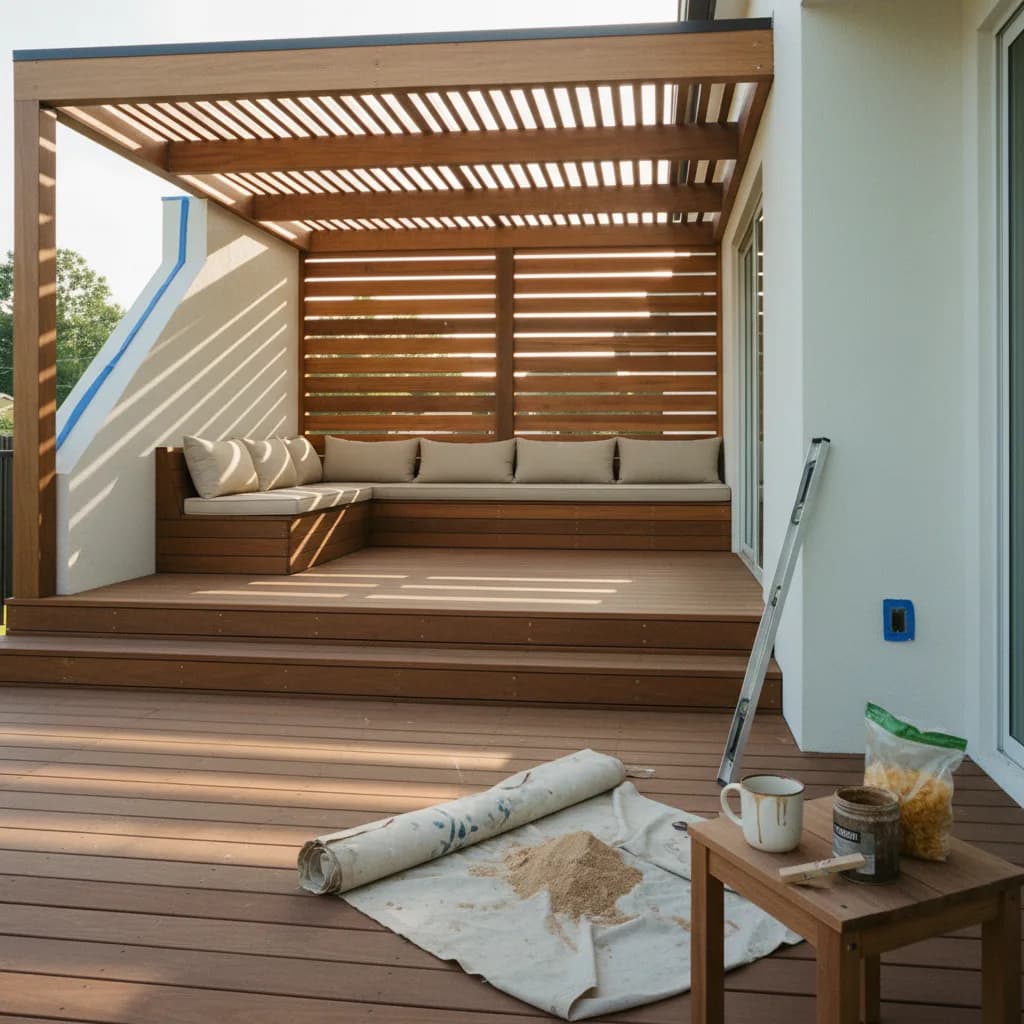
A proper deck build in Orlando takes between eleven and sixteen weeks from the day you sign a contract to the day you pass final inspection. The timeline for decks and pergolas in Orlando for 2026 is holding steady, but don't believe the six-week promise you see on a truck. That’s just the build time, not the whole process. Timelines can start lower, around eight or nine weeks, for a simple ground-level pergola that doesn't disturb much. But for a raised deck tied into your home, plan for the full four months. The single biggest delay in Central Florida isn't materials or labor. It's the summer rainy season. An afternoon thunderstorm can wash out a footing inspection or delay a concrete pour for days, creating a domino effect on the entire schedule for a project in a neighborhood like Lake Nona.
In a Nutshell
- Total Timeline: 11 to 16 weeks
- Four Phases: Design and Permits, Site Prep and Foundation, Framing and Rough-In, Finishes and Final Inspection.
- Biggest Delay Risk: Permitting backlogs at the city and daily summer thunderstorms halting concrete work and site inspections.
- Contingency Fund: Always hold back ten to fifteen percent of the total project cost for surprises. The National Association of Home Builders recommends this for a reason, especially on older homes with potential ledger board issues.
Phase 1: Design and Permits (weeks 1, 5)
This is where the real work happens before a single board is cut. The timeline is paperwork, not construction. Your contractor or a designer will produce structural drawings that meet the Florida Building Code. In Orlando, this means engineering for a 140-mph wind load, specifying the right hurricane ties and footing depth. These plans are your ticket to getting a permit. The homeowner's job is to make every single decision and lock the scope. Your contractor or a permit expediter submits the package to the City of Orlando Permitting Services Division. The most common holdup is an incomplete submission or plans that don't meet wind uplift requirements. A back-and-forth with the city plan checker can easily add two weeks to this phase. If you're in an HOA, you need their approval before the city will even look at your plans. Get that started on day one.
Phase 2: Site Prep and Foundation (weeks 6, 7)
Once the permit is in hand, the site comes to life. This phase involves clearing the area, performing any necessary demolition of old patios or structures, and marking out the new footprint. Your contractor will call 811 to have public utilities marked. Private lines, like irrigation or pool equipment feeds, are on you to locate. The crew then digs the footings. Orlando's sandy soil often requires deeper or wider footings than specified in generic plans to achieve the required load-bearing capacity. The first critical inspection happens here: the city inspector must see the open holes, the rebar, and the post bases before any concrete is poured. A single afternoon thunderstorm can flood the holes and push this inspection back. The Orlando Utilities Commission (OUC) may also need to be involved if the work is near power lines. This phase ends when the concrete is poured, cured, and ready to build on.
Phase 3: Framing and Rough-In (weeks 8, 10)
This is the part that feels like progress. The structure goes up fast. It starts with attaching the ledger board to the house. A deck that doesn't ledger into solid framing isn't a deck, it's a porch waiting to fall. The IRC and FBC require a continuous load path from the decking, to the joists, to the beams, to the posts, and down to the footings. We install beams, joists, and hurricane ties. If your pergola includes a fan or lighting, the electrician runs wiring for a rough-in. The second major inspection is the framing inspection. The inspector checks the ledger attachment, joist spacing, fastener schedules, and all structural connections before any decking goes down. Your inspection card must be on site and signed off. A failed framing inspection can stop a job for a week while corrections are made. This is the skeleton of your project; it has to be perfect.
Phase 4: Finishes and Final Inspection (weeks 11, 12)
3 Orlando deck builders, editor-screened. 4 questions.
See my 3 matchesWith the frame approved, the finish work begins. This includes installing the decking boards, building stairs, and assembling the railing system. For pergolas, this is when shade elements or decorative end caps are added. If you have electrical, the electrician returns to install outlets, switches, and fixtures. Everything must be buttoned up: railings must be the correct height and baluster spacing, stairs need consistent riser heights, and all electrical must be GFCI protected and properly grounded. The job isn't done until the city inspector returns for the final inspection. They walk the finished structure, check the safety features, and ensure it matches the approved plans. Once they sign off on the inspection card, the permit is closed, and you receive a Certificate of Completion. Only then is the project officially and legally complete. Don't make the final payment until that signature is on the card.
Three Representative Projects from 2026
Three modeled project scenarios for 2026, built from the Renology Cost Index and typical local scopes. These are illustrative estimates, not completed client projects:

- Lake Nona Pergola & Deck: A 450-square-foot multi-level composite deck with an integrated aluminum pergola, including full electrical for lighting and a ceiling fan. Total cost: $58,500. Total timeline: 15 weeks, delayed one week by HOA architectural review.
- College Park Wood Deck Replacement: A 300-square-foot pressure-treated wood deck replacing an older, failing structure. Required new footings and ledger board flashing repair. Total cost: $34,000. Total timeline: 12 weeks.
- Thornton Park Patio Cover: A simple 12x12-foot freestanding cedar pergola over an existing concrete patio. No demolition and straightforward permitting. Total cost: $19,500. Total timeline: 9 weeks.
What Can Compress This Timeline
The homeowner who saves four weeks does three things before signing a contract. First, they have a complete vision. They know the exact decking material, color, railing style, and lighting fixtures. This allows the contractor to create a full set of plans for a single, clean permit submission. Second, they hire a design-build firm. A contractor with an in-house designer or a dedicated architect relationship can work through the City of Orlando's permitting process much faster than one who has to outsource. They know the plan checkers and what they look for. Third, they schedule the build for Florida's dry season, from October to April. Avoiding the daily summer thunderstorms eliminates the most common cause of day-to-day delays on site. Decisiveness is your best tool for speed.
What Blows It Up
Three things reliably turn a twelve-week project into a twenty-week headache. First, changing your mind after the scope-lock date. Deciding you want a different color decking or adding a staircase after the permit is issued requires a plan revision, resubmission to the city, and weeks of delay. Second, discovering rot or termite damage at the ledger board. On pre-1990s Orlando homes, we often find the house's rim joist is compromised. This stops the deck build and starts a separate structural repair project. Third, a named storm. A hurricane watch can shut down all construction sites for a week or more as contractors secure materials and inspectors are reassigned to emergency prep. The National Association of Home Builders recommends a ten to fifteen percent contingency on renovations in homes over thirty years old. In Florida, I say it's essential for any age of home.
What Should Be in Your Contractor's Schedule
A real schedule is more than a start and end date. It's a list of milestones with deadlines. Your decks pergola contractor in Orlando should provide a schedule that includes, at a minimum, these line items:
- Scope-lock date for all material selections
- Architectural drawings complete date
- Permit package submission to City of Orlando
- Target permit approval date
- Material order and lead-time confirmation for decking and railings
- Site prep and footing dig start date
- Footing inspection date
- Framing start date
- Framing inspection date
- Final inspection date
This document is the basis for your weekly progress check-ins. For a deeper dive on the city's requirements, see our Orlando permit playbook.
Sources & Methodology
See the Renology Methodology for how sources are reviewed, ranges are normalized, and planning-data limits are handled.
Cost ranges in this guide draw on the following named industry sources, public agency datasets, and Renology editorial research.
- NAHB Remodeling Market Index (RMI) (Q4 2025)
- Florida Department of Economic Opportunity, Orlando-Kissimmee-Sanford MSA Occupational Employment and Wage Statistics (May 2025)
- City of Orlando Permitting Services Division, Permit Turnaround Time Report (January 2026)
- American Wood Council, "Design for Code Acceptance 6: Prescriptive Residential Wood Deck Construction Guide" (2021)
- Remodeling Magazine, Cost vs. Value Report (2025)
- Simpson Strong-Tie, "Deck Connection and Fastening Guide" (2025)
- Renology Project of the Day (POTD) Network Data (2024-2026)
Renology Take
The marketing timeline for Orlando decks and pergolas is a fantasy. Contractors sell the “build time,” which might be four or five weeks. They don’t sell the eight weeks of prep work that comes first. The real work of a successful project is in the planning, the permitting, and the logistics. The actual construction is the most straightforward part. Homeowners get frustrated when a month passes after signing the contract and their yard looks untouched. But that’s when the permit is navigating city review and your composite decking is on a truck from the factory. The best decks pergola orlando 2026 projects will be those where the homeowner understands that the job starts with a pen, not a hammer. A good plan and a locked scope are the foundation. The concrete footings just hold it up.
Frequently Asked Questions
How long does a deck and pergola project in Orlando really take?
Why do decks and pergolas in Orlando cost more than I expect?
Can I live in the home during construction?
What's the longest single phase of a deck build?
What is the biggest mistake homeowners make with Orlando decks?
Orlando · pre-screened
Get 3 Orlando deck bids in 48 hours.
Our editors already vetted Orlando deck builders. Answer 4 questions and we send 3 written bids inside 48 hours, with the real price for your scope, not their inflated first-call number.
- Free, no commission
- Pre-screened locally
- Bids inside 48 hours
Takes about 60 seconds. We'll text you when bids arrive.
Sources
- NAHB Remodeling Market Index (RMI)
- Florida Department of Economic Opportunity, Orlando-Kissimmee-Sanford MSA Occupational Employment and Wage Statistics
- City of Orlando Permitting Services Division, Permit Turnaround Time Report
- American Wood Council, "Design for Code Acceptance 6: Prescriptive Residential Wood Deck Construction Guide"
- Remodeling Magazine, Cost vs. Value Report
- Simpson Strong-Tie, "Deck Connection and Fastening Guide"
- Renology Project of the Day (POTD) Network Data