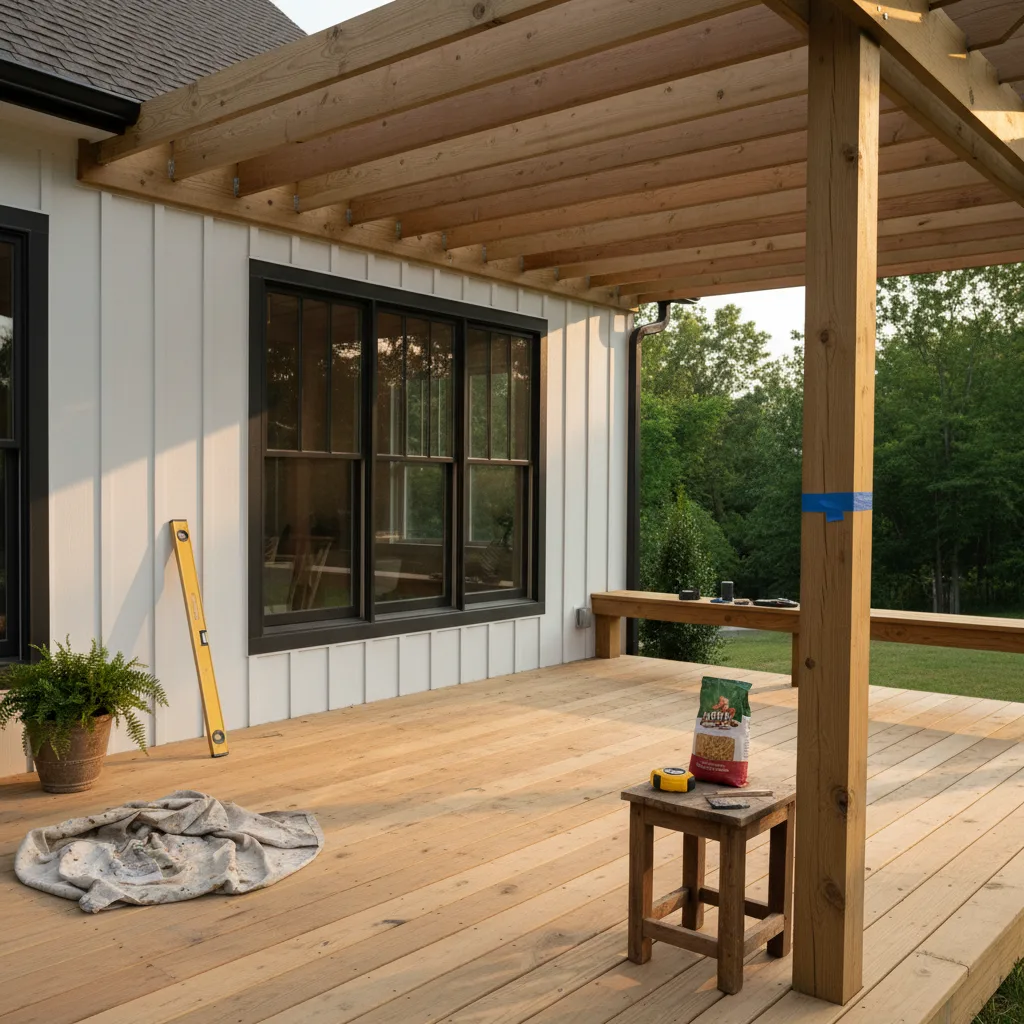
A new deck and pergola in Nashville takes ten to sixteen weeks from first call to final sign-off. Anyone who tells you different is selling a brochure, not a build. The timeline can start lower, around six weeks, for a simple ground-level deck or a prefab pergola kit that doesn't require complex footings. But for a properly ledgered deck that becomes part of your home, the clock runs on the city's schedule, not yours. The biggest single delay in Davidson County is hitting limestone bedrock when digging footings. A shovel-ready site in East Nashville can turn into a week of rock-hammering with one bad test hole. Plan for surprises. The ground always has them.
In a Nutshell
- Total Timeline: 10, 16 weeks for a standard custom deck and pergola.
- Four Phases: Design and Permits (3, 5 weeks), Site Prep and Foundation (1, 2 weeks), Framing and Rough-In (2, 4 weeks), Finishes and Final Inspection (2, 4 weeks).
- Biggest Delay Risk: Unexpected subsurface conditions. Hitting rock during footing excavation can add a week and thousands in equipment rental and labor.
- Contingency Advice: Hold back ten to fifteen percent of your total budget for surprises. The National Association of Home Builders recommends this for a reason. Older homes, in particular, can hide rot or pest damage where the deck meets the house.
Phase 1: Design and Permits (Weeks 1, 5)
This is where the project is built on paper. A good plan prevents expensive changes later. The scope-lock date is critical; after that, every change costs you time and money. For most decks pergola nashville projects, you'll need a full set of plans showing dimensions, footing details, ledger connection, and railing specs to submit for a permit.
- What Happens: Initial design concepts are refined into structural drawings. Your contractor or an architect drafts the plans for submission.
- Who Does What: The homeowner signs off on the final design and materials. The contractor or a permit expediter handles the submission to the Metro Nashville Department of Codes and Building Safety.
- Common Holdups: Incomplete plans get rejected, sending you to the back of the line. Zoning review, especially in Historic Preservation Overlay districts like Germantown or Edgefield, can add weeks for design approval before you even submit for a building permit.
Phase 2: Site Prep and Foundation (Weeks 6, 7)
Once you have an approved permit, the physical work begins. This phase is about what's in the ground. In Nashville, that means dealing with expansive clay soil and the potential for rock. The foundation is everything. A deck's load path starts at the footings. If they're wrong, the whole structure is compromised.
- What Happens: The build area is cleared and graded. Footing locations are marked. Holes are dug, typically with a power auger, down to the frost line or specified depth. Concrete is poured.
- Who Does What: The contractor's crew handles excavation and concrete. Before any digging, they are required to call 811 to have underground utilities marked by providers like Nashville Electric Service and Metro Water Services. The homeowner keeps the site clear.
- Common Holdups: Hitting rock, as mentioned. Heavy rain can flood footing holes before concrete is poured, requiring them to be pumped out and re-dug. The footing inspection by a Metro Codes official must pass before you can set posts.
Phase 3: Framing and Rough-In (Weeks 8, 11)
This is when your deck starts to look like a deck. The skeleton goes up, and the strength of the build is established. The single most important connection is the ledger board, which fastens the deck to your house. A deck that doesn't ledger into solid framing isn't a deck, it's a porch waiting to fall. The IRC requires a continuous load path from rim joist to footing.
- What Happens: Posts are set, beams are installed, and joists are hung. The ledger board is bolted to the house's band joist with proper flashing. If your design includes lighting or outlets, the rough-in electrical wiring is run now.
- Who Does What: The framing crew does the heavy lifting. An electrician runs any necessary conduit and boxes. The homeowner should stay off the structure until it's deemed safe.
- Common Holdups: The framing inspection. The city inspector checks joist spacing, hardware, and the ledger connection against the approved plans. If anything fails, work stops until it's corrected and re-inspected. This is where a good decks pergola contractor nashville earns their keep.
Phase 4: Finishes and Final Inspection (Weeks 12, 16)
With the frame approved, the job moves from structural to cosmetic. This is where material choices become visible. Composite decking, treated wood, railings, stairs, and pergola details all come together. This phase feels fast, but the details matter for longevity and safety.
- What Happens: Deck boards are laid, railings and stairs are built, and the pergola is erected. Any lighting fixtures are installed. If using wood, it gets stained or sealed.
- Who Does What: The contractor's finish carpenters and electricians complete their work. The homeowner's main job is the final walkthrough to create a punch list of any small items needing correction before final payment.
- Common Holdups: Material backorders can stall progress. A failed final inspection on railing height or stair rise/run dimensions can require rework. Getting the final sign-off on the inspection card from Metro Codes officially closes the permit and completes the project.
Three Representative Projects from 2026

Three representative projects from 2026, scoped similarly, reconstructed from Renology's Project of the Day network and used here in aggregate form:
- Germantown Attached Deck & Pergola: A 250 sq. ft. composite deck with a cedar pergola attached to a historic brick townhouse. The project required extra review from the Historical Commission. Total Time: 18 weeks. Total Cost: $38,500.
- Sylvan Park Bungalow Deck: A 400 sq. ft. pressure-treated wood deck with a detached pergola, replacing an old concrete patio. The project involved breaking up and hauling away the old slab. Total Time: 14 weeks. Total Cost: $31,000.
- 12 South Multi-Level Deck: A 600 sq. ft. multi-level composite deck with aluminum railings and built-in lighting. The complex framing and electrical rough-in extended the schedule. Total Time: 16 weeks. Total Cost: $55,000.
What Can Compress This Timeline
The homeowner who saves four weeks does three things before signing a contract. First, have your design and material choices one hundred percent locked in. Scope changes are timeline killers. Second, check with your HOA for their design review process and get that started immediately. It often runs parallel to city permitting and can be a major bottleneck. Third, hire a professional. A reputable decks pergola contractor nashville knows the inspectors, the common soil issues, and how to submit a permit application that gets approved on the first try. Trying to GC it yourself to save money usually costs you weeks in mistakes.
What Blows It Up
Three things reliably derail a deck build. One: discovering rot or termite damage on the house's rim joist when the old siding is removed. This requires structural repair to the house itself before the deck can be safely ledgered. Two: major excavation problems. Hitting a buried utility line or a solid shelf of limestone requires bringing in heavy equipment and specialists. Three: failed inspections. A framing inspection failure can easily add two weeks while you wait for the inspector to return. The National Association of Home Builders recommends a ten to fifteen percent contingency on renovations in homes over thirty years old. Your Nashville deck is no exception.
What Should Be in Your Contractor's Schedule
Your contractor's proposal should include a detailed schedule with key milestones. Don't sign a contract without one. It's your primary tool for holding them accountable. A professional schedule for a Nashville deck build will have, at minimum, these line items:
- Scope-lock date for all design and material decisions.
- Permit submission date.
- Projected permit approval date.
- Material order deadlines for long-lead items (composite decking, custom railings).
- Site prep and excavation start date.
- Footing inspection date.
- Framing start date.
- Framing and rough-in inspection date.
- Finishes start date.
- Final inspection date and project completion.
This schedule is your roadmap. For more on navigating the city's requirements, see our [permit playbook](/guides/nashville-decks-pergolas-permit-playbook-2026).
Renology Take
The marketing for decks pergola nashville often shows a crew assembling a kit in a weekend. That's not a real construction project. A permanent, safe structure that adds value to your home is a process governed by physics and municipal code. The actual build, the part with sawdust and nail guns, might only take four or five weeks. But the total timeline, from design to final inspection, is easily three to four months. The unseen work, the planning, permitting, and inspections, takes more time than the hammering. Homeowners who understand this from the start have a smoother project. The ones who expect a TV-show timeline are always disappointed. Plan for the real timeline, not the sales pitch.
Sources & Methodology
Renology reviews public permit and labor signals, supplier pricing, remodeler quote patterns, comparable projects, the Renology Cost Index, and the Renology Methodology. Cost references are planning ranges for Nashville deck projects, not fixed bids.
- Metro Nashville Department of Codes and Building Safety, Permit Data 2025
- National Association of Home Builders (NAHB), Remodeling Market Index, Q1 2026
- Tennessee Department of Labor and Workforce Development, Nashville-Davidson-Murfreesboro-Franklin, TN MSA occupational wage data, 2025
- International Code Council (ICC), 2021 International Residential Code (IRC)
- Remodeling Magazine, 2025 Cost vs. Value Report
- Renology Project of the Day (POTD) Network, Nashville Metro Data 2024-2025
Sources & methodology
How Renology builds this guide
Renology combines public permit and labor signals, supplier pricing, remodeler quote patterns, and editorial review of comparable projects. Cost references are planning ranges, not fixed bids, because site conditions, materials, access, permits, and finish level can change the final price.
- Benchmarked against the Renology Cost Index, related service guides, and the Renology Methodology.
- Reviewed for Nashville market context when a local market is available.
- Focused on deck scope, materials, timeline, contractor risk, and budget drivers.
Nashville · pre-screened
Get 3 Nashville deck bids in 48 hours.
Our editors already vetted Nashville deck builders. Answer 4 questions and we send 3 written bids inside 48 hours, with the real price for your scope, not their inflated first-call number.
- Free, no commission
- Pre-screened locally
- Bids inside 48 hours
Takes about 60 seconds. We'll text you when bids arrive.