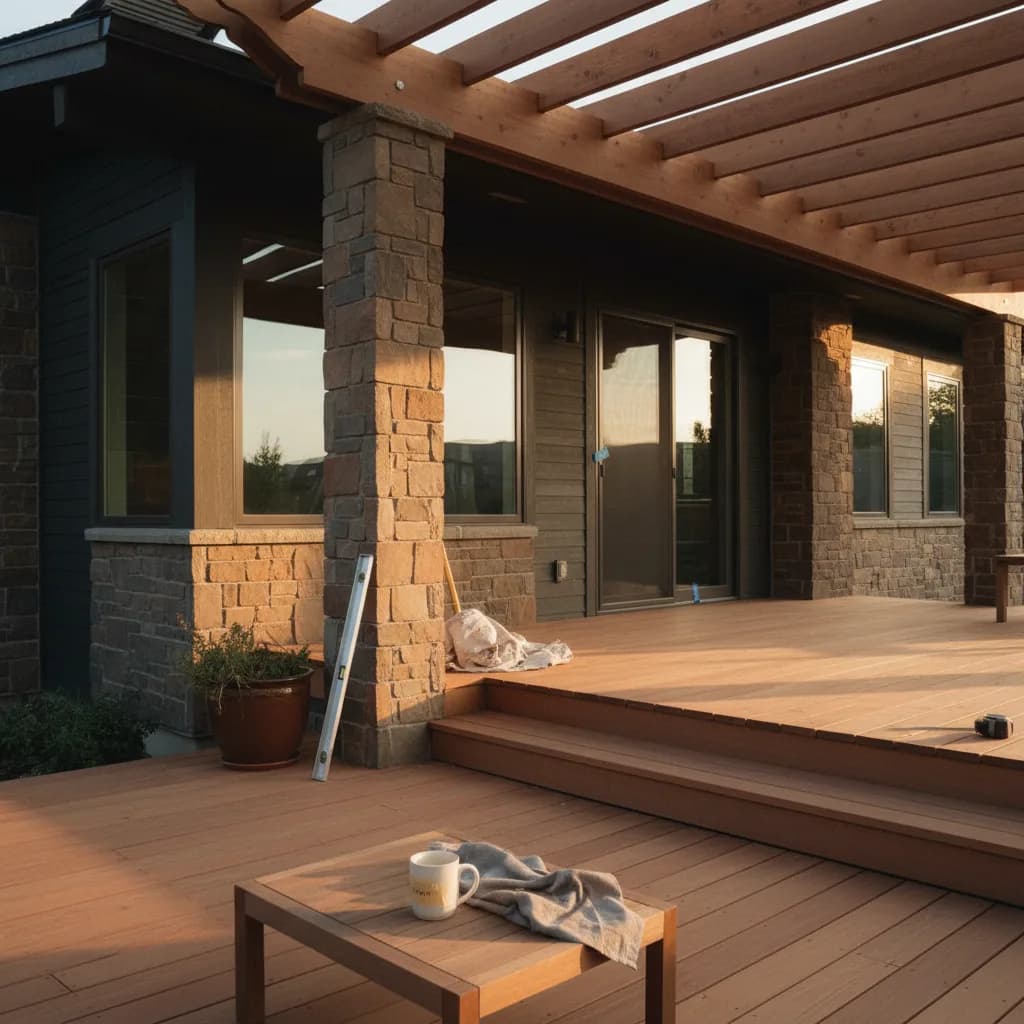
A full deck and pergola build in Denver takes between 12 and 20 weeks, from first call to final inspection. For a simple deck resurfacing or a small, ground-level platform in Washington Park, you might clock in closer to eight weeks. But for a new, improved structure that requires engineered plans and deep footings, plan on four to five months. The biggest variable isn't your contractor or the weather. It's the soil. Denver's expansive bentonite clay can move a house, let alone a deck, so getting the foundation right is non-negotiable and takes time. Most timeline blowouts start three feet underground, long before a single deck board is cut.
In a Nutshell
- Total Timeline: 12, 20 weeks for a standard custom deck and pergola.
- The Four Phases: Your project breaks down into four stages: Design and Permits, Site Prep and Foundation, Framing, and Finishes and Final Inspection.
- Biggest Delay Risk: Expansive soil conditions. A soils report may be required, and engineering for deep concrete caissons is the standard solution, adding time and cost.
- Contingency Fund: Don't start without one. The National Association of Home Builders recommends a ten to fifteen percent contingency fund for any major outdoor project, especially when attaching to an older home.
Phase 1: Design and Permits (Weeks 1, 6)
This is where the project is born on paper. It moves slower than you think. You'll finalize the layout, materials, and structural details. For most decks in Denver, especially anything over 30 inches high or with a roof structure like a pergola, you need engineered plans. A structural engineer will calculate for Denver's specific snow load requirements (30 psf in most areas) and wind shear. Once the plans are stamped, your contractor or an expediter submits them to Denver's Community Planning and Development department. The city's review process is thorough. A common holdup is an incomplete submission package or plans that don't fully address the International Residential Code (IRC) requirements for ledger board attachment and load paths. Expect three to four weeks just for the city's plan check. This phase is about patience. Rushing here just means getting rejected faster.
Phase 2: Site Prep and Foundation (Weeks 7, 9)
Once you have a permit in hand, the real work begins. This phase is all about what's underground. First, we call 811 to have all utilities marked. Don't skip this. Hitting an Xcel Energy gas line is a bad day for everyone. Then, the crew excavates for the footings. In Denver, this isn't a simple post hole. Due to the freeze-thaw cycle and expansive soils, we drill deep concrete piers, or caissons, down below the 42-inch frost line. This ensures your deck doesn't heave up after the first winter. This phase is loud and messy. The biggest surprise is often the soil itself. If we hit loose fill or excessive groundwater, the engineer may need to revise the footing design, which can add a week and several thousand dollars to the project. The concrete needs to cure for several days before we can start framing, so there's built-in waiting time.
Phase 3: Framing and Rough-In (Weeks 10, 12)
With a solid foundation, the deck takes shape quickly. This is the most satisfying phase for homeowners. The first and most critical step is attaching the ledger board to the house. A deck that doesn't ledger into solid framing isn't a deck, it's a porch waiting to fall. The IRC requires a continuous load path from the decking, through the joists and beams, down the posts, and into the concrete footings. We use specific flashing, bolts, and hangers to ensure a waterproof, structurally sound connection. After the ledger is set, the crew frames the beams, joists, and rim joists. If your design includes electrical for lighting or outlets, the rough-in happens now, before the decking goes on. The city inspector will visit to sign off on the framing before we can cover it up. This framing inspection is a critical milestone on your inspection card.
Phase 4: Finishes and Final Inspection (Weeks 13, 16)
3 Denver deck builders, editor-screened. 4 questions.
See my 3 matchesThis is where the structure becomes a space. The crew installs the decking boards, builds the stairs, and assembles the railings. These details are labor-intensive and have to be precise to pass inspection. Guardrail height, baluster spacing, and stair riser consistency are all safety items the inspector will measure with a tape. If you have a pergola, that structure is built and secured now. Any final electrical work, like installing light fixtures or ceiling fans, is completed. If you chose wood, staining or sealing is the last step, and it's weather-dependent. You can't stain in the rain or when it's too cold. Once everything is complete and the site is cleaned, we call for the final inspection. The inspector walks the project, checks it against the approved plans, and signs off. That final signature is what officially closes out the permit and completes your project.
Three Representative Projects from 2026
Three modeled project scenarios for 2026, built from the Renology Cost Index and typical local scopes. These are illustrative estimates, not completed client projects:

- Highlands Craftsman: A 400 sq. ft. second-story composite deck with a custom steel cable railing system and spiral staircase. Required significant structural work to the existing house ledger. Total Cost: $48,500. Total Time: 19 weeks.
- Central Park Modern: A 550 sq. ft. ground-level cedar deck with a large, modern 16'x16' attached pergola. Included built-in benches and integrated low-voltage lighting. Total Cost: $39,000. Total Time: 15 weeks.
- Cherry Creek Tudor: A complex multi-level Ipe hardwood deck totaling 300 sq. ft. to replace a failing, non-compliant structure. The job involved demolishing the old deck and re-engineering the footings. Total Cost: $55,000. Total Time: 21 weeks.
What Can Compress This Timeline
The homeowner who saves four weeks does three things before we ever break ground. First, they make all material decisions early and stick to them. Changing from composite to hardwood after the framing is designed adds weeks of re-engineering and re-ordering. Second, they hire a design-build firm. Having the designer, engineer, and builder on one team from day one eliminates the communication gaps that cause delays during permit review. Third, they have financing secured and a clear budget, including the contingency. When decisions with a cost attached need to be made, they can say yes or no in an hour, not a week. Speed isn't about rushing the work; it's about eliminating the dead time between decisions. A good decks pergola contractor Denver will guide you through this process.
What Blows It Up
Three things reliably turn a 16-week project into a 24-week headache. The most common is changing your mind after the scope-lock date. Adding a gas line for a grill or changing the stair location after permits are approved means going back to the city for revisions. That's a minimum four-week delay. The second is discovering rot or structural damage on the house where the ledger board needs to attach. This is common in pre-1990s homes and requires immediate, unplanned repairs. The third is Denver's soil. If we start drilling for caissons and find something unexpected, all work stops until the engineer provides a solution. This is why a contingency fund is critical. The National Association of Home Builders recommends a ten to fifteen percent contingency on renovations in homes over thirty years old.
What Should Be in Your Contractor's Schedule
Your contractor's proposal should include a detailed project schedule with real dates, not just phases. If it doesn't, ask for one. It's a sign of a professional who has built a realistic timeline. It protects you and them. Look for these specific line items:
- Scope-lock and final design approval date
- Engineering plans completion date
- Permit submission date
- Permit approval milestone
- Material order lead-time deadlines (decking, railings)
- Excavation and caisson drilling start date
- Foundation (concrete pour) inspection date
- Framing start date
- Framing inspection date
- Final inspection date
A detailed schedule is the best tool for tracking progress. For more on navigating the city's requirements, see our Denver permit playbook.
Renology Take
The brochure from a deck builder promises a beautiful outdoor space in four to six weeks. That's not a lie, but it's only part of the truth. That's the construction time. The real timeline, from the day you sign a design agreement to the day you get your final inspection sticker, is closer to four months for most custom decks pergola Denver projects. The part most homeowners don't see is the front-end administrative work, the engineering, and the permit queues. A good contractor manages this whole process, not just the part with the nail guns. The meta-pattern people miss is that a successful project is ninety percent planning and ten percent execution. Your job as a homeowner is to be decisive in that first ninety percent. The rest will follow.
Sources & Methodology
Renology reviews public permit and labor signals, supplier pricing, remodeler quote patterns, comparable projects, the Renology Cost Index, and the Renology Methodology. Cost references are planning ranges for Denver deck projects, not fixed bids.
- National Association of Home Builders (NAHB), Remodeling Market Index, Q1 2026
- Colorado Department of Labor and Employment, Denver-Aurora-Lakewood MSA Occupational Employment and Wage Statistics, 2025 Data
- City of Denver, Community Planning and Development, Permitting Services, 2026 Guidelines
- North American Deck and Railing Association (NADRA), Deck Construction and Safety Standards, 2025 Edition
- Remodeling Magazine, 2025 Cost vs. Value Report, Mountain Region
- International Code Council (ICC), 2024 International Residential Code (IRC)
- Renology Project of the Day (POTD) Network, Denver Metro Data, 2024-2026
Frequently Asked Questions
How long does a deck and pergola build in Denver really take?
How much does a typical decks pergola Denver cost in 2026?
Can I live in the home during construction?
What's the longest single phase of a deck build?
Can I fast-track the permits in Denver?
Denver · pre-screened
Get 3 Denver deck bids in 48 hours.
Our editors already vetted Denver deck builders. Answer 4 questions and we send 3 written bids inside 48 hours, with the real price for your scope, not their inflated first-call number.
- Free, no commission
- Pre-screened locally
- Bids inside 48 hours
Takes about 60 seconds. We'll text you when bids arrive.
Sources
- National Association of Home Builders (NAHB), Remodeling Market Index, Q1 2026
- Colorado Department of Labor and Employment, Denver-Aurora-Lakewood MSA Occupational Employment and Wage Statistics, 2025 Data
- City of Denver, Community Planning and Development, Permitting Services, 2026 Guidelines
- North American Deck and Railing Association (NADRA), Deck Construction and Safety Standards, 2025 Edition
- Remodeling Magazine, 2025 Cost vs. Value Report, Mountain Region
- International Code Council (ICC), 2024 International Residential Code (IRC)
- Renology Project of the Day (POTD) Network, Denver Metro Data, 2024-2026