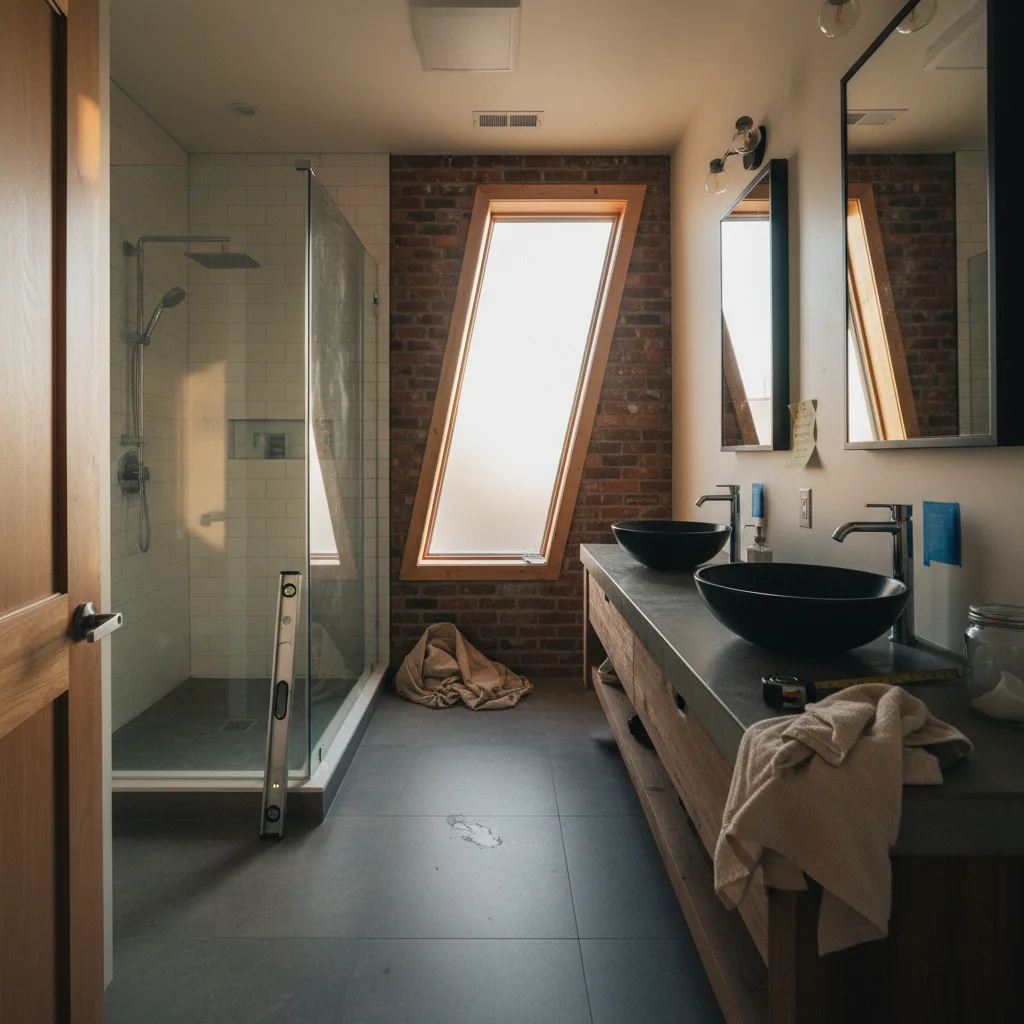
A full gut bathroom remodel in Denver takes eight to twelve weeks. That's from demo day to final polish. The design and permitting phase adds another four to six weeks upfront. The timeline can start lower, around four weeks, for a simple fixture-and-finish refresh in a newer condo. The biggest delay for older homes in neighborhoods like Washington Park? Finding unpermitted, century-old plumbing buried in the walls. That stops the job cold until an engineer and the city sign off on a new plan. A simple three-piece bath turns into a structural review. It happens more than you think.
In a Nutshell
- Total Time: 12 to 18 weeks (4-6 weeks for design/permits, 8-12 weeks for construction).
- Four Phases: 1. Design & Permits; 2. Site Prep & Foundation; 3. Framing & Rough-In; 4. Finishes & Final.
- Biggest Delay Risk: Unforeseen structural or plumbing issues in pre-1970s homes, especially discovering galvanized pipes or improper venting.
- Contingency: Plan for 15% of your total budget in reserve. The National Association of Home Builders recommends a ten to fifteen percent contingency on renovations in homes over thirty years old.
Phase 1: Design and Permits (weeks 1, 6)
This is where the job is won or lost. A clear plan and a locked scope prevent changes that cost time and money. The homeowner works with a designer or a design-build contractor to finalize layouts, materials, and fixtures. Once you have a plan, your contractor or an expediter pulls the permit. In Denver, that means submitting plans to Denver Community Planning and Development. Don't underestimate this step. If you're moving walls, changing the plumbing layout, or altering electrical, you need a permit. Period. The biggest holdup here is an incomplete submittal package. Missing structural details or an unstamped plumbing plan gets your application kicked back, adding weeks to your start date. Scope-lock is your goal. Once plans are submitted, changes become expensive amendments.
Phase 2: Site Prep and Foundation (weeks 7, 9)
For a bathroom remodel, "site prep" means gutting the space and "foundation" means ensuring the subfloor is sound. This is the loud, dusty part. The crew seals off the work area and demolishes everything down to the studs and subfloor. This is where we inspect the foundation of the room: the floor joists and subfloor. In older Denver homes, especially those with a history of slow leaks, we often find rot that needs to be surgically repaired. This is also when we verify the location of main plumbing stacks and electrical runs. It's less about pouring concrete and more about confirming the structural integrity you're building upon. Any issues here, like improperly cut joists from a past renovation, must be fixed and inspected before any new work can begin.
Phase 3: Framing and Rough-In (weeks 10, 11)
With a clean slate, the trades begin their rough-in work. This phase is about placing the skeleton of your new bathroom inside the walls. If the new layout requires moving walls, new framing goes up first. Then, the plumber runs new copper or PEX supply lines and PVC drain lines. After plumbing, the electrician pulls new wiring for outlets, switches, and lighting, ensuring everything is up to modern code with GFCI protection. If a new, more powerful exhaust fan is part of the scope, the HVAC tech runs the ducting. The sequence is critical. Once all trades have completed their in-wall work, the city inspector arrives to sign off on the rough-in inspection card. Only after that approval can insulation and drywall be installed.
Phase 4: Finishes and Final Inspection (weeks 12, 15)
3 Denver bathroom remodelers, editor-screened. 4 questions.
See my 3 matchesThis is where the vision becomes reality. The sequence is critical to avoid damaging finished work. First, primer and paint go on the walls and ceiling. Then, the tile setter lays the floor and shower surround. This is meticulous work that can take a week or more for complex patterns. After the tile and grout are sealed, the vanity, countertops, and toilet are installed. The plumber returns to set the faucets and shower trim. The electrician installs lights, switches, and the exhaust fan. Finally, the shower door, mirrors, and accessories are mounted. The last construction step is the final inspection. The city inspector verifies that all fixtures are installed correctly, GFCI outlets are working, and the project matches the permit. Once that's signed off, the job is officially complete.
Three Representative Projects from 2026
Three modeled project scenarios for 2026, built from the Renology Cost Index and typical local scopes. These are illustrative estimates, not completed client projects:

- Washington Park Master Bath: Gut remodel of a 120 sq. ft. bathroom in a 1920s bungalow. Involved moving a non-load-bearing wall and replacing all plumbing back to the main stack. Total cost: $48,000. Total time: 14 weeks.
- Central Park Primary Suite Addition: New construction of a 150 sq. ft. bathroom as part of a larger addition. High-end finishes including a steam shower and heated floors. Total cost: $75,000 (bathroom portion only). Total time: 11 weeks (within a 24-week addition project).
- Highland Condo Bathroom Refresh: Cosmetic update of a 60 sq. ft. guest bath. Replaced vanity, toilet, and all fixtures in the same location. Retiled shower and floor. Total cost: $22,000. Total time: 5 weeks.
What Can Compress This Timeline
The homeowner who shaves weeks off their project does three things before the first hammer swings. First, they order all long-lead-time materials before demo starts. Custom vanities, tile, and special-order fixtures can have 12-week lead times. Having them on-site prevents dead days. Second, they achieve true scope-lock. They make every single design decision and sign off on it, refusing the temptation to make changes once work begins. A mid-stream change order can add two weeks just for re-pricing and scheduling. Third, they establish a single point of contact for decisions and commit to 24-hour turnaround times for questions from the contractor. A responsive owner keeps the ball rolling.
What Blows It Up
Three things reliably turn an eight-week project into a sixteen-week ordeal. The most common is discovering hazardous materials. Asbestos in drywall joint compound or lead paint in a pre-1978 home requires certified abatement crews, which adds significant time and cost. The second is finding structural deficiencies. Rotted subfloors from a slow leak or improperly cut joists from a previous remodel must be engineered and rebuilt. This is common in Denver's older housing stock. Third, major plumbing surprises. Finding that the main drain line is cracked cast iron or that the vents are nonexistent requires opening up more walls and floors than planned. The National Association of Home Builders recommends a ten to fifteen percent contingency on renovations in homes over thirty years old. This is why.
What Should Be in Your Contractor's Schedule
A professional schedule is more than a list of tasks. It's a roadmap with dependencies. Your bathroom contractor in Denver should provide a schedule that includes these line items at a minimum:
- Scope-lock date
- Permit submission and expected approval dates
- Long-lead material order-by dates
- Demolition start and end
- Rough-in plumbing and electrical start dates
- Rough-in inspection date
- Drywall start and finish
- Tile and flooring installation dates
- Fixture setting dates
- Final inspection date
This schedule creates accountability. For a deeper dive into Denver's specific requirements, see our permit playbook.
Renology Take
Contractors sell an eight-week bathroom remodel. Reality, especially in Denver, is closer to twelve for a full gut. The sales timeline assumes no surprises, perfect material availability, and instant inspection scheduling. That's not the real world. The most significant factor a homeowner misses is the impact of Denver's housing age. A 1920s Tudor in Capitol Hill is not the same as a 2010 build in Central Park. The older home carries a time premium for unknowns. The high cost of skilled labor, tracked by the Colorado Department of Labor and Employment for the Denver-Aurora-Lakewood MSA, means every delay is expensive. The true bathroom cost in Denver isn't just materials; it's the contingency for fixing what the last century got wrong. A good contractor prices for this. A great one explains it upfront.
Sources & Methodology
Renology reviews public permit and labor signals, supplier pricing, remodeler quote patterns, comparable projects, the Renology Cost Index, and the Renology Methodology. Cost references are planning ranges for Denver bathroom projects, not fixed bids.
- National Kitchen & Bath Association (NKBA), 2026 Market Outlook
- Colorado Department of Labor and Employment, Denver-Aurora-Lakewood MSA, Occupational Employment and Wage Statistics (2025-2026)
- Denver Community Planning and Development, Permitting Services Division
- National Association of Home Builders (NAHB), Remodeling Market Index (RMI), Q4 2025
- Remodeling Magazine, 2026 Cost vs. Value Report, Denver, CO
- Renology Project of the Day (POTD) Network, Denver Metro Data (2025-2026)
Frequently Asked Questions
How long does a bathroom remodel in Denver really take?
Can I live in the home during construction?
What's the longest single phase of a bathroom remodel?
Can I fast-track the permits for my Denver bathroom?
Denver · pre-screened
Get 3 Denver bathroom bids in 48 hours.
Our editors already vetted Denver bathroom remodelers. Answer 4 questions and we send 3 written bids inside 48 hours, with the real price for your scope, not their inflated first-call number.
- Free, no commission
- Pre-screened locally
- Bids inside 48 hours
Takes about 60 seconds. We'll text you when bids arrive.
Sources
- National Kitchen & Bath Association (NKBA), 2026 Market Outlook
- Colorado Department of Labor and Employment, Denver-Aurora-Lakewood MSA, Occupational Employment and Wage Statistics (2025-2026)
- Denver Community Planning and Development, Permitting Services Division
- National Association of Home Builders (NAHB), Remodeling Market Index (RMI), Q4 2025
- Remodeling Magazine, 2026 Cost vs. Value Report, Denver, CO
- Renology Project of the Day (POTD) Network, Denver Metro Data (2025-2026)