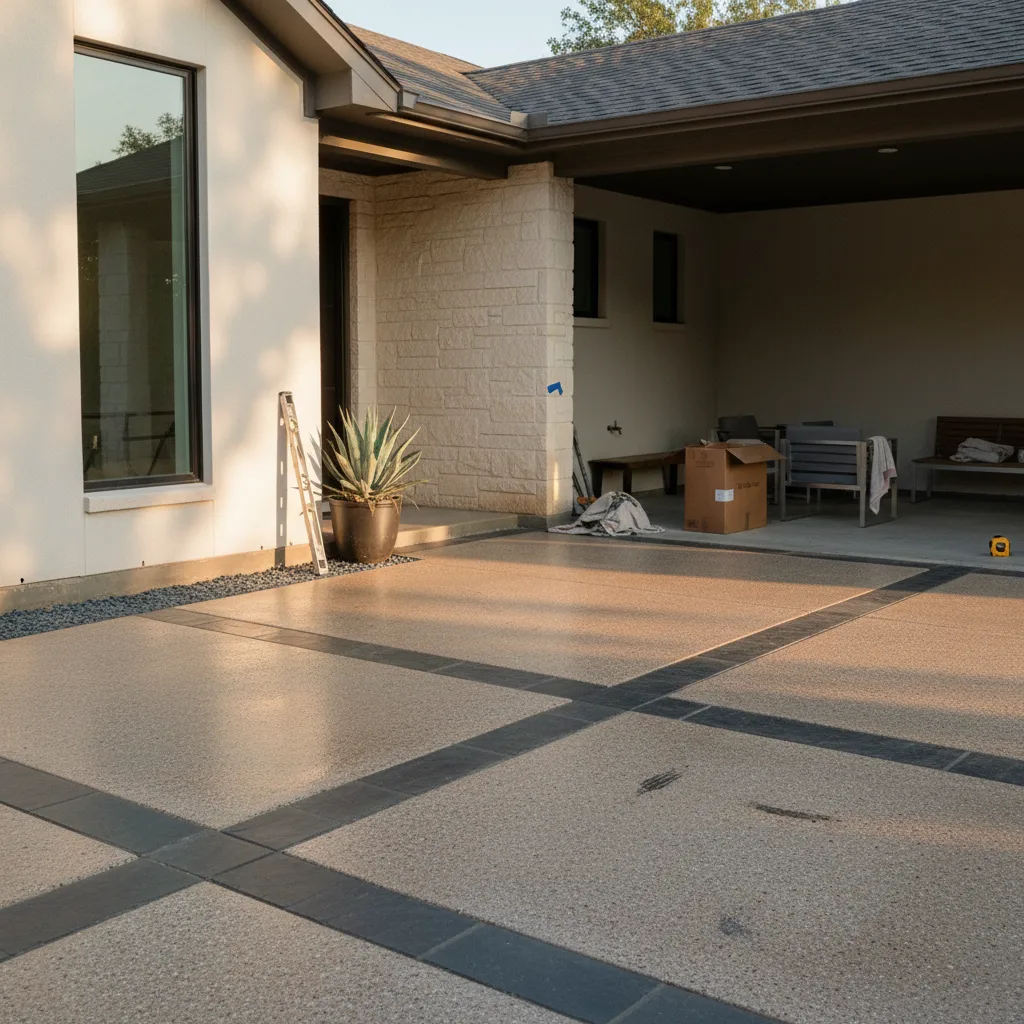
A new driveway in Dallas costs between $7,200 and $24,000 for a standard 600-square-foot project in 2026, with a median expenditure of approximately $11,400 for a professionally installed brushed concrete surface. Costs can start lower, around $3,600 to $5,400, for simpler projects like a gravel driveway refresh or a small asphalt repair for a townhome. However, for most single-family homes, the final price is driven by material choice, the extent of site preparation required for Dallas's expansive clay soil, and local labor rates.
In a Nutshell: Dallas Driveway Costs
- Total Cost Range: $3,600 to $39,000+. A basic gravel driveway (600 sq. ft.) runs $3,600, $7,800, while high-end heated paver systems can exceed $39,000.
- Mid-Range Project Cost: $9,600, $14,400. This covers a standard 600 sq. ft. concrete driveway, including removal of the old surface, proper sub-base preparation, and a broom finish.
- Typical Timeline: Three to seven days. Day one is for demolition and excavation. Day two involves grading and sub-base installation. Day three is for forming and pouring concrete or laying pavers. Curing can take an additional two to five days before light use.
- Biggest Surprise Line Item: Sub-base preparation and soil stabilization, which can add $2,000, $5,000 to the project cost. Dallas's notorious expansive clay soil requires a thicker, more engineered base layer to prevent premature cracking.
What does a driveway actually cost in Dallas?
The total cost for a new driveway in Dallas is a function of square footage and material complexity. A typical two-car driveway is approximately 600 square feet. Below are the expected cost tiers for a project of this size. The bottom of the range, represented by the Basic tier, often applies to simple resurfacing or installations on prepared, level ground, while the Premium tier reflects complex projects with significant site work, drainage, and high-end materials.
| Tier | Materials | Cost per Square Foot | Total Cost (600 sq. ft.) |
|---|---|---|---|
| Basic | Gravel, Asphalt | $6, $13 | $3,600, $7,800 |
| Mid-Range | Standard Concrete, Stamped Concrete | $16, $24 | $9,600, $14,400 |
| Premium | Interlocking Pavers, Exposed Aggregate, Permeable Surfaces | $25, $65+ | $15,000, $39,000+ |
For a median mid-range concrete driveway in Dallas, the budget allocation breaks down as follows, according to a 2026 Renology analysis of contractor quotes:
- Materials (Concrete, Rebar, Base Gravel): 35%
- Labor (Demolition, Grading, Forming, Finishing): 40%
- Excavation & Debris Haul-Away: 10%
- Permits & Fees: 5%
- Contractor Overhead & Profit: 10%
The lowest figures in these ranges typically correspond to projects with minimal site preparation, such as applying a new layer of gravel to an existing base, and do not represent the cost for a full tear-out and replacement common for suburban homes.
Why is a driveway more expensive in Dallas than in other Texas regions?
The cost of Dallas driveways is influenced by three primary factors: specialized labor costs, challenging soil geology, and concentrated demand in affluent neighborhoods. These elements combine to create a market where proper installation requires more material, more skilled labor, and higher contractor overhead compared to areas with more stable soil or lower labor demand. Homeowners should anticipate these regional premiums when budgeting for a driveway replacement.
First, skilled labor rates in the Dallas-Fort Worth metroplex are among the highest in the state. According to the Texas Workforce Commission's Dallas-Fort Worth-Arlington MSA occupational wage data for 2025-2026, the median hourly wage for Cement Masons and Concrete Finishers is $24.50, and for Operating Engineers and Other Construction Equipment Operators, it is $26.75. For a typical three-person crew over a five-day project, this specialized labor can account for $4,000 to $6,000 of the total cost before accounting for contractor markup, a 10-15% premium over rates in smaller Texas markets.
Second, the geology of the Blackland Prairie, where Dallas is situated, presents a significant engineering challenge. The region's expansive clay soil swells dramatically when wet and shrinks when dry, exerting immense pressure on any structure built upon it. To prevent a new driveway from cracking and heaving within a few years, contractors must perform extensive soil stabilization and install a much thicker sub-base of engineered fill and gravel than is required elsewhere. This can add $3 to $5 per square foot to the total cost for materials and the labor to install them.
Finally, neighborhood premiums in areas like Highland Park and Preston Hollow further inflate costs. Contractors working in these neighborhoods face higher logistical expenses, stricter municipal codes, and homeowner association (HOA) regulations that may dictate specific materials or construction practices. The high demand for reputable contractors in these areas allows them to charge a premium of 15-25% over the metro area's baseline rates. This premium covers the additional administrative work and higher client expectations typical of these markets.
What do real Dallas homeowners spend in 2026?
Three representative projects from 2026, scoped similarly, reconstructed from Renology's Project of the Day network and used here in aggregate form:
Project 1: Lake Highlands - Concrete Replacement ($12,800)
This project involved removing a cracked 550-square-foot asphalt driveway and replacing it with 4-inch-thick, 4000 PSI reinforced concrete. The scope included significant grading to improve drainage away from the foundation and the installation of a 6-inch compacted gravel sub-base to mitigate soil movement. The final cost included city permits, debris disposal, and a final broom finish. The homeowner chose concrete for its durability in the Texas heat.
Project 2: Oak Cliff - Paver Driveway Installation ($21,500)
For this 650-square-foot project, the homeowner selected interlocking concrete pavers for aesthetic appeal. The cost was higher due to the labor-intensive installation process. The project required excavation of 10 inches of soil, installation of a geotextile fabric for stability, a 6-inch gravel base, and a 1-inch sand setting bed. The total included the pavers, edge restraints, polymeric sand for the joints, and sealing. This price reflects the premium for a paver driveway, which offers superior longevity and repairability.
Project 3: Plano - Asphalt Resurfacing and Extension ($8,100)
This homeowner's existing 700-square-foot asphalt driveway was structurally sound but had surface cracks. The project involved milling the top 1.5 inches of old asphalt, repairing the base where needed, and laying a new 2-inch layer of hot-mix asphalt. The scope also included adding a 200-square-foot parking pad adjacent to the garage. The cost was lower as it avoided a full tear-out, making it a cost-effective solution for improving curb appeal and function.
What no one else covers: The Hidden Lifecycle Cost of a Dallas Driveway
3 Dallas driveway contractors, editor-screened. 4 questions.
See my 3 matchesMost cost guides focus on the upfront installation price, comparing materials like concrete, asphalt, and pavers. What is almost universally omitted is the long-term financial impact of Dallas's unique geological and climatic conditions. The single most important factor determining the lifecycle cost of a driveway in this region is not the surface material but the engineering and quality of the sub-base beneath it. Under-investing here is the most common and costly mistake a homeowner can make.
The villain in this story is the expansive clay soil of the Blackland Prairie. This soil can change in volume by up to 15% between wet and dry seasons, according to the American Society of Civil Engineers. This constant movement, known as shrink-swell potential, places relentless stress on a rigid slab like a driveway. Without an adequate sub-base, a brand-new concrete driveway can exhibit significant cracking in as little as three to five years. The intense summer heat, with surface temperatures exceeding 140°F, accelerates concrete curing and can cause shrinkage cracks if not managed correctly during installation. This is followed by occasional winter freezes that can introduce frost heave, further stressing the material.
A standard driveway quote might specify a 4-inch gravel base. For Dallas, this is often insufficient. A properly engineered driveway designed for longevity in this soil requires a 6- to 8-inch sub-base of compacted, crushed limestone (flex base). In some cases, soil stabilization with lime or the use of a geotextile fabric is also necessary. This enhanced sub-base can add $3,000 to $6,000 to an upfront project cost of $12,000. While this seems like a significant increase, it prevents catastrophic failure. A premature replacement in five years will cost the full amount again, whereas a driveway on a proper base can last 25 to 30 years. The true cost of a cheap driveway is paying for it twice. Therefore, when evaluating a driveway contractor in Dallas, the most critical questions should concern their specific methods for mitigating expansive soil movement.
Where does the money actually go? Hidden Driveway Costs
Contractor quotes often cover the basics of demolition, materials, and labor, but several necessary line items are frequently left out of initial discussions. Homeowners should budget for these potential additions to avoid surprises. These costs are highly dependent on site conditions and municipal requirements.
- Extensive Grading and Drainage Solutions ($1,500, $6,000): If your property has a slope or poor drainage, a simple replacement isn't enough. Installing French drains, channel drains, or creating swales to direct water away from your home's foundation is a critical but separate cost.
- Soil Stabilization ($2,000, $5,000): As mentioned, Dallas's clay soil may require treatment with lime or the installation of geotextile fabrics beneath the sub-base to create a stable foundation. This is rarely included in a base-level quote.
- Permit and Inspection Fees ($400, $900): The City of Dallas requires permits for new driveway construction or modifications to the curb cut. The cost includes the permit itself, plan review, and scheduling inspections, which some contractors bill for separately.
- Removal of Large Tree Roots ($500, $2,500): If the old driveway was damaged by tree roots, those roots must be professionally removed to prevent them from damaging the new installation. This may require an arborist.
- Concrete Pumping Truck ($600, $1,200): If the driveway location is not easily accessible for a concrete mixing truck, a pump truck will be needed to transport the concrete from the street to the pour site. This is a standard rental fee.
- Landscaping and Sprinkler Repair ($750, $3,000): Heavy equipment used for demolition and installation will inevitably damage the adjacent lawn and potentially sprinkler heads or lines. The cost to repair this is typically excluded from the driveway contract.
- Upgraded Finishes or Sealants ($1, $4 per sq. ft.): A basic quote is for a standard broom-finish concrete. Stamped patterns, color additives, exposed aggregate finishes, or high-performance sealants are all itemized upgrades.
What stops a Dallas driveway project from running over budget?
Budget overruns on driveway projects in Dallas typically stem from three main sources: unforeseen site conditions, mid-project scope changes, and underestimated material costs. Proactive planning and clear communication are the most effective controls for these variables.
First, unforeseen subsurface issues are the most common cause of budget creep. Contractors may discover buried debris, old utility lines not on city maps, or pockets of exceptionally unstable soil once excavation begins. The National Association of Home Builders recommends a ten to fifteen percent contingency on renovations in homes over thirty years old. For a $12,000 driveway project, this means setting aside an additional $1,200 to $1,800 to cover such surprises without derailing the project.
Second, scope creep initiated by the homeowner is a controllable but frequent issue. Deciding to add a walkway, extend a parking pad, or upgrade from a broom finish to a stamped concrete pattern after the contract is signed will generate a change order with associated costs for materials, labor, and project delays. Finalize all design decisions before work begins and ensure they are explicitly detailed in the signed contract to lock in the price.
Third, material price volatility can impact the final cost, especially if there is a significant delay between the quote and the project start date. Concrete and steel rebar prices can fluctuate based on supply chain and energy costs. Reputable contractors will honor their quote for a specific period (typically 30-60 days). Homeowners should confirm this window and aim to sign the contract and schedule the work within it to avoid price adjustments. Asking for material costs to be itemized separately can also provide transparency.
Do I need a permit for a new driveway in Dallas?
Yes, a permit is typically required for driveway work in the City of Dallas. Specifically, any new driveway construction, replacement, or repair that involves altering the 'approach', the portion of the driveway in the public right-of-way between the sidewalk and the street, requires a Pavement and/or Excavation Permit from the Department of Public Works. Even if the work is confined to your private property, a permit may be required if the project's scope is significant or alters drainage patterns. The permit process ensures the new driveway complies with city specifications for materials, thickness, slope, and location to ensure public safety and proper water drainage. Failure to obtain a permit can result in a stop-work order, fines, and the potential for being required to remove the non-compliant work at your own expense. For a detailed walkthrough of the local requirements, consult our [Dallas driveway permit playbook for 2026](/guides/dallas-driveway-permit-playbook-2026).
What should your Dallas contractor include in the quote?
A detailed quote is a sign of a professional contractor and serves as the foundation for your contract. It should be itemized and specific, leaving no room for ambiguity. Vague quotes are a red flag. Your quote for a driveway in Dallas should include the following line items:
- Scope of Work: A precise description of the project, including the exact dimensions (length, width, thickness) of the new driveway.
- Demolition and Debris Removal: Explicit mention of the removal and legal disposal of the existing driveway surface and any excavated soil.
- Site Preparation Details: The depth of excavation and the thickness and type of compacted sub-base material to be used (e.g., "6 inches of compacted flex base").
- Material Specifications: The type and strength of the primary material (e.g., "4000 PSI concrete," "2-inch hot-mix asphalt," or the specific name and brand of pavers).
- Reinforcement Details: For concrete, this should specify the use of steel rebar or wire mesh and its placement pattern.
- Drainage Solutions: Any included channel drains, French drains, or specific grading plans.
- Finish Details: The specified finish (e.g., broom finish, trowel finish, stamped pattern name, exposed aggregate).
- Sealing and Curing: Mention of whether a curing compound or penetrating sealer is included in the price.
- Permit Costs: A line item indicating who is responsible for securing and paying for all required city permits.
- Total Project Cost: A clear, final price.
- Payment Schedule: A breakdown of payments (e.g., 10% on signing, 40% on material delivery, 50% on completion).
- Project Timeline: An estimated start date and completion date.
- Warranty Information: Details on the contractor's warranty for labor and materials.
- Proof of Insurance and Licensing: Copies of their general liability insurance and any required city or state licenses.
Sources & Methodology
Cost ranges in this guide draw on the following named industry sources, public agency datasets, and Renology editorial research.
- Texas Workforce Commission, Dallas-Fort Worth-Arlington MSA Occupational Wage Data (2025)
- Remodeling Magazine, 2025-2026 Cost vs. Value Report (Dallas, TX) (2026)
- National Association of Home Builders (NAHB), Construction Cost Survey (2025)
- City of Dallas, Department of Public Works, Permit Fee Schedule (2026)
- Renology Project of the Day (POTD) Network, Dallas Metro Data (2024-2026)
- American Concrete Institute (ACI), Guide to Curing Concrete (2024)
- Interlocking Concrete Pavement Institute (ICPI), Tech Spec 2: Construction of Interlocking Concrete Pavements (2023)
- American Society of Civil Engineers, 'Foundation Performance on Expansive Soils' (2022)
- U.S. Geological Survey, 'Expansive Soils and Permafrost' (2021)
Renology Take
The most frequent point of failure in Dallas driveway projects is a mismatch between homeowner budget expectations and the geological reality of the region. Many homeowners obtain multiple quotes and select the lowest bidder, assuming all contractors offer a comparable product. In this market, a significantly lower bid often indicates a contractor is cutting corners on the most critical, yet invisible, component: the sub-base. They may be planning only a 2- or 3-inch gravel base, which is wholly inadequate for the area's expansive clay soil. This decision saves a few thousand dollars upfront but virtually guarantees the driveway will heave, crack, and fail within a few years, necessitating a full replacement. The meta-pattern is prioritizing visible finishes over unseen structural integrity. A successful, long-lasting project requires homeowners to become educated on local soil conditions and to question contractors specifically on their sub-base engineering and soil stabilization techniques, not just on the price per square foot.
Sources & methodology
How Renology builds this guide
Renology combines public permit and labor signals, supplier pricing, remodeler quote patterns, and editorial review of comparable projects. Cost references are planning ranges, not fixed bids, because site conditions, materials, access, permits, and finish level can change the final price.
- Benchmarked against the Renology Cost Index, related service guides, and the Renology Methodology.
- Reviewed for Dallas market context when a local market is available.
- Focused on driveway scope, materials, timeline, contractor risk, and budget drivers.
Dallas · pre-screened
Get 3 Dallas driveway bids in 48 hours.
Our editors already vetted Dallas driveway contractors. Answer 4 questions and we send 3 written bids inside 48 hours, with the real price for your scope, not their inflated first-call number.
- Free, no commission
- Pre-screened locally
- Bids inside 48 hours
Takes about 60 seconds. We'll text you when bids arrive.