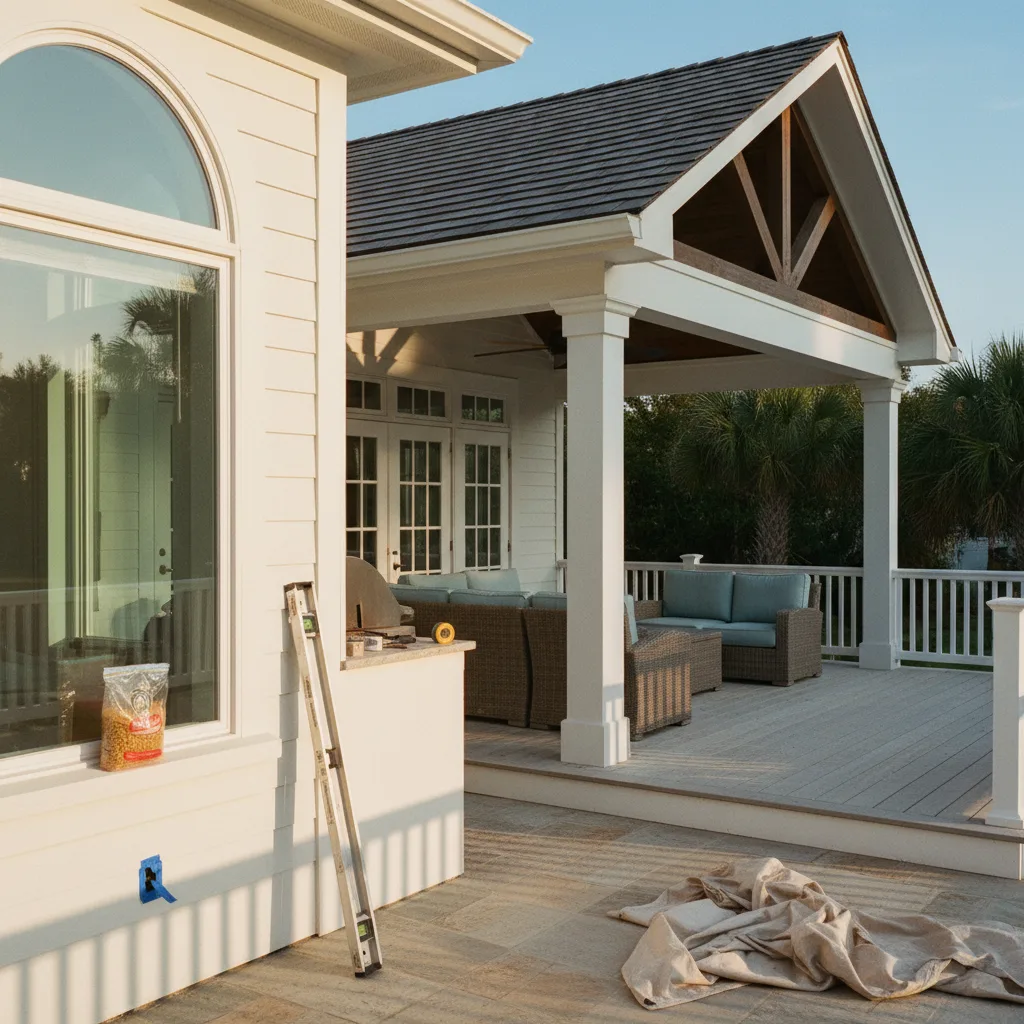
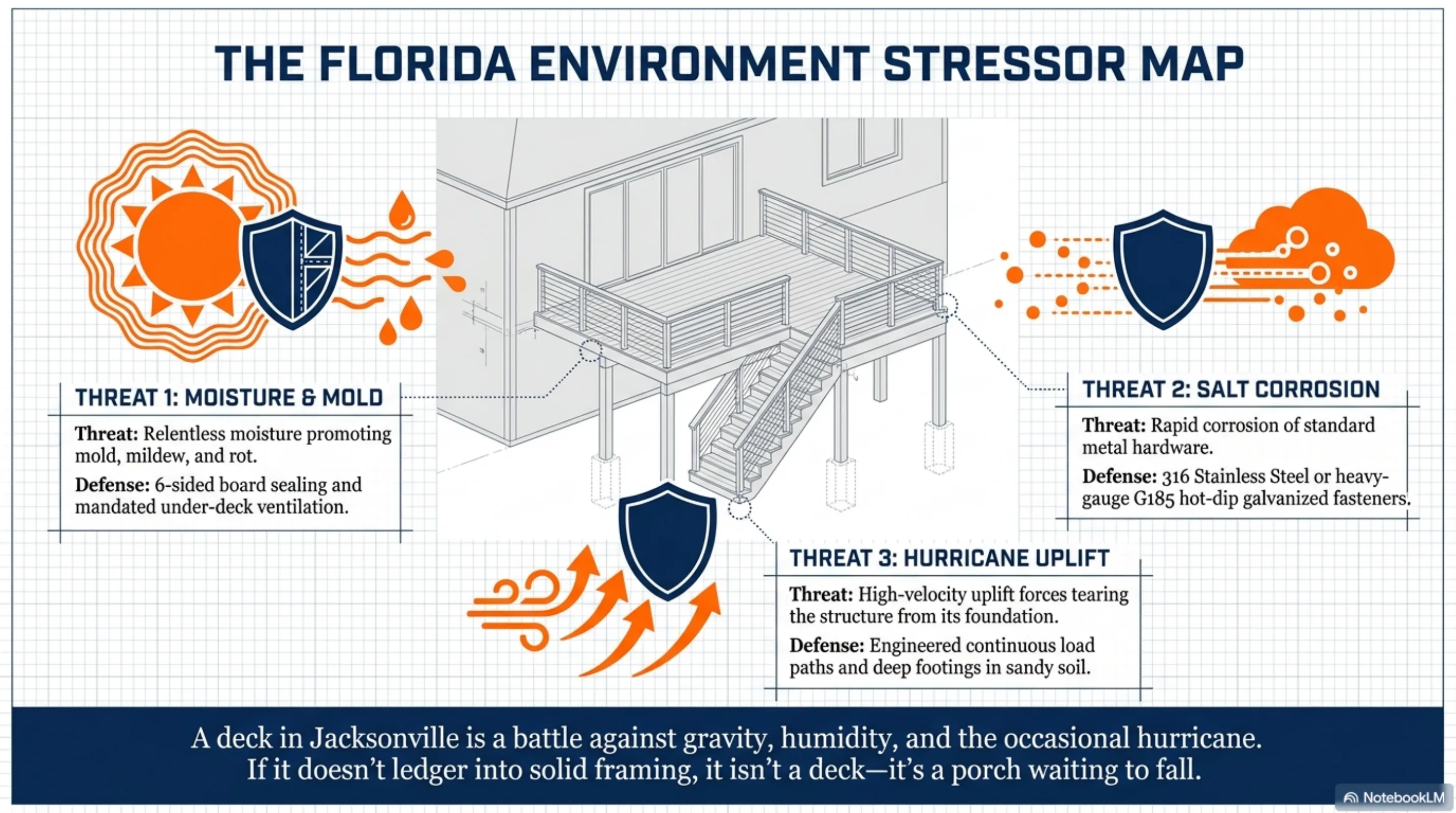
A deck in Jacksonville is a battle against gravity, humidity, and the occasional hurricane. It’s not an outdoor carpet; it’s a structural addition to your home. A deck that doesn't ledger into solid framing isn't a deck, it's a porch waiting to fall. The Florida Building Code requires a continuous load path from rail to footing, something most DIY jobs and pre-2010 builds I see in Duval County get wrong. Finding the right deck builder in Jacksonville means finding someone who understands this isn't just about looks. It’s about building a structure that can handle a summer downpour, a house full of guests, and the corrosive salt air for the next twenty years.
In a Nutshell
- Expect to pay $45 to $85 per square foot. The final price depends on materials, site complexity, and features like stairs or built-in seating.
- Vet licenses and insurance first. A valid Certified Building Contractor or Residential Contractor license from Florida's DBPR is non-negotiable. So is proof of general liability and worker's compensation insurance.
- Demand hurricane-rated hardware. Jacksonville is in a high-velocity hurricane zone. Your contractor must use stainless steel or hot-dip galvanized fasteners and connectors specified for this environment. Anything less is a code violation waiting to happen.
- Get everything in writing. A detailed scope of work, a clear payment schedule, and a defined process for change orders are your best protection against budget overruns and disputes.
- Plan for a 6-12 week timeline. From design and permitting to final inspection, this is a realistic window. Add more time if you're dealing with a complex site or a backed-up permitting office.
The Real Cost of a Jacksonville Deck in 2026
Deck pricing is a function of size, materials, and site access. A simple, ground-level platform is one thing; a multi-level deck on a sloped lot in San Marco is another beast entirely. A realistic budget for a professionally built, fully permitted deck in the Jacksonville area runs from $18,000 to $60,000 or more. The lower end of that range can start lower, but that typically applies to small condo patio refreshes or simple ground-level platforms, not full-scale deck construction.
Three representative projects from 2026, scoped similarly, reconstructed from Renology's Project of the Day network and used here in aggregate form:
- The Starter Deck ($22,500): A 16x20-foot (320 sq. ft.) pressure-treated pine deck. This project included simple stairs, standard wood railings, and concrete pier footings. The price reflects a straightforward build on a level lot with good access for materials and machinery. Total time from permit to final inspection was seven weeks.
- The Composite Upgrade ($41,600): A 400 sq. ft. composite deck (Trex or similar) with aluminum railings. This build in Ponte Vedra Beach required stainless steel fasteners due to proximity to the coast. It also included a picture-frame border and hidden fasteners for a cleaner look. The slightly higher complexity and material cost brought the project timeline to nine weeks.
- The Entertainer's Deck ($75,000+): A 600 sq. ft. multi-level Ipe hardwood deck with custom cable railings, integrated low-voltage lighting, and a small pergola. The project involved significant site prep, complex framing, and engineering review to ensure the load path was sufficient for the structure's weight and intended use. Total project duration was 14 weeks due to material lead times and detailed inspection requirements.
Why Deck Projects Cost More Than You Think
Sticker shock is common because a deck isn't just lumber. It's an engineered system. The main cost drivers are materials, labor, and administration.
Labor: Skilled carpentry isn't cheap, nor should it be. You're paying for expertise in framing, code compliance, and safety. According to the Florida Department of Economic Opportunity, Jacksonville MSA occupational wage data, experienced carpenters and construction managers command a premium wage that reflects the skill needed to build structures that withstand hurricane-force winds. This labor cost is the biggest part of your budget.
Materials: Beyond the decking boards, costs add up. Concrete for footings, pressure-treated lumber for the substructure, and hardware are significant expenses. In coastal Jacksonville, skimping on hardware is the fastest way to failure. Salt spray eats cheap galvanized metal. You need 316 stainless steel or heavy-gauge hot-dip galvanized fasteners and connectors to pass inspection and prevent structural rust within five years.
Permits and Engineering: Any deck over 30 inches high or attached to the house requires a permit from the City of Jacksonville. This involves submitting detailed plans for review, which may require an engineer's stamp. The permit fees, plan review, and required inspections all add to the final cost.
Vetting Deck Builders in Jacksonville: The Non-Negotiables
Finding qualified deck builders in Jacksonville starts with a simple checklist. If a contractor can't tick these three boxes, move on. There is no negotiation on these points.
- Licensing: Florida requires contractors to be licensed. Ask for their license number and verify it on the Florida Department of Business and Professional Regulation (DBPR) website. Look for a Certified Building Contractor (CBC) or Residential Contractor (CRC) license. A handyman license is not sufficient for building a structural deck.
- Insurance: A legitimate builder carries two types of insurance. General Liability protects your property from damage. Worker's Compensation protects you from being sued if one of their crew members is injured on your job site. Ask for a Certificate of Insurance (COI) directly from their insurance agent. Do not accept a photocopy from the contractor.
- Portfolio and References: Look at their past work. Are the lines clean? Do the structures look solid? Then, call their references. Ask about communication, how they handled problems, and if the project stayed on budget and schedule. Ask if they'd hire them again. The answer to that last question tells you everything.
Questions to Ask Every Potential Deck Builder
3 Jacksonville pros, editor-screened. 4 questions.
See my 3 matchesOnce you've shortlisted licensed and insured builders, it's time to dig into the details. Their answers will reveal their process and professionalism.
- Who is pulling the permit? The contractor should always pull the permit. If they ask you to pull an owner-builder permit, it's a massive red flag. It means they are likely unlicensed or trying to evade responsibility.
- How will you attach the ledger board? This is the most critical connection. Ask about their flashing technique. A properly installed ledger uses specific bolts, spacers to create an air gap, and multiple layers of flashing to prevent water from getting into your house framing.
- What fasteners and hardware will you use? For Jacksonville, the answer should involve stainless steel or G185 hot-dip galvanized steel. Ask for the specific product names. This shows they understand local conditions.
- What is your footing specification? Ask about the depth and diameter of their concrete footings. They should be sized based on the deck's load and dug below the frost line, even though Florida freezes are rare. It's about stable soil.
- How do you handle change orders? Changes happen. A professional will have a clear, written process. A change order should specify the new work, the cost, and the impact on the schedule, and it must be signed by both you and the contractor before the new work begins.
- What is your warranty? Ask for specifics on their workmanship warranty. One to two years is standard. Materials will have their own manufacturer's warranty.
Red Flags: When to Walk Away
Your gut is a good guide, but here are some specific warning signs to watch for when meeting with potential deck builders.
- Large Upfront Payment: A request for more than 10-20% down before work starts is a major red flag. Florida law puts limits on down payments for certain contract types. A typical payment schedule is tied to project milestones: a deposit, a payment after footings are poured and inspected, another after framing is complete, and the final payment after the final inspection is passed.
- Vague Contracts: If the proposal says "Build 12x16 deck" with a price, walk away. A proper contract is several pages long and details the specific materials, dimensions, hardware, footing specs, and scope of work. It leaves no room for interpretation.
- Pressure Tactics: "This price is only good for today" or "I have another job starting so you need to sign now" are classic high-pressure sales tactics. A professional builder will give you a detailed bid and adequate time to review it.
- No Physical Address: A contractor operating out of a P.O. box or just a cell phone number can be hard to track down if something goes wrong. Look for an established business with a real office or workshop.
Decoding the Contract: Scope Lock and Contingency
The contract is your project's rulebook. Before you sign, make sure you understand two key concepts: the scope-lock date and the contingency fund. The scope-lock date is the deadline after which any changes to the plan will trigger a formal change order and additional costs. This prevents scope creep and keeps the project on track. For a detailed guide on the local process, see our [Jacksonville Decks & Patios Permit Playbook 2026](/guides/jacksonville-decks-patios-permit-playbook-2026).
No renovation project is without surprises, especially when you start digging. You might find old utility lines, poor soil, or hidden rot where the new deck attaches to your house. This is what a contingency fund is for. The National Association of Home Builders recommends a ten to fifteen percent contingency on renovations in homes over thirty years old. For a $30,000 deck, that's an extra $3,000 to $4,500 set aside. If you don't use it, great. But if the crew discovers your home's rim joist is rotted, you'll be glad you have it.
The Jacksonville-Specifics: Humidity, Wind, and Soil
Building in Jacksonville means building for the coast. The warm, humid air and salt spray create a uniquely challenging environment. A builder who uses inland construction methods will build you a deck that fails prematurely.
First, humidity is a constant threat. It promotes mold, mildew, and rot. Proper ventilation under the deck is critical. Skirting should be vented, and there must be adequate space between the decking boards to allow for airflow and water drainage. For wood decks, a high-quality stain and sealer applied to all six sides of every board before installation is the only way to get a decade or more of life out of the material.
Second, wind loads are serious business. The Florida Building Code has strict requirements for how structures are tied together to resist uplift during a hurricane. This means specific metal connectors at every joist-to-beam and beam-to-post connection. It's not optional. Your inspection card won't get signed without them. A good builder in Riverside or Avondale knows these codes by heart.
Finally, the soil can be tricky. Much of Duval County is sandy and low-lying. Footings must be designed to provide stability in this looser soil. This often means going deeper or wider with the concrete piers than in areas with clay soil. A contractor who doesn't account for this is building on a weak foundation.
The Renology Take
Homeowners often focus on the decking material, comparing the cost of composite versus ipe versus pressure-treated pine. That's the last thing you should worry about. The real value, and the key to a deck that lasts, is in the unseen structure beneath. The footing depth, the fastener metallurgy, the ledger flashing, the joist taping, the continuous load path, these are the things that matter. A beautiful composite deck built on a flimsy, under-built frame is a waste of money. When vetting deck builders in Jacksonville, steer the conversation away from surface materials and toward structure. The builder who geeks out about stainless steel fasteners and proper air gaps is the one you want. They understand that a deck isn't just a platform, it's a piece of engineering that has to survive the Florida coast.
Sources & Methodology
Cost ranges in this guide draw on the following named industry sources, public agency datasets, and Renology editorial research.
- Florida Department of Business and Professional Regulation (DBPR) (2026)
- City of Jacksonville Building Inspection Division, Permitting Guide (2026)
- Florida Building Code, 8th Edition (2023)
- National Association of Home Builders (NAHB) (2025)
- Florida Department of Economic Opportunity, Jacksonville MSA Occupational Wage Data (2025)
- Simpson Strong-Tie, 'High-Wind-Resistant Construction Guide' (2024)
Sources & methodology
How Renology builds this guide
Renology combines public permit and labor signals, supplier pricing, remodeler quote patterns, and editorial review of comparable projects. Cost references are planning ranges, not fixed bids, because site conditions, materials, access, permits, and finish level can change the final price.
- Benchmarked against the Renology Cost Index, related service guides, and the Renology Methodology.
- Reviewed for Jacksonville market context when a local market is available.
- Focused on renovation scope, materials, timeline, contractor risk, and budget drivers.
Jacksonville · pre-screened
Get 3 Jacksonville renovation bids in 48 hours.
Our editors already vetted Jacksonville contractors. Answer 4 questions and we send 3 written bids inside 48 hours, with the real price for your scope, not their inflated first-call number.
- Free, no commission
- Pre-screened locally
- Bids inside 48 hours
Takes about 60 seconds. We'll text you when bids arrive.