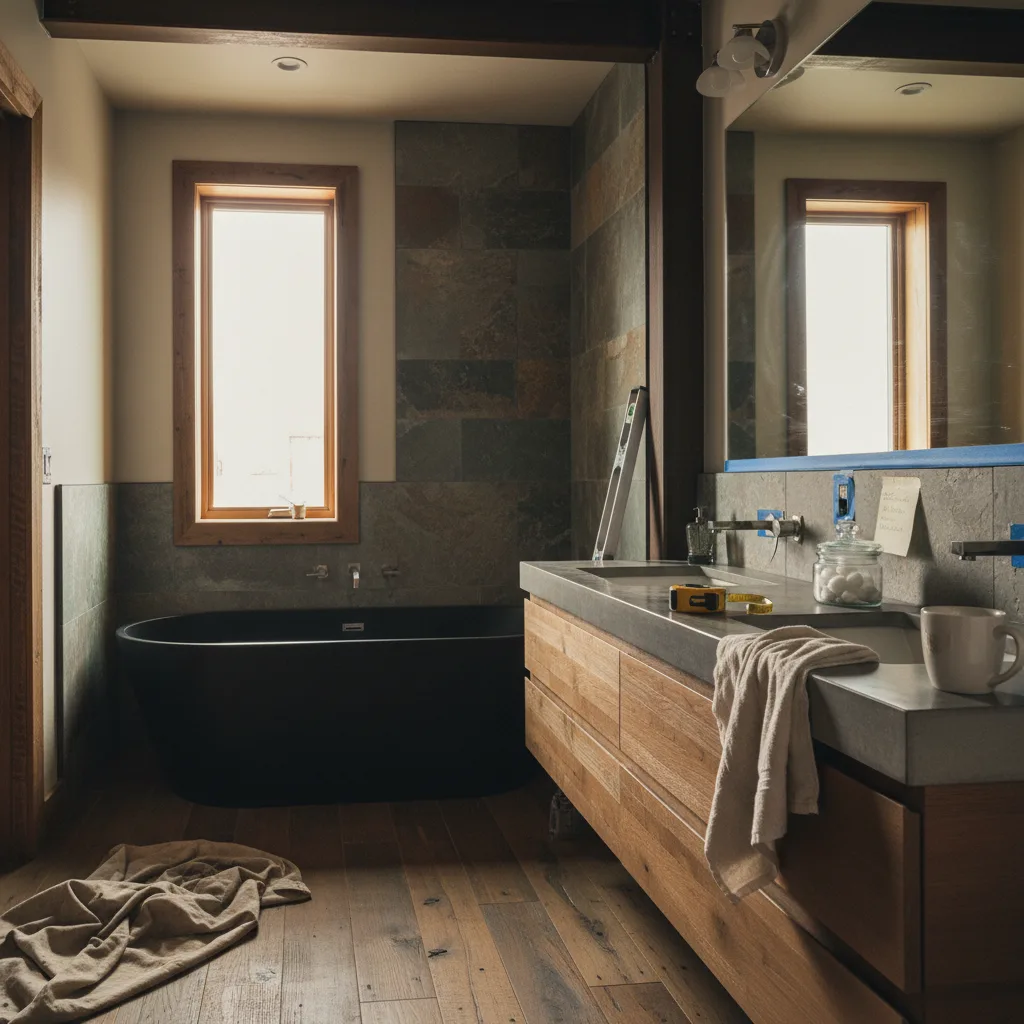
A full bathroom remodel in Denver costs between $28,000 and $45,000 for a typical 5x8 foot space in 2026, with the median project cost landing at $34,500. This range reflects a complete gut renovation with mid-range materials. Costs can start lower, from $12,000 to $18,000, for cosmetic updates in a condominium or a surface-level refresh that avoids moving plumbing or electrical lines. High-end, custom projects involving layout changes or luxury materials regularly exceed $75,000, particularly in premium Denver neighborhoods.
In a Nutshell
- Total Cost Range: $18,000 to $95,000+
- Mid-Range Project Cost: $28,000, $45,000
- Typical Timeline: 4 to 9 weeks
- Biggest Surprise Cost: Plumbing modifications. Moving a toilet or shower drain can add $3,500 to $6,000 to the total cost, a detail often overlooked in initial estimates.
What does a bathroom remodel actually cost in Denver?
The final cost of a Denver bathroom project is determined by three factors: the quality of materials, the scope of labor, and the size of the space. We have categorized projects into three common tiers based on data from Denver-area contractors and national benchmarks from the National Kitchen & Bath Association (NKBA).
| Tier | Cost Range (5x8 ft Bathroom) | Typical Scope |
|---|---|---|
| Basic / Refresh | $18,000, $27,000 | Prefabricated vanity, cultured marble top, builder-grade fixtures, vinyl or ceramic tile floor, new paint. No changes to plumbing or electrical layout. |
| Mid-Range | $28,000, $45,000 | Semi-custom vanity, quartz countertop, porcelain tile on floor and in shower surround, recessed medicine cabinet, improved ventilation, new lighting fixtures. |
| Premium / Custom | $50,000, $95,000+ | Custom cabinetry, natural stone countertops and tile, frameless glass shower enclosure, heated floors, moving walls or fixtures, high-end plumbing fixtures, smart home integration. |
For a mid-range project, which represents the bulk of remodels in the Denver metro, the budget allocation is typically as follows:
- Labor: 25%
- Vanity & Cabinetry: 20%
- Fixtures (toilet, sink, shower): 15%
- Tile & Tilework Labor: 15%
- Plumbing: 10%
- Countertops: 5%
- Electrical & Lighting: 5%
- Paint & Finishes: 5%
The bottom of the cost range, below $18,000, typically applies to a cosmetic refresh rather than a full renovation. This involves painting, replacing a vanity, and updating light fixtures without disturbing the underlying plumbing, electrical, or tile work, making it common for newer homes or condominiums.
Why is it more expensive in Denver than surrounding regions?
Remodeling costs in Denver are consistently 10 to 20 percent higher than the national median. This premium is driven by a combination of high labor costs, logistical challenges, and concentrated demand in affluent neighborhoods.
First, labor rates are a primary factor. According to the Colorado Department of Labor and Employment for the Denver-Aurora-Lakewood MSA, prevailing wages for skilled trades are among the highest in the mountain region. A licensed plumber bills between $110 and $185 per hour, and a journeyman electrician charges from $95 to $160 per hour. This reflects a tight labor market where demand for qualified tradespeople outpaces supply, allowing experienced bathroom contractors in Denver to command higher prices.
Second, material logistics contribute to increased costs. As a landlocked city, Denver faces higher transportation and freight costs for heavy materials like tile, natural stone, and custom vanities compared to cities near major shipping ports. These pass-through costs from suppliers can add 5 to 8 percent to the material portion of a project budget.
Finally, neighborhood-specific premiums exist. Contractor rates are often higher in areas like Cherry Creek, Washington Park, and the Highlands due to higher operational costs (parking, access, stricter HOA rules) and greater demand. Homes in these areas are also frequently older, increasing the likelihood of encountering outdated plumbing or electrical systems that require costly upgrades to meet current building codes.
What do real Denver homeowners spend in 2026?
Three representative projects from 2026, scoped similarly, reconstructed from Renology's Project of the Day network and used here in aggregate form:
- A 1970s Ranch in Englewood ($31,500): This project involved a full gut of a 60-square-foot primary bathroom. The homeowners kept the original layout to control costs. The budget included a new double vanity with a quartz top, porcelain tile for the floor and tub surround, new Moen fixtures, a high-efficiency toilet, and an updated vanity light. The discovery of non-GFCI protected wiring near the sink required an unexpected $900 electrical upgrade.
- A Victorian in Capitol Hill ($48,000): The main bathroom in this historic home required significant work beyond cosmetics. The 75-square-foot space was reconfigured, moving the toilet six feet to create space for a larger walk-in shower. This triggered a plumbing permit and extensive work on the cast-iron drain stack. The project featured historically appropriate hex tile flooring, a clawfoot tub restoration, a custom-built vanity, and updated ventilation to handle moisture.
- A Modern Condo in LoHi ($24,000): This 45-square-foot bathroom was a cosmetic-heavy update. The scope was limited by building rules, so the plumbing footprint remained unchanged. The project included a new floating vanity, a high-end prefab shower system, luxury vinyl tile flooring, new paint, and designer lighting fixtures. Labor was a smaller percentage of the budget, as demolition was minimal and no major systems were altered.
Where does the money actually go?
3 Denver bathroom remodelers, editor-screened. 4 questions.
See my 3 matchesA contractor's initial quote covers the visible items, but a significant portion of a bathroom remodel budget is consumed by necessary work behind the walls. Homeowners should account for these items, which are often excluded from preliminary bids.
- Permit Fees: $500, $1,800. A simple cosmetic update may not require a permit, but moving plumbing or electrical will. Denver's permit fees are based on project valuation.
- Waterproofing System: $900, $2,500. Modern shower systems require a multi-layer waterproofing membrane (like Schluter-KERDI) behind the tile. This is a non-negotiable step to prevent future water damage.
- Ventilation Upgrades: $600, $1,500. Older homes often have inadequate bathroom fans. Upgrading to a properly sized, externally vented fan is required by code to manage moisture and prevent mold.
- Asbestos or Lead Abatement: $1,000, $4,000. If your home was built before 1980, testing for asbestos in flooring or lead in paint is critical. Remediation, if needed, must be done by a certified professional.
- Subfloor Repair: $800, $2,200. Leaks from old toilets or showers often cause water damage to the subfloor, which is only discovered after demolition.
- Plumbing Stack Updates: $2,000, $5,000. In older Denver homes, replacing corroded cast-iron drainpipes with modern PVC is a common and expensive necessity.
- Debris Haulage and Disposal: $400, $950. The cost of a dumpster and disposal fees for construction waste.
What stops a Denver bathroom project from running over budget?
Budget overruns in bathroom remodels are common, but they are almost always preventable. They typically stem from three main sources: indecision, unforeseen conditions, and an incomplete scope of work.
First, scope creep from homeowner changes is the leading cause of budget increases. Selecting all materials, from tile to fixtures, before construction begins is the most effective way to lock in pricing. Changing a tile selection after it has been ordered can incur restocking fees and delay the project, leading to higher labor costs.
Second, discovering hidden issues after demolition can derail a budget. This is especially true in Denver's older housing stock. Problems like rotted subfloors, outdated wiring, or leaky pipes are impossible to quote for in advance. The National Association of Home Builders recommends a ten to fifteen percent contingency on renovations in homes over thirty years old. For a $35,000 project, this means setting aside $3,500 to $5,250 for surprises.
Third, a vaguely defined scope of work in the contractor's proposal leaves room for ambiguity and extra charges. A detailed contract that specifies every product model number and installation detail protects both the homeowner and the contractor.
How do I get the right permits for a bathroom remodel in Denver?
Navigating the permitting process is a critical step for any bathroom project that involves altering the structure, plumbing, or electrical systems. The Denver Community Planning and Development office oversees all residential construction permits. Minor cosmetic updates like painting or replacing a faucet do not require a permit. However, if you plan to move a wall, relocate a toilet or shower, or add a new electrical circuit, a permit is mandatory. Your licensed bathroom contractor in Denver should handle the application and inspection process as part of their service. For a detailed guide on what triggers a permit and how to prepare your application, see our [Denver Bathroom Permit Playbook for 2026](/guides/denver-bathrooms-permit-playbook-2026).
What should your Denver contractor include in the quote?
A detailed quote is the foundation of a successful project. A professional bid from a qualified Denver bathroom contractor should be a multi-page document that itemizes both materials and labor. Do not accept a one-page estimate with a single number.
- Detailed Scope of Work
- Demolition and Debris Removal
- Framing or Structural Changes
- Plumbing Rough-in and Finish Work
- Electrical Rough-in and Finish Work
- Insulation and Drywall Installation
- Waterproofing (Shower and Tub Surrounds)
- Tile Installation (Floor, Walls, Niche)
- Cabinetry and Vanity Installation
- Countertop Fabrication and Installation
- Painting and Finishing
- Installation of All Fixtures (Toilet, Sinks, Faucets, Showerhead)
- Permit Application and Management
- Project Timeline with Milestones
Renology Take
The most common point of failure in a Denver bathroom remodel budget is the disconnect between the tangible and the intangible. Homeowners understandably focus on the visible finishes: the tile, the vanity, the fixtures. These are the elements you interact with daily. However, the majority of the project's labor cost and financial risk lies behind the drywall. It's in the correct sloping of a shower pan, the proper venting of a drain line, and the code-compliant wiring of a GFCI outlet. A beautiful tile job is worthless if the waterproofing behind it fails. The meta-pattern we observe is homeowners allocating too much of their initial budget to high-end finishes, leaving an insufficient contingency for the foundational plumbing and electrical work that ensures the room's longevity and safety. A successful project prioritizes the unseen systems first.
Sources & Methodology
Renology reviews public permit and labor signals, supplier pricing, remodeler quote patterns, comparable projects, the Renology Cost Index, and the Renology Methodology. Cost references are planning ranges for Denver bathroom projects, not fixed bids.
- Remodeling Magazine, 2025 Cost vs. Value Report (Denver, CO data)
- National Kitchen & Bath Association (NKBA), 2026 Design Trends Report
- Colorado Department of Labor and Employment, Denver-Aurora-Lakewood MSA Occupational Wage Data, 2025
- National Association of Home Builders (NAHB), Remodeling Market Index (RMI), Q4 2025
- City of Denver, Community Planning and Development, Permit Fee Schedule, 2026
- Renology Project of the Day (POTD) Network, Denver Metro Data, 2024-2026
Frequently Asked Questions about Bathroom Remodeling Costs in Denver
How much value does a bathroom remodel add in Denver?
According to the 2025 Cost vs. Value report for the Denver market, a mid-range bathroom remodel has a notable resale value. For a project with a median cost of approximately $34,500, homeowners can expect to recoup between 60 and 68 percent of the cost at resale, adding around $20,700 to $23,460 in home value. A more upscale, premium bathroom remodel, costing $75,000 or more, tends to have a lower percentage return, typically between 50 and 55 percent. While not a direct dollar-for-dollar return, the project significantly improves a home's marketability. An updated bathroom can be the deciding factor for buyers and can help a property sell faster than comparable homes with dated facilities, which has its own financial benefit.
What are the permit requirements for a bathroom remodel in Denver?
In Denver, permits are required for bathroom remodels that alter the existing structural, plumbing, or electrical systems. Simply replacing a faucet, toilet, or vanity in the same location does not require a permit. However, you will need a permit from Denver's Community Planning and Development office if your project includes moving or adding walls, relocating plumbing drains or supply lines (like moving a shower), or installing new electrical circuits for lighting or outlets. Licensed contractors are required to pull these permits on your behalf. The process ensures that all work is performed to current building codes, particularly regarding ventilation, electrical safety (GFCI outlets), and proper plumbing drainage, protecting both your safety and your home's value.
How long does a typical bathroom remodel take in Denver?
A complete, gut remodel of a standard 5x8 foot bathroom in Denver typically takes four to nine weeks from the start of demolition to final inspection. This timeline can be broken down: one week for demolition and rough-in work (plumbing, electrical), one to two weeks for inspections, drywall, and waterproofing, one to two weeks for tile work and painting, and one final week for installing the vanity, fixtures, and finishes. The primary variables that extend this timeline are the availability of materials and the schedule of subcontractors. Custom-ordered tile or vanities can have lead times of six to twelve weeks, so all materials should be on-site before demolition begins to prevent costly delays.
Can I save money on a Denver bathroom remodel by sourcing my own materials?
Sourcing your own materials, a practice known as owner-sourcing, can potentially save money on the retail markup but introduces significant risks. While you might save 10 to 20 percent on items like tile, vanities, and fixtures, you become responsible for measurement accuracy, ordering the correct quantities (including overages for tile), freight, and ensuring all items are on-site and undamaged when needed. A contractor's price includes these logistics. If a toilet you purchased arrives cracked or a vanity is the wrong size, the resulting project delays will cost you in labor fees as the crew waits. Most contractors in Denver will not warranty items they did not procure, leaving you to deal with manufacturers if a faucet fails prematurely. For most homeowners, the financial risk and coordination effort outweigh the potential savings.
What's the difference between a bathroom refresh and a full remodel?
A bathroom refresh is a cosmetic update that works within the existing layout and infrastructure. Its cost in Denver ranges from $8,000 to $18,000. This typically includes painting, replacing the vanity and countertop, installing a new toilet and faucet in their original locations, and updating light fixtures. A refresh does not involve changing plumbing, moving walls, or extensive tile work. In contrast, a full remodel, costing $28,000 and up, is a gut renovation. It involves tearing out everything down to the studs, allowing for layout changes, new plumbing and electrical, full tile installation, and a comprehensive update of all surfaces and fixtures. A remodel addresses underlying issues, while a refresh improves aesthetics.
How do I find a qualified bathroom contractor in Denver?
Finding a qualified bathroom contractor in Denver requires a multi-step verification process. Start by seeking referrals from local architecture supply stores, tile showrooms, or neighbors. Once you have a shortlist of three to five names, verify their license is active and in good standing with the Denver Community Planning and Development office. Check for proof of general liability and worker's compensation insurance. Request a portfolio of at least three completed bathroom projects similar in scope to yours and speak with those references directly. A reputable contractor will provide a detailed, itemized bid, not a one-line estimate. Finally, ensure they have extensive experience with the specific challenges of Denver homes, such as managing permits and dealing with the quirks of older plumbing and electrical systems.
Denver · pre-screened
Get 3 Denver bathroom bids in 48 hours.
Our editors already vetted Denver bathroom remodelers. Answer 4 questions and we send 3 written bids inside 48 hours, with the real price for your scope, not their inflated first-call number.
- Free, no commission
- Pre-screened locally
- Bids inside 48 hours
Takes about 60 seconds. We'll text you when bids arrive.