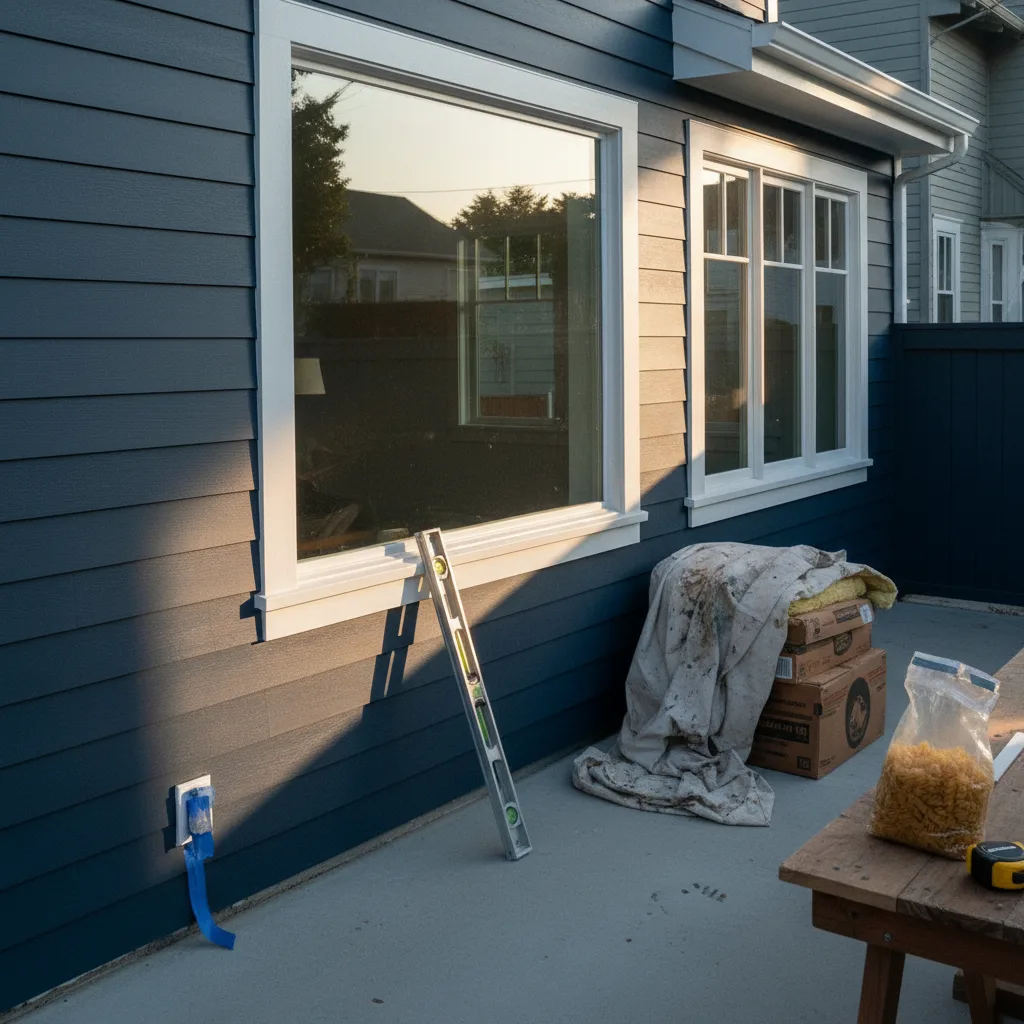
The era of flat, apologetic stucco is decisively over. By the first quarter of 2026, over sixty percent of new siding specifications for San Francisco custom homes and major remodels featured textured or dimensional profiles, a stark departure from the monolithic surfaces that defined the last decade. We are witnessing a city-wide pivot towards exteriors with depth, character, and a material honesty that reflects Northern California's rugged landscape.
In a Nutshell: San Francisco Siding in 2026
- The Umbrella Theme: Texture over flatness. Homes are gaining visual depth through material choice and orientation.
- The Big Three Trends: Dark & Moody Vertical Siding, Natural Wood Accents, and Large Format Architectural Panels.
- What's Being Replaced: Monotone beige stucco, traditional horizontal lap siding, and vinyl products that fail to imitate wood convincingly.
- What's Next: Fully integrated exterior lighting systems within siding reveals and composite materials with near-perfect biological accuracy.
1. Vertical Siding is the New Default
Horizontal lap siding has ceded its throne. The new standard for contemporary and transitional homes is vertical orientation, which lends a sense of height and modernity. We're seeing this executed in two primary ways: classic board and batten for a modern farmhouse feel in neighborhoods like Glen Park, and narrow-plank tongue-and-groove profiles for a cleaner, more architectural look in places like the Sunset District. Material suppliers like Golden State Lumber report that orders for James Hardie's Fine Texture Vertical Siding have tripled since 2023. This trend has a long runway; its clean lines are versatile enough to outlast more fleeting styles.
2. Dark & Moody Exteriors Dominate
The all-white exterior has been replaced by a sophisticated, darker palette. Deep charcoals, near-blacks, and rich blues are covering entire facades, creating a dramatic backdrop for San Francisco's unique, soft light. These colors, like Benjamin Moore's "Wrought Iron" or Sherwin-Williams' "Tricorn Black," absorb light and emphasize a home's form and silhouette. In Pacific Heights and Russian Hill, designers are using these dark tones to give historic Victorians a bold, contemporary edge. This is not a passing fad but a fundamental shift towards more assertive and grounded color stories that connect with the Bay's often-overcast skies.
3. Natural Wood Accents Warm Up Facades
To balance the cool, dark palettes, natural wood is being used strategically and sparingly. Instead of cladding an entire house, designers are specifying clear Western Red Cedar or thermally modified hemlock for soffits, covered entryways, and protected accent walls. This creates a focal point, adding warmth and organic texture where it matters most. In Noe Valley, we see these wood elements highlighting the front door or framing a large picture window. This trend celebrates wood as a precious material, using it for maximum impact while relying on more durable composites for the bulk of the exterior, a smart response to San Francisco's damp climate.
4. Fiber Cement Panels Create a Modernist Grid
3 San Francisco siding contractors, editor-screened. 4 questions.
See my 3 matchesFor the purist, the modernist grid is back, but with better materials. Large format architectural panels, like those from Nichiha or Hardie's Architectural Panel line, are being installed with intentional reveals or expressed fasteners. This creates a clean, commercial-grade aesthetic that appeals to homeowners in Dogpatch and Potrero Hill. The look is precise and controlled, emphasizing geometry and plane. It’s a sophisticated choice that speaks to an appreciation for structural honesty and minimalist form, often used for modern additions or entirely new builds that seek to stand apart from the city's more traditional housing stock.
5. The Rainscreen Gap Becomes a Design Element
What was once a purely technical requirement is now an aesthetic choice. In a city defined by coastal fog and driving rain, a rainscreen system is non-negotiable for high-performance walls. But instead of hiding the gap, architects are celebrating it. By detailing the furring strips and openings with precision, the shadow line of the rainscreen gap becomes a design element in itself, adding another layer of depth and rhythm to the facade. This technical-turned-aesthetic move is a hallmark of thoughtful, climate-specific design, a clear sign that a home was built with San Francisco's unique environmental pressures in mind.
6. Composite "Wood" Finally Looks Real
For years, composite siding that aimed to mimic wood fell short. That is no longer the case. Brands like NewTechWood and TimberTech have developed composite siding with convincing grain patterns and subtle color variations that are nearly indistinguishable from real wood from the curb. This is a game-changer for homeowners who want the look of cedar without the maintenance, especially in foggy areas like the Outer Richmond. Siding contractors in San Francisco report a major uptick in client requests for these high-end composites, which offer both aesthetic quality and the durability needed to withstand decades of marine air.
7. Mixing Materials is Standard Practice
The most sophisticated projects are no longer defined by a single siding choice. The prevailing trend is a curated mix of two or three materials. A typical composition might involve dark vertical fiber cement for the main body of the house, warm cedar cladding the recessed entryway, and smooth architectural panels on a projecting bay window. This approach breaks down a home's mass, creates visual interest, and allows for the best material to be used in the right place. It’s a more complex and thoughtful way to design an exterior, and it's becoming the signature of high-end custom homes across the city, from Sea Cliff to the Mission District.
8. Metal Siding Moves Beyond the Industrial
Once reserved for warehouses or rustic cabins, metal siding is now a high-design material in residential architecture. Standing seam steel, often in a matte black or dark bronze finish, is being used for its sharp lines, extreme durability, and non-combustible nature, a key consideration for homes in Wildland-Urban Interface zones near the Presidio or Mount Sutro. While full metal exteriors are still rare, it’s increasingly popular for accent walls, dormers, or as a durable shell for modern additions. This trend signals a move towards more resilient, industrial-chic materials that offer longevity and a distinctly modern profile.
The Renology Take
The common thread through all eight trends is a desire for authenticity and resilience. San Francisco homeowners are rejecting the artificiality of the past and demanding exteriors that feel substantial, textured, and connected to the Northern California environment. This isn't just about aesthetics; it's a pragmatic response to the city's climate. The fog, wind, and rain demand high-performance materials like fiber cement and well-detailed rainscreens. The dark palettes and natural wood accents are a nod to the region's forests and often-gray skies. This is design that is both beautiful and intelligent, a sophisticated architectural language that is deeply rooted in its specific place. The minimalist decade is over; homes are now meant to be felt as much as they are seen.
Sources & Methodology
See the Renology Methodology for how sources are reviewed, ranges are normalized, and planning-data limits are handled.
Cost ranges in this guide draw on the following named industry sources, public agency datasets, and Renology editorial research.
- James Hardie Siding, '2026 Home Exteriors Report' (2026)
- Remodeling Magazine, '2026 Cost vs. Value Report' (2026)
- Renology Project of the Day Network, Field Interviews (2025-2026)
- Golden State Lumber, San Francisco Dealer Network Data (Q1 2026)
- American Institute of Architects (AIA), San Francisco Chapter, 'Residential Trends Survey' (2025)
- California Department of Industrial Relations, Prevailing Wage Data (2026)
San Francisco · pre-screened
Get 3 San Francisco siding bids in 48 hours.
Our editors already vetted San Francisco siding contractors. Answer 4 questions and we send 3 written bids inside 48 hours, with the real price for your scope, not their inflated first-call number.
- Free, no commission
- Pre-screened locally
- Bids inside 48 hours
Takes about 60 seconds. We'll text you when bids arrive.