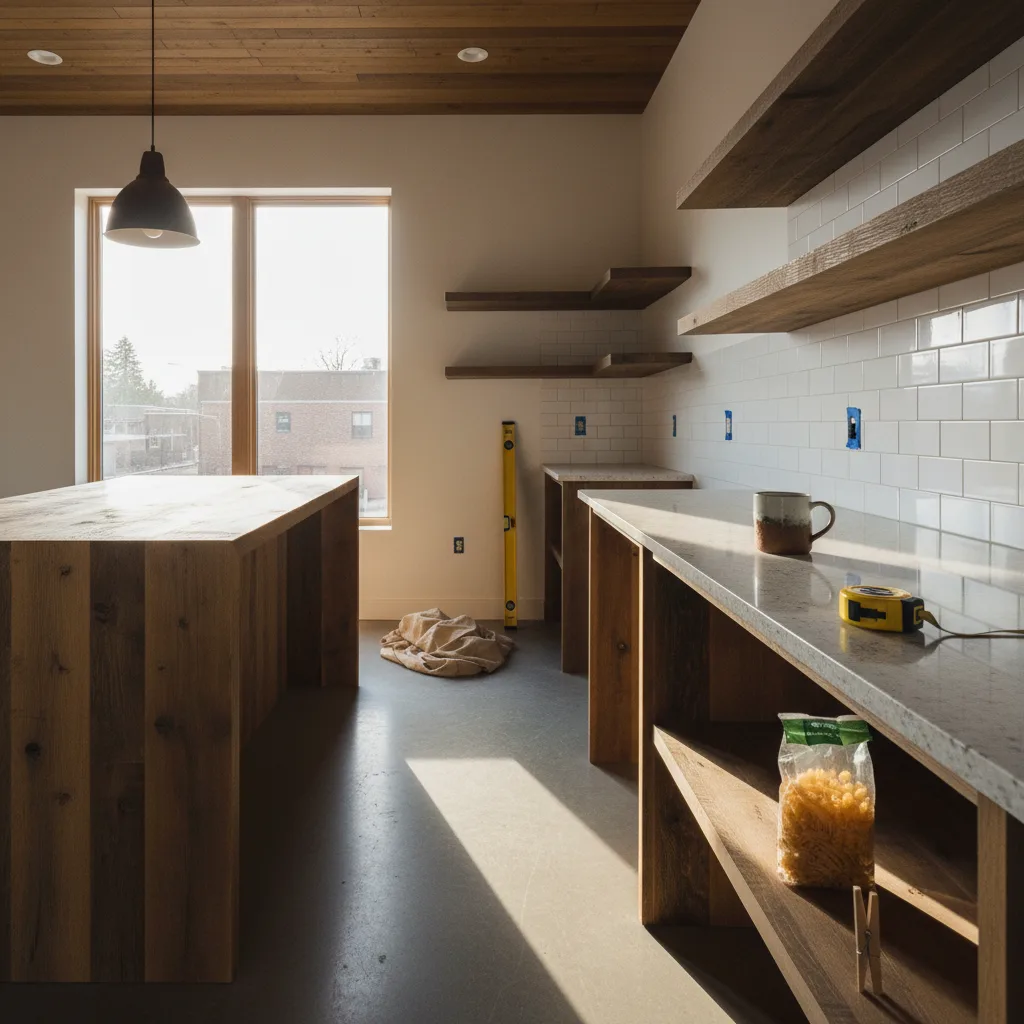
The era of the sterile, open-concept showroom kitchen is officially over in Denver. For 2026, we're seeing a twenty-two percent rise in specifications for dedicated pantry and prep zones, signaling a city-wide return to the "working kitchen." This isn't about hiding mess behind closed doors; it's about designing for genuine function first, moving past the decade of white shaker cabinets and vast, empty islands that looked better than they cooked.
In a Nutshell: The 2026 Denver Kitchen
- The Big Idea: The kitchen as a warm, functional, and personal hub, not just a showpiece.
- The Trends: Working pantries, saturated earth-tone colors, and highly durable, textured materials like honed soapstone and rift-cut oak.
- What's Being Replaced: All-white palettes, polished Carrara marble, purely open-concept layouts without defined zones.
- What's Next: Even more integration of furniture-like elements and a focus on hyper-specific task lighting schemes.
1. The Working Pantry is the New Must-Have
The walk-in pantry is evolving into a full-blown secondary kitchen. More than just shelving, these new spaces are designed as dedicated prep zones, housing the coffee maker, stand mixer, and microwave to keep the main kitchen's countertops clear. Data from three of Denver's largest kitchen contractors shows scullery and "working pantry" mentions in project scopes are up over thirty percent year-over-year. We're seeing this trend take hold in new builds in Central Park and in major remodels in established neighborhoods like Washington Park, where homeowners are carving out space for true functional depth. This isn't a fad; it's a fundamental shift in how we design the engine of the home.
2. Color Drenches Replace All-White
The minimalist decade is over, and with it, the reign of the all-white kitchen. Homeowners are embracing rich, saturated color, often "drenching" a room by painting cabinets, walls, and trim in the same hue. Earthy tones dominate, with deep forest greens, moody blues, and warm terracottas appearing in projects across the Highlands and Sloan's Lake. Showrooms like William Ohs report that custom cabinet orders in colors like Farrow & Ball's 'Green Smoke' or Benjamin Moore's 'Polo Blue' have doubled since 2024. This trend signals a desire for warmth and personality, a direct response to years of stark minimalism.
3. Texture is the New Pattern
Visual interest in 2026 is being created through the interplay of materials, not busy patterns. Think honed or leathered quartzite countertops paired with the tight grain of rift-cut white oak cabinets, accented by the soft gleam of unlacquered brass hardware that will patina over time. Fluted glass on upper cabinet doors and hand-thrown zellige tile backsplashes add another layer of tactile richness. This is a sophisticated, organic approach that feels both modern and timeless, a look that works especially well with the soft afternoon light that filters into so many Denver kitchens.
4. The 'Un-Island' Rethinks the Center of the Room
The monolithic, built-in island is giving way to more flexible and personal solutions. We're seeing a rise in freestanding, furniture-style islands that look more like a rustic worktable or a refined console. In smaller Denver bungalows, some homeowners are forgoing the island altogether in favor of a well-designed peninsula, which can improve the work triangle and create a cozier, more defined breakfast nook. This approach challenges the idea that every kitchen needs a massive central island, prioritizing custom layouts that fit the home's architecture and the owner's lifestyle.
5. Lighting Gets Layered and Intentional
3 Denver kitchen remodelers, editor-screened. 4 questions.
See my 3 matchesA single grid of recessed can lights no longer cuts it. The best Denver kitchens of 2026 feature a layered lighting plan designed for specific tasks. This includes warm, dimmable 2700K LED strips under cabinets for prep work, articulating sconces over open shelving to create a warm glow, and a statement pendant or chandelier over the island or dining area. The goal is to create a space that is both perfectly functional for cooking and warmly inviting for gathering, with the ability to change the mood at the touch of a a dimmer. Good lighting design is the single most underrated element of a successful kitchen remodel.
6. Honed Soapstone and Quartzite Edge Out Marble
While the beauty of Calacatta marble is undeniable, its tendency to etch and stain is a poor match for the active Denver lifestyle. Homeowners are overwhelmingly choosing more durable, practical stones. Vermont soapstone, with its deep charcoal color and velvety honed finish, is surging in popularity for its ability to develop a beautiful patina over time. For those wanting a lighter look without the maintenance of marble, quartzites like 'Taj Mahal' or 'Mont Blanc' offer similar visual appeal with superior resistance to scratches and acids. Local suppliers confirm that quartzite now outsells marble nearly four to one for kitchen applications.

7. The Command Center Nook Reclaims Counter Space
Countertop clutter is a universal problem, and the solution is the integrated command center. This is a small, dedicated zone, often concealed behind pocket doors or integrated into a bank of tall cabinets, designed to manage the details of daily life. It's more than a charging drawer; it's a place for the family calendar, mail, keys, and smart home hub. By designing a specific home for these items, the main kitchen work surfaces and landing zones remain clear and ready for cooking and entertaining. This small detail has a massive impact on the daily usability of a kitchen.
8. Zoned Layouts Bring Back Definition
The pure open-concept floor plan is being refined. While kitchens are still open to living areas, designers are using subtle architectural cues to create distinct zones. A peninsula can separate the primary cooking work triangle from the dining area, a dropped ceiling soffit can define the kitchen's perimeter, or a wide, cased opening can frame the transition to the living room. This approach provides the social benefits of an open layout while creating a sense of place and preventing the kitchen from feeling like it's spilling into the entire ground floor. It's a more intentional and structured approach to open-plan living.
The Renology Take
What connects these eight trends is a collective desire for authenticity and durability. The 2026 Denver kitchen is a direct reflection of the city's ethos: it's sophisticated but unpretentious, beautiful but built to withstand the realities of an active life. The shift away from delicate, high-maintenance materials and sterile, showroom aesthetics is a move toward warmth, personality, and genuine usability. Homeowners want their spaces to tell a story, to feel collected over time, and to function as the true heart of the home. This isn't about chasing fleeting styles; it's about investing in a functional, personal, and enduring space that can handle everything from a Tuesday night homework session to a holiday dinner party.
Frequently Asked Questions About Kitchen Remodels in Denver
How much does a kitchen remodel cost in Denver in 2026?
The typical cost for a full, gut remodel of a mid-range kitchen in Denver falls between $85,000 and $155,000. High-end or luxury projects involving custom cabinetry, professional-grade appliances, and structural changes often exceed $200,000. These figures can start lower, in the $45,000 to $70,000 range, for smaller condo kitchens or cosmetic refreshes that retain the existing layout. Three modeled project scenarios for 2026, built from the Renology Cost Index and typical local scopes. These are illustrative estimates, not completed client projects: a 180-square-foot kitchen in a Washington Park bungalow with semi-custom cabinets and quartzite countertops cost $115,000; a larger 250-square-foot kitchen in a Cherry Creek townhome with custom cabinets and high-end appliances was $170,000; a cosmetic update in a Highlands condo cost $62,000. The National Association of Home Builders recommends a ten to fifteen percent contingency on renovations in homes over thirty years old, a common scenario in many Denver neighborhoods.
Why is the kitchen cost in Denver so high?
Several factors contribute to the cost of Denver kitchens. First, skilled labor is in high demand. According to the Colorado Department of Labor and Employment for the Denver-Aurora-Lakewood MSA, wages for experienced carpenters, electricians, and plumbers are among the highest in the mountain region. Second, material costs, particularly for quality cabinetry, countertops, and appliances, have seen persistent inflation. Finally, Denver's housing stock often presents unique challenges. Remodeling older homes in neighborhoods like Park Hill or Capitol Hill can uncover needs for significant plumbing, electrical, or structural updates to meet modern building codes, adding to the project scope. The regional climate also requires attention to factors like freeze-thaw cycles, which can impact foundations and any exterior wall penetrations.
What is the biggest mistake homeowners make when hiring a kitchen contractor in Denver?
The most common misstep is failing to fully define the project scope before signing a contract. Ambiguity leads to change orders, which cause budget overruns and schedule delays. It is critical to have every single selection, from the cabinet hardware and grout color to the exact appliance models, decided upon and documented in the contract. A reputable kitchen contractor in Denver will guide you through this process and insist on a detailed scope. Rushing into demolition without a locked-in plan is a recipe for a stressful and expensive remodel. You can learn more about defining your project scope and navigating the local bureaucracy in our Denver kitchens permit playbook for 2026.
How long does a full kitchen remodel take in Denver?
For a complete gut remodel, the construction phase itself typically takes eight to twelve weeks. However, the total timeline from initial design to final completion is much longer, usually four to six months. The pre-construction phase, which includes design, material selection, ordering, and permitting, is the longest part. Custom cabinetry alone can have a lead time of ten to sixteen weeks. Permitting with the Denver Community Planning and Development department can add another four to six weeks. Rushing this planning phase is a false economy; a well-planned project executed by a professional team will almost always run more smoothly and finish faster than one that starts prematurely.
Sources & Methodology
See the Renology Methodology for how sources are reviewed, ranges are normalized, and planning-data limits are handled.
Cost ranges in this guide draw on the following named industry sources, public agency datasets, and Renology editorial research.
- NKBA 2026 Kitchen & Bath Market Outlook (January 2026)
- Renology Project of the Day (POTD) Field Interviews, Denver Metro (Q4 2025 - Q1 2026)
- Remodeling Magazine, 2025 Cost vs. Value Report (Denver, CO) (December 2025)
- Showroom Sales Data, William Ohs Cabinetry (Q1 2026)
- Colorado Department of Labor and Employment, Denver-Aurora-Lakewood MSA Wage Data (2025)
- National Association of Home Builders (NAHB), Remodeling Market Index (RMI) (Q1 2026)
Frequently Asked Questions
How much does a kitchen remodel cost in Denver in 2026?
Why is the kitchen denver cost so high?
What is the biggest mistake homeowners make when hiring a kitchen contractor in Denver?
How long does a full kitchen remodel take in Denver?
Ready to find a pro?
Tell us about your project and location. A Renology advisor can help you explore contractor matching.
Free for homeowners. No obligation to hire.
Find a ProSources
- NKBA 2026 Kitchen & Bath Market Outlook
- Renology Project of the Day (POTD) Field Interviews, Denver Metro
- Remodeling Magazine, 2025 Cost vs. Value Report (Denver, CO)
- Showroom Sales Data, William Ohs Cabinetry
- Colorado Department of Labor and Employment, Denver-Aurora-Lakewood MSA Wage Data
- National Association of Home Builders (NAHB), Remodeling Market Index (RMI)
Follow Renology on Google
Choose Renology as a preferred source and our guides show up more often in your Google results, including Top Stories and AI Overviews.