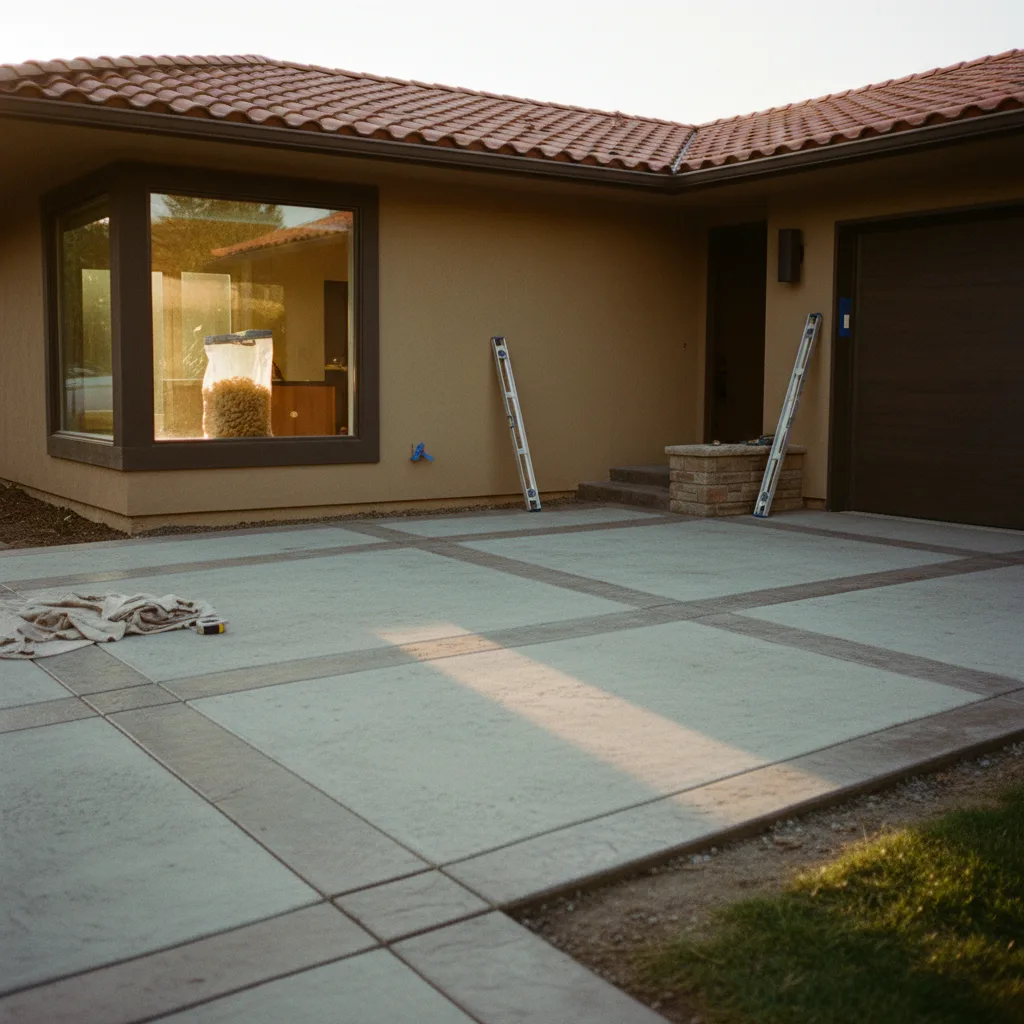
The era of the monolithic gray concrete slab is officially over. In its place, Sacramento driveways are being reimagined as designed 'first rooms' that blend architecture, landscape, and technology. We're seeing a 35 percent year-over-year increase in client requests for permeable paver systems, signaling a fundamental shift in how homeowners view the most prominent feature of their home's facade. This isn't just about parking anymore; it's about arrival.
In a Nutshell
- The Big Idea: The driveway is evolving from a purely functional surface into a designed, multi-purpose entry court that enhances curb appeal and environmental performance.
- The Trends: Permeable pavers are becoming the default choice, dark charcoal and slate tones are replacing traditional gray, and integrated low-voltage lighting is now a standard feature.
- What's Being Replaced: Plain poured concrete, asphalt, high-gloss stamped patterns, and ignoring drainage.
- What's Next: Widespread integration of EV charging infrastructure and the use of lighter, solar-reflective materials to combat the urban heat island effect, a key concern for Sacramento summers.
1. Permeable Pavers Are the New Standard
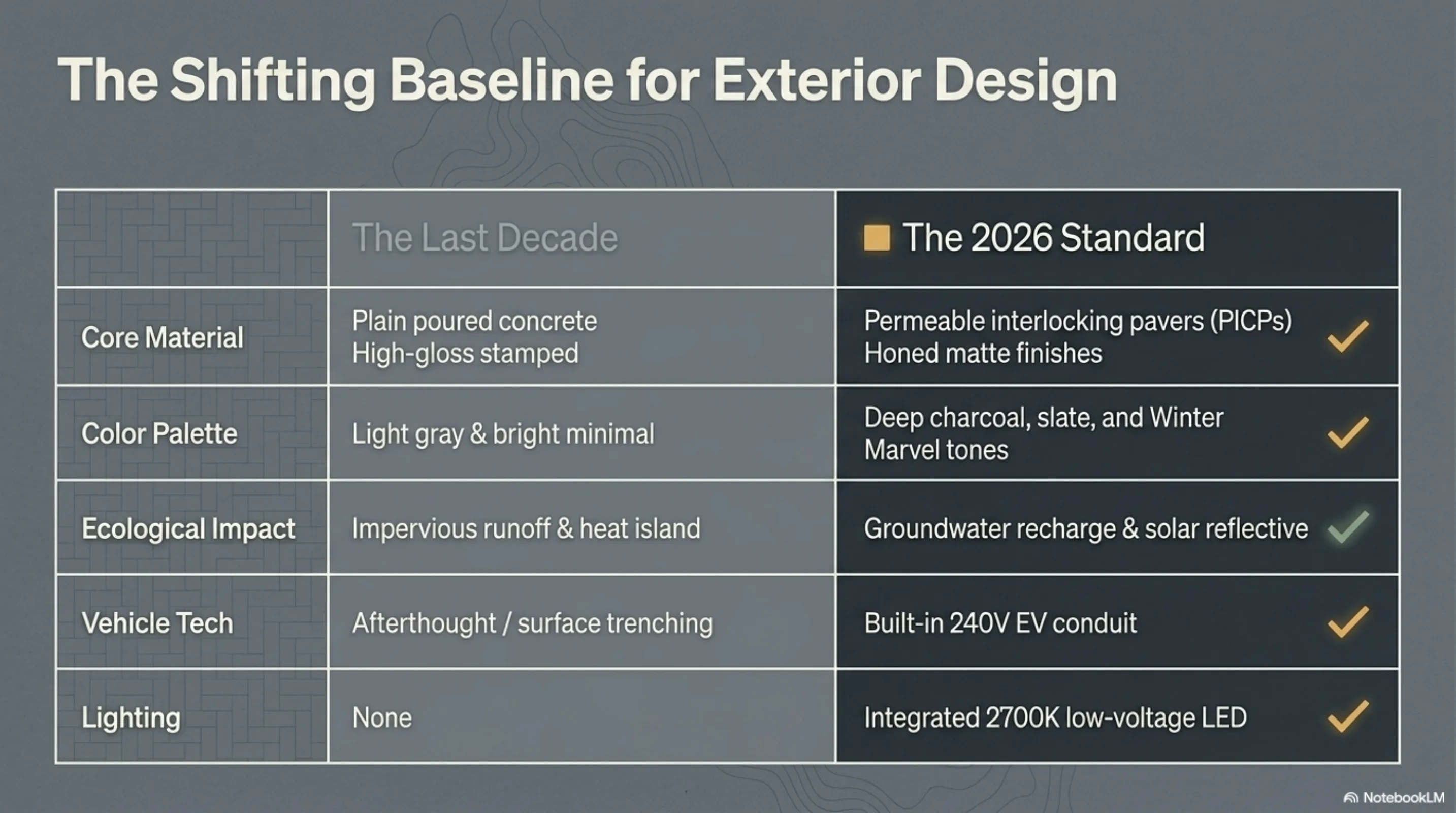
Permeable interlocking concrete pavers (PICPs) have crossed the chasm from eco-friendly niche to the dominant choice for new and replacement driveways. This system, which allows rainwater to filter through the joints into a gravel base below, directly addresses California's water conservation mandates and helps recharge local groundwater. Our data from the Renology Project of the Day network shows that over half of all new driveway sacramento projects specified permeable systems in early 2026. Homeowners in Land Park and East Sacramento are leading the charge, using products like Belgard's Eco-Dublin series to manage stormwater runoff while mitigating the effects of the region's expansive clay soil. This isn't a fleeting trend; it's the new baseline for responsible and resilient design.
2. The Return of the Ribbon Driveway
The classic ribbon driveway, featuring two parallel tracks of hardscaping separated by a strip of turf or groundcover, is staging a major comeback. This design dramatically reduces the amount of impervious surface, creating a softer, greener approach to the home that feels more integrated with the landscape. Sacramento showrooms report a renewed interest in this style for both historic homes in the Fab Forties, where it complements the architecture, and for new builds aiming for a modern farmhouse aesthetic. The central strip is often planted with drought-tolerant grasses or creeping thyme, offering a low-water solution that still provides a lush look. We expect this trend to accelerate as homeowners seek creative ways to balance functionality with green space.
3. Dark Tones Define the Modern Palette
The palette for Sacramento driveways has taken a dramatic turn towards the dark side. Light gray concrete is being replaced by deep charcoal, slate gray, and even near-black pavers and stained concrete. These darker tones create a sophisticated, grounded look that provides a strong visual anchor for the home's facade. For example, Unilock's Umbriano pavers in 'Winter Marvel' offer a rich, granite-like appearance that pairs beautifully with the warm wood and white siding popular in new Folsom communities. This shift reflects a broader design movement away from the light-and-bright minimalism of the last decade toward moodier, more substantial materials.
4. Integrated Lighting is Now Expected
A well-designed driveway no longer goes dark at sunset. Low-voltage LED lighting, once a luxury add-on, is now considered an essential component of any high-quality driveway project. Fixtures are being integrated directly into the design, either set flush between pavers, tucked under retaining wall caps, or installed along the border to define the space. This isn't just about safety and visibility; it's about creating ambiance and highlighting the home's architecture after dark. A popular configuration we're seeing involves warm 2700K up-lights on specimen trees combined with subtle path lights. A driveway contractor in Sacramento we spoke with noted that nearly every proposal over $30,000 now includes a comprehensive lighting package.
5. The 'Motor Court' Creates a Grand Arrival
For larger properties, particularly in areas like Granite Bay and El Dorado Hills, the simple driveway is being expanded into a formal motor court. This design creates a dedicated arrival zone separate from the garage entrance, often featuring a central island with a fountain or a specimen Japanese Maple. The surface is typically a high-end paver or cut stone, laid in a pattern like herringbone or basketweave to signal a more pedestrian-friendly, luxurious space. This approach improves the daily experience of arriving home and provides a more gracious welcome for guests, transforming a utility area into a true architectural feature.
6. EV-Ready Infrastructure is Built In
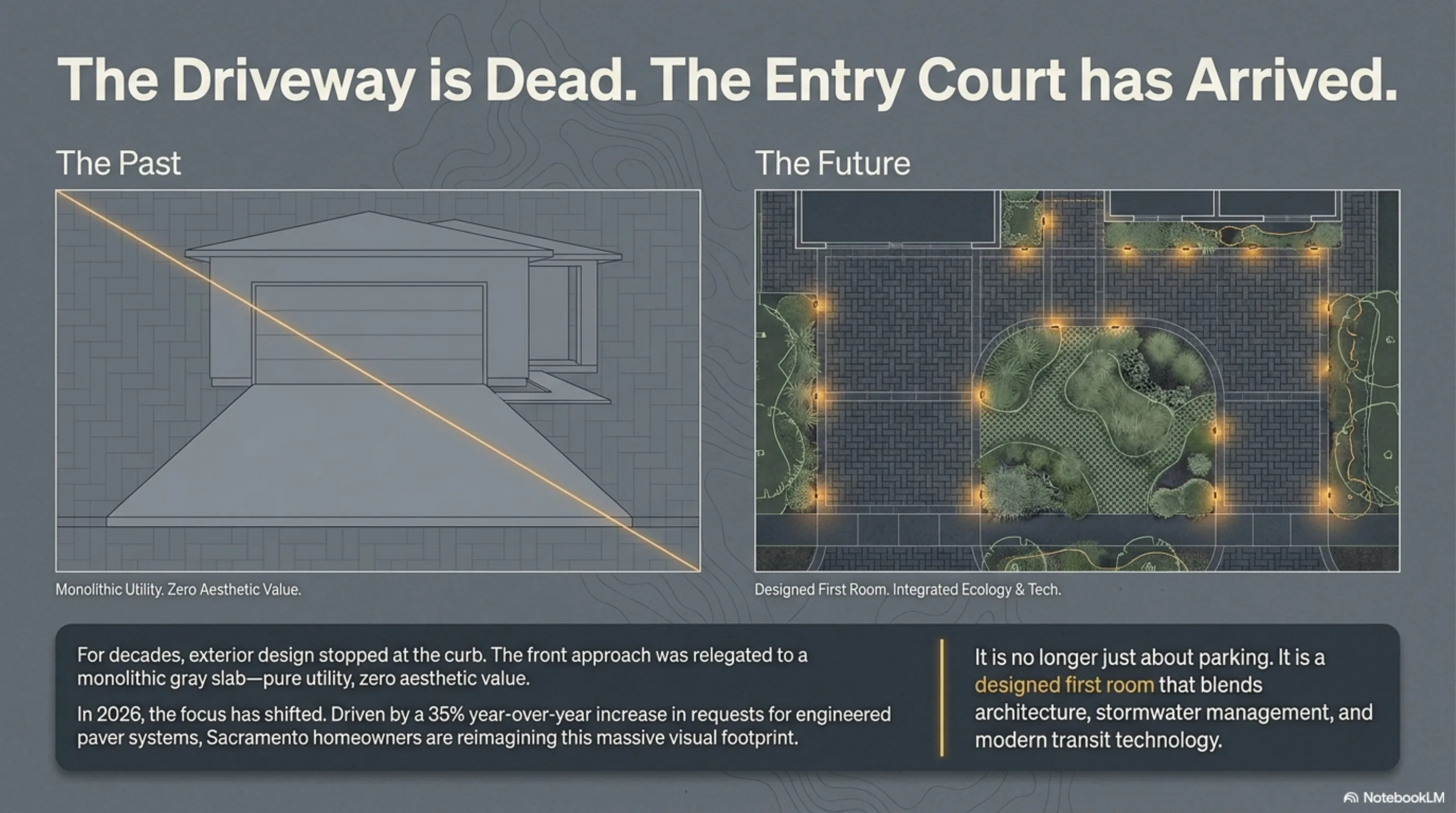
With the rapid adoption of electric vehicles, planning for charging is no longer an afterthought. The smart move in 2026 is to install the necessary infrastructure during the driveway replacement. This means running a dedicated 240-volt conduit from the main electrical panel to a logical charging location near the driveway or in the garage. Burying the conduit under the new driveway is far more cost-effective than trenching through a finished surface later. Leading driveway contractors in Sacramento are now including this as a standard line item in their quotes, recognizing that an EV-ready home is more functional and holds higher resale value.
7. Borders and Inlays Provide a Custom Touch
A simple way to add a high-design element to a driveway is with contrasting borders and inlays. This trend involves using a different color, texture, or type of paver to frame the main field of the driveway or to create custom patterns. A common application is a 'soldier course' border, where rectangular pavers are laid end-to-end around the perimeter in a darker, complementary color. We're also seeing homeowners inlay their house numbers or simple geometric motifs near the entrance. This level of personalization makes the driveway feel less like a commodity product and more like a deliberate part of the home's overall design scheme.
8. Matte Finishes Supplant Stamped Concrete
The era of high-gloss, heavily patterned stamped concrete is waning. Homeowners are now opting for more subtle, sophisticated finishes that mimic natural stone without the artifice. Honed concrete, which is ground to a smooth, matte surface, and pavers with a natural, non-glossy finish are in high demand. These materials offer a timeless, organic texture that complements modern architecture and landscaping. The focus has shifted from creating a facsimile of another material to celebrating the inherent beauty and texture of concrete and manufactured pavers themselves.
How Much Does a New Driveway Cost in Sacramento?
The "driveway sacramento cost" can vary significantly based on materials, size, and site conditions. For a standard two-car driveway (around 600 square feet), a basic brushed concrete installation might start around $7,000. However, most of the design-forward projects we see in 2026 fall into a higher range. A project featuring high-quality interlocking pavers from a brand like Belgard or Unilock, including demolition of the old driveway, proper base preparation, and professional installation, typically ranges from $18,000 to $35,000. Large, complex projects with extensive lighting, motor courts, or high-end materials can exceed $50,000.
Three representative projects from 2026, scoped similarly, reconstructed from Renology's Project of the Day network and used here in aggregate form:
- Land Park ($22,500): A 750-square-foot permeable paver driveway using Belgard Catalina Grana pavers. The project included removal of an old, cracked concrete driveway and installation of a new sub-base designed to handle the area's clay soil.
- Folsom ($31,000): A 900-square-foot driveway and walkway combination using dark charcoal pavers with a contrasting soldier course border. The scope included integrated low-voltage LED lighting along the edges and conduit for a future EV charger.
- East Sacramento ($16,000): A classic ribbon driveway with poured-in-place concrete strips and a central planting area for drought-tolerant groundcover. This price included minor landscape and irrigation adjustments.
The cost of labor is a significant factor in these figures. According to the California Department of Industrial Relations prevailing wage data for Sacramento County, skilled labor rates for concrete finishers and equipment operators contribute substantially to the overall project cost.
Common Budget Overruns and How to Plan for Them
Even with a detailed quote from your driveway contractor in Sacramento, unexpected issues can arise. The most common surprises involve what's underneath the old driveway. Poor soil conditions, especially the expansive clay common in the Sacramento Valley, may require more extensive excavation and a deeper, engineered sub-base than initially planned. Discovering old, unmarked utility lines that need to be relocated can also add significant cost and delays. To prepare for these possibilities, it's wise to hold a contingency fund. The National Association of Home Builders recommends a ten to fifteen percent contingency on renovations in homes over thirty years old.
Renology Take
The throughline connecting all eight of these trends is the elevation of the driveway from a neglected utility space to a critical design element. For years, the focus was on the kitchen, the bathroom, and the backyard. Now, the design thinking starts at the curb. This shift is driven by a convergence of factors: a deeper appreciation for cohesive indoor-outdoor living, pressing environmental concerns like stormwater management, and the integration of new technology like electric vehicles. Homeowners in Sacramento are realizing that the driveway occupies a huge visual portion of their property. Investing in it is no longer just about function; it's about creating a sense of arrival, expressing personal style, and making a smart, resilient investment in their home's future. The minimalist decade is over; texture, thoughtful details, and integrated systems are defining the new standard.
Sources & Methodology
Renology reviews public permit and labor signals, supplier pricing, remodeler quote patterns, comparable projects, the Renology Cost Index, and the Renology Methodology. Cost references are planning ranges for Sacramento driveway projects, not fixed bids.
Sources & methodology
How Renology builds this guide
Renology combines public permit and labor signals, supplier pricing, remodeler quote patterns, and editorial review of comparable projects. Cost references are planning ranges, not fixed bids, because site conditions, materials, access, permits, and finish level can change the final price.
- Benchmarked against the Renology Cost Index, related service guides, and the Renology Methodology.
- Reviewed for Sacramento market context when a local market is available.
- Focused on driveway scope, materials, timeline, contractor risk, and budget drivers.
Sacramento · pre-screened
Get 3 Sacramento driveway bids in 48 hours.
Our editors already vetted Sacramento driveway contractors. Answer 4 questions and we send 3 written bids inside 48 hours, with the real price for your scope, not their inflated first-call number.
- Free, no commission
- Pre-screened locally
- Bids inside 48 hours
Takes about 60 seconds. We'll text you when bids arrive.