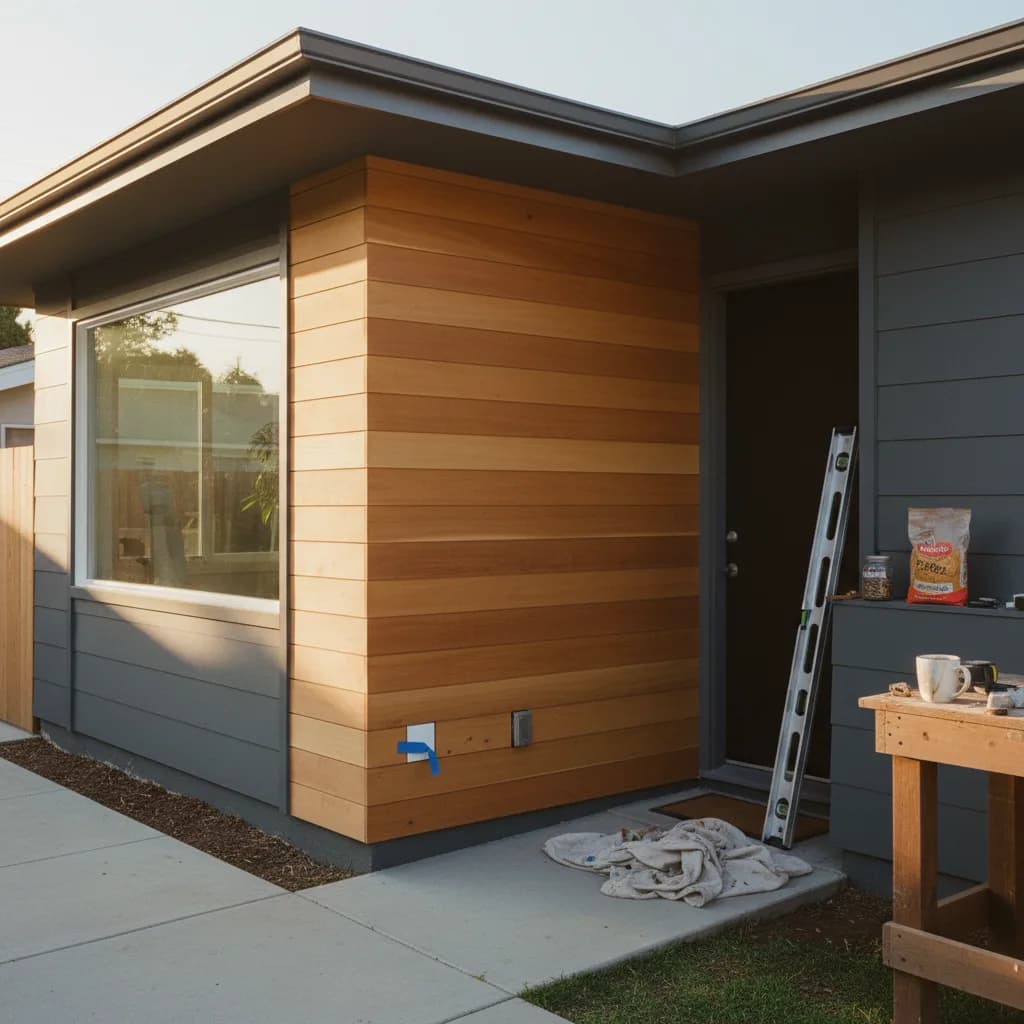
A full siding replacement in Los Angeles is a major investment, typically running from $18,000 to $45,000. But the final invoice is often twenty to thirty percent higher than the initial quote. These overruns aren't surprises; they're the predictable result of a few common homeowner mistakes. Getting the exterior envelope of your home wrong means a decade of chasing leaks, repainting failed finishes, and watching your investment degrade under the Southern California sun. The cost of doing it right is high. The cost of doing it wrong is higher.
In a Nutshell: Siding Mistakes
The core mistake Los Angeles homeowners make is treating siding like a cosmetic update when it's a critical performance system. It's your home's first line of defense against water, sun, and fire. The three most common errors are choosing a material based on looks instead of local climate, hiring an unqualified contractor to save a few thousand dollars, and failing to budget for what lies beneath the old stucco. Your one move this week: before you get a single quote, look up the license status of one potential siding contractor in Los Angeles on the CSLB website. It takes five minutes and can save you five figures.
Mistake #1: Ignoring the Substrate
Most homeowners focus on the visible siding material. They ignore the sheathing, framing, and water-resistive barrier (WRB) underneath. Tearing off old siding, especially brittle 1960s stucco, almost always reveals hidden damage: dry rot around windows, termite-riddled studs, or improperly flashed pipes. This discovery work can add $5,000 to $15,000 to the project cost, completely derailing the budget. The fix is to plan for this. Insist your contractor includes a clear unit price for replacing damaged sheathing and framing in the initial contract, and fund your contingency accordingly.
Mistake #2: Choosing Siding for the Photo, Not the Climate
People see a dark, moody board-and-batten home online and want to replicate it. This is a critical error in LA's varied microclimates. That black siding will absorb immense heat in the San Fernando Valley, driving up cooling costs and causing materials to expand and contract excessively. In coastal areas like Mar Vista or Santa Monica, salt air corrodes cheap fasteners and degrades low-quality paint finishes in just a few years. The fix is to select materials for performance in your specific location. Consider pre-finished fiber cement from James Hardie for its UV stability and fire resistance, especially in WUI zones around Eagle Rock. For coastal homes, specify stainless steel fasteners and a solid paint system designed for marine environments.
Mistake #3: Accepting the Lowest Bid Without Vetting
Homeowners often get three quotes and automatically select the lowest one. The lowest siding cost in Los Angeles is rarely the best value; it's often a sign of an unlicensed operator, inadequate insurance, or someone who uses cheap, untrained labor. This can lead to catastrophic installation failures, voided material warranties, and even a mechanic's lien on your property if they fail to pay their suppliers. The fix is a strict vetting process. Get three quotes. Check three references. Visit one finished job before signing. Verify their license and insurance are active and sufficient for your project's scale.
Mistake #4: Skipping the Permit Process
3 Los Angeles siding contractors, editor-screened. 4 questions.
See my 3 matchesMany homeowners assume replacing siding is a simple repair that doesn't require a permit. This is a dangerous assumption. In Los Angeles, if you are changing the siding material, altering the building envelope, or replacing the underlying sheathing, you almost certainly need a permit from the Los Angeles Department of Building and Safety (LADBS). Proceeding without one can result in stop-work orders, fines, and the nightmare of having to tear off newly installed siding for inspection. The fix is to define permit responsibility in your contract from day one. Confirm who is responsible for pulling the permit and scheduling inspections. Our guide, the Los Angeles Siding Permit Playbook 2026, provides a detailed overview of the LADBS requirements.
Mistake #5: Opting for Field-Painted Finishes to Save Money
To cut upfront costs, some people choose primed-only siding and have it painted on-site. This is a long-term financial mistake. A field-applied paint job, even with good paint, rarely matches the durability of a factory-baked finish. Under the intense LA sun, it will likely start to fade, peel, or chalk within five to seven years, requiring a complete and expensive repaint. The fix is to prioritize factory-finished products. James Hardie’s ColorPlus Technology, for example, involves multiple coats of a proprietary finish baked on in a controlled environment. The finish is more resistant to UV damage and comes with a 15-year warranty that covers paint and labor, offering a far lower total cost of ownership.
Mistake #6: Not Having a Contingency Fund
Homeowners create a budget based on the contractor's quote and assume that's the final number. This is unrealistic for any major renovation, especially on older homes. Unexpected issues are the norm, not the exception. As a rule, you should expect the unexpected. The National Association of Home Builders recommends a ten to fifteen percent contingency on renovations in homes over thirty years old. For a $30,000 siding job, that's an extra $3,000 to $4,500 in cash, set aside and untouched. The fix is to have this money in a separate account before the first hammer swings. It's the difference between a stressful, budget-breaking project and a smooth, predictable one.

Mistake #7: Signing a Vague Scope of Work
Many contracts for Los Angeles siding projects are dangerously simple. They might say "Install new fiber cement siding" but leave out critical details. What brand of siding? What type of house wrap? What kind of fasteners? What specific trim details around windows and doors? This vagueness is a breeding ground for disputes and change orders that inflate the final cost. The fix is to demand a detailed scope of work. It should specify every single product by brand and model number, from the siding itself to the caulk and flashing. A clear scope protects both you and the contractor and ensures you get exactly what you paid for.
Siding Costs in Los Angeles: Three Examples
Siding los angeles 2026 project costs can start lower for simple repairs or smaller homes, but a full replacement is a significant outlay. Labor is a major factor; according to the California Department of Industrial Relations prevailing wage data for Los Angeles County, skilled construction labor rates are among the highest in the nation. Three modeled project scenarios for 2026, built from the Renology Cost Index and typical local scopes. These are illustrative estimates, not completed client projects:
- Sherman Oaks Ranch (1,600 sq. ft.): This project involved removing old, cracked stucco and replacing it with James Hardie lap siding with a ColorPlus finish. The scope included new WRB, some minor sheathing repair, and new trim. The total cost was approximately $28,500.
- Mar Vista Bungalow (1,200 sq. ft.): The homeowner replaced sun-damaged wood siding with a modern smooth stucco finish. The project required extensive flashing work due to the coastal location and a three-coat stucco application. The final cost came to $23,000.
- Eagle Rock Hillside (2,200 sq. ft.): This home, located in a high fire risk zone, was re-sided with non-combustible fiber cement panels and metal trim. The complexity of working on a sloped lot added to labor costs. The total project cost was $41,000.
The Renology Take
The meta-mistake behind nearly every siding failure is a lack of patience. Homeowners are in a rush to see the cosmetic change and push contractors to start work before the details are settled. A proper siding job is ninety percent preparation and ten percent execution. It requires a forensic approach to the existing conditions, meticulous planning of the water management details, and a precise material specification. Rushing this process to save a few weeks on the schedule inevitably leads to corner-cutting. The contractor, pressured to start, uses a vague contract. The homeowner, eager for progress, signs it. The result is a project built on assumptions, not specifications. The single most effective way to avoid these mistakes is to slow down. Finalize every detail on paper before you allow anyone to touch your house.
Sources & Methodology
Renology reviews public permit and labor signals, supplier pricing, remodeler quote patterns, comparable projects, the Renology Cost Index, and the Renology Methodology. Cost references are planning ranges for Los Angeles siding projects, not fixed bids.
Frequently Asked Questions
What's the most expensive mistake in a Los Angeles siding replacement?
How do I know if a siding contractor is padding their quote?
When should I walk away from a siding quote?
What's the fastest way to blow a siding replacement budget?
Ready to find a pro?
Tell us about your project and location. A Renology advisor can help you explore contractor matching.
Free for homeowners. No obligation to hire.
Find a ProSources
- California Contractors State License Board (CSLB)
- Los Angeles Department of Building and Safety (LADBS) Permit Records
- James Hardie, 'Homeowner's Guide to Siding'
- National Association of Home Builders (NAHB) Construction Cost Survey
- California Department of Industrial Relations, Prevailing Wage Determinations
- BuildingGreen, 'Exterior Finishes and Coatings'
Follow Renology on Google
Choose Renology as a preferred source and our guides show up more often in your Google results, including Top Stories and AI Overviews.