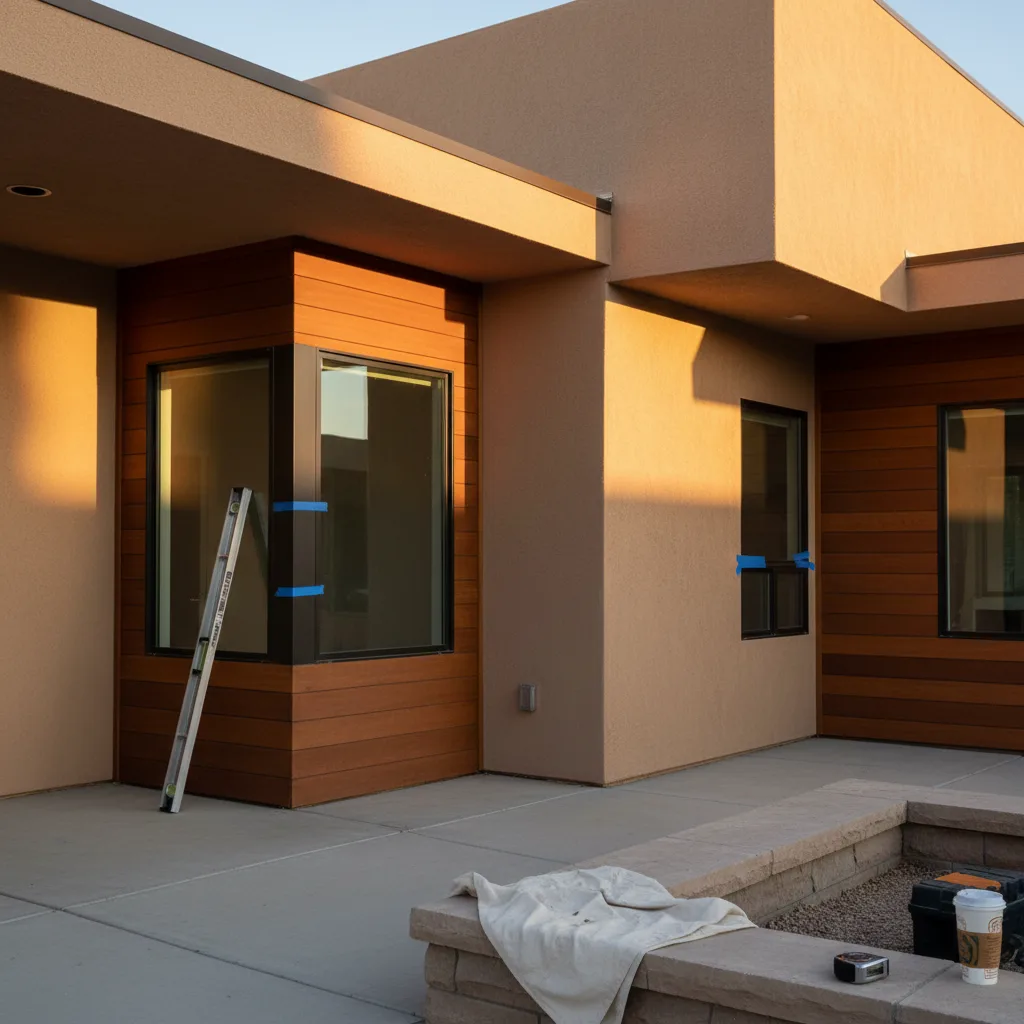
A typical siding replacement in Las Vegas can start at $15,000 for a smaller home and climb past $45,000 for a larger, multi-story residence with premium materials. Most homeowners, however, discover the final invoice is twenty to forty percent higher than the initial quote. The reasons are predictable, expensive, and entirely avoidable. The homeowners who stay on budget make their key decisions before a single tool comes out of the truck.
In a Nutshell: Siding Mistakes in Las Vegas
Getting the siding process wrong in Las Vegas doesn't just cost money; it costs time and years off your material's lifespan. The intense desert sun is an unforgiving adversary for exterior finishes.
- The Cost of Common Mistakes: Expect to pay an extra $7,000 to $12,000 for easily avoided errors, primarily from choosing the wrong materials for the UV exposure or needing to fix water damage from a botched installation.
- Three Most Common Errors: Homeowners most often fail by (1) selecting a siding material based on aesthetics from a milder climate, (2) not specifying a high-performance weather-resistive barrier, and (3) hiring a contractor without verifying their Nevada C-3 license.
- One Action to Take This Week: Before you get a single quote, visit a local supplier. Get large samples of three different siding materials in the colors you are considering. Place them against the south-facing wall of your home and watch how the brutal Las Vegas sun alters their appearance at 9 AM, 1 PM, and 5 PM. The results will surprise you and prevent the most common regret.
Mistake #1: Choosing Siding for Looks, Not for Desert Survival
Most homeowners begin their siding journey on Pinterest, saving images of dark, dramatic exteriors popular in Seattle or the Midwest. They fall in love with a look without considering the climate. This is a fatal flaw in Las Vegas. The intense, year-round UV radiation and extreme heat load will degrade and destroy materials not specifically designed for this environment. A standard-grade vinyl siding, especially in a dark color like charcoal or deep blue, can begin to warp, chalk, and fade within five years, not the fifteen to twenty promised on the brochure. The dark color absorbs heat, which not only accelerates material failure but also increases the thermal load on your home, driving up your NV Energy bill every summer. This mistake forces a premature replacement, effectively doubling the long-term cost of cladding your home. The fix is to reframe your thinking from aesthetics to performance. Prioritize materials with proven UV resistance. This means specifying fiber cement like James Hardie with their baked-on ColorPlus™ Technology or engineered wood like LP SmartSide with its SmartGuard® process. If you must use vinyl, insist on a premium, cellular PVC or a high-end vinyl with a documented Solar Reflective Index (SRI) and a solid colorfastness warranty. Choose lighter colors. They reflect solar radiation instead of absorbing it, extending the life of the finish and reducing cooling costs.
Mistake #2: Ignoring the Weather-Resistive Barrier (WRB)
Homeowners fixate on the visible siding, the part that gives the curb appeal. The contractor, looking to win the bid, focuses the quote there too. This leads to a critical omission: the underlayment, or weather-resistive barrier (WRB). Many contractors will default to the cheapest generic house wrap available. This is a massive mistake. The WRB is the home's primary defense against water intrusion. While Las Vegas is dry most of the year, the summer monsoon season brings short, intense downpours that can drive water into any seam or gap. A cheap, improperly installed WRB will fail. Water gets behind the siding, soaks into the OSB or plywood sheathing, and creates the perfect environment for rot and mold. You won't see this damage for years. By the time you do, it's a catastrophic, $10,000 to $20,000 structural repair. The correct approach is to treat the WRB as a critical component of the system, not an afterthought. Specify a high-performance product by name in your contract. Insist on a system like DuPont Tyvek HomeWrap combined with the correct flashing tapes, or an integrated panel system like ZIP System sheathing. Review the manufacturer’s installation requirements for flashing around windows, doors, and penetrations, and ensure your contractor’s plan meets or exceeds them. This small specification change adds maybe 5% to the upfront cost but prevents a 100% budget overrun down the road.
Mistake #3: Hiring a Contractor Without a Nevada C-3 License
The search for a good deal often leads homeowners to accept a low cash bid from a general handyman or a crew that seems proficient but lacks the proper credentials. In Nevada, this is a gamble you cannot afford to take. The Nevada State Contractors Board (NSCB) requires a specialty C-3 license for Siding and Exterior Wall Coatings. Hiring someone without this specific license voids nearly all your protections. An unlicensed operator is almost certainly uninsured and unbonded. If a worker is injured on your property, you could be held liable. If they cause significant damage to your home, you have no bond to claim against. The NSCB has no jurisdiction to help you resolve disputes. You are entirely on your own. The money you saved on the quote vanishes in legal fees or repair costs. The counter-move is non-negotiable and takes five minutes. Before you even consider a bid, get the contractor's full business name and license number. Then, verify it on the NSCB's public website. Confirm the license is active, in good standing, and is specifically a C-3 classification. Then, follow the rule of three. Get three quotes from licensed C-3 contractors. Check three of their recent references. Visit one of their finished jobs in a neighborhood like Summerlin or Henderson to see the quality of their work firsthand. This due diligence is the single most important step in protecting your investment.
Mistake #4: Underestimating the Real Siding Las Vegas Cost
Homeowners often create a preliminary budget by searching for "siding cost per square foot" and multiplying it by their home's square footage. This method is guaranteed to be wrong, often by as much as 50%. The advertised price is almost always for the material only, and it's usually for the cheapest available option. The true cost of a siding project is a complex calculation. Labor is the largest component, often making up 40% to 60% of the total budget. According to the U.S. Bureau of Labor Statistics occupational wage data for the Las Vegas-Henderson-Paradise MSA, skilled construction labor rates reflect the high demand in the region. Beyond materials and labor, you must account for the tear-off and disposal of the old siding, the cost of new underlayment and trim, permit fees from Clark County, and the rental of a dumpster. The biggest variable is the potential for discovering hidden damage, like dry rot or termite damage, once the old siding is removed. The National Association of Home Builders recommends a ten to fifteen percent contingency on renovations in homes over thirty years old. To get an accurate picture, you must demand a detailed, line-item quote. This quote should break down costs for materials, labor, tear-off, disposal, permits, and a specific allowance or unit cost for rot repair. For a detailed guide on local requirements, see the [Las Vegas Siding Permit Playbook for 2026](/guides/las-vegas-siding-permit-playbook-2026).
Mistake #5: Finalizing Color and Finish Choices Indoors
3 Las Vegas siding contractors, editor-screened. 4 questions.
See my 3 matchesThis is a subtle but crushing mistake. A homeowner goes to a showroom or looks at a small color chip inside their house and makes a final decision. The siding gets installed, and they hate it. The beautiful, earthy tan from the brochure looks like a pale, sickly yellow in the harsh desert sun. The sophisticated charcoal gray looks washed out and flat by midday. The problem is that color is a function of light, and Las Vegas has a unique and intense quality of light. Indoor fluorescent lighting tells you nothing about how a color will render on a large scale under a full sun. This mistake is costly because the only fix is to live with a color you dislike for twenty years or pay to have the siding repainted, which can cost $8,000 to $15,000 and may void the manufacturer's finish warranty. The solution is simple: test colors in place. Once you have narrowed your choices to two or three, get the largest possible samples from your contractor, at least two-foot by two-foot. Place them on the south and west-facing walls of your home. Observe them at different times of day: morning, high noon, and late afternoon as the sun gets lower. This is the only way to see the color's true character and undertones. Pay close attention to pre-finished products from manufacturers like James Hardie or LP, as their factory-applied coatings are engineered to resist the UV degradation that causes fading and color shift.
Mistake #6: Accepting a Vague, One-Page Contract
After weeks of getting quotes and choosing materials, homeowners are often fatigued and ready to get started. A contractor presents a simple, one-page document with a total price and a signature line, and the homeowner signs it just to move forward. This is a trap. A vague contract protects the contractor, not you. It provides no clear recourse when things go wrong. What happens when the crew damages your landscaping? What if the material delivered is a cheaper grade than what was discussed? What is the procedure and cost if they uncover rotten sheathing that needs replacement? Without a detailed contract, all these scenarios become a contentious, stressful negotiation with no clear resolution. It's your word against theirs, and they hold all the use because your house is torn apart. The fix is to demand a professional, comprehensive contract before signing anything. The document must specify the exact scope of work. It should list product names, model numbers, and colors for every component: siding panels, trim, soffit, fascia, fasteners, and the WRB. It needs to detail the payment schedule, tying payments to specific project milestones, not arbitrary dates. It must include a start date, a projected completion date, and a clear, written process for handling change orders. This level of detail isn't adversarial; it's professional. It ensures both parties have the same expectations and prevents the misunderstandings that blow up budgets.
Mistake #7: Treating Trim, Soffit, and Fascia as an Afterthought
Homeowners focus their budget and attention on the big, flat walls. They plan for the siding panels but forget the crucial details that finish the job: the trim around windows and doors, the soffits under the eaves, and the fascia boards at the roofline. Often, they'll tell the contractor to "just leave the old trim." This is a mistake for two reasons. First, aesthetics. Brand new, perfectly installed siding next to old, cracked, and peeling wood trim looks terrible. It instantly cheapens the entire project. Second, and more importantly, it compromises the integrity of the building envelope. The trim is a critical part of the water management system. If the old trim is failing, it creates a direct path for water to get behind your new siding, defeating the purpose of the entire investment. Replacing it later, as a separate project, is significantly more expensive than doing it all at once when the scaffolding is up and the crew is on site. The correct strategy is to plan for a full system replacement. Scope the project to include new trim, soffits, and fascia from the beginning. Choose materials that match the durability and low-maintenance characteristics of your new siding. Options like fiber cement trim from James Hardie or PVC composite trim are impervious to rot and hold paint far longer than wood in the dry Las Vegas heat, ensuring a cohesive and long-lasting exterior.
What No One Else Covers: The Hidden Cost of HOA Compliance in Las Vegas
Nearly every article on siding replacement focuses on materials and labor. They completely miss the single biggest source of delays and surprise costs for homeowners in master-planned communities: the Homeowners Association Architectural Review Committee (ARC). In Las Vegas neighborhoods like Southern Highlands, The Lakes, or Summerlin, you cannot simply pick a siding and start working. The HOA has a powerful say in what materials and colors are permitted. Ignoring this process can result in stop-work orders, daily fines, and even forced removal of newly installed siding at your expense. The process itself is a hidden cost. Most ARCs require a formal submission package. This can include architectural drawings, a site plan showing the proposed changes, physical samples of the siding and trim materials, and paint chips for the exact colors. Preparing this package can take time and may require hiring a draftsman. Then comes the waiting. Committees often meet only once a month, and your project might not make the agenda for the next meeting. This can add four to eight weeks of delay before you can even begin., many HOAs have a pre-approved, and often very limited, palette of colors. If you want a color that is not on that list, you must apply for a variance, a process that is even longer and has no guarantee of success. The key is to start the HOA approval process before you do anything else. Get a copy of the architectural guidelines, understand the submission requirements, and build their review timeline into your project schedule. This proactive step saves thousands in potential fines and months of frustration.
Three Representative Siding Las Vegas Projects from 2026
Three representative projects from 2026, scoped similarly, reconstructed from Renology's Project of the Day network and used here in aggregate form:
- North Las Vegas Ranch Refresh ($14,500): For a 1,600-square-foot single-story home, the owner chose a straightforward replacement of old, cracked vinyl with new, mid-grade vinyl siding in a light tan color. The project included new aluminum trim wrap around the windows and fascia but reused the existing soffits. This price reflects a direct overlay in some areas without a full tear-off, keeping labor and disposal costs to a minimum.
- Henderson Stucco-to-Fiber-Cement Conversion ($38,000): The owner of a 2,400-square-foot two-story home wanted to remove the dated, failing stucco. The project involved a full tear-off, installation of new OSB sheathing and a ZIP System WRB, and installation of pre-finished James Hardie fiber cement lap siding and trim. The higher cost reflects the extensive labor for demolition and the premium, durable materials chosen for longevity in the sun.
- Custom Home in The Lakes with Engineered Wood ($62,000): This 3,200-square-foot custom home project involved replacing old wood siding with premium LP SmartSide engineered wood siding and matching trim. The design included both lap siding and board-and-batten accent walls, adding to labor complexity. The cost includes a high-end, multi-coat factory finish and new copper gutters to complete the high-end look.
Sources & Methodology
Cost ranges in this guide draw on the following named industry sources, public agency datasets, and Renology editorial research.
- Nevada State Contractors Board (NSCB) (2026)
- U.S. Bureau of Labor Statistics, Occupational Employment and Wage Statistics, Las Vegas-Henderson-Paradise, NV MSA (May 2025)
- James Hardie Siding Installation Best Practices (2026)
- LP SmartSide Siding Application Instructions (2026)
- Remodeling Magazine, 2026 Cost vs. Value Report (2026)
- National Association of Home Builders (NAHB) (2026)
- Clark County Building Department, Permitting Guidelines (2026)
- U.S. Census Bureau, Monthly Construction Spending Survey (2026)
- DuPont Tyvek Weather-Resistive Barrier Installation Guide (2025)
- Huber Engineered Woods, ZIP System Installation Manual (2025)
Renology Take
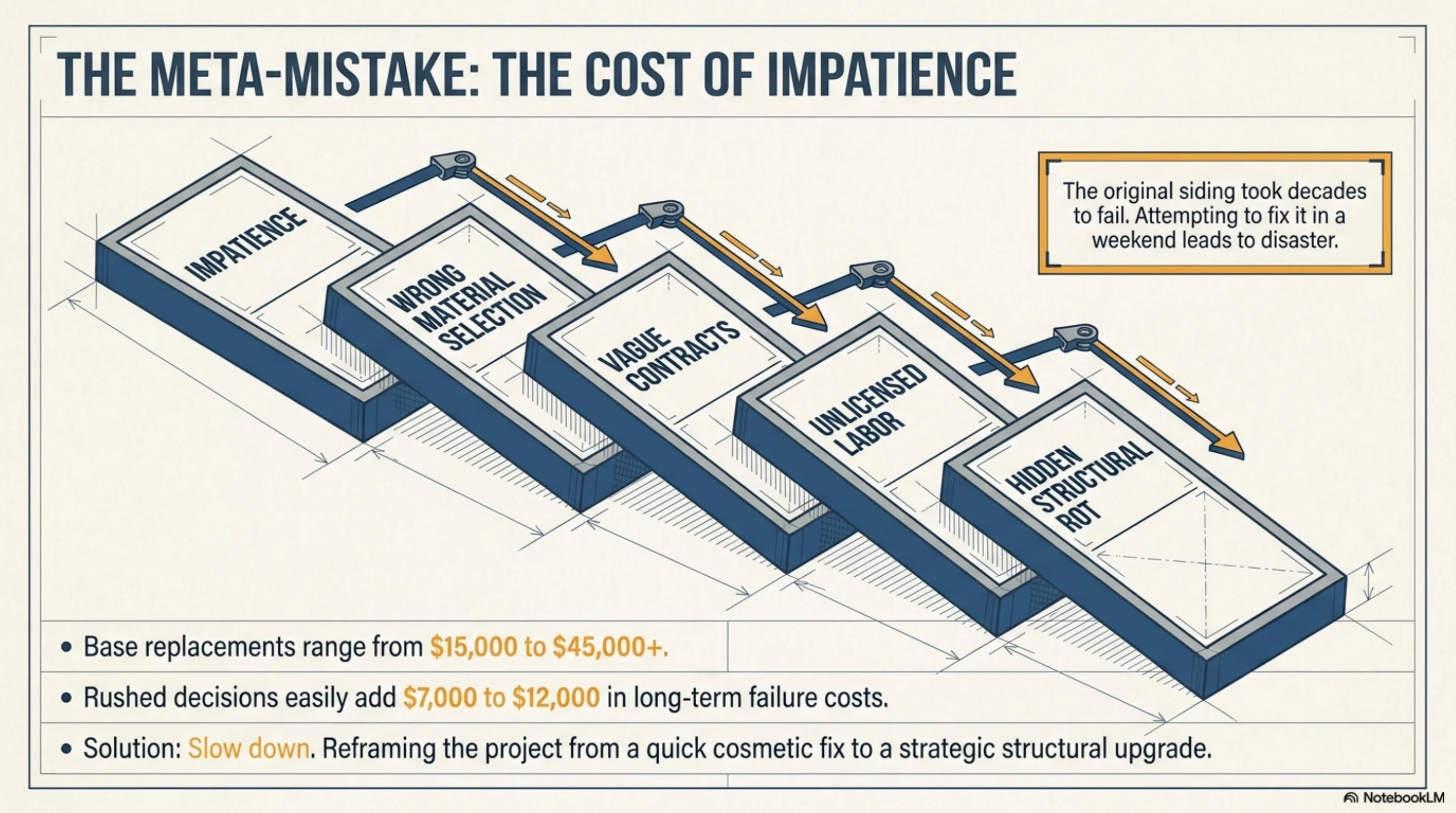
The meta-mistake behind almost every siding disaster is impatience. A homeowner sees peeling paint or a cracked panel and panics, rushing into the first available contractor's schedule. This haste is the root of all other errors. It leads to picking whatever material is in stock, not what's right for the climate. It leads to signing a vague contract just to "get things moving." It leads to skipping the tedious but essential steps of checking licenses and references. The original siding problem took years, often decades, to develop. The solution does not need to be decided in a weekend. The most effective way to save thousands of dollars and ensure a twenty-year outcome is to slow down. Dedicate four solid weeks to research, vetting, and planning. Get the samples. Make the calls. Read the contract. This deliberate, un-rushed planning phase is what separates a successful project from a costly, long-term regret.
Frequently Asked Questions about Siding in Las Vegas
Answers to the most common questions we receive from Las Vegas homeowners about their siding projects.
What's the most expensive mistake in a siding replacement?
Without question, the most expensive mistake is hiring an unlicensed and uninsured contractor. While it may seem like you're saving 10-20% upfront with a low cash bid, the financial exposure is catastrophic. If a worker gets injured on your property, you could be liable for their medical bills and lost wages, a cost that can easily run into six figures. If the contractor causes major damage to your home’s structure or a utility line, their lack of insurance means you are solely responsible for the repair costs., you have no recourse through the Nevada State Contractors Board if they perform shoddy work or abandon the job. Any warranty they offer is worthless. A close second is ignoring signs of water damage. If a contractor proposes to install new siding directly over old, soft sheathing, they are not solving the problem, just hiding it. The rot will continue to spread, leading to structural failure that can cost tens of thousands to remediate later.
How do I know if my siding contractor is padding the quote?
Identifying a padded quote requires careful analysis and comparison. First, never rely on a single quote. Always get at least three bids from licensed, reputable contractors. This gives you a baseline. If one quote is significantly higher than the others for the same scope of work and materials, it's a red flag. Second, insist on a line-item breakdown, not just a total price. A professional quote will separate costs for materials, labor, demolition, disposal, and permits. Vague lump sums like "sundries" or overly high material markups are signs of padding. You can cross-reference the material quantities and unit prices with your own research from local suppliers. Third, question any large upfront deposit requirements. While a deposit for materials is standard (typically 10-30%), a demand for 50% or more before any work begins is a major warning sign. A fair payment schedule should be tied to project milestones.
When should I walk away from a siding quote?
You should walk away immediately if the contractor exhibits any major red flags. The most critical is an inability or unwillingness to provide a valid Nevada C-3 license number and proof of liability and workers' compensation insurance. Do not proceed without verifying these yourself. Another major reason to walk away is high-pressure sales tactics. If a contractor pressures you to sign a contract on the spot, offering a "special one-day-only price," they are not confident their bid can stand up to scrutiny. A reputable professional will give you time to review the proposal. Also, reject any quote that is not provided in a detailed, written format. A verbal agreement or a price scribbled on a business card is not a contract. Finally, trust your gut. If the contractor is difficult to communicate with, dismissive of your questions, or seems unprofessional, walk away. This is a person you will be working with for weeks; poor communication from the start will only get worse.
What's the fastest way to blow a siding budget in Las Vegas?
The fastest and most common way to blow your siding budget is by failing to plan for the unknown with a contingency fund. The project's biggest cost variables are hidden behind the existing siding. When the tear-off begins, you might discover widespread dry rot in the wall sheathing from a long-term leak, extensive termite damage, or improper framing around windows that needs to be rebuilt. If you have not set aside a contingency fund of 10-15% of the total project cost, this discovery will bring the project to a halt. You will be forced to either approve a costly change order that you can't afford or leave your home exposed while you scramble to find the funds. This single oversight turns a planned renovation into a financial crisis. A proper budget isn't just the contractor's quote; it's the quote plus a 15% reserve for the inevitable surprises that old houses contain.
How long should fiber cement siding last in the Las Vegas climate?
Fiber cement siding, specifically from a top-tier manufacturer like James Hardie, is one of the most durable choices for the Las Vegas climate. When properly installed, you can expect the siding panels themselves to last 50 years or more. They are resistant to termite damage, rot, and are non-combustible, which is an advantage in a dry climate. The more important factor for Las Vegas is the finish. A standard field-painted application of acrylic latex paint might need to be refreshed every 7 to 10 years due to the intense UV exposure. However, if you opt for a factory-applied, baked-on finish like James Hardie's ColorPlus™ Technology, the finish warranty is typically 15 years against peeling, chipping, and cracking. This factory finish is applied in a controlled environment and is far more resistant to UV degradation and fading than paint applied on-site. For Las Vegas homeowners, the upfront investment in a factory finish pays for itself by eliminating at least one full repainting cycle.
Is vinyl siding a bad choice for Las Vegas?
Standard, builder-grade vinyl siding is a poor choice for Las Vegas. It does not perform well under the relentless sun and heat. Darker colored, thinner vinyl panels are prone to warping, buckling, and distortion as they absorb heat and expand and contract with the extreme temperature swings. The intense UV radiation also causes the color to fade and the material to become brittle and chalky over time, significantly shortening its lifespan compared to its performance in a milder climate. However, not all vinyl is created equal. Premium-grade, thicker vinyl panels (often.046" or thicker) with a high-quality UV-resistant top coat will perform better. Lighter colors are essential, as they reflect heat rather than absorb it. If you are considering vinyl, you must ask the contractor for the specific product specifications, including its thickness, warranty against fading, and heat distortion temperature. In general, while premium vinyl can be a viable budget option, fiber cement or engineered wood are superior long-term investments for the Las Vegas environment.
What siding color fades the least in the desert sun?
In high UV environments like Las Vegas, color fading is a major concern. Generally, lighter colors with inorganic pigments hold up the best. Shades of white, beige, light tan, and light gray are the most stable. These colors have a high Light Reflectance Value (LRV), meaning they reflect more light and absorb less heat and UV radiation, which are the primary drivers of fading. Earth tones derived from inorganic iron oxide pigments also tend to be very durable. The colors that fade the fastest are deep, vibrant organic colors. Bright reds, deep blues, dark greens, and charcoals absorb a tremendous amount of solar energy, which breaks down the chemical bonds in the pigments, causing them to fade and shift. When choosing a color, look for products that come with a specific warranty on the finish. Factory-finished products, like those from James Hardie or LP SmartSide, use advanced coatings engineered and tested for color retention and are a much safer bet than standard exterior paint.
Do I need a permit for siding replacement in Clark County?
Yes, in most cases, a building permit from the Clark County Building Department (or the specific city jurisdiction like Henderson or North Las Vegas) is required for a full siding replacement. The permit process ensures that the work meets local building codes, especially regarding the weather-resistive barrier, flashing details around openings, and proper attachment of the siding material. While some minor repairs might not require a permit, any project that involves removing and replacing the majority of the siding on your home will. A reputable, licensed siding contractor will know the specific requirements and should handle the permit application process as part of their service. A contractor who suggests skipping the permit process is a major red flag. Working without a permit can result in fines, stop-work orders, and problems when you eventually sell your home, as unpermitted work may need to be torn out and redone correctly.
Sources & methodology
How Renology builds this guide
Renology combines public permit and labor signals, supplier pricing, remodeler quote patterns, and editorial review of comparable projects. Cost references are planning ranges, not fixed bids, because site conditions, materials, access, permits, and finish level can change the final price.
- Benchmarked against the Renology Cost Index, related service guides, and the Renology Methodology.
- Reviewed for Las Vegas market context when a local market is available.
- Focused on siding scope, materials, timeline, contractor risk, and budget drivers.
Las Vegas · pre-screened
Get 3 Las Vegas siding bids in 48 hours.
Our editors already vetted Las Vegas siding contractors. Answer 4 questions and we send 3 written bids inside 48 hours, with the real price for your scope, not their inflated first-call number.
- Free, no commission
- Pre-screened locally
- Bids inside 48 hours
Takes about 60 seconds. We'll text you when bids arrive.