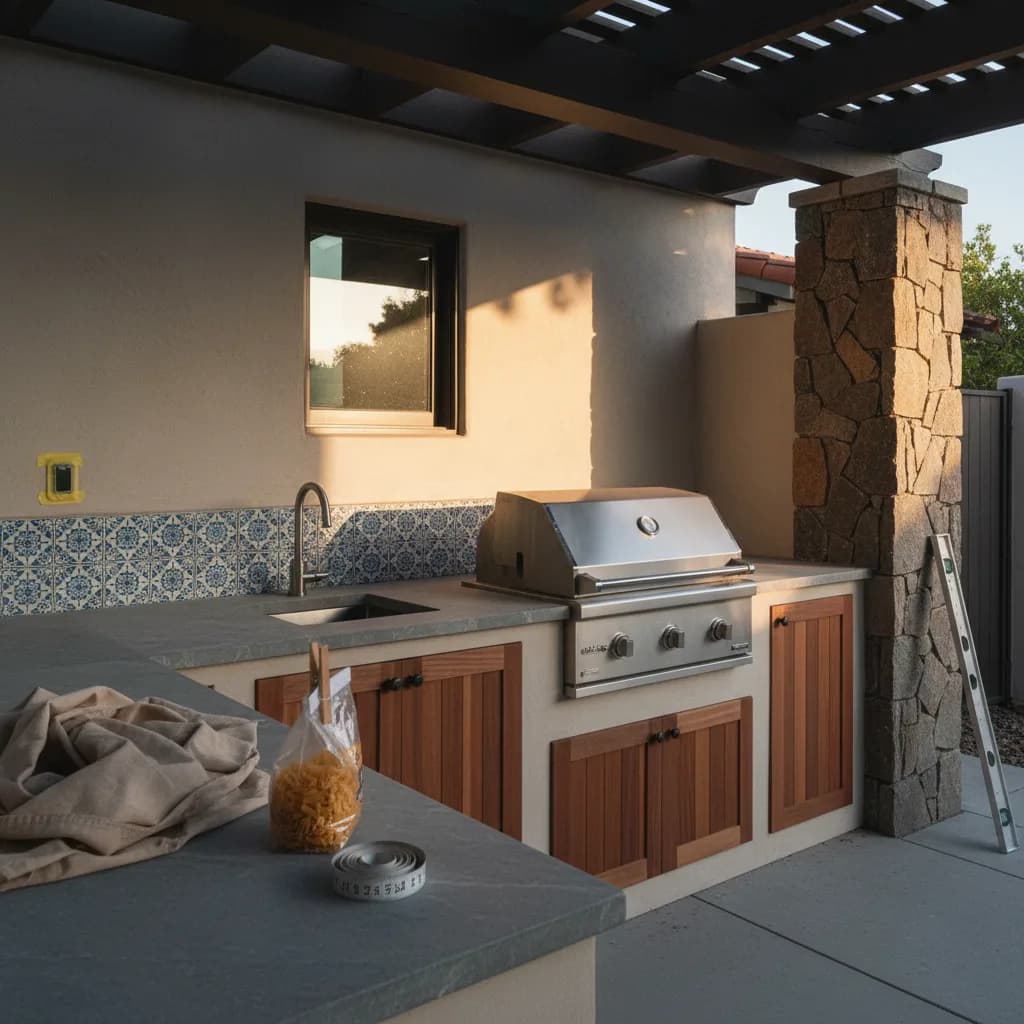
Most outdoor kitchen projects in San Francisco go over budget by $15,000 to $30,000 and finish two to four months late. The reasons are predictable, tied directly to the city's unique climate, topography, and building codes. The homeowners who stay on budget make their most critical decisions before a single shovel hits the ground. This is how they do it.
In a Nutshell
The core mistake is treating an outdoor kitchen like a simple patio accessory instead of a complex construction project. It involves gas, plumbing, electrical, and structural work, all exposed to the elements. Here's the pattern:
- The Three Most Common Mistakes: Choosing materials that can't handle coastal fog, underestimating the cost of utility runs on sloped lots, and hiring a landscaper to do a general contractor's job.
- The Counter-Move to Make This Week: Before you call a single designer, map the exact locations of your property's gas, water, and electrical lines. Knowing where they are, and where they aren't, will define your project's budget more than any appliance you choose.
The Real Cost of an Outdoor Kitchen in San Francisco
Homeowners see a $20,000 price for a prefabricated island online and anchor their expectations there. This is unrealistic for a custom, built-in project in the Bay Area. A properly permitted and constructed outdoor kitchen in San Francisco is a significant investment. The outdoor kitchen cost in San Francisco can start lower, around $25,000 to $40,000 for a simple island with a high-end grill and minimal utility work on a flat lot, typical for a refresh or a smaller condo patio space. However, most comprehensive projects are more involved.
For a fully integrated kitchen with a sink, refrigerator, extensive countertops, and significant site work, San Francisco homeowners should budget between $60,000 and $120,000+. This range accounts for the high cost of skilled labor. According to the California Department of Industrial Relations prevailing wage data for San Francisco County, specialized trades like plumbers and electricians command rates that significantly impact the total budget. The National Association of Home Builders recommends a ten to fifteen percent contingency on renovations, a figure that is essential for SF's older housing stock and complex sites.
Three modeled project scenarios for 2026, built from the Renology Cost Index and typical local scopes. These are illustrative estimates, not completed client projects:
- Noe Valley Terrace Kitchen ($72,000): A compact L-shaped kitchen on an existing deck. Included a high-end gas grill, sink, and under-counter refrigerator. The high cost was driven by reinforcing the deck structure and running new, dedicated gas and water lines from the house.
- Pacific Heights Entertainment Patio ($115,000): A larger installation with a grill, pizza oven, extensive Neolith countertops, and bar seating. The budget included a new concrete pad with seismic footings and a custom steel pergola for wind protection.
- Bernal Heights Hillside Kitchen ($155,000+): A complex project requiring a new retaining wall and significant excavation to create a level pad. Included top-of-the-line appliances, a fire pit, and extensive low-voltage lighting. Over a third of the budget went to site work and engineering before the kitchen was even started.
Mistake #1: Choosing Finishes for Napa Weather, Not Karl the Fog
Most homeowners select materials from photos taken in perpetually sunny climates. They choose porous travertine or standard 304-grade stainless steel. In San Francisco, the persistent marine layer introduces moisture and salt that accelerates decay. That stainless steel will show rust spots within a year, and the travertine will become a mildew magnet. The cost is a full replacement of finishes in five to seven years. The fix is to specify materials for a coastal environment from day one. Insist on 316 marine-grade stainless steel for all appliances and hardware. For countertops, choose ultra-compact, non-porous surfaces like Dekton or Neolith that resist moisture and staining.
Mistake #2: Underestimating Site Prep on a Sloped Lot
People budget for the visible parts: the grill, the cabinets, the countertops. They forget that in a city of hills like San Francisco, getting utilities and a stable, level surface to the desired location is often the most expensive part of the job. Most backyards in areas like the Sunset or Twin Peaks require excavation, grading, and retaining walls. The cost is an immediate budget overrun of $10,000 to $50,000 for foundational work you hadn't planned on. The fix is to get a geotechnical report and a firm quote for all site preparation, including drainage and foundation work, before you even think about appliances. This is the true foundation of your outdoor kitchen san francisco 2026 budget.
Mistake #3: Designing Around Appliances Instead of Your Space
A homeowner sees a 48-inch professional grill with a rotisserie and smoker and decides they must have it. They force the entire design to accommodate this single appliance, even if their patio is small and their budget is tight. This is backward. It leads to cramped layouts, oversized vent hoods, and unnecessary utility upgrades. The cost is a dysfunctional space that was compromised for one feature. The fix is to design the layout first, based on workflow, seating, and the unique constraints of your site. Then, select appliances that fit the scale and function of that finished design.
Mistake #4: Ignoring the Wind Tunnel on Your Patio
3 San Francisco outdoor kitchen builders, editor-screened. 4 questions.
See my 3 matchesMany San Francisco outdoor kitchens are designed without considering the wind. A beautiful dining area is built, only for the owners to discover it's unusable after 3 p.m. when the wind picks up. Flames on the grill flicker and go out. Paper napkins fly away. The cost is an expensive installation that you can only comfortably use on the rarest of calm days. The fix is to spend time in the space at different times of day before finalizing the design. Identify the prevailing wind direction and incorporate solutions like glass windscreens, strategic plantings, or even a solid wall to create a comfortable microclimate. This is a critical step for successful san francisco outdoor kitchens.
Mistake #5: Skipping Seismic Anchoring for Heavy Features
Homeowners get excited about a masonry pizza oven or a long, cantilevered concrete countertop. They assume the installer will secure it properly. In a seismically active zone, 'properly' means engineered footings and steel reinforcement tied into the foundation. Failure to do this is not just a code violation; it's a serious safety hazard. The cost is not just the repair but the potential for catastrophic failure during an earthquake. The fix is to ensure your outdoor kitchen contractor san francisco has experience with seismic codes and that any heavy element is specified on the structural plans and inspected by the city.
Mistake #6: Using Interior-Grade Materials Outdoors
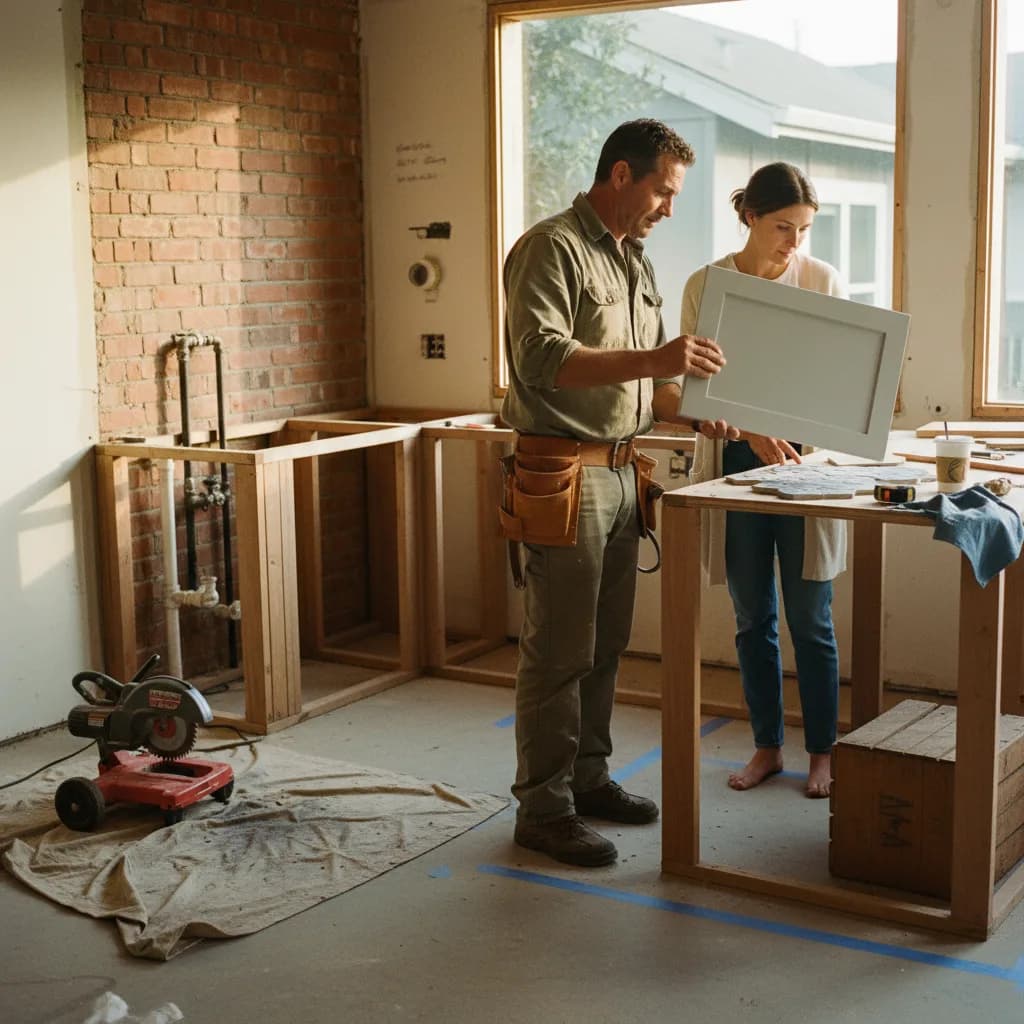
This is the classic attempt to save a few hundred dollars that costs thousands later. A contractor might suggest using a standard cabinet box because it's cheaper, or an interior-grade tile for a backsplash because the client liked the pattern. These materials are not manufactured with the adhesives, sealants, and finishes to withstand UV radiation and constant moisture. They will delaminate, warp, crack, and fade, often within the first two years. The fix is to be mercilessly specific. Verify that every single component, from the cabinet boxes (like those from NatureKast or WeatherStrong) to the grout and fasteners, is explicitly rated for permanent outdoor exposure.
Mistake #7: Hiring the Wrong Type of Pro
Most homeowners think of an outdoor kitchen as a landscaping project. They hire a landscape designer or a paving contractor to manage it. This is the single most common path to failure. These professionals are experts in plants and hardscaping, not utility runs, structural footings, and city permits for gas lines. The cost is improper installation, failed inspections, and rework. The fix is to hire a licensed general contractor who specializes in outdoor living spaces. Vet them properly. Get three quotes. Check three references. Visit one finished job before signing. A qualified contractor will also manage the entire permitting process, which you can learn more about in our San Francisco Outdoor Kitchen Permit Playbook.
Renology Take
The meta-mistake that enables all the others is a failure of categorization. Homeowners categorize an outdoor kitchen as a piece of high-end garden furniture. It is not. An outdoor kitchen is a small, exposed, utility-dense building project. It has the same components as a home addition: a foundation, structural walls, plumbing, gas, and high-voltage electrical systems. When you frame the project this way, the need for an architect or experienced designer, a general contractor, and a solid permitting strategy becomes obvious. Thinking of it as landscaping is the fastest way to get a $100,000 bill for a space that doesn't work. Treat it like the serious construction it is, and you will sidestep the most expensive mistakes.
Frequently Asked Questions about Outdoor Kitchens
What's the most expensive mistake in an outdoor kitchen project?
The most expensive mistake is underestimating site work, especially in a city like San Francisco. Homeowners focus their budget on the visible elements like grills and countertops, but the real costs are often buried in the ground. On a sloped lot, creating a level, stable foundation can require extensive excavation, grading, and retaining walls, which can easily add $20,000 to $50,000 before a single cabinet is installed. Similarly, long or complex utility trenches for gas, water, and electricity add thousands in labor and materials. A surprise discovery, like hitting bedrock or needing to reroute main sewer lines, can halt a project and require a complete budget overhaul. Always allocate a significant portion of your initial budget and contingency to site preparation.
How do I know if my contractor is padding the quote?
A padded quote often hides in vague descriptions and large, unexplained allowances. A trustworthy quote is highly detailed. It will break down costs by line item: demolition, site prep, foundation, framing, each utility run, and specific appliance model numbers. Look for lump-sum figures for 'finishes' or 'labor' without a detailed breakdown; this is a red flag. Question large 'allowances'. An allowance for a countertop should specify the price per square foot it's based on. If a contractor resists providing this level of detail or pressures you to sign a contract based on a simple, one-page estimate, they are likely building in buffer for their own protection, which you will pay for. A professional is confident in their numbers and can explain every single charge.
When should I walk away from an outdoor kitchen quote?
Walk away immediately if the contractor is not a licensed general contractor (a C-27 landscape contractor license is insufficient for this scope of work). Walk away if they cannot provide proof of liability and workers' compensation insurance. Be very wary of a quote that is dramatically lower than all the others; this often indicates they've missed a major component of the scope, are using inferior materials, or are financially unstable. Also, walk away if the contractor is evasive about their past clients or refuses to let you visit a completed project. Finally, any high-pressure sales tactics, like a 'special price' that's only good if you sign today, are a clear signal to find someone else.
What's the fastest way to blow an outdoor kitchen budget?
The fastest way is through change orders after construction has begun. Every time you change your mind about a material, an appliance location, or the layout, it creates a ripple effect. The contractor has to stop work, re-quote the new scope, order different materials (often with rush fees), and reschedule subcontractors. This not only adds direct costs but also creates expensive delays. The second fastest way is discovering that your desired appliances require utility upgrades you didn't plan for, such as a larger gas line or a new dedicated electrical circuit. Decide on every single detail, from the cabinet pulls to the countertop material, and sign off on them before the project starts. Lock in your scope to protect your budget.
Sources & Methodology
Renology reviews public permit and labor signals, supplier pricing, remodeler quote patterns, comparable projects, the Renology Cost Index, and the Renology Methodology. Cost references are planning ranges for San Francisco outdoor kitchen projects, not fixed bids.
[{"name": "San Francisco Department of Building Inspection (DBI)", "date": "2026"}, {"name": "National Association of Home Builders (NAHB) Remodeling Market Index", "date": "Q4 2025"}, {"name": "Brown Jordan Outdoor Kitchens, 'Coastal Environments Material Guide'", "date": "2025"}, {"name": "California Department of Industrial Relations, Prevailing Wage Determinations", "date": "2026"}, {"name": "Dekton, 'Outdoor Collection Technical Specifications'", "date": "2025"}, {"name": "RSMeans Construction Cost Data", "date": "2026"}]
Frequently Asked Questions
What's the most expensive mistake in an outdoor kitchen project?
How do I know if my contractor is padding the quote?
When should I walk away from an outdoor kitchen quote?
What's the fastest way to blow an outdoor kitchen budget?
Ready to find a pro?
Tell us what you are planning and where. A Renology advisor can help you explore contractor matching.
Find a Pro- Free for homeowners
- Licensed, vetted local contractors
- No obligation to hire
Sources
- San Francisco Department of Building Inspection (DBI)
- National Association of Home Builders (NAHB) Remodeling Market Index
- Brown Jordan Outdoor Kitchens, 'Coastal Environments Material Guide'
- California Department of Industrial Relations, Prevailing Wage Determinations
- Dekton, 'Outdoor Collection Technical Specifications'
- RSMeans Construction Cost Data
Follow Renology on Google
Choose Renology as a preferred source and our guides show up more often in your Google results, including Top Stories and AI Overviews.