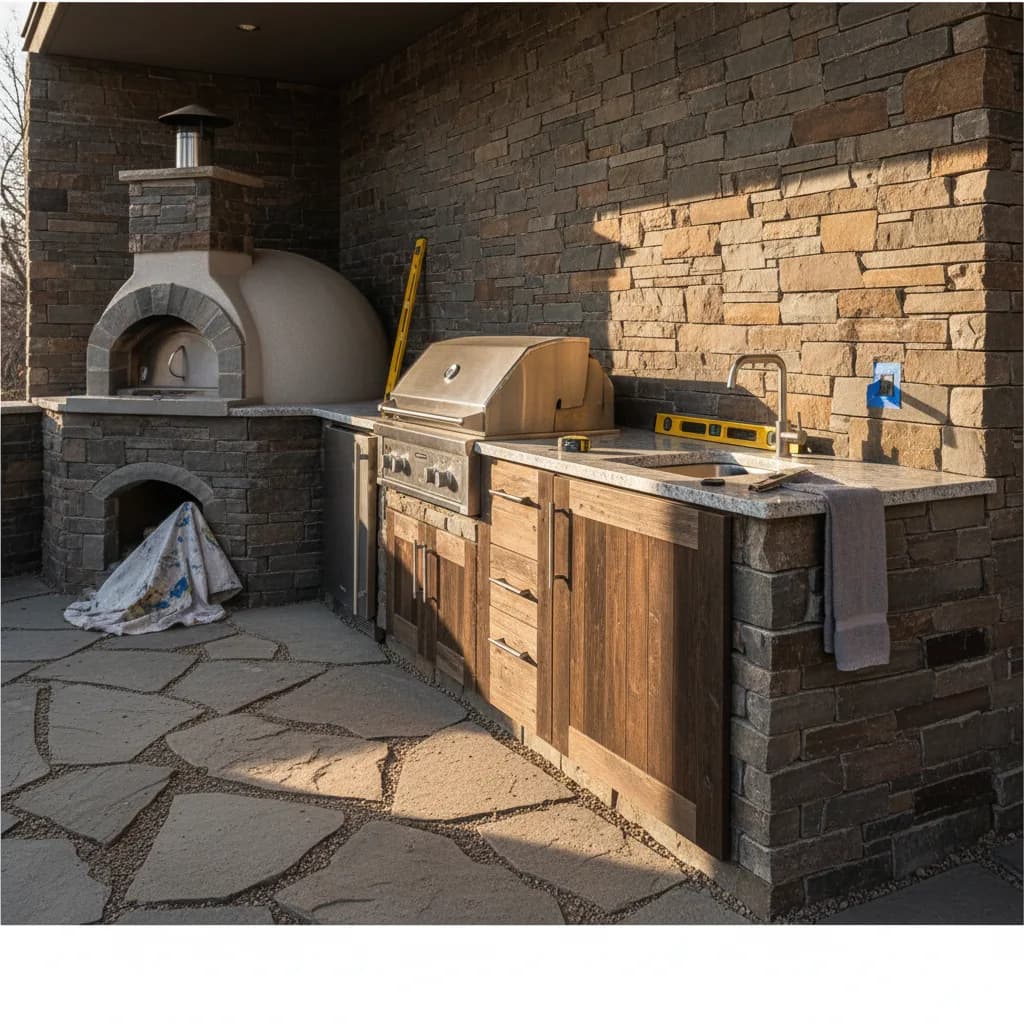
An outdoor kitchen remodel in Denver gone wrong doesn't just sting; it costs. Budget overruns aren't a few hundred dollars for a different faucet. They are five-figure mistakes, driven by rework, poor material choices, and overlooked site prep. For a project with a baseline budget of $40,000, cost overruns can easily exceed $10,000, delaying completion by months and turning a dream upgrade into a financial drain.
In a Nutshell
Most Denver outdoor kitchen projects go over budget by 20-30%. The primary mistakes are predictable: selecting materials unsuited for Colorado's freeze-thaw cycle, underestimating the cost of utility runs, and hiring an unqualified contractor. The single most expensive error is ignoring soil and foundation requirements, leading to catastrophic structural failure. Your counter-move this week: get a soil report before you solicit a single bid.
Mistake #1: Ignoring Denver's Freeze-Thaw Cycle
Most homeowners choose countertops and veneers based on indoor aesthetics. This is a fundamental error. Materials that perform beautifully inside, like certain granites or unsealed concrete, will spall, crack, and delaminate when subjected to Denver's relentless freeze-thaw cycles. The constant expansion and contraction of moisture destroys porous materials from within. The fix is to specify materials rated for extreme weather. Choose porcelain pavers over standard tile, select dense non-porous stones like quartzite, or use marine-grade polymers like Dekton. The Brown Jordan Outdoor Kitchens' 'Material Durability Report' is clear: material selection is not an aesthetic choice, it's an engineering one.
Mistake #2: Underestimating Utility Runs
Homeowners see an empty spot in the yard and assume running gas, water, and electricity will be straightforward. This assumption is expensive. Trenching across an established lawn, especially through Denver's hard clay soil, is labor-intensive. If lines need to run from the opposite side of the house, costs can balloon by $5,000 to $8,000 for trenching, conduit, and licensed plumber and electrician fees alone. In older neighborhoods like Washington Park or Capitol Hill, tying into aging infrastructure adds another layer of complexity. The fix is to site your outdoor kitchen as close to the home's existing utility stubs as possible. Get a firm, itemized quote for all utility work before signing a contract.
Mistake #3: Choosing the Wrong Contractor
Many people select an outdoor kitchen contractor in Denver based on the lowest bid. This is the fastest path to disaster. A low bid often signals an unlicensed operator, inadequate insurance, or someone who doesn't understand the full scope of work, leading to endless change orders. The contractor who builds a beautiful deck may not be qualified to engineer footings and run gas lines. The fix is a non-negotiable vetting process. Get three quotes. Check three references. Visit one finished job before signing.
Mistake #4: Skimping on Appliances and Storage
3 Denver outdoor kitchen builders, editor-screened. 4 questions.
See my 3 matchesTo cut costs, some homeowners try to use indoor-rated mini-fridges or build cabinets from standard exterior-grade wood. This is a short-sighted saving. Residential appliances lack the weather-sealing and solid components to survive outside; they often fail within one or two seasons. Wood cabinets, even from cedar or redwood, will warp and rot without obsessive maintenance. The fix is to budget for equipment designed for the purpose. This means UL-rated outdoor appliances and storage solutions made from 304-grade stainless steel, powder-coated aluminum, or marine-grade high-density polyethylene (HDPE).
Mistake #5: Neglecting Proper Footings
Most homeowners assume their kitchen can be built on an existing concrete patio. This is the single most costly mistake. Denver is notorious for its expansive clay soil, which swells when wet and shrinks when dry, causing massive ground movement. A standard four-inch patio slab will heave and crack under this pressure, destroying your entire investment. The fix is to build your kitchen on a proper foundation. This means a monolithic slab with grade beams or concrete caissons drilled below the local frost line of 36 inches to provide a stable base that moves independently of the surrounding soil.
Mistake #6: Forgetting About Permits
Many believe an outdoor kitchen is just 'landscaping' and doesn't require city approval. This is incorrect and risky. Any project involving new gas lines, electrical circuits, or plumbing requires permits from Denver's Community Planning and Development department. Building without them can result in stop-work orders, fines, and being forced to tear out finished work. The fix is to confirm permit requirements before you start. Your contractor should handle the submission, but you are ultimately responsible. Our Denver outdoor kitchen permit playbook for 2026 details the entire process.

Mistake #7: Designing for Sun, Not Shade
Homeowners get caught up in layouts and finishes, forgetting how the space will actually feel at 3 p.m. in July. Denver's high-altitude sun is intense. An uncovered, west-facing kitchen will be unusable for half the day, with stainless steel surfaces becoming dangerously hot and guests squinting into the glare. The fix is to integrate shade into the initial design. This could be a solid-roof pergola, a retractable awning, or simply siting the kitchen to take advantage of afternoon shade from the house or mature trees. Planning for shade and prevailing winds is as critical as the appliance layout.
Renology Take
The meta-mistake behind almost every outdoor kitchen disaster is a failure of process. Homeowners fall in love with a grill at the home show or a picture on social media and try to build a project around a single component. This is backward. It's like buying a transmission before you've designed the car. The result is a collection of expensive parts that don't form a functional, durable system. The real solution is to hire a dedicated outdoor kitchen designer or a design-build firm first. A comprehensive plan, including site analysis, material specifications, utility mapping, and a full set of construction documents, is the only way to get an accurate budget and a finished product that lasts. Don't buy a single thing until you have a complete plan on paper.
Sources & Methodology
See the Renology Methodology for how sources are reviewed, ranges are normalized, and planning-data limits are handled.
- Brown Jordan Outdoor Kitchens, "Material Durability Report, 2025"
- Colorado Department of Labor and Employment, "Denver-Aurora-Lakewood MSA Occupational Employment and Wage Statistics, 2025"
- National Association of Home Builders (NAHB), "Remodeling Market Index (RMI), Q4 2025"
- City of Denver, Community Planning and Development, "Residential Construction & Permitting Guidelines, 2026"
- Renology proprietary data from 2024-2026 outdoor kitchen projects in the Denver metro area.
Frequently Asked Questions
What's the most expensive mistake in a Denver outdoor kitchen?
How do I know if my contractor is padding the quote?
When should I walk away from a quote?
What's the fastest way to blow an outdoor kitchen budget?
Denver · pre-screened
Get 3 Denver outdoor kitchen bids in 48 hours.
Our editors already vetted Denver outdoor kitchen builders. Answer 4 questions and we send 3 written bids inside 48 hours, with the real price for your scope, not their inflated first-call number.
- Free, no commission
- Pre-screened locally
- Bids inside 48 hours
Takes about 60 seconds. We'll text you when bids arrive.
Sources
- Brown Jordan Outdoor Kitchens, "Material Durability Report, 2025"
- Colorado Department of Labor and Employment, "Denver-Aurora-Lakewood MSA Occupational Employment and Wage Statistics, 2025"
- National Association of Home Builders (NAHB), "Remodeling Market Index (RMI), Q4 2025"
- City of Denver, Community Planning and Development, "Residential Construction & Permitting Guidelines, 2026"
- Renology proprietary data from 2024-2026 outdoor kitchen projects in the Denver metro area.