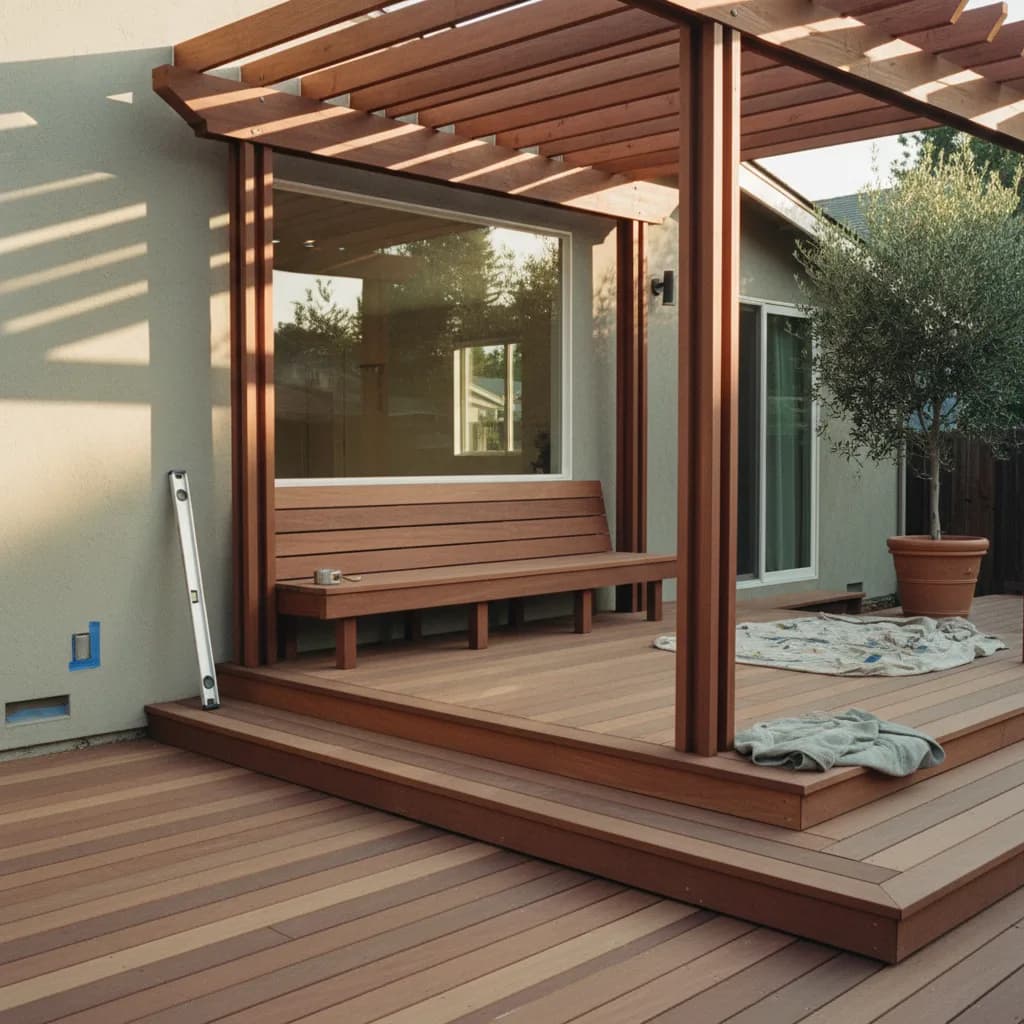
It’s not uncommon for decks and pergola projects in Sacramento to run twenty to thirty percent over budget, adding weeks of delay and frustration. A $30,000 project quickly becomes a $39,000 project. The reasons are predictable, and they almost always trace back to a handful of critical errors made before a single post is set. The homeowners who stay on budget decide on the details before construction starts.
In a Nutshell
Most Sacramento deck and pergola projects overrun their budgets due to predictable planning failures, primarily underestimating our climate's impact on materials and hiring the wrong contractor. These missteps can easily add $10,000 or more in premature repair costs. Your first move, before getting a single quote, should be understanding your property's specific soil conditions.
Key Project Numbers
- Typical Budget Overrun: 15-30%
- Average Cost Split (Labor/Materials): 55% Labor / 45% Materials
- Recommended Contingency Fund: 10-15%
- Average Lifespan of Wrong Materials: 3-5 years
Mistake #1: Underestimating Sacramento's Climate
Most homeowners choose deck materials based on photos they see online. This is a mistake. Sacramento's climate is brutal on exterior finishes. The intense, dry summer heat and high UV exposure will warp, crack, and fade materials that perform perfectly well in milder climates. That cheap pine or low-grade composite decking looks great for about one season, then it starts to fail. The fix is choosing materials specifically for punishing heat. This means specifying heat-resistant composites with superior capping, like Trex Transcend Lineage or TimberTech's Advanced PVC line, which are designed to stay cooler. For wood, only dense hardwoods like Ipe or a properly maintained redwood can stand up to the Central Valley sun. For pergolas, consider powder-coated aluminum like Alumawood, which won't warp or require repainting. In many parts of the region, including Folsom and El Dorado Hills, you're also in a Wildland-Urban Interface (WUI) zone. Cal Fire's defensible space guidelines require ignition-resistant materials, making this not just a durability issue, but a safety and compliance one.
Mistake #2: Ignoring Our Expansive Clay Soil
Homeowners assume the ground beneath their deck is stable. The contractor digs standard footings, and the project moves on. This is a five-figure error in the making. Much of the Sacramento Valley is built on expansive clay soil, which swells dramatically when wet and shrinks when it dries. This constant movement exerts immense pressure on concrete piers, causing them to heave and crack. An unstable foundation means a warped, unsafe deck. A total rebuild is the only solution. The fix is to treat the foundation as the most critical part of the build. Before you design the deck, get a basic soil assessment. Insist your contractor digs deeper and wider footings than the bare minimum code requires, often using helical piles for more stability. This is non-negotiable in neighborhoods known for soil movement like Land Park and parts of Carmichael.
Mistake #3: Hiring the Wrong Contractor
The most common mistake is picking a contractor based on the lowest price or earliest availability. A suspiciously low bid for decks and pergolas in Sacramento isn't a deal; it's a warning sign. It often means the contractor is cutting corners on things you can't see until it's too late: inadequate flashing against the house leading to rot, using cheaper galvanized fasteners that will rust and fail instead of stainless steel, or skipping the permit process entirely. The fix is a rigorous vetting process. Get three quotes. Check three references. Visit one finished job before signing. Verify their CSLB license is active and they carry adequate insurance. A professional `decks pergola contractor sacramento` will provide a detailed, itemized bid that specifies every material, not a one-page estimate with a single number.
Mistake #4: Skimping on Materials to 'Save' Money
3 Sacramento deck builders, editor-screened. 4 questions.
See my 3 matchesThe thinking is simple: use pressure-treated pine for the decking surface to lower the initial cost. This is a classic false economy. Standard pressure-treated lumber splinters, warps, and checks horribly in Sacramento's dry heat. You might save a few thousand dollars upfront, but you're committing yourself to sanding and sealing it every single year, and you'll likely be replacing cupped boards within five years. The initial savings are quickly erased by maintenance costs and a shorter lifespan. The fix is to invest in the right materials for the right application. Use pressure-treated lumber for the unseen substructure, where it belongs. For the surfaces you see and walk on, invest in a high-performance composite, PVC, or a durable hardwood. The ten-year cost of ownership is always lower.
Mistake #5: Starting Work with a Vague Scope
Many projects begin with a loose verbal agreement and a sketch on a napkin. This is the fastest way to blow your budget. Every detail left undecided is a future change order, and every change order adds cost and delays the timeline. "We'll figure out the railing style later" turns into a two-week delay and a $2,000 upcharge. This is how the `decks pergola sacramento cost` balloons. The fix is to lock in every single decision before the first day of work. Your contract should include a detailed plan specifying dimensions, materials by brand and color (e.g., Benjamin Moore Arborcoat, solid stain in Black), fastener types, and lighting placement. This detailed scope is your primary tool for keeping the project on track and on budget. It's also required for your permit application. You can learn more by reading our Sacramento decks and pergolas permit playbook for 2026.
Mistake #6: Misunderstanding Permit Requirements
Homeowners often assume that if a deck is low to the ground or a pergola isn't attached to the house, no permit is needed. This assumption is almost always wrong in Sacramento County. Most outdoor structures, regardless of size, require a permit to ensure they meet safety and setback requirements. A contractor who says, "We can do it cheaper without a permit," is not doing you a favor. They are exposing you to significant risk. If you're caught, you face fines, a tear-down order, and major headaches when you try to sell your home. The fix is to assume you need a permit from day one. Contact the county building department yourself to confirm the requirements for your project. The contractor should manage the submission process, but the legal responsibility is yours. A proper permit ensures the project is inspected for safety at critical stages.

Mistake #7: Focusing Only on the Upfront Cost
The final mistake is looking only at the initial price tag. A beautiful redwood deck in East Sacramento is often less expensive to install than a premium composite deck. But the analysis can't stop there. That redwood deck will require professional cleaning and sealing every one to two years, a service that costs $600 to $1,200. Over a decade, that's potentially $12,000 in maintenance costs, not including board replacements. The composite deck requires only occasional soap-and-water cleaning. The fix is to calculate the total cost of ownership over at least ten years. Compare the upfront cost of different materials against their long-term maintenance needs. A higher initial investment in low-maintenance materials like composite or aluminum often results in a lower overall cost and saves you dozens of weekends of work.
Understanding Decks Pergola Sacramento Costs in 2026
A typical deck and pergola project's cost can vary widely, but most projects start at around $15,000 for a simple deck and can exceed $80,000 for complex, multi-level structures with high-end materials. The final price is driven by size, materials, and labor costs, which are significant in this market. According to the California Department of Industrial Relations' prevailing wage data for Sacramento County, skilled carpentry labor is a primary budget component. A typical split is 55% for labor and 45% for materials. The National Association of Home Builders recommends a ten to fifteen percent contingency on renovations in homes over thirty years old; we recommend it for all major outdoor projects.
Three modeled project scenarios for 2026, built from the Renology Cost Index and typical local scopes. These are illustrative estimates, not completed client projects:
- The East Sacramento Refresh ($18,000): A 250-square-foot project involving the removal of an old wood deck and replacement with new composite decking (Trex Enhance) and standard aluminum railings on the existing structure.
- The Folsom Entertainer ($42,000): A new 400-square-foot, single-level Ipe hardwood deck with a matching 12x12-foot attached cedar pergola, including picture-frame border and integrated low-voltage lighting.
- The Granite Bay Overhaul ($85,000+): A 600-square-foot multi-level PVC deck (TimberTech Azek) with custom glass railings, a large Alumawood pergola, built-in outdoor kitchen hookups, and extensive foundation work on a sloped lot.
Sources & Methodology
See the Renology Methodology for how sources are reviewed, ranges are normalized, and planning-data limits are handled.
Cost ranges in this guide draw on the following named industry sources, public agency datasets, and Renology editorial research.
- NAHB/Westlake Royal Remodeling Market Index (Q1 2026)
- California Department of Industrial Relations, Prevailing Wage Determinations (2026)
- Principia Consulting, 'Wood & Composite Decking Market Report' (2025)
- Cal Fire, 'Defensible Space Guidelines' (2025)
- Sacramento County Building Permits & Inspection Department, 'Deck Construction Guide' (2025)
Renology Take
The meta-mistake behind almost every failed deck project is impatience. Homeowners are understandably eager to get to the finish line and enjoy their new outdoor space. This rush leads directly to cutting corners in the planning phase. They hire the first available contractor, not the best one. They pick materials from a brochure without testing them in local sunlight. They start demolition without a final, detailed plan. All the costly mistakes flow from this initial haste. The fix is a mental shift. Treat the design and planning phase as the most important part of the project. A slow, methodical, and detailed plan is the only way to guarantee a fast, predictable, and on-budget build. Spend three months planning to save six months of chaos.
Frequently Asked Questions
What's the most expensive mistake in a Sacramento deck build?
How do I know if my contractor is padding the quote?
When should I walk away from a decks and pergola quote?
What's the fastest way to blow a decks and pergola budget?
Sacramento · pre-screened
Get 3 Sacramento deck bids in 48 hours.
Our editors already vetted Sacramento deck builders. Answer 4 questions and we send 3 written bids inside 48 hours, with the real price for your scope, not their inflated first-call number.
- Free, no commission
- Pre-screened locally
- Bids inside 48 hours
Takes about 60 seconds. We'll text you when bids arrive.
Sources
- NAHB/Westlake Royal Remodeling Market Index
- California Department of Industrial Relations, Prevailing Wage Determinations
- Principia Consulting, 'Wood & Composite Decking Market Report'
- Cal Fire, 'Defensible Space Guidelines'
- Sacramento County Building Permits & Inspection Department, 'Deck Construction Guide'