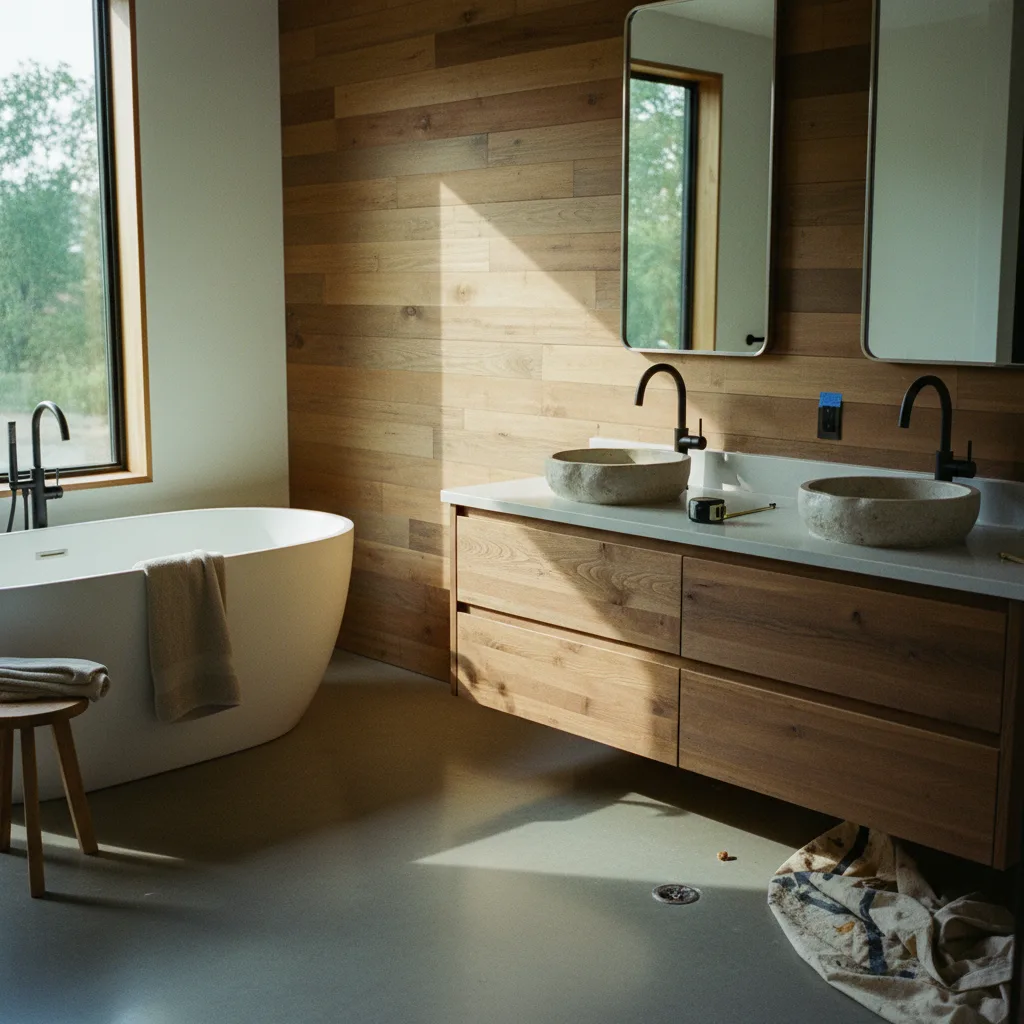
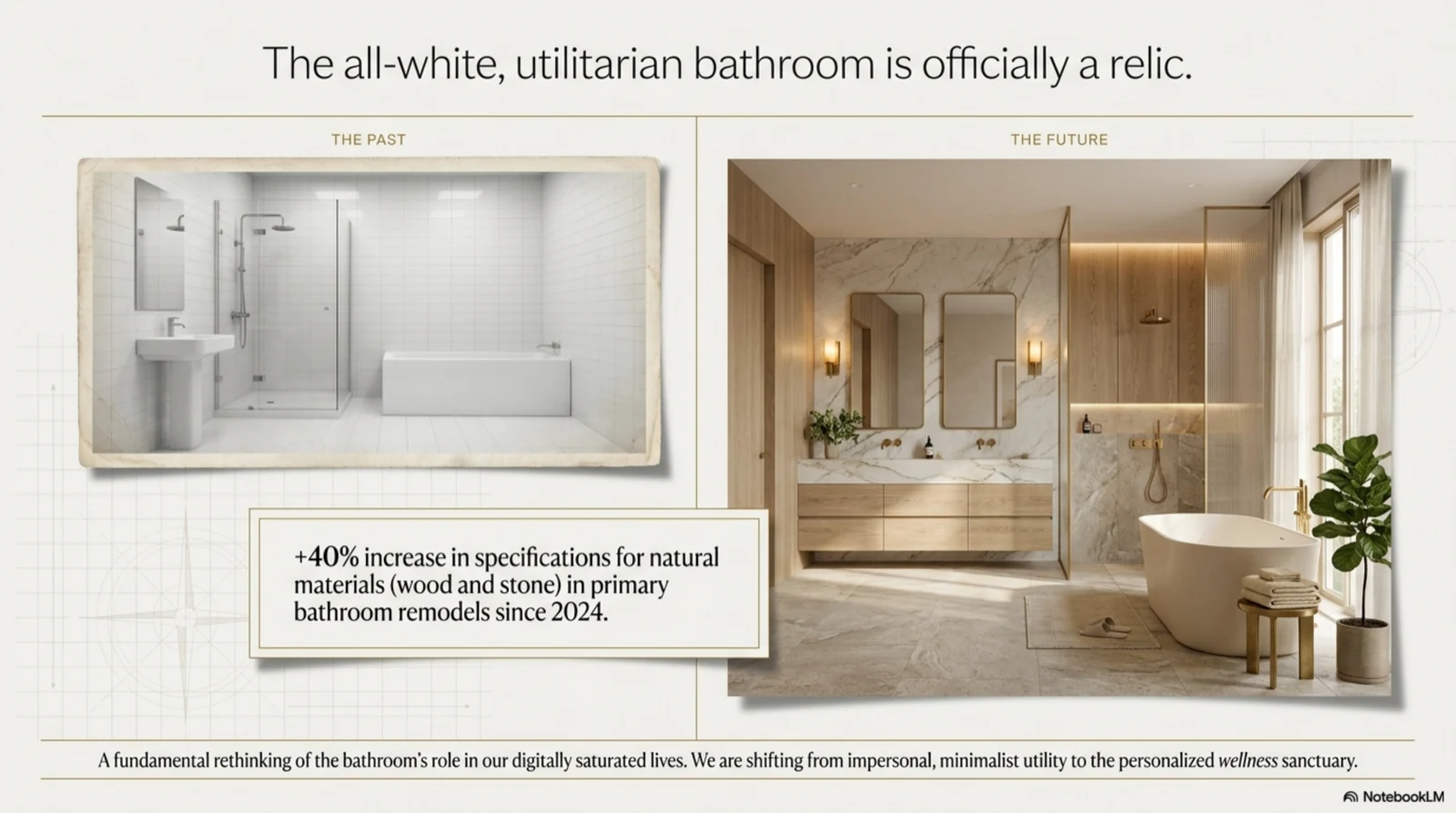
The all-white, hyper-minimalist bathroom is officially a relic. Across the Pacific Northwest, a new design ethos is taking hold, one defined by warmth, texture, and personal sanctuary. We're seeing a nearly forty percent increase in specifications for natural materials like wood and stone in primary bathroom remodels since 2024. This isn't just a cosmetic shift; it's a fundamental rethinking of the bathroom's role in our homes, moving it from a purely utilitarian space to a vital wellness retreat.
In a Nutshell
- The Theme: Bathrooms are becoming personalized wellness sanctuaries. The focus is on natural materials, tactile surfaces, and lighting that soothes, a direct response to our digitally saturated lives.
- The Big Three: The curbless wet room for smooth accessibility; rift-cut white oak vanities for organic warmth; and unlacquered brass fixtures that add a living, evolving finish.
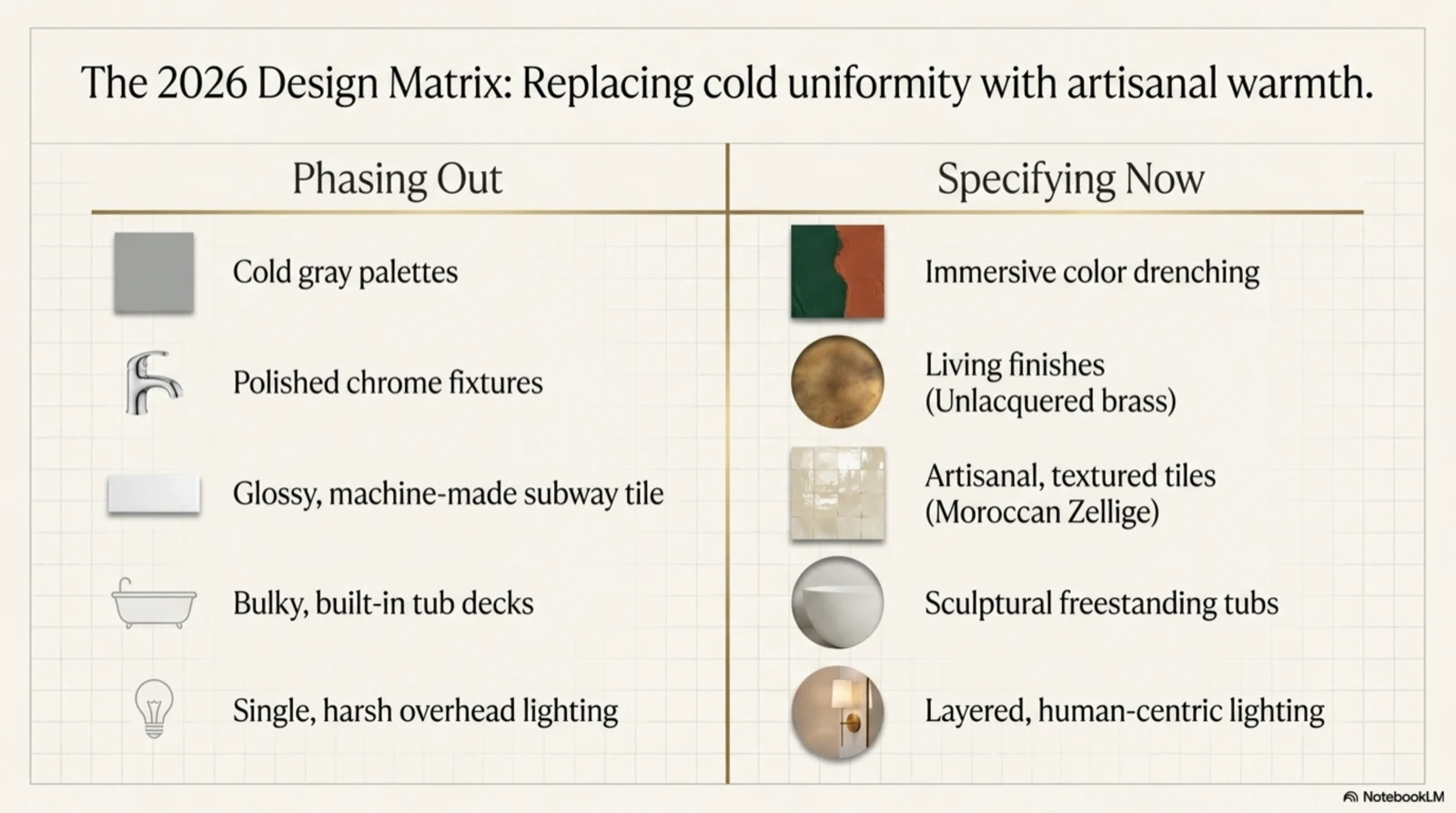
- What's Being Replaced: Cold gray palettes, polished chrome, glossy subway tile, and bulky, built-in tub decks are all on their way out.
- What's Next: Deeper integration of smart home technology for lighting and water temperature, biophilic elements like interior plant walls, and a renewed appreciation for locally sourced, artisanal materials.
Trend 1: The Curbless Wet Room is the New Standard
The distinction between the shower and the rest of the bathroom is dissolving. Curbless, open-concept wet room designs are becoming the default for primary bathroom renovations, creating an unbroken plane that enhances both accessibility and the sense of space. Data from Seattle-area tile distributors shows a forty percent year-over-year increase in linear drain sales, the key component for this design. This is one of the most significant bathroom design trends we've seen in a decade. High-end remodels in Laurelhurst and Bellevue's Bridle Trails are leading the charge, but the approach is now common in mid-range projects in Ballard and Tacoma. The curbless shower design is more than an aesthetic choice; it’s a long-term investment in universal design that will become a baseline expectation for buyers.
Trend 2: Color Drenching Replaces the Accent Wall
The tentative accent wall is over. In its place, designers are using a technique called color drenching, where walls, ceiling, trim, and even the vanity are enveloped in a single, saturated hue. This creates a deeply immersive and cohesive atmosphere. Benjamin Moore's Seattle Design Center reports that deep greens like Regent Green, rich terracottas, and moody blues are outselling traditional off-whites for full-room applications for the first time in over a decade. This confident use of color is appearing in design-forward homes in Portland's West Hills and Seattle's Madrona neighborhood. It's a bold move, but one that signals a shift toward more personal, expressive interiors that will define Pacific Northwest bathroom design for years to come.
Trend 3: Rift-Cut White Oak Vanities are Ubiquitous
Rift-cut white oak is the new white. The floating, flat-front vanity in this warm, straight-grained wood has officially dethroned the painted shaker cabinet as the cornerstone of contemporary bathroom design. Two of the largest custom cabinet shops in the Puget Sound area, including Kerf Design, report that natural and light-stained white oak now constitute over sixty percent of new bathroom vanity orders for 2026 delivery. Its appeal is its versatility; it pairs equally well with dark, moody colors or light, airy palettes. You can see this trend in Queen Anne historic renovations, new construction in Bend, Oregon, and everything in between. This is the foundational material of the current era, prized for its organic texture and clean, modern lines.
Trend 4: Zellige and Textured Tiles Add Artisanal Depth
3 Pacific Northwest bathroom remodelers, editor-screened. 4 questions.
See my 3 matchesPerfection is no longer the goal. Homeowners are embracing tiles with inherent imperfections, like Moroccan Zellige, which offer subtle variations in color, texture, and sheen. These tiles bring a human, artisanal quality to shower walls and backsplashes. Premier showrooms like Ann Sacks and Pratt + Larson in Portland are highlighting these tactile tiles, citing a strong client demand for materials with character over machine-made uniformity. The way their irregular surfaces catch the soft afternoon Pacific Northwest light is unmatched. We are seeing this layered look in projects on Bainbridge Island and in Lake Oswego, where designers use it to create a rich, storied feel. This is a lasting shift away from flat, glossy surfaces towards materials that celebrate the hand of the maker.
Trend 5: Unlacquered Brass is the Dominant Metal
The living finish of unlacquered brass is the metal of the moment. Unlike sealed finishes, it develops a unique patina over time, darkening and changing with use. This appeal of graceful aging has made it the preferred choice for faucets, shower hardware, and lighting. Conversations with dealers for Waterworks and Kallista confirm that unlacquered and aged brass finishes are now outselling polished nickel and chrome combined in the custom home market. Its warmth complements the natural wood and stone prevalent in current bathroom trends 2026. This finish is being specified in everything from historic Craftsman remodels in Tacoma to modern farmhouses in the Willamette Valley. It's a clear signal of a broader desire for authentic materials that tell a story.
Trend 6: Integrated, Human-Centric Lighting is Key
A single, harsh overhead light is a design crime. The best 2026 bathroom design trends focus on layered lighting schemes that are both functional and atmospheric. Following NKBA guidelines, designers are implementing three essential layers: ambient light from ceiling fixtures, task lighting at the vanity, and accent lighting for architectural details. This means vertical sconces at eye level to eliminate shadows, combined with discreet, waterproof 2700K LEDs in shower niches. The goal is to create a warm, inviting glow, not a sterile lab. Mercer Island and Hunts Point projects are integrating sophisticated systems from Lutron that allow for dimming and scene-setting. The next step, already appearing in high-end projects, is smart lighting that adjusts its color temperature to support circadian rhythms, a crucial feature in a region with dramatic seasonal light changes.
Trend 7: The Freestanding Tub Makes a Sculptural Statement
The tub is no longer just for bathing; it’s a piece of art. Once confined to built-in alcoves, soaking tubs are now being treated as sculptural centerpieces that anchor the entire room. Renology's Project of the Day data reveals a fifty percent increase in freestanding tub specifications in primary bathrooms over 150 square feet since 2024. This trend requires space, making it a luxury feature, but its visual impact is undeniable. In the spacious primary suites of Sammamish and West Seattle, we see elegant tubs from brands like Victoria + Albert or Badeloft positioned to take in a view or sit under a statement chandelier. While not for every project, the freestanding tub remains a powerful symbol of the bathroom as a personal retreat.
Trend 8: Slab Stone Reaches for the Ceiling
Grout lines are disappearing. In their place, designers are specifying full-height stone or porcelain slabs for shower walls and the areas behind vanities. This creates a dramatic, monolithic look that is both luxurious and incredibly low-maintenance. Stone suppliers like Pental Surfaces and Caesarstone have seen a surge in demand for large-format slabs intended for these vertical applications. The effect of a bookmatched slab of Calacatta Viola marble or a richly veined quartzite is breathtaking. This is a high-budget choice, currently most common in Medina and Clyde Hill homes. However, as the quality and scale of porcelain slabs improve, this trend will become more accessible, offering the visual impact of stone without the maintenance or cost.
Renology Take
The common thread connecting these Pacific Northwest bathroom design trends is a deep-seated desire for sanctuary. After a decade of cool, minimalist design that often felt impersonal, we are collectively craving warmth, texture, and authenticity in our most private spaces. This isn't about replicating a commercial spa; it's about creating a personal one. The emphasis on natural wood, living metals, and artisanal tile reflects the region's profound connection to the natural world. These materials don't just look good; they feel good and age gracefully. The minimalist decade is over. We've entered an era of the bespoke retreat, a space designed not for fleeting trends, but for quiet restoration and a tangible connection to the materials that surround us.
Sources & methodology
How Renology builds this guide
Renology combines public permit and labor signals, supplier pricing, remodeler quote patterns, and editorial review of comparable projects. Cost references are planning ranges, not fixed bids, because site conditions, materials, access, permits, and finish level can change the final price.
- Benchmarked against the Renology Cost Index, related service guides, and the Renology Methodology.
- Reviewed for Pacific Northwest market context when a local market is available.
- Focused on bathroom scope, materials, timeline, contractor risk, and budget drivers.
Pacific Northwest · pre-screened
Get 3 Pacific Northwest bathroom bids in 48 hours.
Our editors already vetted Pacific Northwest bathroom remodelers. Answer 4 questions and we send 3 written bids inside 48 hours, with the real price for your scope, not their inflated first-call number.
- Free, no commission
- Pre-screened locally
- Bids inside 48 hours
Takes about 60 seconds. We'll text you when bids arrive.