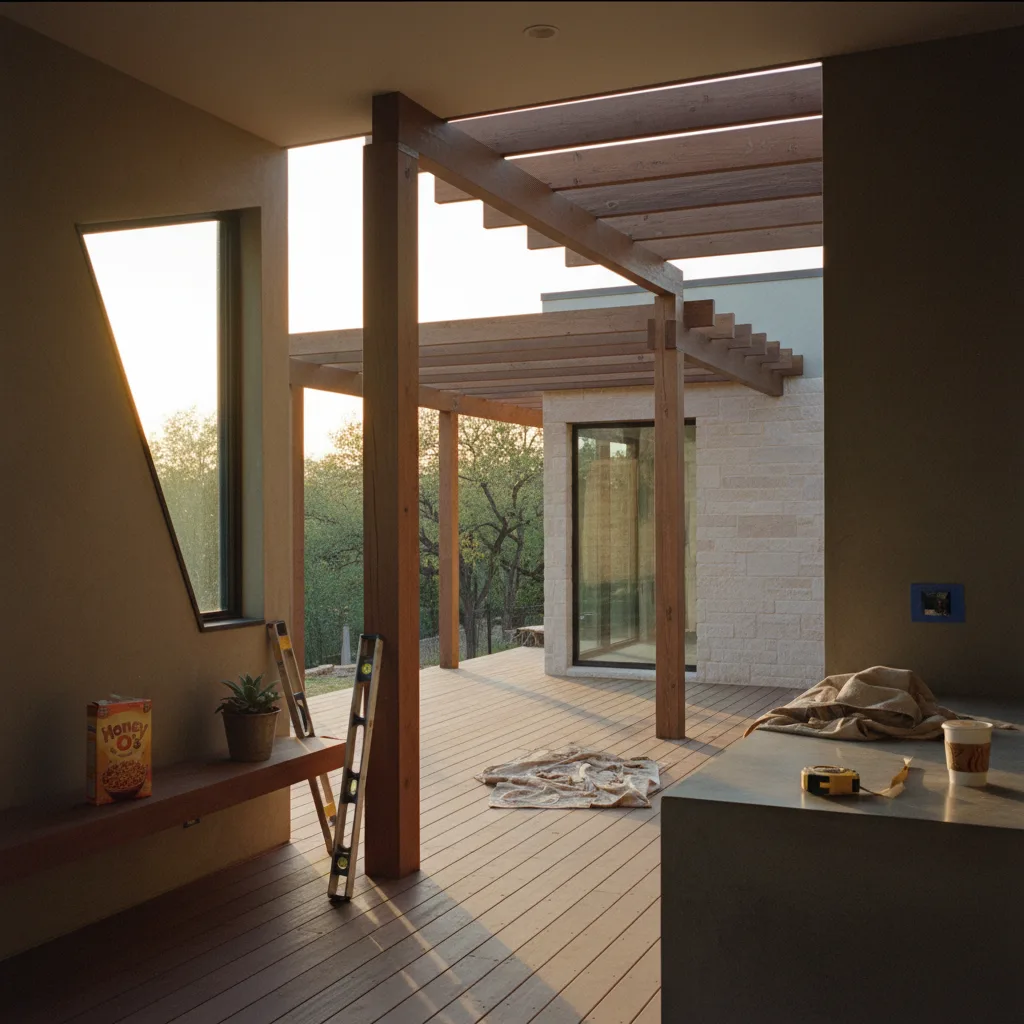
A botched deck in Austin isn't a weekend setback; it's a $15,000 teardown and rebuild. That’s the average cost I see for fixing unpermitted, poorly-footed decks that fail inspection or, worse, fail under the weight of a family barbecue. While a simple deck refresh on a Zilker condo can start lower, most substantial projects that go wrong end up costing double the original quote, adding ten to fourteen weeks of delays. These are the most common deck building mistakes that turn a homeowner’s dream into a financial nightmare.
In a Nutshell: The Austin Deck Dilemma
The core issue is treating a deck like furniture instead of a structural addition to your home. The cost of this mistake is a failed inspection, a voided homeowners insurance policy, and the full price of a teardown and replacement. The three most common failures I see in Austin are improper footings in our expansive clay soil, ledger boards improperly attached to the house, and a complete lack of city permits. Your counter-move this week: before you talk to anyone, look up three local deck builders on the City of Austin's permit database. See if they’re actually pulling permits for their work. The answer tells you everything.
Mistake #1: Skipping the Permit
Many homeowners try to build a deck without pulling a permit, thinking it’s a minor project. This is a critical error. In Austin, any deck attached to the house, more than 30 inches above grade, or serving as a required egress needs a permit and inspections. The cost of getting caught is a stop-work order, potential fines, and the requirement to retroactively permit the structure, which often means tearing out finished work to prove the framing and footings are to code. Don't do it. Instead, insist that your contractor pulls the permit before any work begins, and make sure the inspection card is posted on site. This is non-negotiable and protects you from liability. You can learn the local rules in our Austin decks-pergolas permit playbook for 2026.
Mistake #2: Underestimating Austin's Clay Soil
Contractors new to Central Texas often dig footings as if they're building on stable ground. This is one of the costliest deck building mistakes in our region. Austin's expansive clay soil swells when wet and shrinks when dry, a process called shrink-swell potential. Standard shallow footings will heave and settle, cracking concrete and twisting your deck frame within a few seasons. The entire structure becomes unsafe. The correct approach is to engineer footings for this specific geological challenge. This usually means digging deeper piers, often below the active soil zone, and frequently using bell-bottom piers to create a wider base that resists soil movement. It costs more upfront but prevents catastrophic failure down the road.
Mistake #3: Botching the Ledger Board Attachment
The ledger board is the piece of lumber that connects the deck to your house. Amateurs often just nail it through the siding. This is catastrophically wrong. A deck that doesn't ledger into solid framing isn't a deck, it's a porch waiting to fall. The International Residential Code (IRC) requires a continuous load path from the deck joists, through the ledger, into the home's band joist or foundation. Nailing into sheathing or siding provides zero structural support. Instead, the ledger must be attached with specific structural lags or through-bolts directly into the house's framing, complete with proper spacing and flashing to prevent water intrusion. This is the single most common point of failure in deck collapses.
Mistake #4: Mishandling Composite Decking
3 Austin deck builders, editor-screened. 4 questions.
See my 3 matchesComposite decking is a fantastic, low-maintenance product, but it has specific rules. Many composite deck installation problems stem from ignoring the manufacturer’s instructions. Installers accustomed to wood might fasten boards too tightly or leave inadequate gaps for expansion and contraction. In the intense Texas sun, a dark composite board can get extremely hot, causing it to expand significantly. Without the right gapping and hidden fastener system, the boards will buckle, warp, and wave, creating an ugly and unsafe surface. This almost always voids the material's warranty. The solution is simple: follow the installation guide to the letter. Use the specified hidden clips, which automatically set the gap and allow for movement, and respect the requirements for joist spacing.

Mistake #5: Ignoring Flashing and Water Management
Water is the enemy of your house's frame. Attaching a deck ledger without proper flashing is like creating a funnel for rainwater directly into your wall cavity. Many builders slap the ledger on and run a bead of caulk, which will fail in a year. This small oversight leads to thousands in repairs when the house's band joist and sill plate rot away. A $50 flashing mistake can easily cause a $20,000 structural repair. The proper method involves installing a continuous piece of corrosion-resistant flashing that starts from behind the siding, goes over the top of the ledger board, and directs water away from the house. This is a non-negotiable detail that a professional deck contractor in Austin will do as standard practice.
Mistake #6: Signing a Vague, One-Page Contract
A handshake deal or a simple estimate is not a contract. Homeowners eager to start often accept a vague proposal, leaving them vulnerable to endless deck warranty issues and cost overruns. A weak contract won't specify material grades, fastener types, footing depths, or a clear payment schedule. This means the contractor can substitute cheaper materials or hit you with unexpected charges for things you thought were included. Your defense is a detailed scope of work. Get three quotes. Check three references. Visit one finished job before signing. Your final contract must specify everything: material brands and models, hardware specs, a draw schedule tied to project milestones, a firm scope-lock date, and explicit warranties on both labor and materials. A contractor who resists this level of detail is a red flag. Check Austin deck builder reviews, but trust the contract.
Why Deck Budgets Go Wrong in Austin
A realistic deck budget in Austin accounts for more than just lumber and screws. Labor is the primary driver, and costs reflect regional skill levels. According to the Texas Workforce Commission, Austin-Round Rock MSA occupational wage data, skilled carpenters and framers command competitive wages. Beyond labor, you must budget for permits, debris disposal, and a contingency fund. The National Association of Home Builders recommends a ten to fifteen percent contingency on renovations in homes over thirty years old. This covers surprises like discovering rot behind the siding when the old deck is removed or hitting caliche rock during excavation. Under-budgeting the contingency is a recipe for a stalled project.
Three representative projects from 2026, scoped similarly, reconstructed from Renology's Project of the Day network and used here in aggregate form:
- Tarrytown Composite Deck Replacement ($48,500): A 400-square-foot, multi-level composite deck with aluminum railings. The project involved tearing out an old, unsafe wood deck, pouring new, deeper footings for clay soil, and adding low-voltage lighting.
- East Austin Pergola and Deck Combo ($35,000): A 300-square-foot ground-level pressure-treated wood deck with an attached 12x12 cedar pergola. The budget included engineering plans for the pergola's footing and attachment to the house.
- Circle C Ground-Level Patio Deck ($22,000): A 250-square-foot floating deck built over an old concrete patio. Since it was not attached to the house and was under 30 inches high, permitting was simpler, keeping costs down.
Renology Take
The single biggest mistake homeowners make is classifying a deck build as a landscaping project. It is not. A deck is a structural addition. It has a foundation (footings), a frame (joists and beams), and must support significant live loads, including people, snow, and furniture. It must be integrated safely with the primary structure of your house. Thinking of it as an outdoor floor leads you to hire based on the wrong criteria, prioritizing portfolio pictures over technical knowledge of load paths and building codes. You wouldn't hire a landscaper to frame a room addition, and you shouldn't hire one to build a deck unless they have a documented history of passing structural inspections. The moment you reframe the project in your mind from “backyard feature” to “home addition,” you start asking the right questions and hiring the right people.
Sources & methodology
How Renology builds this guide
Renology combines public permit and labor signals, supplier pricing, remodeler quote patterns, and editorial review of comparable projects. Cost references are planning ranges, not fixed bids, because site conditions, materials, access, permits, and finish level can change the final price.
- Benchmarked against the Renology Cost Index, related service guides, and the Renology Methodology.
- Reviewed for Austin market context when a local market is available.
- Focused on deck scope, materials, timeline, contractor risk, and budget drivers.
Austin · pre-screened
Get 3 Austin deck bids in 48 hours.
Our editors already vetted Austin deck builders. Answer 4 questions and we send 3 written bids inside 48 hours, with the real price for your scope, not their inflated first-call number.
- Free, no commission
- Pre-screened locally
- Bids inside 48 hours
Takes about 60 seconds. We'll text you when bids arrive.