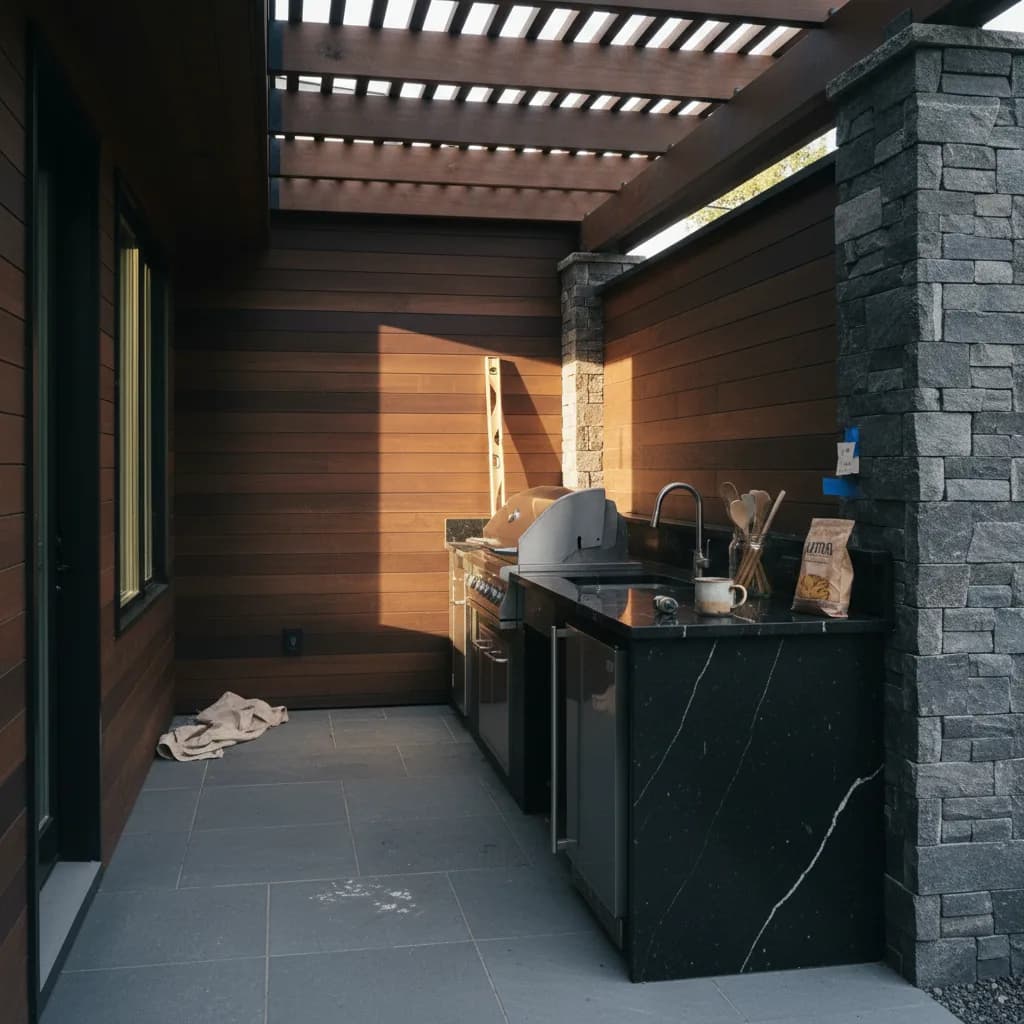
A mid-range outdoor kitchen in Seattle costs between $22,000 and $40,000 in 2026. This typical project includes a built-in gas grill, stainless steel cabinetry, stone countertops, a sink, and an under-counter refrigerator integrated into a permanent structure. While simpler, pre-fabricated island setups can start lower, in the $18,000 to $25,000 range, most homeowner projects involving utility connections and custom masonry fall squarely within the higher median. Costs are driven by Seattle's labor rates, material choices resilient to the Pacific Northwest climate, and extensive site preparation.
In a Nutshell
- Total Cost Range: $18,000 to $125,000+
- Typical Mid-Range Project: $22,000 to $40,000
- Project Timeline: Six to sixteen weeks from design approval to completion.
- Biggest Surprise Line Item: Utility extensions for gas, water, and electrical, which can add $8,000 to $15,000 before any appliances are installed.
What does an outdoor kitchen actually cost in Seattle?
The total cost for Seattle outdoor kitchens is segmented into three tiers, largely defined by the scope of construction, appliance quality, and level of customization. A basic project is often semi-permanent, while mid-range and premium projects are permanent home additions.
| Tier | Cost Range (2026) | Typical Scope |
|---|---|---|
| Basic | $18,000, $35,000 | Pre-fabricated island, drop-in grill, minimal counter space, no utility hookups (uses propane tank), placed on existing patio. |
| Mid-Range | $35,000, $80,000 | Custom masonry or steel frame construction, built-in natural gas grill, sink with plumbing, under-counter refrigerator, granite or quartz countertops, dedicated electrical circuit, new patio section. |
| Premium | $80,000, $125,000+ | Extensive custom build-out, luxury appliances (e.g., pizza oven, smoker), bar seating, pergola or roof structure, task and ambient lighting, outdoor heater, extensive stonework. |
For a typical mid-range project valued at $60,000, the cost breakdown is as follows:
- Appliances: 35% ($21,000)
- Cabinetry & Countertops: 25% ($15,000)
- Labor & Installation: 20% ($12,000)
- Utilities (Plumbing, Gas, Electrical): 10% ($6,000)
- Permits & Design: 5% ($3,000)
- Finishes (Patio, Lighting, Backsplash): 5% ($3,000)
The bottom of the range, around $18,000, typically represents a standalone grill island on an existing patio without the cost of running new gas, water, or electrical lines. Most homeowners seeking a fully integrated outdoor kitchen contractor in Seattle will find their projects begin in the mid-range tier.
Why is it more expensive in Seattle than surrounding regions?
Three primary factors contribute to the higher outdoor kitchen cost in Seattle compared to national figures: skilled labor rates, material requirements for the climate, and complex site conditions.
1. Skilled Labor Rates: The cost of licensed and insured trade professionals in the Seattle metro area is among the highest in the state. According to Washington State Department of Labor & Industries (L&I) prevailing wage data for King County, hourly rates for journeyman plumbers, electricians, and masons are substantial. This directly impacts the 20 to 25 percent of the project budget allocated to labor, ensuring that qualified professionals who can correctly install utility lines and construct durable structures are compensated at market rate.

2. Climate-Resilient Materials: Seattle's persistent rain and freeze-thaw cycles demand materials that resist moisture, corrosion, and temperature shifts. This means specifying 304-grade stainless steel appliances, marine-grade polymer or stainless steel cabinetry, and non-porous countertops like granite or specially treated concrete. These materials carry a 15 to 30 percent price premium over materials suitable for drier climates. Standard wood framing or porous stone would fail within a few seasons, making the upfront cost for durability a necessity.
3. Neighborhood Premiums and Site Complexity: Building in established, dense neighborhoods like Queen Anne or Laurelhurst involves higher logistical costs for material delivery, limited staging areas, and stricter building codes., many Seattle properties have challenging topography, such as steep slopes or poor drainage, which requires extensive and costly site preparation. A project on a sloped yard may require an additional $5,000 to $15,000 for retaining walls and foundation work compared to a project on a flat lot.
What do real Seattle homeowners spend in 2026?
Three modeled project scenarios for 2026, built from the Renology Cost Index and typical local scopes. These are illustrative estimates, not completed client projects:
- $52,500 in Ballard: This project involved extending an existing paver patio by 200 square feet and building a 12-foot L-shaped kitchen island. The scope included a mid-range 36-inch built-in gas grill, a sink with a hot/cold water line tied into the home's plumbing, an outdoor-rated refrigerator, and stainless steel access doors. The structure was framed with steel studs and finished with cultured stone veneer and granite countertops. The cost included all permits, electrical for the fridge and two outlets, and the gas line extension.
- $78,000 in West Seattle: On a property with a view, this homeowner opted for a more comprehensive entertainment space. The 16-foot linear kitchen included a premium grill, side burner, and under-counter refrigerator. The key cost drivers were a custom-built cedar pergola for rain protection, extensive low-voltage landscape lighting, and bar-height seating for six. The countertops were a higher-end quartzite, and the project required significant grading to create a level surface, adding approximately $7,000 to the budget.
- $115,000 in Sammamish: This premium project created a complete outdoor living room. The kitchen featured a luxury grill, a power burner for crab boils, a pizza oven, and an outdoor dishwasher. The structure was built under a new pavilion with recessed heaters and ceiling fans. A 20-foot counter with two-tiered seating accommodated large gatherings. The cost was improved by the extensive utility work, structural engineering for the roof, and high-end bluestone patio flooring.
Where does the money actually go?
3 Seattle outdoor kitchen builders, editor-screened. 4 questions.
See my 3 matchesContractor quotes often focus on the visible items like appliances and countertops. However, a significant portion of the budget for Seattle outdoor kitchens is allocated to foundational and infrastructure work that is often omitted from initial estimates. Homeowners should budget for these items separately.
- Site Preparation and Grading: $2,500, $6,000. This covers clearing the area, ensuring a level surface, and compacting the soil for a stable foundation.
- Utility Trenching and Hookups: $8,000, $15,000. The cost to run new gas, water, and electrical lines from the house to the kitchen location. The distance and complexity of the run are the main variables.
- Permits and Structural Engineering: $1,800, $4,500. Any project with new utility lines or a permanent structure requires permits from the Seattle Department of Construction and Inspections (SDCI). Roof structures require an engineer's stamp.
- Foundation and Footings: $3,000, $7,000. A concrete slab or frost-proof footings are necessary to support the weight of the structure and prevent shifting during freeze-thaw cycles.
- Drainage Systems: $2,000, $5,000. Essential in Seattle. This can include French drains or grading to direct water away from the structure and patio, preventing water damage and foundation issues.
- Protective Covering (Pergola/Roof): $7,000, $30,000+. A necessity for extending the usability of the kitchen through Seattle's nine-month wet season.
- Outdoor-Rated Lighting: $1,500, $4,000. This includes task lighting over the grill, ambient lighting for seating areas, and pathway lighting, all requiring weatherproof fixtures and wiring.
- Waste Disposal and Site Cleanup: $1,000, $2,500. The cost to remove excavated soil, construction debris, and professionally clean the site upon completion.
What stops a Seattle outdoor kitchen from running over budget?
Budget overruns are common and typically stem from three sources: unforeseen site conditions, mid-project design changes, and under-budgeted finishes.
First, discovering unexpected issues during excavation, such as large boulders, a high water table, or unstable soil, can require immediate and expensive remediation. Second, scope creep is a primary driver of cost increases. Adding a feature like a pizza oven or deciding to install a pergola after construction has begun can have a cascading effect on the budget, requiring new permits, materials, and labor. Third, homeowners often underestimate the cost difference between standard and premium finishes. Upgrading from a standard granite countertop to a high-end quartzite, for example, can add thousands to the final bill.
To mitigate these risks, a contingency fund is crucial. The National Association of Home Builders recommends a ten to fifteen percent contingency on renovations in homes over thirty years old. For a new construction project like an outdoor kitchen, a ten percent fund is a responsible minimum.
What should your Seattle contractor include in the quote?
A detailed quote is the best tool to prevent surprises and ensure you are comparing equivalent bids. An outdoor kitchen contractor in Seattle should provide a line-item proposal that includes specifics for each of the following. Before signing any contract, ensure you understand the city's building regulations. For a detailed breakdown of local requirements, see our guide: /guides/seattle-outdoor-kitchens-permit-playbook-2026.
- Detailed site plan and design renderings
- Scope of site preparation, including grading and excavation
- Foundation specifications (e.g., concrete slab thickness, rebar)
- Framing or masonry materials and construction methods
- Specific make and model numbers for all appliances
- Countertop material, thickness, and edge finishing
- Cabinetry material, brand, and layout
- Plumbing scope, including fixture models and connection points
- Natural gas line scope, including pipe size and connection to meter
- Electrical scope, including number of outlets, lighting fixtures, and GFCI protection
- Finishing details (e.g., stone veneer type, backsplash material, paint)
- Permit acquisition and associated fees
- Debris removal and site cleanup plan
- Project timeline with key milestones and payment schedule
Sources & Methodology
See the Renology Methodology for how sources are reviewed, ranges are normalized, and planning-data limits are handled.
Cost ranges in this guide draw on the following named industry sources, public agency datasets, and Renology editorial research.
- Remodeling Magazine, 2025 Cost vs. Value Report (Pacific Region) (2025)
- National Kitchen & Bath Association (NKBA), Outdoor Kitchen Design Guidelines (2024)
- Washington State Department of Labor & Industries, King County Prevailing Wage Data (2026)
- Seattle Department of Construction and Inspections (SDCI), Permitting Requirements (2026)
- National Association of Home Builders (NAHB), Construction Cost Survey (Q4 2025)
- Pacific Northwest Contractors' Cost Survey (2025)
- Renology Project of the Day (POTD) Network, Seattle Metro Data (2024-2026)
Renology Take
The most common mistake Seattle homeowners make is budgeting for an outdoor kitchen as if it were an indoor appliance upgrade. In reality, it is a small-scale construction project. The appliances often represent only a third of the total cost. The majority of the expense lies in creating the permanent, weather-proof infrastructure to support them: a foundation, utility lines, drainage, and durable, climate-appropriate structures. Homeowners who focus their budget primarily on the grill and refrigerator are often surprised by the six-figure all-in cost of a fully functional and lasting outdoor space. The key is to reframe the project not as buying outdoor appliances, but as building a small, highly specialized addition to your home. This perspective shift aligns expectations with the financial reality of the outdoor kitchen seattle 2026 cost landscape.
Frequently Asked Questions
How much value does an outdoor kitchen add to a home in Seattle?
Do I need a permit for an outdoor kitchen in Seattle?
What materials work best for Seattle's wet climate?
How long does it take to build an outdoor kitchen in Seattle?
Can I use indoor appliances in an outdoor kitchen?
Ready to find a pro?
Tell us about your project and location. A Renology advisor can help you explore contractor matching.
Free for homeowners. No obligation to hire.
Find a ProSources
- Remodeling Magazine, 2025 Cost vs. Value Report (Pacific Region)
- National Kitchen & Bath Association (NKBA), Outdoor Kitchen Design Guidelines
- Washington State Department of Labor & Industries, King County Prevailing Wage Data
- Seattle Department of Construction and Inspections (SDCI), Permitting Requirements
- National Association of Home Builders (NAHB), Construction Cost Survey
- Pacific Northwest Contractors' Cost Survey
- Renology Project of the Day (POTD) Network, Seattle Metro Data
Follow Renology on Google
Choose Renology as a preferred source and our guides show up more often in your Google results, including Top Stories and AI Overviews.