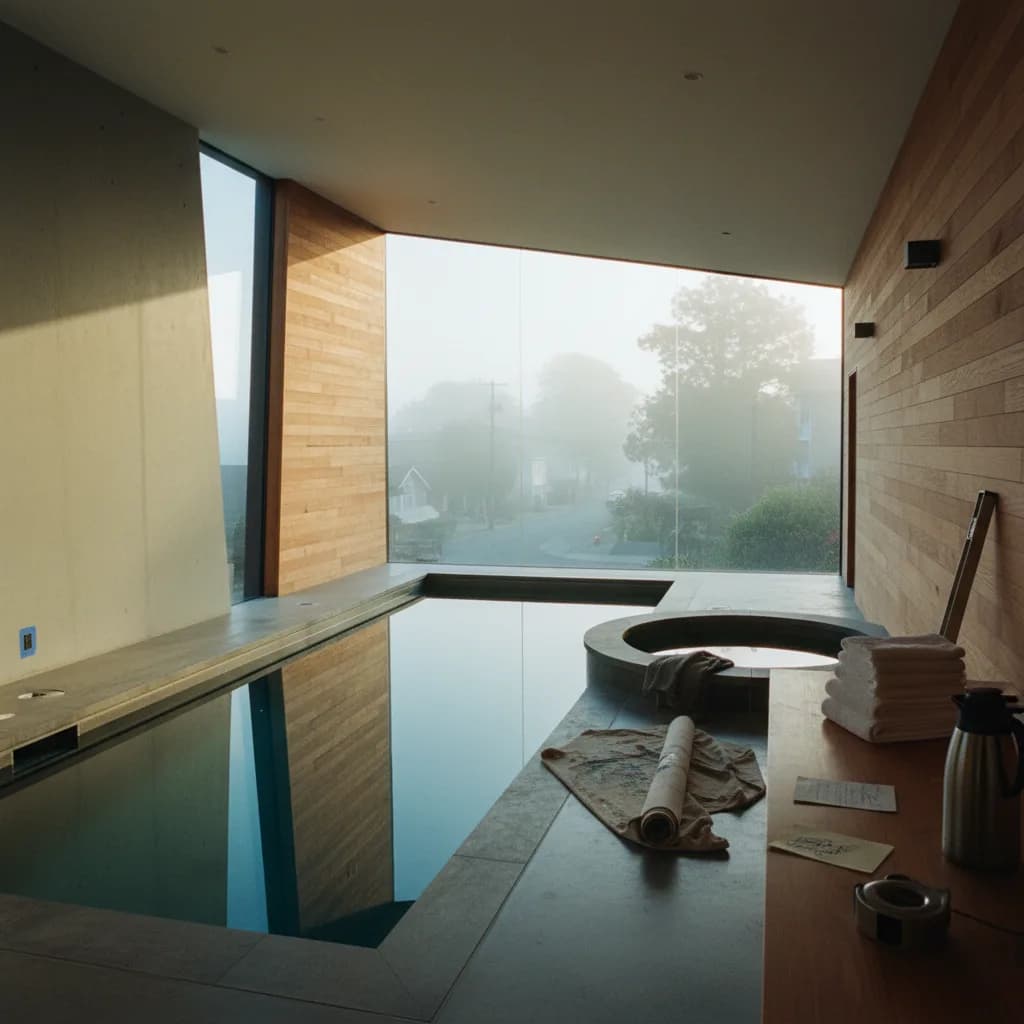
A gunite pool installation in San Francisco takes 16 to 24 weeks from the day you sign the contract to the day you can swim. I’ve seen it take longer. The timeline can start lower, around 12 to 18 weeks, for a simpler pre-fabricated fiberglass or plunge pool on a flat lot. But for most custom projects, especially on the city's hillsides, the single biggest delay isn't construction, it's geology. Hitting unexpected serpentine rock or dealing with uncompacted fill in a neighborhood like Noe Valley can stop a project cold for re-engineering. The timeline your contractor gives you is a best-case scenario. The real one is written in the ground beneath your yard.
In a Nutshell
- Total Timeline: 16, 24 weeks for a typical gunite pool; 12, 18 for fiberglass.
- The Four Phases: Design & Permits; Site Prep & Excavation; Structure & Rough-In; Finishes & Final Inspection.
- Biggest Delay Risk: Geotechnical surprises. Unforeseen soil conditions or groundwater requiring shoring, extensive off-haul, or a full structural re-design.
- Contingency Advice: Hold back ten to fifteen percent of the total project cost. The National Association of Home Builders recommends this for a reason, especially on SF’s challenging lots.
Phase 1: Design and Permits (Weeks 1, 8)
This is where the project is built on paper, and it’s often the longest phase. Don't rush it. A bulletproof plan set saves weeks of headaches later. This phase isn't about digging; it's about due diligence.
- What happens: You finalize the design, size, and features. A geotechnical engineer drills soil borings to see what you're building on. A structural engineer then uses that report to design a pool shell and any necessary retaining walls to withstand seismic loads. The architect pulls it all into a plan set.
- Who does what: The homeowner makes final decisions on materials and equipment. The design team creates the construction documents. Your pool contractor or a permit expediter submits the package to the San Francisco Department of Building Inspection (SFDBI).
- Common holdups: The SFDBI plan check queue is the main bottleneck. Expect comments and required revisions related to drainage, seismic engineering, or property line setbacks. A plan that doesn't account for liquefaction zones or steep slope requirements will get sent right back. Getting this right is key to understanding your final pool cost in San Francisco.
Phase 2: Site Prep and Excavation (Weeks 9, 12)
Once you have a permit in hand, the physical work begins. This phase is loud, messy, and dramatic. The goal is to create a clean, stable hole that matches the engineering plans exactly.
- What happens: The crew establishes access for machinery, which on a tight SF lot can mean craning a mini-excavator over the house. They dig the hole, carefully separating soil from rock. Forms are set to define the pool's shape, and a complex web of steel rebar is installed to create the structural skeleton.
- Who does what: The excavation contractor operates the heavy machinery. The steel crew bends and ties the rebar according to the structural drawings. The general contractor coordinates with Pacific Gas and Electric (PG&E) to mark any underground utility lines before a shovel ever hits the ground.
- Common holdups: Hitting a pocket of groundwater that requires dewatering. Discovering buried debris or an old foundation. The biggest issue is access; hauling dirt out of a terraced yard in Pacific Heights, one small truck at a time, adds days to the schedule.
Phase 3: Structure and Rough-In (Weeks 13, 16)
With the steel cage in place, the pool takes its permanent form. This is also when the guts of the system, the plumbing and electrical lines, are laid in place. Every one of these steps requires a sign-off on your inspection card before you can proceed.
- What happens: A specialized crew applies shotcrete or gunite at high velocity to form the concrete pool shell. After it cures, plumbers run pipes for drains, skimmers, and returns. Electricians run conduit for lighting and equipment connections. Gas lines for a heater are also installed now.
- Who does what: The gunite crew does their work in a single, intense day. The plumber and electrician then follow, laying out their systems. The contractor is responsible for scheduling the city inspections in the correct sequence: pre-gunite steel inspection, then post-gunite plumbing and electrical rough-in inspections.
- Common holdups: A failed inspection on rebar placement stops the gunite truck from even showing up. Rain can delay the concrete application. If the trades get out of sequence, you lose time while one waits for the other to finish their work and get it signed off.
Phase 4: Finishes and Final Inspection (Weeks 17, 24)
3 San Francisco pool builders, editor-screened. 4 questions.
See my 3 matchesThis is where the structural shell becomes a finished pool. It's a phase of craftsmanship, with masons, tile setters, and plasterers applying the final surfaces. It's also about safety compliance to get that final sign-off.
- What happens: The coping around the pool edge is laid, followed by the waterline tile. The surrounding deck is formed and poured or laid with pavers. The pool equipment (pump, filter, heater) is installed on its concrete pad. Finally, the interior finish is applied and the pool is filled with water. All required safety fencing and alarms must be installed.
- Who does what: A sequence of specialized finishing trades does their work. The contractor manages their flow. The final step is scheduling the final inspection with the SFDBI inspector, who will verify that every safety feature is in place and operational.
- Common holdups: Lead times on non-stock tile or coping materials. Weather delaying deck pours or plastering. The final inspection is a pass/fail test. A faulty gate latch or missing window alarm means a failed inspection and a delay until the next available appointment. The project isn't done until that inspection card is signed.
Three Representative Projects from 2026
Three modeled project scenarios for 2026, built from the Renology Cost Index and typical local scopes. These are illustrative estimates, not completed client projects:

- Noe Valley Terraced Yard: A 15x25 foot gunite pool and integrated spa built into a steep hillside. Required extensive retaining walls and shoring. Total cost: $195,000. Total timeline: 22 weeks, with three weeks lost to soil re-engineering.
- Sea Cliff Infinity Edge: A 20x40 foot gunite pool with a vanishing edge overlooking the coast. Complex structural engineering and waterproofing. Total cost: $320,000. Total timeline: 28 weeks, slowed by marine layer moisture affecting concrete cure times and material deliveries.
- Sunset District Plunge Pool: A 10x15 foot pre-molded fiberglass pool on a flat lot with good access. Simple concrete decking and standard equipment. Total cost: $115,000. Total timeline: 16 weeks. This shows how much simpler San Francisco pools can be with favorable site conditions.
What Can Compress This Timeline
The homeowner who saves six weeks does these three things before signing. First, they lock the scope. Every decision, from tile choice to light placement, is made and documented before the permit is pulled. Second, they choose materials that are in-stock locally. That custom Italian glass tile looks great in the catalog, but it can add eight weeks of shipping time. Third, they hire an integrated team. A pool contractor in San Francisco with an in-house designer and permit specialist avoids the blame game between architect and builder when the city asks for revisions. It’s one team, one goal: get the permit issued.
What Blows It Up
Three things reliably turn a 20-week project into a 30-week one. The first is geology. Hitting solid rock where you expected soil means bringing in hydraulic hammers, which is slow and expensive. The second is access. If your neighbor is difficult about granting temporary access for an excavator, you're stuck. Get a formal, written agreement first. The third and most common is scope creep. Deciding to add an outdoor kitchen or a new retaining wall halfway through the build is like starting a new project. It triggers new designs, new permits, and new schedules. The National Association of Home Builders recommends a ten to fifteen percent contingency on renovations in homes over thirty years old. For a new pool on an old SF lot, that's sound advice.
What Should Be in Your Contractor's Schedule
A real schedule is more than a start and end date. It's a list of dependencies. Your contractor's schedule of values or project timeline must include these specific milestones:
- Geotechnical Report Completion Date
- Structural Engineering Plans Submitted to SFDBI
- Permit Issuance Target Date
- Excavation & Steel Installation Start
- Pre-Gunite (Steel & Plumbing) Inspection Date
- Gunite/Shotcrete Application Date
- Coping, Tile, and Decking Start Date
- Plaster Application & Pool Fill Date
- Final Barrier & Safety Inspection Date
- Project Completion & Handover
Make sure these milestones are clear. For a full breakdown of the city's process, see our permit playbook.
Renology Take
The marketing timeline for a pool is 12 weeks. The realistic timeline for a custom gunite pool in San Francisco is closer to six months, from initial design to final sign-off. The work isn't the pool build itself, it's the process. It's the soil report, the seismic engineering, the plan check, the inspections. A good pool contractor San Francisco has built here for years knows this. Their price reflects the cost of shoring, the difficulty of access, and the time for proper engineering. A low-ball bid ignores these realities. They plan to make their profit on change orders when they 'discover' the rock they should have planned for from the start. In this city, the geology isn't a surprise. It's the first line item on any honest scope of work for a 2026 project.
Sources & Methodology
Renology reviews public permit and labor signals, supplier pricing, remodeler quote patterns, comparable projects, the Renology Cost Index, and the Renology Methodology. Cost references are planning ranges for San Francisco pool projects, not fixed bids.
- National Association of Home Builders (NAHB), Construction Statistics, 2026
- California Department of Industrial Relations, Prevailing Wage Data for San Francisco County, 2026
- San Francisco Department of Building Inspection (SFDBI), Permit Services Division, 2026
- Pool & Hot Tub Alliance (PHTA), Construction Standards and Best Practices, 2025
- Remodeling Magazine, Cost vs. Value Report, San Francisco MSA, 2025
- Renology Project of the Day (POTD) Network, San Francisco Construction Data, 2025-2026
Frequently Asked Questions
How long does a pool installation in San Francisco really take?
Can I live in the home during construction?
What's the longest single phase?
Can I fast-track the permits?
Why does a pool in San Francisco cost so much?
Ready to find a pro?
Tell us about your project and location. A Renology advisor can help you explore contractor matching.
Free for homeowners. No obligation to hire.
Find a ProSources
- National Association of Home Builders (NAHB), Construction Statistics
- California Department of Industrial Relations, Prevailing Wage Data for San Francisco County
- San Francisco Department of Building Inspection (SFDBI), Permit Services Division
- Pool & Hot Tub Alliance (PHTA), Construction Standards and Best Practices
- Remodeling Magazine, Cost vs. Value Report, San Francisco MSA
- Renology Project of the Day (POTD) Network, San Francisco Construction Data
Follow Renology on Google
Choose Renology as a preferred source and our guides show up more often in your Google results, including Top Stories and AI Overviews.