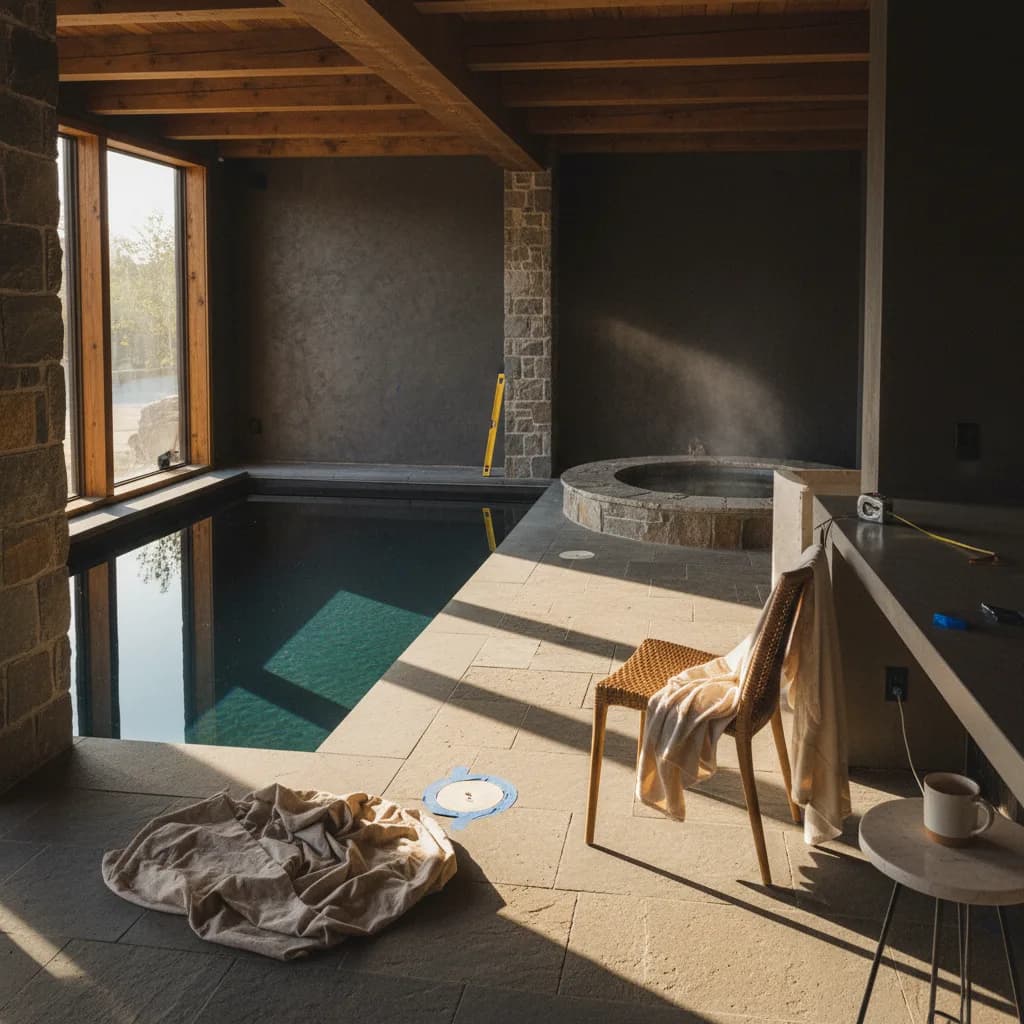
A gunite pool installation in Denver takes between 14 and 22 weeks from the day you sign the contract to the day you fill it with water. It's not the 8-week timeline you see in brochures. That number assumes the permits are ready and the ground is perfect. In Denver, the ground is never perfect. The biggest delay is our soil. The expansive bentonite clay under a neighborhood like Washington Park can add three weeks of over-excavation and structural fill before a single piece of rebar gets tied. The timeline can start lower, around 10 to 12 weeks, for a simpler drop-in fiberglass shell, but the permitting and earthwork timeline is a fixed cost. Expect the unexpected, especially with the ground beneath your feet.
In a Nutshell
- Total Timeline: 14, 22 weeks for a custom gunite pool; 10, 14 weeks for a fiberglass pool.
- Four Phases: Design and Permits; Site Prep and Excavation; Shell and Rough-In; Finishes and Final Inspection.
- Biggest Delay Risk: Unforeseen soil conditions. Denver's expansive clay often requires costly and time-consuming soil remediation before the shell can be formed. An early autumn freeze can also halt all concrete and plaster work for the season.
- Contingency Fund: Assume you'll spend it. The National Association of Home Builders recommends a 10-15% contingency fund for any major renovation, and a pool qualifies. For a $120,000 pool, that's $12,000 to $18,000 set aside for surprises.
Phase 1: Design and Permits (Weeks 1, 6)
This is where the project is built on paper. Nothing physical happens at your property, but it's the most critical phase. Your pool contractor will work with a geotechnical engineer to produce a soil report. This isn't optional in the Front Range. The report dictates the structural engineering for the pool shell, specifying the thickness of the concrete and the density of the rebar grid needed to resist soil movement. The owner's job is to make every single design decision and lock them in. Tile, coping, plaster color, equipment, decking material. Changes after this point cost time and money. The contractor or an expeditor submits the full plan set to Denver's Community Planning and Development office. A common holdup is an incomplete submission. A plan without engineered drainage or that ignores utility easements gets rejected fast. The city's review cycle is the review cycle. You don't get to rush it.
Phase 2: Site Prep and Excavation (Weeks 7, 9)
Once you have an approved permit card, the heavy equipment arrives. The first step is staking out the pool's exact location and elevation. Then the excavator starts digging. This is where you see the real cost of a pool project in Denver. A small yard with tight access means smaller machines, which means more time and higher labor costs. This is also when surprises happen. Hitting a high water table or a vein of solid rock can stop work instantly. After the hole is dug to the engineer's specifications, trenches are cut for plumbing and electrical conduit. The main drain, skimmers, and return lines are stubbed out. Before any concrete, the excavator grades the site for proper drainage. Bad grading means water pooling against your foundation. Xcel Energy and Denver Water will likely need to mark their lines before any digging begins. Ignoring a utility locate is a fast way to cause a neighborhood-wide problem.
Phase 3: Shell and Rough-In (Weeks 10, 13)
This is where the hole starts to look like a pool. A steel crew bends and ties the rebar cage that forms the pool's skeleton. This intricate web follows the structural plans to the letter. It's what gives the gunite shell its tensile strength against our shifting soils. After the rebar is in, the plumber and electrician return for their rough-in. They'll install all the pipes, light niches, and conduit within the rebar cage. This is a critical inspection point. A Denver building inspector must visit the site and sign off on the inspection card for the steel, plumbing, and electrical bonding before any concrete is sprayed. This is a non-negotiable step in the load path. If the inspection fails, the crew reworks the problem and you wait for a re-inspection. Only after that sign-off can the gunite crew arrive to shoot the concrete shell. That shell then needs to cure, ideally for 28 days, though most crews start tile work sooner.
Phase 4: Finishes and Final Inspection (Weeks 14, 18)
3 Denver pool builders, editor-screened. 4 questions.
See my 3 matchesWith the concrete shell cured, the artisans take over. The first finish is the waterline tile and the coping, which is the stone or concrete edge around the pool. This work requires precision. After the tile and coping are set, the decking crew comes in to form and pour the concrete or lay the pavers for the pool surround. This is another major concrete job that is entirely weather-dependent. Once the deck is complete and all the heavy work is done, the plaster crew arrives for the final interior finish. This is a single, continuous application that has to be done perfectly. The pool is immediately filled with water to allow the plaster to cure properly. While it fills, an electrician completes the equipment set, and a fence contractor installs the required safety barrier. A final inspection from the city is required to verify all safety features, electrical work, and plumbing are up to code before the pool can be officially opened.
Three Representative Projects from 2026
Three modeled project scenarios for 2026, built from the Renology Cost Index and typical local scopes. These are illustrative estimates, not completed client projects:

- Highlands Rectangle: A 15x30 foot rectangular gunite pool with an integrated spa and automatic cover. Tight lot access required smaller equipment. Significant soil remediation was needed. Total Cost: $145,000. Total Time: 21 weeks.
- Central Park Fiberglass: A medium-sized pre-fabricated fiberglass shell with a simple broom-finished concrete deck. Site access was excellent, and soil conditions were better than average for the area. This represents a more straightforward pool denver 2026 project. Total Cost: $95,000. Total Time: 13 weeks.
- Cherry Hills Village Custom: A freeform gunite pool with a waterfall, extensive flagstone decking, and high-end pebble finish. Required complex engineering and significant grading work. Total Cost: $220,000. Total Time: 26 weeks.
What Can Compress This Timeline
The homeowner who saves four weeks does three things before the first shovel hits the dirt. First, they make every single design and material decision before the scope-lock date. No waffling on tile choices or deck materials once the plans are submitted. Second, they hire a veteran pool contractor in Denver who has their own crews or has used the same subcontractors for a decade. A contractor with a deep bench doesn't get stuck waiting for a plaster crew. Third, they prepare the site. This means clearing all access routes for heavy machinery, communicating with neighbors about the disruption, and having the funds ready for each draw payment. Delays in payment mean delays in work. The schedule is the schedule. You can't buy your way ahead of the concrete cure time.
What Blows It Up
Three things reliably turn a 16-week project into a 24-week ordeal. The first is the ground. A geotechnical report that finds deep, expansive clay means thousands of dollars and two weeks of over-excavating and hauling in structural fill. The second is weather. An early snow in October or a week of rain in June can shut down all excavation, concrete, and plaster work. You can't fight the weather in Colorado. The third, and most controllable, is changing your mind. Adding a spa, changing the decking from concrete to pavers, or deciding on a different water feature mid-build is called scope creep. It requires re-engineering, re-permitting, and re-sequencing subs. It's the most expensive way to build a pool. The National Association of Home Builders recommends a ten to fifteen percent contingency on renovations in homes over thirty years old. For a new pool, that money is for the ground giving you a fight.
What Should Be in Your Contractor's Schedule
A real construction schedule isn't a vague timeline. It's a detailed document with specific dates and dependencies. Your contract should include a schedule with, at minimum, these line items:
- Scope-lock date for all owner selections.
- Permit submission date.
- Target permit approval date.
- Excavation start date.
- Steel, plumbing, and electrical rough-in completion date.
- Pre-gunite inspection date.
- Gunite/shotcrete application date.
- Tile and coping installation start date.
- Decking pour/installation date.
- Plaster application date.
- Final inspection date.
This schedule is your primary tool for holding the project accountable. For a deeper look into the city's requirements, see our Denver pools permit playbook.
Renology Take
The marketing from most Denver pools contractors sells a dream of a quick, smooth process. They show renderings of a perfect backyard oasis, often with a timeline that seems impossibly short. The reality is that building a pool is heavy civil construction that takes place in your backyard. It's loud, messy, and subject to forces no one can control, chiefly geology and weather. The advertised pool cost in Denver is often just for the basic shell and equipment, not the decking, fencing, and landscaping that make it usable. A good contractor tells you the hard truth upfront. They build the soil remediation, the weather delays, and the inspection waits into the schedule from day one. They plan for the fight. The contractors who sell the 8-week dream are the ones who aren't prepared when the ground, or an early blizzard, punches back.
Sources & Methodology
Renology reviews public permit and labor signals, supplier pricing, remodeler quote patterns, comparable projects, the Renology Cost Index, and the Renology Methodology. Cost references are planning ranges for Denver pool projects, not fixed bids.
- National Association of Home Builders (NAHB), Construction Statistics
- Colorado Department of Labor and Employment, Denver-Aurora-Lakewood MSA Occupational Employment and Wage Statistics, 2025
- Denver Community Planning and Development, Residential Permits Division
- Pool & Hot Tub Alliance (PHTA), ANSI/PHTA/ICC-7 Standard for Suction Entrapment Avoidance
- Remodeling Magazine, 2026 Cost vs. Value Report
- Renology Project of the Day (POTD) Network, Denver Metro Data 2024-2026
Frequently Asked Questions
How long does a pool in Denver really take?
Can I live in the home during construction?
What's the longest single phase?
Can I fast-track the permits?
What's the biggest cost variable for a pool in Denver?
Ready to find a pro?
Tell us about your project and location. A Renology advisor can help you explore contractor matching.
Free for homeowners. No obligation to hire.
Find a ProSources
- National Association of Home Builders (NAHB), Construction Statistics
- Colorado Department of Labor and Employment, Denver-Aurora-Lakewood MSA Occupational Employment and Wage Statistics
- Denver Community Planning and Development, Residential Permits Division
- Pool & Hot Tub Alliance (PHTA), ANSI/PHTA/ICC-7 Standard for Suction Entrapment Avoidance
- Remodeling Magazine, 2026 Cost vs. Value Report
- Renology Project of the Day (POTD) Network, Denver Metro Data 2024-2026
Follow Renology on Google
Choose Renology as a preferred source and our guides show up more often in your Google results, including Top Stories and AI Overviews.